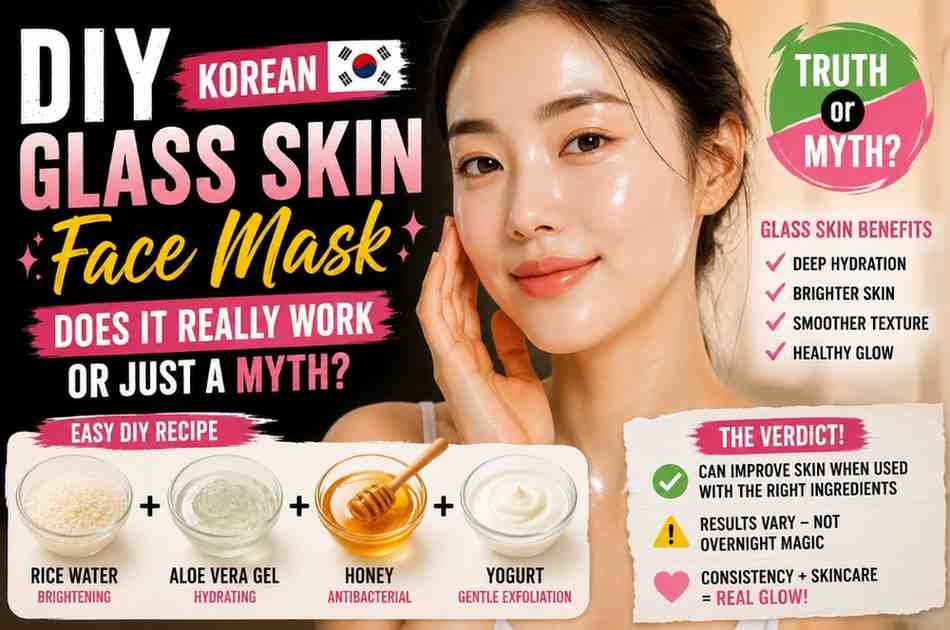
Introduction: Can a simple DIY face mask really give you flawless, glowing “glass skin”? When actress Yuvika Chaudhary shared her homemade Korean-inspired skincare routine, it quickly gained attention among beauty enthusiasts. But dermatologists caution that achieving glass skin that smooth, luminous, poreless look—is not about a one-time remedy. Instead, it requires a disciplined skincare routine, scientific understanding of skin health, and sometimes professional intervention. This article explores what glass skin actually means, evaluates DIY masks, and explains how to achieve long-lasting results safely.
What Is “Glass Skin” and Why Is It Trending?
The term “glass skin” originates from Korean skincare culture and refers to skin that appears:
- Clear and blemish-free
- Deeply hydrated
- Smooth with minimal texture
- Radiant and reflective
Key insight: Glass skin is not just about appearance—it reflects underlying skin health, hydration levels, and barrier strength.
With the rise of K-beauty trends globally, this ideal has become a benchmark for glowing skin. However, achieving it involves more than applying a single mask.
The Reality Check: Can DIY Face Masks Deliver Glass Skin?
DIY skincare remedies often use natural ingredients like yogurt, honey, rice water, or aloe vera. While these ingredients may provide temporary hydration or soothing effects, they have limitations.
Dermatologists emphasize:
- DIY masks can offer short-term glow but not structural skin improvement
- Results are often superficial and temporary
- Improper combinations may irritate sensitive skin
Critical insight: The glowing effect people notice after a DIY mask is often due to temporary hydration—not long-term skin transformation.
Why Consistency Matters More Than Quick Fixes
Achieving glass skin requires a consistent, multi-step skincare routine rather than occasional treatments.
The Core Elements of a Glass Skin Routine
- Cleansing: Removes dirt and excess oil
- Exfoliation: Eliminates dead skin cells
- Hydration: Maintains moisture balance
- Sun protection: Prevents damage and pigmentation
Unique angle: Think of skincare like fitness—one workout won’t transform your body, but consistent effort will.
The Hidden Risk of Overusing Home Remedies
While DIY masks are often perceived as safe, overuse or incorrect application can harm your skin.
- Over-exfoliation can damage the skin barrier
- Acidic ingredients may cause irritation
- Unhygienic preparation can lead to breakouts
Important warning: Repeated breakouts or pigmentation issues are not problems to “experiment” on—they require professional guidance.
When to See a Dermatologist or Aesthetic Expert
If your skin concerns persist despite trying home remedies, it’s time to seek expert advice.
Consult a professional if you experience:
- Frequent acne or breakouts
- Stubborn pigmentation
- Sensitivity or redness
- Uneven skin texture
Why this matters: Delaying proper treatment can worsen skin conditions and make them harder to treat later.
Comparison: DIY Masks vs Professional Skincare
| Factor | DIY Face Masks | Professional Skincare |
|---|---|---|
| Effectiveness | Temporary results | Long-term improvement |
| Safety | Varies by ingredients | Scientifically tested |
| Customization | Limited | Personalized to skin type |
| Results | Surface-level glow | Deep skin health |
The Science Behind Glowing Skin
Healthy, glowing skin depends on several biological factors:
- Collagen production: Maintains firmness and elasticity
- Hydration levels: Prevent dryness and dullness
- Cell turnover: Keeps skin fresh and smooth
- Barrier function: Protects against environmental damage
Insight: Most DIY masks do not penetrate deeply enough to influence these processes significantly.
Real-World Impact: Why Skincare Myths Can Be Harmful
Social media trends often promote quick fixes without highlighting risks. This can lead to:
- Unrealistic expectations
- Wasted time and money
- Potential skin damage
For young audiences especially, the pressure to achieve “perfect skin” can lead to overuse of products and harmful experimentation.
Smarter Approach: How to Actually Achieve Glass Skin
1. Build a Simple, Consistent Routine
Stick to basic steps—cleanse, moisturize, protect—before adding advanced treatments.
2. Prioritize Hydration
Use products with ingredients like hyaluronic acid to maintain moisture.
3. Protect Your Skin Daily
Sunscreen is essential to prevent damage and maintain clarity.
4. Introduce Active Ingredients Gradually
Retinoids, AHAs, and BHAs can improve skin texture—but only when used correctly.
5. Avoid Overloading Your Skin
More products do not mean better results. Simplicity often works best.
The Bigger Insight: Skincare Is a Long-Term Investment
The idea of glass skin reflects a broader shift toward preventive skincare rather than reactive treatments. Instead of fixing problems after they appear, the focus is on maintaining healthy skin consistently.
Prediction: The future of skincare will move toward personalized routines based on skin type, lifestyle, and environmental factors rather than one-size-fits-all trends.
Conclusion: Skip the Shortcut, Build the Habit
Yuvika Chaudhary’s DIY face mask highlights a common desire for quick, natural solutions—but dermatologists agree that true glass skin cannot be achieved overnight.
Final takeaway: A glowing complexion is the result of consistency, science-backed care, and sometimes professional guidance—not just a single homemade remedy.
So the next time you’re tempted by a viral skincare hack, remember: your skin deserves patience, not shortcuts.
For breaking news and live news updates, like us on Facebook or follow us on Twitter and Instagram. Read more on Latest Lifestyle on thefoxdaily.com.


COMMENTS 0