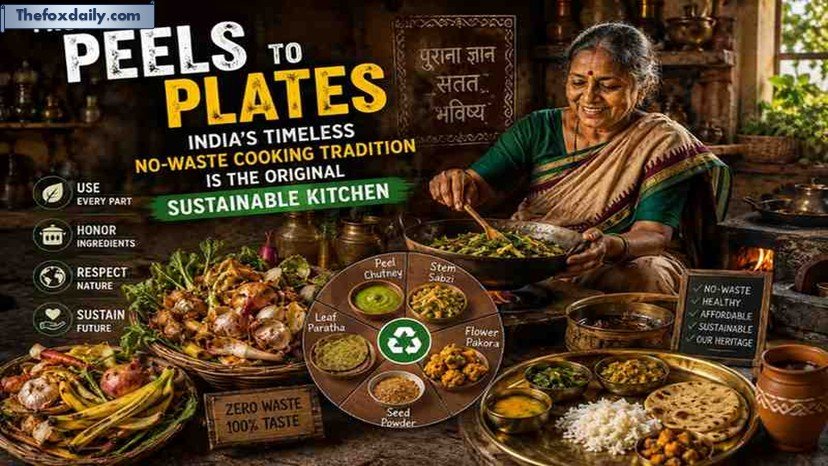
Long before the world embraced concepts like “zero-waste cooking”, “root-to-stem eating”, and “sustainable kitchens”, Indian households had already mastered the art of making every ingredient count. Across generations, families transformed vegetable peels, stems, leaves, seeds, and fruit rinds into flavorful, nutritious dishes that reflected not just culinary creativity but also deep respect for food.
What many now celebrate as a modern sustainability movement has been part of Indian kitchens for centuries. Driven by tradition, resourcefulness, seasonal eating, and the belief that food should never be wasted, these recipes continue to offer lessons for healthier eating, reducing household waste, and preserving culinary heritage.
India’s No-Waste Kitchen: A Tradition Born from Wisdom
For generations, Indian cooking evolved around the principle that almost every edible part of a plant has value. Rather than discarding peels, stalks, leaves, or seeds, home cooks found inventive ways to transform them into chutneys, stir-fries, curries, pickles, and desserts.
This philosophy emerged not only from necessity during periods of food scarcity but also from traditional knowledge that recognized the nutritional richness of ingredients often considered “waste.”
Today, this approach aligns perfectly with modern sustainability goals.
Why No-Waste Cooking Matters Today
Globally, millions of tonnes of edible food are discarded every year, contributing to environmental degradation, greenhouse gas emissions, and unnecessary pressure on natural resources.
Reducing kitchen waste offers several benefits:
- Lower household food waste.
- Reduced environmental impact.
- Better utilization of nutrients.
- Lower grocery expenses.
- Preservation of traditional recipes.
- Support for sustainable living.
The Nutritional Value Hidden in Peels
Many fruit and vegetable peels contain significant amounts of dietary fibre, vitamins, minerals, and plant compounds.
Depending on the produce, peels may provide:
- Dietary fibre.
- Vitamin C.
- Potassium.
- Polyphenols.
- Antioxidants.
- Natural pigments with health-supporting properties.
Proper washing and preparation are essential before using peels, especially when produce may contain pesticide residues.
Traditional Indian Ingredients That Rarely Go to Waste
Across India’s diverse regional cuisines, numerous ingredients traditionally find a second life in delicious recipes.
| Ingredient | Traditional Uses |
|---|---|
| Bottle gourd peels | Chutneys, stir-fries |
| Ridge gourd peels | Chutney, pachadi, thogayal |
| Watermelon rind | Curry, pickle, sabzi |
| Pumpkin peels | Dry vegetable dishes |
| Banana peels | Curries, stir-fries |
| Neem leaves | Seasonal preparations |
| Radish leaves | Parathas, saag |
| Cauliflower stems | Curries, soups |
Ridge Gourd Peel Chutney: A South Indian Favourite
One of India’s best-known no-waste recipes is ridge gourd peel chutney.
Instead of discarding the thick green skin, it is sautéed with lentils, chillies, tamarind, and spices before being ground into a flavorful accompaniment for rice, dosa, or idli.
The result is rich, earthy, and packed with fibre.
Bottle Gourd Peel Sabzi
In many northern and western Indian households, bottle gourd peels are cooked with mustard seeds, cumin, onions, and spices to create a simple yet nutritious side dish.
This preparation highlights how ingredients often considered scraps can become the main attraction on the dining table.
Watermelon Rind: More Than Just the White Layer
Most people enjoy the sweet red flesh of watermelon and throw away the rest.
However, the pale white rind has long been used in several Indian kitchens.
It can be transformed into:
- Pickles.
- Vegetable curries.
- Dry stir-fries.
- Sweet preserves.
Its mild flavour absorbs spices beautifully while providing additional fibre.
Neem Leaves: Seasonal Tradition with Purpose
Neem leaves occupy a special place in several Indian culinary traditions, particularly during seasonal transitions.
Although naturally bitter, they are used in limited quantities in traditional dishes where the bitterness is balanced with jaggery, vegetables, or lentils.
Their inclusion reflects cultural practices associated with seasonal eating and culinary diversity.
The Humble Onion as the Hero
Indian cuisine has long demonstrated that exceptional meals do not require elaborate ingredients.
Dishes prepared almost entirely from onions, potatoes, tomatoes, or seasonal vegetables showcase how thoughtful use of spices, cooking techniques, and regional traditions can transform simple ingredients into satisfying meals.
Regional Diversity in No-Waste Cooking
Different parts of India have developed unique approaches to minimizing food waste.
| Region | Examples |
|---|---|
| South India | Peel chutneys, thogayal, pachadi |
| Bengal | Neem preparations, vegetable peels, posto dishes |
| Punjab | Leafy saag, stuffed vegetable peels |
| Maharashtra | Peel stir-fries, chutneys |
| Gujarat | Sweet and spicy peel dishes |
The Sustainability Lesson Hidden in Traditional Kitchens
Traditional Indian kitchens naturally practiced many principles now promoted by sustainability experts.
These include:
- Buying seasonal produce.
- Cooking only what is needed.
- Using leftovers creatively.
- Repurposing vegetable scraps.
- Sharing food within communities.
- Reducing unnecessary waste.
These habits helped families maximize nutrition while minimizing environmental impact.
How Modern Households Can Adopt No-Waste Cooking
Small changes can make a significant difference.
- Wash vegetables thoroughly before using edible peels.
- Store leftovers properly.
- Plan meals in advance.
- Freeze vegetable scraps for homemade stock.
- Learn traditional recipes from older family members.
- Compost unavoidable food waste.
These practices reduce waste while encouraging mindful consumption.
Economic Benefits of Using the Whole Ingredient
No-waste cooking is not only environmentally responsible but also economical.
Making full use of vegetables and fruits can:
- Reduce grocery costs.
- Increase meal variety.
- Stretch seasonal produce further.
- Decrease food disposal costs.
For many households, these savings become meaningful over time.
Food Heritage Worth Preserving
Many traditional no-waste recipes are slowly disappearing as processed foods and convenience cooking become more common.
Preserving these dishes means protecting generations of culinary knowledge, family traditions, and sustainable practices that remain relevant today.
Grandparents and home cooks often possess invaluable knowledge about using every edible part of seasonal produce—knowledge that deserves to be documented and passed on.
Conclusion
India’s no-waste cooking tradition is far more than a response to scarcity—it is a philosophy rooted in respect for food, sustainability, nutrition, and culinary creativity. Long before the global popularity of zero-waste kitchens, Indian households were transforming peels, leaves, stems, and rinds into nourishing meals that reflected both wisdom and resourcefulness.
As concerns over food waste and environmental sustainability continue to grow, these age-old practices offer practical solutions that remain remarkably relevant. By rediscovering traditional recipes and embracing the principle of using every edible part of fresh produce, modern households can reduce waste, improve nutrition, save money, and help preserve one of India’s most valuable culinary traditions.
For breaking news and live news updates, like us on Facebook or follow us on Twitter and Instagram. Read more on Latest Lifestyle on thefoxdaily.com.


COMMENTS 0