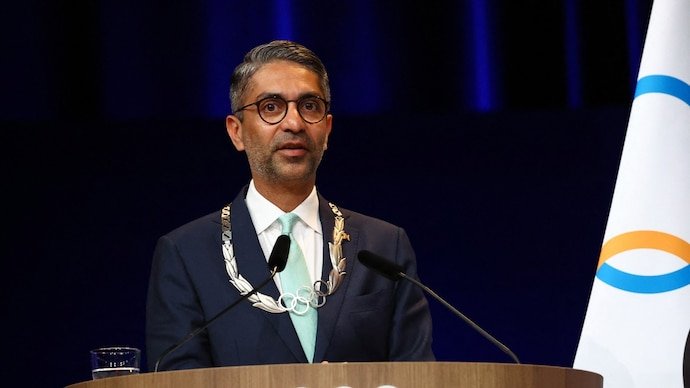
Olympic champion Abhinav Bindra is not known for frequent interventions in public controversies. Throughout his career, the former shooter has largely focused on excellence, athlete development, education and performance science rather than political debates. That is precisely why his recent remarks on student protests and educational reform have attracted significant attention across the country.
At a time when discussions about examination transparency, educational accountability and student welfare have intensified, Bindra’s message offered a broader perspective. Instead of entering political arguments, he focused on principles that affect every student, parent, educator and institution: trust, merit, opportunity and the future of young people.
His comments arrive during one of the most closely watched education-related debates in recent years, a moment that has sparked discussions far beyond examination halls and university campuses.
What Abhinav Bindra Said About Education and Students
Bindra emphasized that education is an issue that transcends political affiliations and ideological differences. While reiterating that he does not consider himself a political figure, he argued that educational opportunity belongs to everyone and should remain a national priority.
The Olympic champion stressed that the true measure of a nation extends beyond economic performance or international achievements. According to his perspective, the opportunities available to young people are among the most important indicators of national progress.
His message highlighted several key principles:
- Education should inspire confidence.
- Merit must be rewarded fairly.
- Curiosity and innovation should be encouraged.
- Young people deserve meaningful opportunities.
- Educational systems must remain trustworthy.
- Future generations should inherit stronger institutions.
Although carefully worded and non-partisan in tone, the statement quickly became part of a wider national conversation about educational reform and student concerns.
Why Abhinav Bindra’s Opinion Carries Significant Weight
Few athletes in Indian sporting history command the level of respect associated with Abhinav Bindra.
His historic gold medal at the 2008 Beijing Olympics transformed Indian sport forever, making him the country’s first individual Olympic gold medallist. Beyond that achievement, Bindra built a reputation based on discipline, preparation and a relentless pursuit of excellence.
Unlike many public figures whose influence depends on popularity alone, Bindra’s credibility stems from accomplishment and consistency. He has spent years advocating for better sports science, athlete development programs and educational initiatives.
As a result, his views on systems that reward merit and nurture talent often resonate strongly with both young people and policymakers.
The Bigger Issue: Why Education Has Become a National Conversation
Education occupies a unique position in modern society because it influences nearly every aspect of national development.
For millions of students, competitive examinations represent gateways to higher education, professional careers and economic mobility. Families invest significant financial, emotional and personal resources in preparing children for these opportunities.
Consequently, public confidence in educational systems is crucial.
When students believe opportunities are determined by merit and fairness, institutions gain legitimacy. When confidence is challenged, broader questions emerge regarding accountability, transparency and institutional effectiveness.
This explains why discussions involving examination integrity often generate strong emotional and public responses.
The Relationship Between Trust and Educational Success
One of the most important themes in Bindra’s remarks is trust.
An education system functions effectively when students believe effort, preparation and ability will be fairly recognized.
Trust influences:
- Student motivation.
- Academic performance.
- Mental well-being.
- Institutional credibility.
- Long-term career planning.
- Public confidence in educational institutions.
Research across multiple countries has shown that strong educational systems are not defined solely by curriculum quality or examination standards. They are also characterized by transparency, fairness and confidence among participants.
Bindra’s emphasis on educational confidence reflects this broader understanding.
How Elite Sport and Education Share Similar Foundations
One reason Bindra’s comments resonate is because elite sport and education are built upon many of the same principles.
Success in both environments depends on structured effort, preparation, perseverance and objective evaluation.
| Elite Sport | Education |
|---|---|
| Training | Learning |
| Performance Evaluation | Examinations |
| Merit-Based Selection | Academic Achievement |
| Long-Term Development | Career Preparation |
| Discipline | Consistent Study |
Bindra’s sporting career itself is an example of what can happen when talent is supported by opportunity, discipline and a system capable of recognizing excellence.
His comments therefore carry a deeper message about creating environments where potential can flourish.
The Growing Role of Athletes in Public Issues
Modern athletes increasingly participate in discussions extending beyond sport.
Across the world, prominent sports figures regularly speak about education, mental health, youth development, social inclusion and public policy issues affecting future generations.
This evolution reflects the reality that athletes often become influential role models whose experiences extend beyond competition.
In India, sports personalities have become important voices in conversations surrounding:
- Education.
- Mental health awareness.
- Youth empowerment.
- Gender equality.
- Sports infrastructure.
- Skill development.
Bindra’s intervention fits within this broader trend of athletes engaging with issues that influence society’s future.
Why Educational Opportunity Matters for National Growth
Every developed economy shares one common characteristic: strong investment in human capital.
Human capital refers to the knowledge, skills, creativity and capabilities possessed by a population. Education remains one of the primary mechanisms through which countries develop these assets.
Educational opportunity affects:
- Economic productivity.
- Innovation and research.
- Entrepreneurship.
- Technological advancement.
- Social mobility.
- Global competitiveness.
For a country with one of the world’s largest youth populations, maintaining confidence in educational pathways is particularly important.
The future workforce, scientific community and entrepreneurial ecosystem all depend on educational systems functioning effectively.
The Mental Health Dimension Often Overlooked
Discussions surrounding examinations frequently focus on administrative and policy considerations. However, the emotional impact on students is equally significant.
High-stakes academic environments can create immense pressure. Students often invest years preparing for competitive examinations that may influence career opportunities and life trajectories.
Sports psychology provides valuable insight into this challenge.
Athletes generally perform best when they trust the fairness of competition. The same principle applies to education. Students are more likely to thrive when they believe the system is transparent, predictable and merit-based.
This connection between trust and performance helps explain why educational confidence remains such an important issue.
What Bindra’s Statement Reveals About Leadership
Leadership is not always about offering solutions or taking political positions. Sometimes it involves highlighting values that deserve collective attention.
Bindra’s message focused on several universally relevant principles:
- Opportunity.
- Merit.
- Hope.
- Innovation.
- Educational excellence.
- Future generations.
Rather than emphasizing division, his statement encouraged cooperation and long-term thinking.
This approach reflects a style of leadership centered on institution-building rather than short-term controversy.
Why Education Remains One of India’s Most Important Priorities
India’s demographic profile makes educational success particularly important.
With a large and ambitious youth population, the country possesses enormous potential in technology, science, business, healthcare and research. Unlocking that potential depends heavily on educational quality and accessibility.
Over the coming decades, nations that successfully develop talent and innovation ecosystems are likely to enjoy significant competitive advantages.
This reality explains why conversations about education often extend beyond classrooms and become national priorities.
The discussion is ultimately about preparing future generations to contribute meaningfully to society and the economy.
The Broader Significance of the Debate
While immediate controversies often dominate headlines, the larger conversation concerns the future of opportunity itself.
Questions about educational systems are fundamentally questions about fairness, trust and social mobility. They affect students today, but they also influence future generations who will inherit the institutions being shaped now.
Bindra’s remarks therefore resonate because they shift attention from short-term disagreements toward long-term goals.
They remind audiences that educational excellence is not merely an academic issue—it is a national development issue.
Conclusion
Abhinav Bindra’s comments have generated attention because they address a principle that extends far beyond current events: the importance of building educational systems that inspire confidence, reward merit and create opportunity.
As India’s first individual Olympic gold medallist, Bindra understands better than most the role that opportunity and institutional support can play in transforming talent into achievement. His message highlights the need to protect those pathways for future generations.
Regardless of political viewpoints or ongoing debates, his central argument remains difficult to dispute. A nation’s success is measured not only by economic growth or international accomplishments but also by the opportunities it creates for young people. Strengthening education, fostering trust and encouraging innovation are therefore not merely policy objectives—they are investments in the country’s future.
For breaking news and live news updates, like us on Facebook or follow us on Twitter and Instagram. Read more on Latest Sports on thefoxdaily.com.





COMMENTS 0