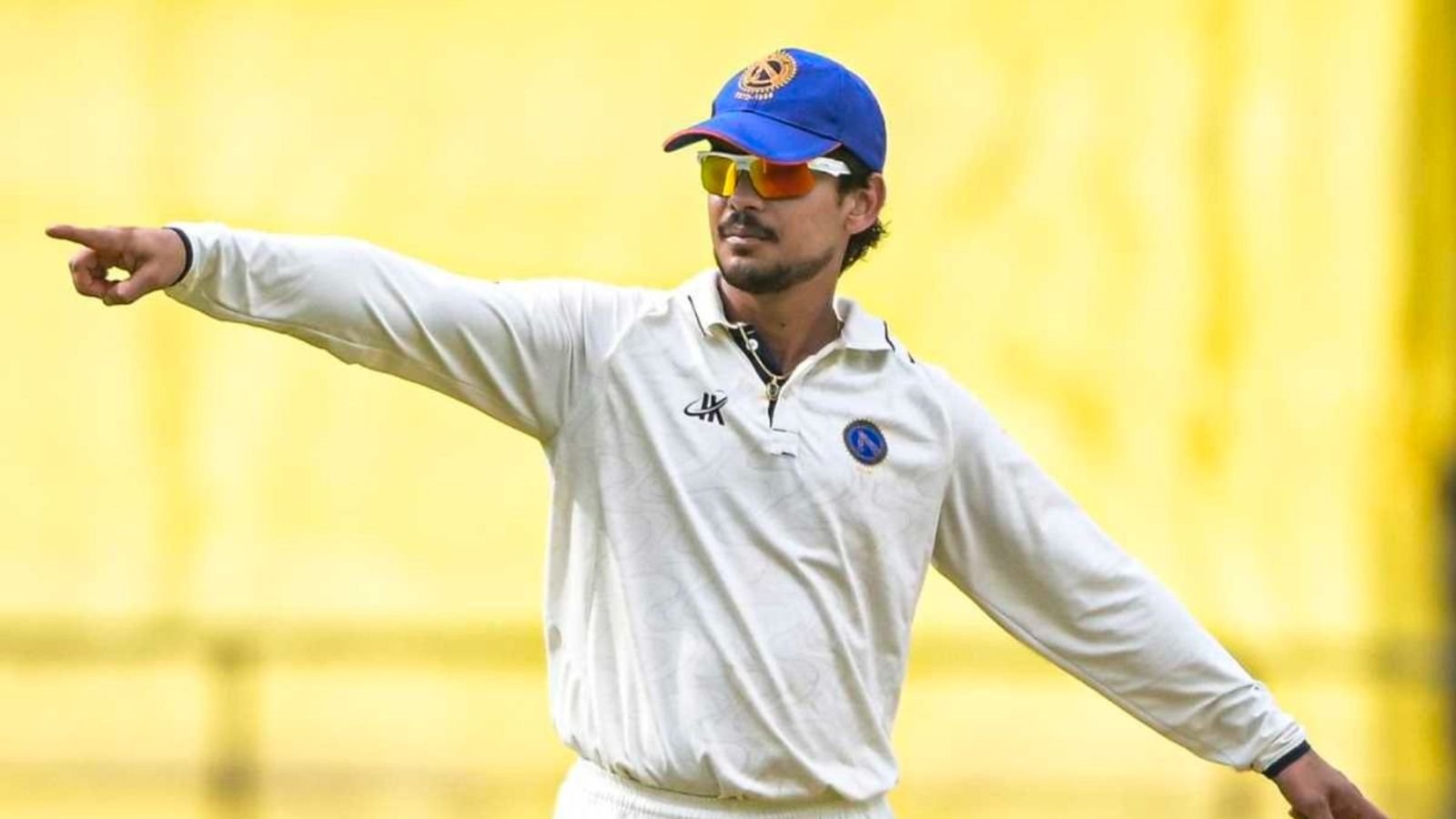
East Zone have taken firm control of their Duleep Trophy 2026 clash against North East Zone after turning a strong first-innings total of 467 into an overwhelming advantage with the ball. Led by captain Ishan Kishan, East Zone bowled North East Zone out for only 111 before enforcing the follow-on.
The collapse was driven by 29-year-old pacer Abhijit Sarkar, who finished with outstanding figures of 5/20 from 9.5 overs. Even more remarkably, four of his five wickets came from his final seven deliveries, turning an already difficult innings into a complete batting collapse.
North East Zone had been 72/2 and appeared capable of putting together a competitive response. Instead, they lost their final eight wickets for only 39 runs. After being dismissed for 111, North East Zone began their second innings and reached 7/0 at stumps, but they still require another 349 runs to avoid an innings defeat.
East Zone’s bowling attack changes the game
The defining feature of the match has been the contrast between North East Zone’s first phase with the bat and what happened after 72/2. Once East Zone found a way through the middle order, wickets began arriving rapidly.
In four-day domestic cricket, collapses of this nature can completely alter the tactical balance. A team that loses eight wickets for 39 runs does not merely surrender runs; it also loses time, momentum and the opportunity to put pressure back on the opposition.
East Zone exploited that weakness ruthlessly. Their bowlers maintained enough pressure to prevent North East Zone from rebuilding after the initial breakthroughs.
Abhijit Sarkar’s five-wicket haul becomes the headline
Abhijit Sarkar was the standout performer with the ball. The 29-year-old pacer claimed five wickets for 20 runs in just 9.5 overs, producing one of the most influential spells of the innings.
His finish was particularly dramatic. Sarkar took four of his five wickets in his final seven deliveries, effectively completing North East Zone’s collapse almost single-handedly at the end of the innings.
That sequence is significant because late-innings wickets are often the most damaging. Once a batting side has only a few wickets remaining, another dismissal can expose the tail and create the possibility of a rapid finish.
Sarkar’s spell demonstrated precisely that pattern. What began as a competitive innings at 72/2 ended with North East Zone all out for 111.
North East Zone lose eight wickets for 39 runs
The most important statistic from North East Zone’s innings is not their final score alone. It is the manner in which they reached it.
North East Zone moved to 72/2 before losing their final eight wickets for only 39 runs. That means the side was unable to convert a relatively stable position into a substantial first-innings total.
Only five North East Zone batters managed to reach double figures, while opener Arpit Bhaterwara was their top scorer with 32.
The collapse highlights the importance of partnerships in first-class cricket. Once the established batters were separated, the remaining lineup could not withstand East Zone’s sustained pressure.
East Zone’s 467 provided the perfect platform
East Zone had already done the hard work with the bat before their bowlers took over. They posted 467 runs in the first innings, giving themselves a huge cushion against North East Zone.
Shahbaz Ahmed was the major contributor, producing a remarkable 167 from 244 balls. His innings included 17 fours and four sixes, combining patience with controlled aggression.
Sudip Kumar Gharami had also played a major role on the opening day, scoring 146 and helping East Zone build a commanding total.
When East Zone resumed Day 2 at 355/6, they added another 112 runs before being dismissed for 467. Anukul Roy contributed 37, while Mohammed Shami added 11.
The batting performance gave East Zone exactly what a team wants in a long-format domestic match: enough runs to allow the bowlers to attack aggressively without worrying about conceding a small first-innings lead.
Shahbaz Ahmed’s 167 was crucial to the first innings
Shahbaz Ahmed’s 167 was arguably the foundation of East Zone’s dominance. His innings lasted 244 deliveries and included 17 boundaries and four sixes, showing how he combined endurance with the ability to score when opportunities appeared.
His performance also helped East Zone maintain pressure after Sudip Kumar Gharami’s 146 had already given the innings considerable momentum.
In a first-class match, two major individual scores in the same innings can be extremely difficult for the opposition to overcome. North East Zone were eventually faced with a total of 467, leaving very little margin for error when their own innings began.
East Zone’s bowlers share the workload
Although Sarkar’s five-wicket haul attracted the most attention, East Zone’s bowling effort was not dependent on one player alone.
Shahbaz Ahmed added three wickets, while Mukesh Kumar and Anukul Roy claimed one each. East Zone used five bowlers during the innings.
Mohammed Shami was the only bowler in the group who failed to take a wicket, finishing with nine overs for 36 runs. Even without a wicket, his presence added another experienced option to the attack.
The variety in the bowling attack is important because it allows the captain to change the angle and style of pressure. Fast bowling can challenge the batters with movement and pace, while spin can become increasingly useful as an innings develops.
Why the follow-on is such a major advantage
After dismissing North East Zone for 111, East Zone chose to enforce the follow-on. That decision reflects the size of their first-innings advantage.
East Zone’s 467 meant they had a lead of 356 runs. Instead of batting again immediately, they sent North East Zone back to the crease.
The strategic benefit is straightforward: East Zone can attempt to take all 20 wickets without spending additional time batting. If North East Zone collapse again, the match could finish with an innings victory.
For North East Zone, the follow-on creates a completely different challenge. They now have to bat again while already carrying the psychological pressure of an enormous first-innings deficit.
North East Zone’s second innings begins quietly
Despite the difficult position, North East Zone managed to reach 7/0 in their second innings. That unbeaten start provides at least a small opportunity to rebuild.
However, the numbers remain heavily against them. They still need another 349 runs to avoid an innings defeat, meaning their batters must produce a vastly different performance from the first innings.
The key will be building long partnerships. A few boundaries will not be enough. North East Zone need batters to spend significant time at the crease and force East Zone’s bowlers to work for every wicket.
What North East Zone must change
The first innings showed that North East Zone’s biggest weakness was their inability to stop the collapse once wickets began falling.
The second innings therefore requires a more disciplined approach. Batters must avoid gifting wickets after getting starts and should focus on rotating the strike while waiting for scoring opportunities.
The psychological challenge may be even bigger than the technical one. When a team has already lost eight wickets for 39 runs, the next innings can become a test of concentration and confidence.
North East Zone’s best route back into the contest is to forget the first innings and build the second innings partnership by partnership.
East Zone’s route to an innings victory
East Zone now have a very clear objective. Their bowlers need to maintain pressure and avoid allowing North East Zone to establish long partnerships.
If the hosts lose several early wickets, East Zone could move quickly towards an innings victory. If North East Zone’s top order survives for a long period, however, the match could be extended considerably.
The important point is that East Zone have already created a huge safety margin. They do not need to take unnecessary risks. Their bowling attack can remain patient and wait for opportunities.
Match situation at a glance
| Match factor | East Zone | North East Zone |
|---|---|---|
| First innings | 467 all out | 111 all out |
| First-innings lead | 356 runs | 356-run deficit |
| Second innings | Follow-on enforced | 7/0 |
| Key bowler | Abhijit Sarkar 5/20 | — |
| Other bowling highlights | Shahbaz Ahmed 3 wickets | — |
| Top first-innings batter | Shahbaz Ahmed 167 | Arpit Bhaterwara 32 |
The bigger lesson from the Duleep Trophy contest
This match demonstrates why domestic first-class cricket remains such an important testing ground for players looking to progress to the highest level.
Performances such as Sarkar’s five-wicket haul provide selectors with evidence of a bowler’s ability to exploit pressure situations. Meanwhile, Shahbaz’s 167 shows how a substantial batting contribution can shape an entire match.
For younger players in particular, matches like this offer a chance to demonstrate consistency against strong domestic opposition. One spectacular spell can attract attention, but sustained performances across multiple games are ultimately what establish a player’s credentials.
Prediction: East Zone are firmly in the driver’s seat
Based on the match position provided, East Zone are overwhelmingly better placed to secure victory. They have a 356-run first-innings lead, have already enforced the follow-on and have North East Zone at 7/0 in their second innings.
The biggest uncertainty is how long North East Zone can resist. A strong partnership could delay the result, while another early collapse could bring an innings victory into view.
Weather and the remaining playing time can also influence the outcome, but from a purely cricketing perspective, East Zone have created almost every advantage available to them.
Conclusion
East Zone have turned the Duleep Trophy contest into a one-sided battle through a combination of powerful batting and ruthless bowling. Their 467 first-innings total was followed by North East Zone’s collapse for 111, with the visitors losing eight wickets for only 39 runs.
Abhijit Sarkar was the standout performer, taking 5/20 and claiming four wickets in his final seven deliveries. Shahbaz Ahmed also played a central role, contributing 167 with the bat and three wickets with the ball.
With the follow-on enforced and North East Zone still 349 runs away from avoiding an innings defeat, East Zone are now firmly in control. The next phase will reveal whether North East Zone can produce the long partnerships required to extend the contest or whether Sarkar and his teammates can finish the job quickly.
For breaking news and live news updates, like us on Facebook or follow us on Twitter and Instagram. Read more on Latest Cricket on thefoxdaily.com.






COMMENTS 0