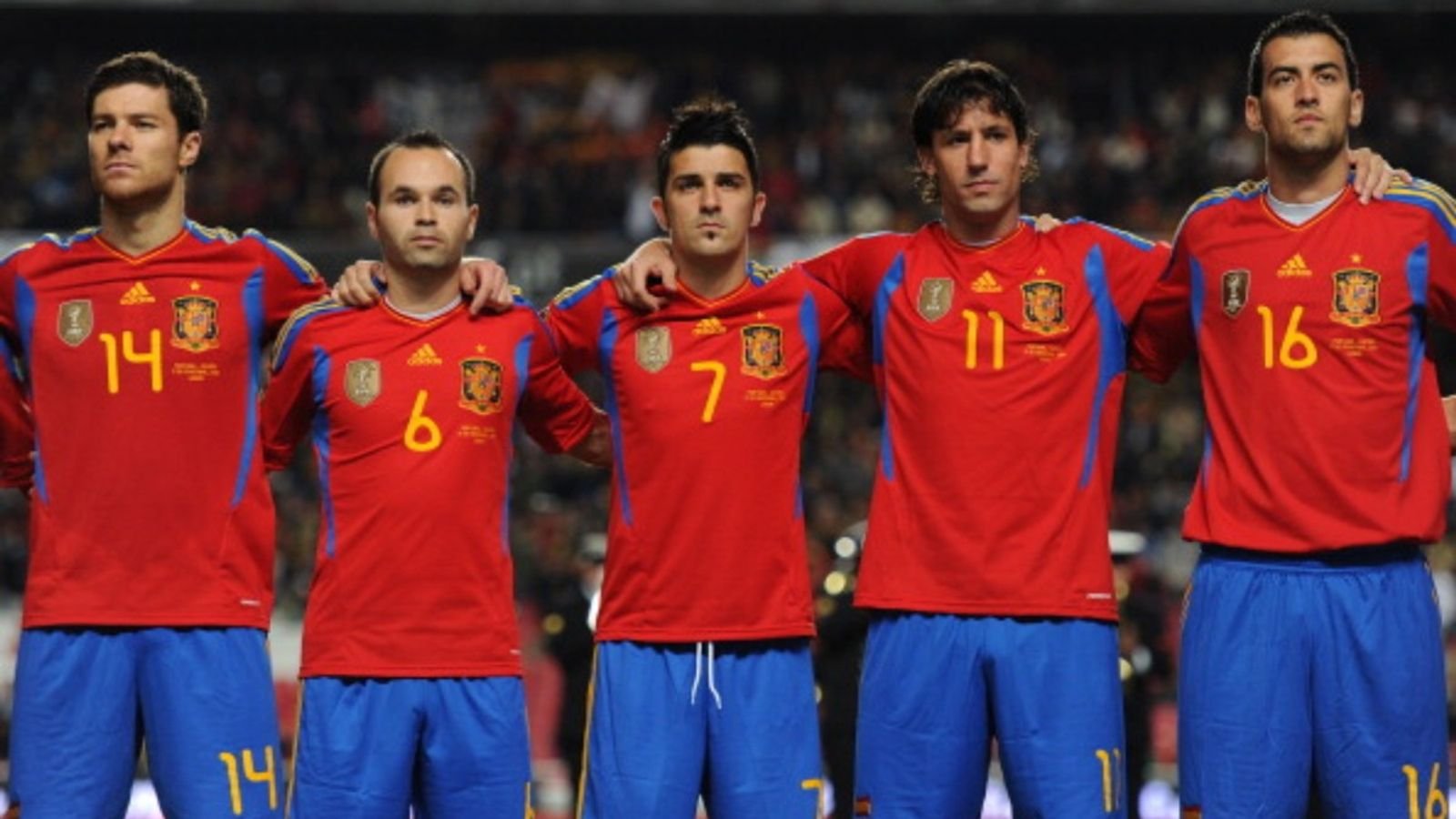
Just days before the FIFA World Cup 2026 Final, an unexpected story emerged that has captured the attention of football fans worldwide. Joan Capdevila, a key member of Spain’s historic 2010 World Cup-winning squad, revealed that he was denied authorization to enter the United States and may miss Spain’s highly anticipated showdown against argentina.
The former Spanish international publicly appealed for help after learning that his Electronic System for Travel Authorization (ESTA) application had been rejected. The timing could hardly be worse. Spain is preparing for one of the biggest matches in its football history, while Capdevila had planned to attend alongside his children and reunite with former teammates from the nation’s greatest football generation.
While the immediate focus is on whether Capdevila will ultimately be allowed to travel, the situation raises broader questions about international travel regulations, sporting events, athlete legacies, and the logistical challenges facing global tournaments in an increasingly interconnected world.
Who Is Joan Capdevila and Why Does His Story Matter?
For younger football fans, Joan Capdevila may not be as instantly recognizable as players like Xavi, Andres Iniesta, or David Villa. However, his contribution to Spain’s greatest football era was significant.
Capdevila was the first-choice left-back during Spain’s victorious 2010 FIFA World Cup campaign in South Africa. At a time when Spain dominated international football with its possession-based style, he provided balance, defensive stability, and attacking support from the flank.
His role was particularly important because Spain’s tactical system depended on full-backs creating width while midfield stars controlled possession. Throughout the tournament, Capdevila delivered consistent performances that helped Spain concede only two goals en route to lifting the trophy.
For Spanish football supporters, the 2010 team represents a golden generation that transformed the nation’s football identity. Any reunion involving those players carries enormous emotional significance.
The FIFA World Cup 2026 Final Context
The controversy arrives at a fascinating moment in football history.
Spain enters the FIFA World Cup 2026 final seeking its second world title. Argentina, led by Lionel Messi, is attempting to achieve something only two nations have previously managed—successfully defending a World Cup crown.
The stakes extend far beyond a single trophy.
- Spain could secure its second World Cup title.
- Argentina could join one of football’s most exclusive clubs.
- Lionel Messi could further strengthen his claim as the greatest player in football history.
- A new generation of Spanish stars could establish their own legacy.
Against this backdrop, the absence of a member of Spain’s legendary 2010 squad has become a notable talking point among supporters and media outlets alike.
What Is ESTA and Why Can Applications Be Denied?
The Electronic System for Travel Authorization, commonly known as ESTA, allows eligible travelers from participating countries to enter the United States without obtaining a traditional visa for short visits.
Many travelers assume ESTA approval is automatic, but that is not the case.
Applications undergo security screening and can be denied for a variety of reasons. Importantly, a denial does not automatically imply wrongdoing by the applicant.
Potential factors can include:
- Administrative issues.
- Incomplete information.
- Travel history considerations.
- Eligibility concerns under visa waiver regulations.
- Identity verification complications.
- Technical or procedural issues.
In many cases, travelers whose ESTA requests are denied may still be able to apply for a traditional visa through the appropriate channels.
Because immigration decisions involve privacy protections, governments typically do not publicly disclose detailed reasons behind individual cases.
The Growing Importance of Travel Logistics in Modern Football
Football has become one of the most globalized industries in the world.
Players, coaches, journalists, former stars, sponsors, and supporters regularly cross international borders to participate in tournaments and events. While fans often focus on performances on the pitch, major competitions rely on extensive travel coordination behind the scenes.
The Capdevila situation serves as a reminder that even globally recognized sports figures must comply with immigration procedures.
As tournaments expand across multiple countries and continents, travel documentation has become increasingly important.
The 2026 FIFA World Cup itself represents the largest tournament in football history, featuring host venues across the United States, Canada, and Mexico. Such a massive event inevitably places additional attention on border management, travel systems, and visitor processing.
Spain’s Golden Generation and Its Enduring Legacy
One reason Capdevila’s story resonates so strongly is the lasting impact of Spain’s 2008–2012 era.
During this period, Spain achieved a level of international dominance rarely seen in football.
| Tournament | Result |
|---|---|
| UEFA Euro 2008 | Champions |
| FIFA World Cup 2010 | Champions |
| UEFA Euro 2012 | Champions |
This remarkable achievement established Spain as one of the greatest international teams ever assembled.
Players such as Iker Casillas, Xavi, Iniesta, Sergio Ramos, Carles Puyol, David Villa, Gerard Pique, and Capdevila became symbols of an era that changed how football was played and understood globally.
The possibility of former players gathering to support a new Spanish team attempting to win another World Cup carries enormous symbolic value.
Why the Story Has Generated Such Strong Public Interest
Not every immigration issue becomes an international headline. This one has attracted attention for several reasons.
1. Timing
The issue emerged immediately before the biggest match of the tournament, ensuring maximum visibility.
2. Emotional Connection
Capdevila emphasized that he intended to travel with his children. That personal dimension has made the story more relatable for many supporters.
3. Historical Significance
As a World Cup winner, Capdevila represents one of the most important chapters in Spanish football history.
4. Public Appeal
His decision to make a direct appeal on social media transformed what could have been a private administrative matter into a widely discussed international story.
How Social Media Is Changing Sports Narratives
One of the most interesting aspects of this story is how quickly it spread.
In previous decades, situations involving travel complications would likely have remained private until resolved. Today, former athletes can instantly communicate with millions of people through platforms such as X.
This direct access changes the dynamics of sports news.
Fans no longer rely solely on official statements or traditional media reports. Instead, athletes can tell their stories in real time, creating immediate public engagement.
Capdevila’s appeal demonstrates the growing influence of social media in shaping sports conversations, particularly during major global events.
What This Means for FIFA World Cup 2026
The incident also highlights broader challenges facing mega sporting events.
As international tournaments become larger and more complex, organizers must balance accessibility with security requirements.
The FIFA World Cup 2026 is expected to welcome millions of visitors from around the globe. Managing that influx while maintaining immigration standards is a significant logistical challenge.
Although Capdevila’s case is an individual matter, it inevitably sparks discussion about how major sporting events interact with border policies and international travel systems.
Argentina vs Spain: A Final Rich in Historical Significance
The controversy surrounding Capdevila should not overshadow the extraordinary significance of the final itself.
Spain and Argentina arrive with compelling narratives.
- Spain seeks to reclaim football’s ultimate prize after a 16-year wait.
- Argentina aims to become back-to-back world champions.
- Lionel Messi continues to pursue additional milestones in an already unmatched career.
- A new generation of Spanish talent is attempting to build its own dynasty.
The match represents a collision between football history and football’s future.
That is precisely why former champions like Capdevila hoped to be present—to witness another potentially historic chapter unfold.
An Overlooked Angle: The Emotional Value of Former Champions
One aspect often missing from discussions is the role former players play in a nation’s sporting culture.
World Cup winners do more than collect medals. They become custodians of a country’s football identity.
When former champions attend major matches, they provide continuity between generations. Their presence reminds supporters where their football journey began and how current successes connect to past achievements.
For Spain, the 2010 squad remains the benchmark against which all future national teams are measured.
That is why Capdevila’s potential absence carries symbolic weight beyond a simple travel issue.
Could This Lead to Broader Discussions About Sporting Event Access?
Major tournaments frequently trigger conversations about travel, visas, and accessibility.
As football continues to expand globally, governing bodies may face increasing pressure to improve coordination with host nations regarding travel procedures for accredited guests, former players, officials, and supporters.
While security and immigration controls remain essential, large sporting events often expose areas where administrative processes can become more streamlined.
The Capdevila situation may ultimately become another example cited in future discussions about balancing security requirements with the unique demands of international sports.
What Happens Next?
The immediate question remains whether Joan Capdevila will be able to secure authorization to travel before the FIFA World Cup 2026 final.
Immigration matters can sometimes be resolved quickly, while others require additional review. Until an official outcome is known, uncertainty remains.
Regardless of the final decision, the story has already become one of the most unexpected off-field narratives of the tournament.
It serves as a reminder that even football legends can encounter challenges far removed from the pitch.
Conclusion: More Than a Travel Story
Joan Capdevila’s denied US entry request is not simply a travel complication involving a retired footballer. It sits at the intersection of sports, international mobility, technology, and global events.
For Spain, it concerns a member of the team that delivered the nation’s greatest football achievement. For fans, it is an emotional story about family, legacy, and the desire to witness history. For organizers and policymakers, it highlights the growing importance of efficient travel systems in an era of mega sporting events.
Whether Capdevila ultimately reaches the United States or not, his situation has already sparked a broader conversation about the realities of international travel in modern sports. And as Spain prepares to battle Argentina for football’s biggest prize, the story serves as a reminder that sometimes the most compelling narratives unfold away from the stadium lights.
For breaking news and live news updates, like us on Facebook or follow us on Twitter and Instagram. Read more on Latest Sports on thefoxdaily.com.






COMMENTS 0