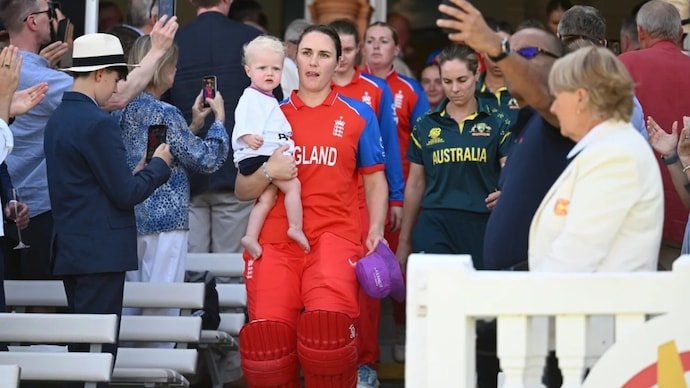
Sport often produces unforgettable moments through extraordinary performances, dramatic finishes, and record-breaking achievements. However, some of the most powerful memories transcend the scoreboard entirely. Ahead of the ICC Women’s T20 World Cup 2026 final at Lord’s, England captain Nat Sciver-Brunt delivered one such moment when she walked onto the field carrying her infant son, Theo, creating an image that instantly resonated with cricket fans around the world.
The emotional scene unfolded before England’s championship clash against Australia, with Sciver-Brunt holding Theo during the national anthem while a packed Lord’s crowd responded with warm applause. While the final itself represented the pinnacle of international women’s cricket, the pre-match moment highlighted something equally important: the growing acceptance of motherhood within elite sport.
For many observers, the image represented far more than a family celebration. It became a symbol of how women’s cricket is evolving, creating an environment where athletes no longer feel forced to choose between professional ambitions and family life.
Why Nat Sciver-Brunt’s Walk With Theo Became a Global Talking Point
The significance of the moment extended beyond the boundaries of cricket. Historically, female athletes have often faced difficult decisions regarding pregnancy, maternity leave, and career continuity. In many sports, motherhood was once viewed as a potential obstacle to elite performance.
Sciver-Brunt’s appearance with Theo challenged those outdated assumptions in front of one of the largest audiences in women’s cricket history.
The image sent several powerful messages:
- Motherhood and elite sport can coexist successfully.
- Professional female athletes should not have to sacrifice family aspirations.
- Modern sports organizations are becoming more supportive of parents.
- Women’s cricket is embracing inclusivity and long-term player welfare.
- Athletes can excel both personally and professionally.
In a sporting landscape increasingly focused on athlete wellbeing, the moment felt both symbolic and transformative.
The Journey of Nat Sciver-Brunt During Women’s T20 World Cup 2026
The emotional pre-match scene carried even greater significance because of the challenges Sciver-Brunt had overcome during the tournament.
England’s captain entered the competition as one of the most important players in the squad but faced a major setback when a calf injury forced her to miss three group-stage matches.
For many teams, losing a world-class all-rounder during a World Cup campaign could derail championship ambitions. However, Sciver-Brunt returned at exactly the right moment.
Her comeback showcased both resilience and leadership.
| Tournament Phase | Key Development |
|---|---|
| Group Stage | Missed three matches due to calf injury |
| Semi-final | Returned to the England lineup |
| Against South Africa | Scored 75 runs from 47 balls |
| Partnership | Shared a record 133-run stand with Heather Knight |
| Final | Led England at Lord’s against Australia |
Her semi-final performance demonstrated why she remains one of the most influential figures in women’s cricket. The match-winning innings helped propel England into their first Women’s T20 World Cup final since 2018.
Theo’s Appearance Highlighted a Changing Culture in Women’s Sport
The presence of baby Theo during the World Cup final reflected a broader transformation taking place across global sport.
In previous generations, athletes often returned from maternity leave without structured support systems. Today, governing bodies and teams increasingly recognize that helping players balance family life and professional responsibilities benefits both individuals and the sport itself.
Sciver-Brunt’s moment at Lord’s offered a visible example of this progress.
Rather than treating parenthood as a challenge to overcome, modern sporting institutions are increasingly viewing it as a natural part of an athlete’s life journey.
This cultural shift has helped create pathways for female athletes to continue competing at the highest levels after becoming parents.
The Role of Katherine Sciver-Brunt in the Special Occasion
The moment carried additional emotional significance because former England fast bowler Katherine Sciver-Brunt was present at Lord’s to witness it.
As one of England’s most celebrated cricketers, Katherine understands the pressures, sacrifices, and rewards associated with elite international cricket.
Her presence alongside Theo transformed the occasion into a family celebration as well as a sporting milestone.
For many supporters, seeing one of England’s greatest cricketing families together on the sport’s biggest stage added another layer of meaning to an already memorable day.
ICC’s New Post-Pregnancy Policy Marks a Major Turning Point
The timing of the moment was particularly significant because it arrived shortly after the International Cricket Council introduced new post-pregnancy guidelines designed to support female cricketers returning to professional competition.
The initiative represents one of the most important player welfare developments in the history of women’s cricket.
The framework aims to help athletes safely navigate their return following childbirth while encouraging cricket boards around the world to implement supportive maternity policies.
The ICC’s “6 Rs” Return-to-Play Framework
- Ready – Preparing athletes for recovery and return.
- Review – Ongoing medical assessments.
- Restore – Supporting physical recovery.
- Recondition – Rebuilding strength and fitness.
- Return – Gradual reintroduction to competition.
- Refine – Long-term performance management.
The guidelines also encourage practical support measures including childcare assistance, mental health resources, travel support, and baby-friendly facilities.
These initiatives represent a major step toward making cricket one of the most family-inclusive sports in the world.
How Women’s Cricket Has Evolved Over the Past Decade
The image of Sciver-Brunt and Theo would have been almost unimaginable in many sporting environments just a decade ago.
Women’s cricket has experienced rapid growth in professionalism, visibility, and commercial support during recent years.
Several developments have accelerated this progress:
- Expanded international tournaments.
- Professional domestic leagues.
- Increased television coverage.
- Greater sponsorship investment.
- Improved player welfare programs.
- Enhanced maternity and family support initiatives.
As the sport continues to grow, moments like this demonstrate that progress is not measured solely through attendance figures or broadcast numbers but also through the quality of support available to players.
Why Athlete Motherhood Matters Beyond Cricket
The significance of Sciver-Brunt’s appearance extends well beyond the cricket community.
Across multiple sports, female athletes continue to advocate for improved maternity protections and workplace flexibility.
High-profile examples help normalize conversations around parenthood in professional sport and challenge long-standing stereotypes.
For young athletes watching around the world, the message is powerful:
A successful sporting career and a fulfilling family life do not have to be mutually exclusive.
This visibility can inspire future generations while encouraging sports organizations to continue investing in supportive policies.
England’s Pursuit of World Cup Glory Added Extra Meaning
The emotional pre-match moment took place against the backdrop of one of the most important matches in England’s recent cricket history.
England entered the final unbeaten throughout the tournament and were chasing their first Women’s T20 World Cup title since 2009.
Meanwhile, Australia sought to further extend their dominance with another world championship.
The stakes could hardly have been higher.
Yet despite the pressure of a global final, Sciver-Brunt’s focus on family before the match highlighted an increasingly important lesson in elite sport: athletes perform best when they are supported as complete individuals rather than simply competitors.
A Unique Insight: The Most Powerful Legacy May Be Cultural, Not Sporting
World Cup finals are often remembered for centuries through statistics, trophies, and match-winning performances.
However, some moments leave a deeper cultural impact.
The image of Sciver-Brunt carrying Theo onto the field has the potential to become one of those lasting symbols.
Years from now, fans may remember the final scoreline, but they may also remember the image that demonstrated how far women’s cricket had progressed.
It represented an era in which family responsibilities no longer had to conflict with sporting ambition.
That message could ultimately prove as influential as any batting record or championship victory.
What This Means for the Future of Women’s Cricket
The future of women’s cricket increasingly depends on creating environments where athletes can thrive throughout every stage of life.
As governing bodies continue improving maternity policies and player support systems, the sport is positioning itself as a leader in athlete welfare.
Future generations of players may benefit from:
- Stronger maternity protections.
- Expanded childcare assistance.
- More flexible training structures.
- Enhanced medical support.
- Greater career longevity.
- Improved work-life balance.
Moments like Sciver-Brunt’s appearance with Theo help accelerate those conversations and demonstrate why such initiatives matter.
Conclusion
Nat Sciver-Brunt’s walk onto the Lord’s field carrying her infant son Theo before the ICC Women’s T20 World Cup 2026 final was far more than a touching family moment. It symbolized a changing sporting landscape in which motherhood and elite athletic performance are no longer viewed as competing priorities.
Coming after her inspiring return from injury and against the backdrop of cricket’s biggest women’s match, the image captured the progress the sport has made in supporting female athletes both on and off the field. Combined with the ICC’s new post-pregnancy guidelines, it highlighted a future where players can pursue international success without sacrificing family aspirations.
Regardless of the final result at Lord’s, the sight of Sciver-Brunt and Theo together on cricket’s grandest stage will remain one of the defining images of Women’s T20 World Cup 2026—a powerful reminder that sporting excellence and parenthood can thrive side by side.
For breaking news and live news updates, like us on Facebook or follow us on Twitter and Instagram. Read more on Latest Sports on thefoxdaily.com.






COMMENTS 0