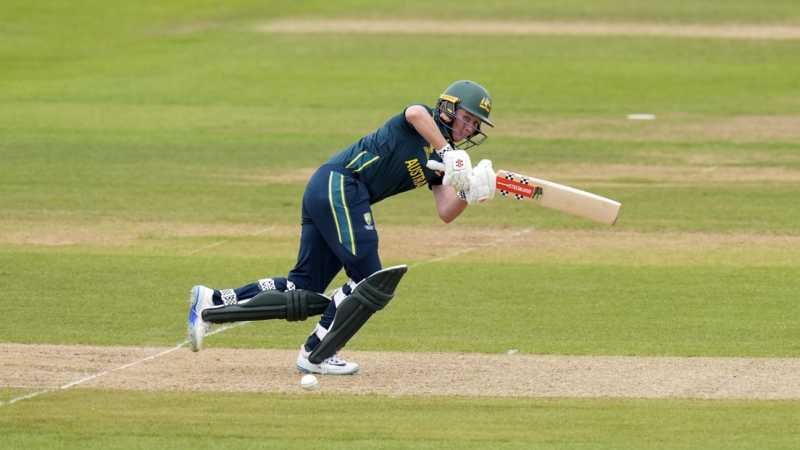
Australia continued their dominant campaign in the Womenâs T20 World Cup 2026 by winning the toss and electing to bat first against Pakistan at Headingley. With momentum firmly on their side and an unchanged playing XI, the defending powerhouse looked to extend their unbeaten run in the group stage and strengthen their position at the top of the standings.
For Pakistan, however, the match carried a very different context. Already eliminated from semifinal contention after a winless run, Fatima Sana’s side entered the contest with only pride and experience to play for. The inclusion of senior pacer Diana Baig and off-spinner Rameen Shamim signaled an attempt to rebuild confidence and give opportunities to experienced campaigners in a tough tournament.
In many ways, this fixture highlighted the widening gap between the tournament favorites and a side still searching for consistency at the highest level of women’s T20 cricket.
Match Overview: Australia vs Pakistan, Women’s T20 World Cup 2026
| Fixture | Australia vs Pakistan |
|---|---|
| Tournament | Women’s T20 World Cup 2026 |
| Venue | Headingley |
| Toss | Australia won and chose to bat |
| Australia XI | Unchanged |
| Pakistan XI Changes | Diana Baig, Rameen Shamim in |
Why Australia’s Unchanged XI Sends a Strong Message
Australia’s decision to stick with an unchanged playing XI is not just about stability — it is a statement of dominance. In tournament cricket, teams often rotate players to manage workload or experiment with combinations. Australia, however, have no need for such adjustments.
Sophie Molineux confirmed that Beth Mooney, who had earlier retired hurt with back soreness against the Netherlands, had recovered fully and was fit to play. That assurance allowed Australia to maintain their balance without any forced structural changes.
From a strategic point of view, consistency in selection often reflects confidence in a winning formula. Australia’s core group — featuring Ellyse Perry, Ashleigh Gardner, and Alana King — has delivered match-winning performances throughout the tournament.
This stability is one of the key reasons Australia remain among the strongest contenders for the title.
Beth Mooney Fitness Boost Strengthens Top Order Stability
One of the major talking points heading into the match was the fitness of Beth Mooney. The experienced wicketkeeper-batter had retired hurt in the previous game, raising concerns about Australia’s top-order depth.
Her availability not only strengthens the batting lineup but also removes the need for tactical reshuffling, such as using Georgia Voll as a backup wicketkeeper.
Mooney’s role in Australia’s batting structure is crucial. She provides stability at the top, allowing aggressive players like Ellyse Perry and Ashleigh Gardner to play more freely in the middle overs.
In high-pressure World Cup matches, such balance between caution and aggression often defines championship-winning teams.
Pakistan’s Two Changes Reflect Tournament Reality
Pakistan’s decision to bring in Diana Baig and Rameen Shamim reflects both tactical intent and tournament circumstances. With elimination already confirmed, the focus shifts from qualification pressure to team rebuilding and squad assessment.
Diana Baig’s return adds experience and control to the pace attack. With 57 T20 internationals to her name, she remains one of Pakistan’s most reliable seam options.
Rameen Shamim’s inclusion strengthens the spin department, offering control in the middle overs — a phase where Pakistan have often struggled in this tournament.
However, the absence of Tuba Hassan and Tasmia Rubab suggests Pakistan are experimenting with combinations rather than sticking to a settled XI.
Pakistan Captain Fatima Sana on Team Strategy
Pakistan captain Fatima Sana acknowledged the difficulty of the contest but emphasized the importance of learning and giving opportunities to senior players.
Her approach reflects a broader developmental mindset rather than short-term results.
In modern ICC tournaments, teams that exit early often use remaining matches to test depth, evaluate bench strength, and prepare for future cycles. Pakistan appear to be following that model in the final phase of their campaign.
Australia’s Tactical Advantage at Headingley
The decision to bat first at Headingley is consistent with Australia’s aggressive match strategy. The surface is traditionally known to offer early assistance to seamers, but becomes more batting-friendly under lights.
By choosing to set a target, Australia aim to apply scoreboard pressure on a Pakistan side that has already struggled in run chases throughout the tournament.
Key advantages for Australia in this approach include:
- Using top-order depth to build a strong platform
- Exploiting Pakistan’s inconsistent bowling under pressure
- Allowing spin options like Gardner and King to attack later in the innings
- Forcing Pakistan into a high-risk chase scenario
This kind of proactive decision-making is a hallmark of elite white-ball teams.
Pakistan’s Challenge: Containing Australia’s Power Batting
Facing Australia’s batting lineup is one of the toughest assignments in Womenâs Cricket. Even without explosive starts, the depth of their order ensures consistent scoring throughout the innings.
Players like Ellyse Perry bring classical timing and control, while Ashleigh Gardner adds explosive hitting in the middle overs. Combined with Mooney’s stability, Australia can shift gears seamlessly depending on match conditions.
For Pakistan, the key challenge lies in early breakthroughs. Without early wickets, Australia’s middle order can quickly take the game away.
Key Matchups to Watch
| Battle | Why It Matters |
|---|---|
| Mooney vs Pakistan new ball attack | Sets tone for Australia’s innings |
| Gardner vs spin (Nashra Sandhu, Sadia Iqbal) | Middle-overs momentum shift |
| Alana King vs Pakistan middle order | Control through leg-spin variation |
| Baig vs Australia top order | Pakistan’s best chance for breakthroughs |
Why This Match Still Matters Despite Pakistan’s Exit
Even though Pakistan are out of semifinal contention, this match carries developmental importance. World Cups often expose weaknesses, but they also provide a platform for rebuilding.
For Pakistan, performing competitively against a dominant side like Australia can restore confidence and highlight areas of improvement ahead of future ICC events.
For Australia, every match is about maintaining rhythm, refining combinations, and building momentum for knockout stages. Even slight dips in performance can be costly later in the tournament.
Australia’s Road Ahead in the Tournament
With their unbeaten run intact, Australia remain strong favorites for another deep World Cup campaign. Their consistency in selection, depth in all departments, and experience in pressure situations make them the team to beat.
However, tournaments are rarely decided on reputation alone. Maintaining form through group stages and peaking at the right time will be crucial.
A dominant performance against Pakistan would further reinforce their status as title contenders.
Conclusion: A Clash Between Stability and Rebuilding
The Women’s T20 World Cup 2026 clash between Australia and Pakistan at Headingley represents two very different phases of team development. Australia enter with confidence, continuity, and a settled XI built for championship success. Pakistan, meanwhile, are in a transition phase, focusing on experience, experimentation, and long-term rebuilding.
With Beth Mooney fit and Australia unchanged, the balance of power clearly leans toward the reigning giants. But for Pakistan, every over offers a chance to learn, adapt, and prepare for the future.
In tournament cricket, such matches often define not just results — but trajectories.
For breaking news and live news updates, like us on Facebook or follow us on Twitter and Instagram. Read more on Latest Sports on thefoxdaily.com.






COMMENTS 0