The Women’s T20 World Cup 2026 continues to produce high-pressure encounters, and New Zealand’s six-wicket victory over Scotland may prove to be one of the tournament’s defining moments. Facing a must-win situation to keep their semifinal aspirations alive, the defending champions found themselves under serious pressure before a remarkable recovery secured two invaluable points.
At Manchester’s Old Trafford, New Zealand overcame a spirited Scottish challenge, successfully chasing 132 after Scotland posted a competitive total of 131. While the scorecard may suggest a comfortable result, the contest was far more dramatic than the final margin indicates. Early wickets in both innings repeatedly shifted momentum, turning the match into a test of composure, experience, and tournament temperament.
The victory keeps the White Ferns firmly in contention for a place in the knockout stage while simultaneously ending Scotland’s hopes of progressing beyond the group phase.
Why This Match Was So Important
Entering the contest, New Zealand knew another defeat would severely damage their chances of defending the Women’s T20 World Cup title they captured in the previous edition. Scotland, meanwhile, were fighting to keep their slim qualification hopes alive and searching for one of the biggest wins in their cricketing history.
The result therefore carried significance beyond two points.
- New Zealand needed a win to remain in the semifinal race.
- Scotland needed a victory to stay mathematically alive.
- Net run rate implications could influence Group B standings.
- Momentum ahead of the final group-stage fixtures was crucial.
These factors created a knockout-like atmosphere despite the match being part of the group stage.
Darcey Carter Delivers a World Cup Statement
Scotland’s innings was built around a magnificent knock from Darcey Carter, whose 72 runs from 52 deliveries showcased maturity, shot selection, and the ability to perform under pressure.
Against an experienced New Zealand bowling attack featuring Amelia Kerr, Sophie Devine, and Lea Tahuhu, Carter demonstrated remarkable confidence. She rotated strike effectively, punished loose deliveries, and prevented Scotland from suffering a collapse after early pressure.
More importantly, her innings highlighted the continued growth of associate nations in Women’s Cricket. Performances like Carter’s demonstrate that the competitive gap between traditional powerhouses and emerging teams is steadily narrowing.
Scotland Missed Opportunities to Push Beyond 150
While Carter’s innings provided the foundation for Scotland’s total, the team struggled to capitalize fully on her efforts.
The partnership with Katherine Fraser added stability, but the scoring rate remained below what Scotland would have ideally wanted during the middle overs. Fraser’s patient seven from 17 deliveries helped preserve wickets but limited acceleration.
Later in the innings, Sarah Bryce contributed a useful 25, yet Scotland failed to produce the explosive finish often required in modern T20 cricket.
As a result, the final total of 131/6 felt competitive but perhaps 15 to 20 runs short of what they might have achieved with stronger support around Carter.
Amelia Kerr Leads from the Front Again
Great teams often rely on their leaders during difficult situations, and New Zealand captain Amelia Kerr once again delivered with the ball.
Her figures of 3/22 proved critical in preventing Scotland from building a larger total. Beyond the wickets themselves, Kerr controlled the middle overs and ensured Scotland never completely seized momentum.
The leg-spinning all-rounder has consistently demonstrated her value in major tournaments, and this performance reinforced why she remains one of the most influential players in world cricket.
| Top Performers | Performance |
|---|---|
| Darcey Carter (Scotland) | 72 runs off 52 balls |
| Amelia Kerr (New Zealand) | 3 wickets for 22 runs |
| Izzy Sharp (New Zealand) | 62 runs off 43 balls |
| Brooke Halliday (New Zealand) | 41* runs off 38 balls |
New Zealand’s Chase Begins in Disaster
If New Zealand expected a straightforward chase, Scotland quickly shattered those assumptions.
The White Ferns lost key wickets inside the powerplay, creating genuine concern among supporters. Captain Amelia Kerr departed cheaply, Isabella Gaze failed to establish herself, and star all-rounder Sophie Devine was dismissed for just one run.
At that stage, Scotland sensed a major upset.
The pressure shifted entirely onto New Zealand, exposing a middle order that suddenly found itself responsible for rescuing a campaign rather than merely chasing a modest target.
Izzy Sharp and Brooke Halliday Produce the Tournament-Saving Partnership
Every successful tournament campaign features one partnership that changes everything. For New Zealand, this could be the one.
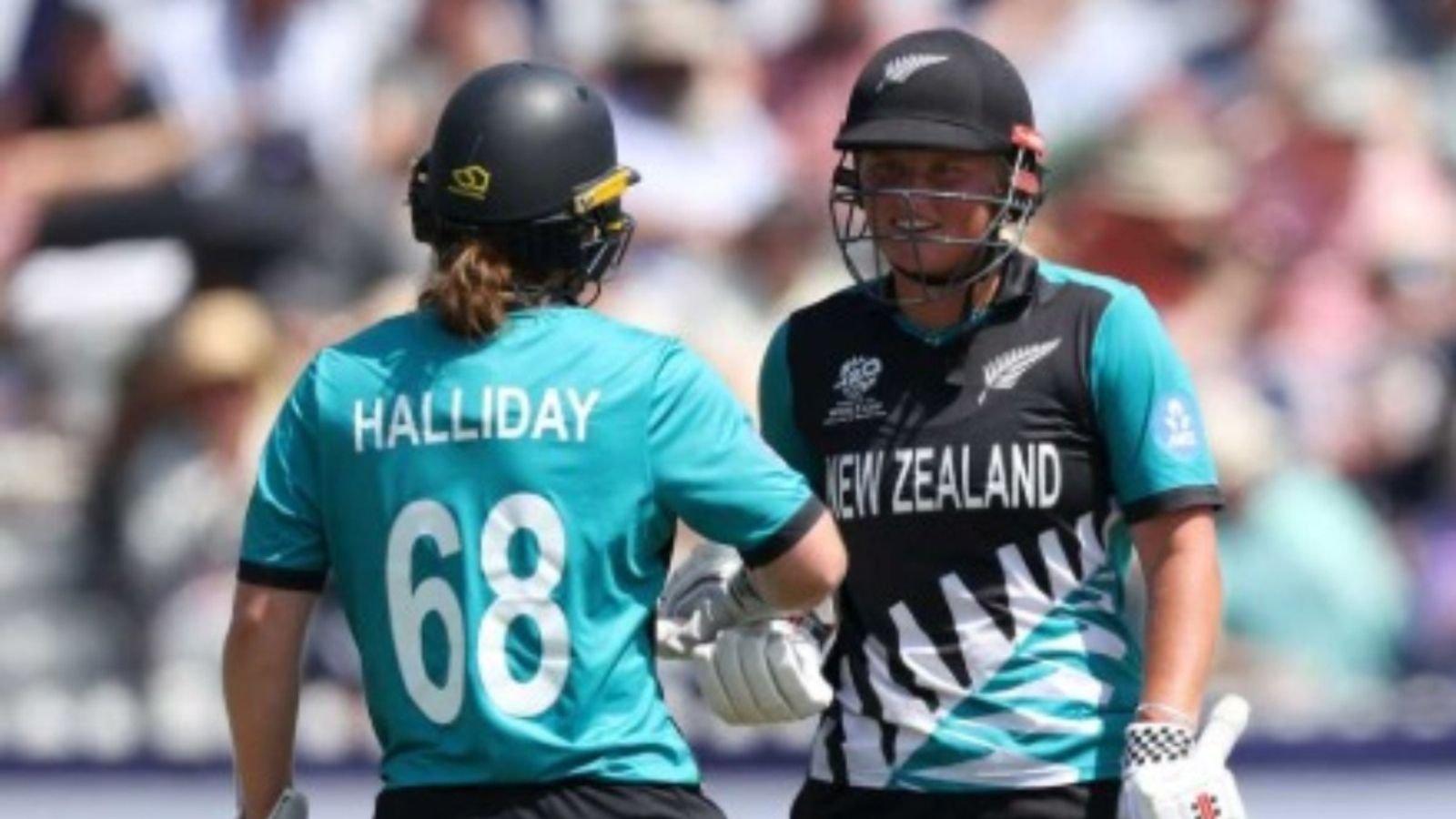
Izzy Sharp and Brooke Halliday combined for a remarkable 101-run stand that transformed a dangerous situation into a memorable victory.
Sharp played the aggressor’s role, scoring 62 from just 43 deliveries and putting Scotland’s bowlers under sustained pressure. Her innings balanced calculated risk with intelligent shot selection.
Halliday complemented her perfectly. Remaining unbeaten on 41, she anchored the chase, absorbed pressure, and ensured New Zealand never lost control after the partnership was established.
Their contrasting approaches created the ideal formula for a successful run chase.
The Hidden Importance of Halliday’s Unbeaten Knock
While Sharp’s half-century understandably attracted headlines, Halliday’s contribution deserves equal recognition.
T20 cricket often celebrates explosive batting, but successful chases frequently depend on calm decision-making and situational awareness.
Halliday understood exactly what the team required. Rather than forcing the pace unnecessarily, she managed the innings intelligently and ensured Scotland never regained momentum after the initial recovery.
Her unbeaten innings may ultimately be remembered as one of New Zealand’s most valuable contributions of the group stage.
Scotland Leave the Tournament with Valuable Lessons
Although Scotland’s elimination is undoubtedly disappointing, their campaign has also highlighted significant progress.
Competing against established Full Member nations remains one of the most effective ways for emerging teams to accelerate development. Matches like this provide invaluable experience that domestic cricket alone cannot replicate.
The performances of players such as Darcey Carter and Kathryn Bryce indicate that Scotland possesses a strong foundation for future tournaments.
The challenge moving forward will be converting competitive performances into victories against elite opposition.
How the Result Changes Group B
The victory lifts New Zealand to four points from four matches and keeps them firmly involved in the semifinal race.
However, qualification remains far from guaranteed.
Group B has emerged as one of the most competitive groups in the tournament, with multiple teams still battling for knockout positions. As a result, net run rate and other results could play decisive roles in determining the final standings.
New Zealand’s healthy net run rate may prove extremely valuable if qualification scenarios become complicated during the final round of matches.
What New Zealand Must Improve Before the Knockout Stage
While the victory was crucial, New Zealand’s performance also exposed areas requiring improvement.
- Top-order batting consistency remains a concern.
- Powerplay scoring needs greater stability.
- Early wickets continue to create unnecessary pressure.
- Finishing opportunities with the ball could be sharper.
If New Zealand reaches the semifinals, stronger opponents will be less forgiving of slow starts or batting collapses.
The positive news is that the team demonstrated resilience, a quality often associated with championship-winning sides.
The Bigger Picture for Women’s Cricket
One of the most encouraging aspects of this match was its competitiveness. Not long ago, encounters between defending world champions and emerging cricket nations often resulted in one-sided contests.
Today, teams such as Scotland are increasingly capable of challenging established powers for long periods.
This trend reflects broader growth within women’s cricket, where investment, professional structures, and international exposure are gradually creating a more balanced global landscape.
For the sport’s long-term future, that may be just as significant as the result itself.
Conclusion
New Zealand’s six-wicket victory over Scotland was about far more than two points. It was a test of character, resilience, and tournament survival.
After a shaky start with both bat and ball, the defending champions responded when it mattered most. Darcey Carter’s brilliant innings threatened to produce a famous Scottish upset, but Izzy Sharp and Brooke Halliday ensured New Zealand’s title defense remains alive.
With the semifinal race entering its decisive phase, the White Ferns have given themselves a fighting chance. Whether this victory becomes the turning point of their campaign will depend on the matches ahead, but for now, New Zealand remain exactly where every defending champion wants to be—still in the hunt.
For breaking news and live news updates, like us on Facebook or follow us on Twitter and Instagram. Read more on Latest Sports on thefoxdaily.com.






COMMENTS 0