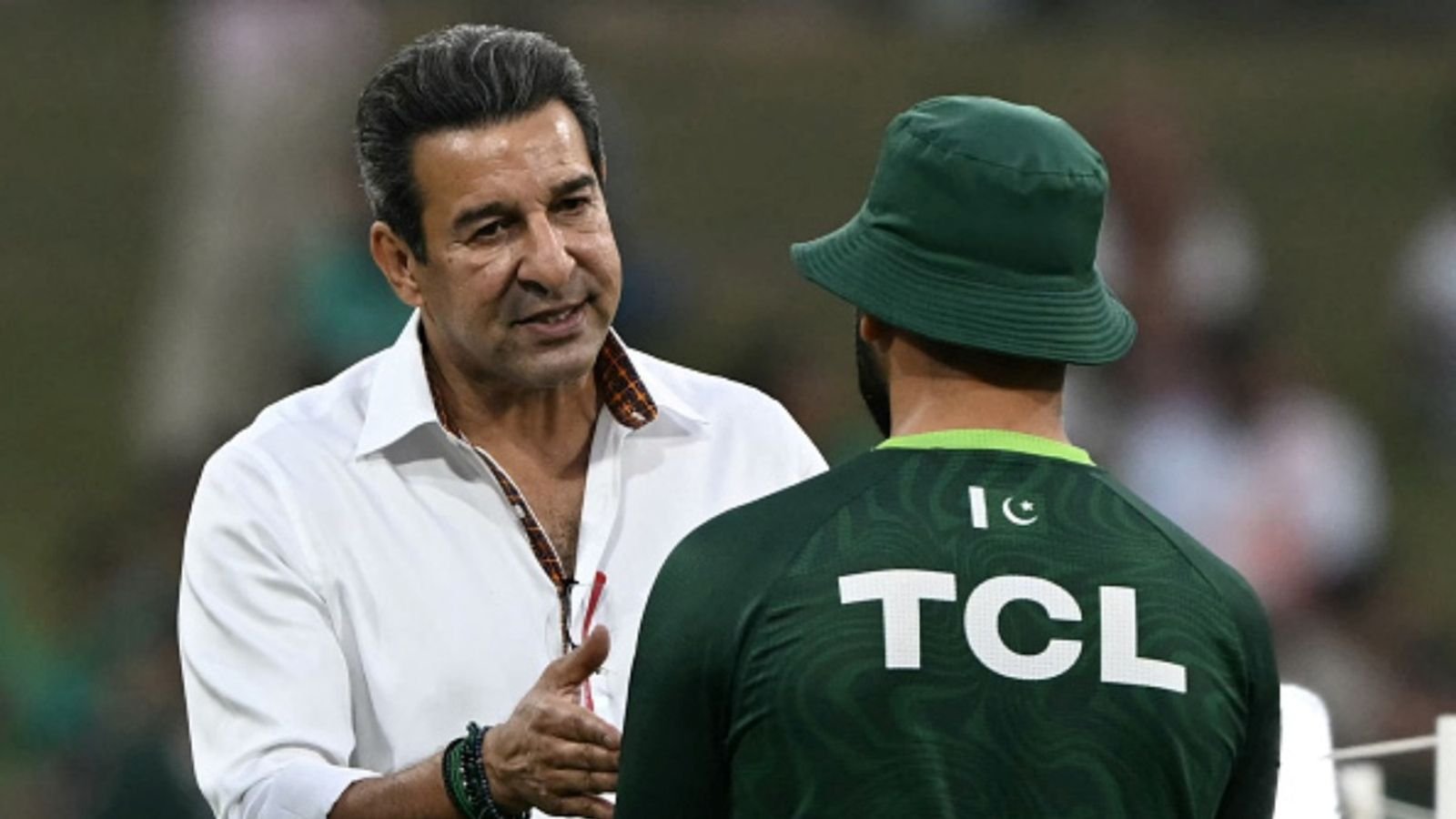
Wasim Akram has delivered a blunt assessment of Pakistan Cricket, arguing that the national team’s struggles against England are symptoms of much deeper structural problems within the country’s cricketing system.
The Pakistan great revealed that he expected England to win the Test series 3-0 even before the tour began. His prediction reflected concerns about Pakistan’s batting, bowling and fielding, but his broader criticism focused on the system producing players for international cricket.
According to Akram, the problem cannot be solved simply by replacing a few players or coaches. He believes Pakistan needs a more consistent domestic structure, greater patience with developing cricketers and a long-term approach to building the national team.
Wasim Akram predicted Pakistan would lose 3-0
Akram’s prediction came from his assessment of Pakistan’s overall balance before the England series. He felt the team was struggling across all three major areas of the game: batting, bowling and fielding.
Rather than identifying one specific weakness, the former Pakistan captain described a team that lacked strength throughout its playing XI. That made an England tour particularly difficult, given the conditions and the quality of the opposition.
His prediction eventually became especially significant as Pakistan struggled during the series. The results also increased attention on the selection decisions and wider changes being made around the Test team.
For Akram, however, the issue goes beyond the scoreline. A 3-0 defeat may be the visible result, but he believes the underlying causes have developed over several years.
Pakistan’s domestic cricket structure is at the heart of the problem
One of Akram’s strongest criticisms concerns Pakistan’s first-class cricket system. He believes the pathway below the international team has lacked consistency and stability.
A strong domestic structure is essential because it gives emerging players regular opportunities to develop their technique, physical conditioning and understanding of longer-format cricket.
When domestic competitions frequently change format, structure or selection priorities, players can struggle to receive the sustained exposure needed to become international-ready.
Akram’s argument is therefore broader than simply asking why Pakistan is losing Test matches. He is questioning whether the system is consistently producing enough high-quality players to replace established international cricketers.
Why constant changes can create another problem
Pakistan’s response to poor performances has included significant changes to its Test squad and coaching setup. After the Lord’s defeat, seven changes were made to the squad, with five rookies brought into the group and two members of the coaching staff removed.
Such decisions can sometimes provide an immediate boost, particularly when a team needs fresh energy. But excessive changes can also make it difficult for a side to develop continuity.
Test cricket demands specialist skills that often take years to develop. Young players need time to understand international conditions, learn from mistakes and establish themselves at the highest level.
That is why Akram’s criticism about patience is important. He believes Pakistan has reached a point where frequent chopping and changing has not solved the underlying problems.
Akram says there are not enough alternatives
A particularly concerning part of Akram’s assessment is his view that Pakistan’s current international players represent the strongest options available from the existing system.
That creates a difficult situation for selectors. Dropping several experienced players may appear to be an obvious response to poor results, but replacing them requires a strong pool of domestic performers who are genuinely prepared for international cricket.
If that depth does not exist, simply changing the names on the team sheet may not produce better results.
This is where domestic cricket becomes crucial. A sustainable national team needs a continuous pipeline of players who can compete for places rather than a small group carrying the responsibility for an entire generation.
Pakistan’s seven changes highlight the selection dilemma
| Issue | Potential consequence |
|---|---|
| Frequent squad changes | Reduced continuity and familiarity |
| Limited domestic depth | Fewer proven replacements available |
| Young players promoted quickly | Greater pressure at international level |
| Coaching changes | Disruption to long-term planning |
| Lack of patience | Players may not receive enough time to develop |
The seven changes made during the England series illustrate the challenge Pakistan currently faces. Introducing new players can be necessary, but doing so in the middle of a difficult tour places enormous responsibility on inexperienced cricketers.
For young players, Test cricket in England can be a particularly demanding environment. They must adapt to unfamiliar conditions while simultaneously dealing with the pressure of representing Pakistan.
Babar Azam was reportedly not involved in the major overhaul
The scale of the changes also raised questions about communication within the Pakistan setup. On the eve of the third Test at Edgbaston, captain Babar Azam was asked about the decision to make seven changes to the squad.
Babar indicated that he had learned about the major overhaul rather than being deeply involved in the discussions from the beginning. The changes reportedly included the removal of head coach Sarfaraz Ahmed and bowling coach Umar Gul.
That situation adds another layer to the problems surrounding Pakistan cricket. Team development requires alignment between selectors, coaches, captains and administrators.
If major decisions are made without strong communication between those groups, it can become harder to establish a clear cricketing direction.
Why patience matters in Test cricket
Test cricket is fundamentally different from shorter formats. A player can sometimes make an immediate impact in T20 cricket through athleticism or a few match-changing performances. Building a reliable Test cricketer generally takes longer.
Batters need to learn how to construct long innings, manage different bowling conditions and maintain concentration over extended periods. Bowlers need to develop stamina, tactical awareness and the ability to create pressure across long spells.
Young players also need opportunities to fail without immediately fearing that one poor performance will cost them their place.
That does not mean selection should ignore poor performances. Instead, Pakistan’s challenge is finding the right balance between accountability and development.
England’s conditions exposed Pakistan’s weaknesses
The England tour has provided a demanding examination of Pakistan’s current Test setup. English conditions can reward disciplined bowling while making life difficult for batters who struggle against movement.
At Edgbaston in the third Test, England were bowled out for just 133 in their first innings, with Josh Tongue, Ollie Robinson and Jofra Archer making major contributions with the ball.
Pakistan’s response to that opportunity was crucial because the visitors needed a strong performance to challenge England and potentially avoid the series result Akram had predicted.
Instead, Pakistan entered the final Test already under considerable pressure, with the series and their broader World Test Championship campaign both presenting difficult circumstances.
Pakistan’s WTC hopes had already ended
Another major factor surrounding the series is Pakistan’s position in the World Test Championship 2025-27 cycle. The team had already been eliminated from contention for the final.
That means the England series is no longer about keeping a WTC qualification campaign alive. The more important question is whether Pakistan can use the remaining matches to establish a stronger foundation for the next phase of Test cricket.
For a rebuilding side, results still matter, but identifying players capable of contributing over the next several years becomes equally important.
What Pakistan needs to change according to Akram’s argument
Akram’s comments point toward several areas that require attention if Pakistan wants to build a more reliable Test team.
- Strengthen first-class cricket: Domestic competitions need consistency so players can develop in a stable environment.
- Build a stronger talent pipeline: Pakistan needs enough emerging players to create genuine competition for international places.
- Give players time: Young cricketers should be assessed over a meaningful period rather than judged solely on short-term results.
- Improve decision-making: Selectors, coaches and captains need a clearly defined long-term strategy.
- Reduce unnecessary disruption: Constant changes can prevent a team from developing cohesion and confidence.
These changes would not produce an instant turnaround. That is precisely the point behind Akram’s call for patience.
Can Pakistan rebuild without another complete reset?
The biggest challenge for Pakistan will be resisting the temptation to treat every disappointing result as a reason for another wholesale overhaul.
A rebuild can require difficult decisions, including dropping established players when their performances no longer meet expectations. But rebuilding becomes counterproductive if every new group is given only a short window before another reset begins.
The better approach would be to establish clear performance standards while giving selected players enough time to understand what is expected of them.
Domestic cricket must also become part of that strategy. International selection should be supported by a strong first-class environment where potential replacements can develop before being thrown into high-pressure Test matches.
Akram’s criticism goes beyond one England series
The significance of Akram’s comments is that he did not present Pakistan’s problems as a temporary crisis caused by one poor tour.
His assessment points toward structural weaknesses that have developed underneath the international team. The England series has simply brought those problems into sharper focus.
That distinction matters because changing the captain, coach or several players may alter the appearance of the team without necessarily changing the system that produces it.
Pakistan has a long history of producing exceptional cricketing talent. The challenge is creating an environment where that talent can consistently progress from domestic cricket to international success.
What the future could look like for Pakistan cricket
If Pakistan addresses the concerns raised by Akram, the benefits may not be visible immediately. Domestic restructuring, improved player development and better planning require time.
However, a stable pathway could eventually produce a deeper group of Test-ready players. That would allow selectors to make changes based on performance rather than desperation.
It could also reduce the pressure placed on established stars and give the national team greater flexibility when injuries or poor form affect key players.
The key lesson from Akram’s assessment is therefore not simply that Pakistan is struggling. It is that rebuilding a national Test side requires more than replacing individuals.
Final Verdict
Wasim Akram’s 3-0 prediction reflects his belief that Pakistan’s problems against England are rooted in weaknesses across the team and, more importantly, in the domestic system underneath it.
The former Pakistan star has highlighted inconsistent first-class cricket, limited depth, frequent changes and a lack of patience as major concerns. The seven squad changes and coaching shake-up during the England series have further illustrated the uncertainty surrounding the setup.
Pakistan’s immediate priority is not simply finding another group of players. It is creating a system capable of consistently developing the next generation of Test cricketers.
If that foundation is strengthened and young players are given enough time to develop, Pakistan can eventually move beyond short-term fixes. Until then, Akram’s warning remains a powerful reminder that Pakistan cricket’s biggest challenge may lie deeper than the results on the scoreboard.
For breaking news and live news updates, like us on Facebook or follow us on Twitter and Instagram. Read more on Latest Cricket on thefoxdaily.com.






COMMENTS 0