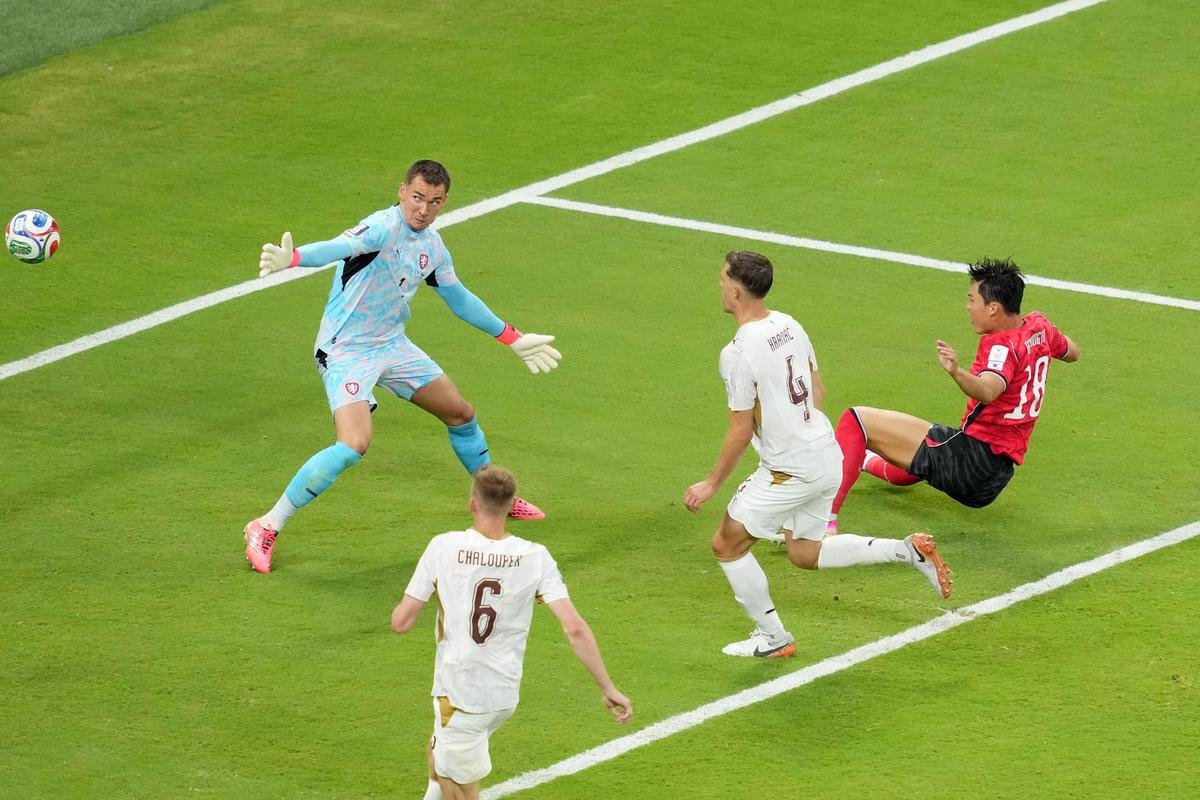
The 2026 FIFA World Cup has already delivered memorable moments on the pitch, but one of the biggest talking points from South Korea’s dramatic 2-1 comeback victory over Czechia had little to do with football itself.
Fans watching the Group A clash at Guadalajara’s Akron Stadium were quick to notice something unusual: large sections of visible empty seats throughout the venue. The images sparked debate across social media, with many questioning how a World Cup match could appear partially unfilled on opening day.
The situation has reignited a broader conversation surrounding ticket prices, hospitality packages, travel expenses, and accessibility for ordinary football supporters in an era when major sporting events are becoming increasingly expensive.
While official figures suggested a near-capacity crowd, the visual reality inside the stadium told a more complicated story.
What Was the Official Attendance?
According to official tournament figures, attendance for the South Korea versus Czechia match was recorded at 44,985 spectators.
Considering Akron Stadium’s official capacity of 45,664, the numbers suggest the venue was operating at approximately 98.5% capacity.
| Attendance Metric | Figure |
|---|---|
| Stadium Capacity | 45,664 |
| Official Attendance | 44,985 |
| Difference | 679 Seats |
| Approximate Occupancy Rate | 98.5% |
At first glance, these numbers suggest a nearly sold-out stadium. However, spectators both inside the venue and watching on television observed noticeable pockets of empty seats, particularly in premium sections.
This apparent contradiction highlights one of the most misunderstood aspects of attendance reporting at major sporting events.
The Difference Between Tickets Sold and Seats Occupied
One explanation for the visual discrepancy lies in how attendance figures are calculated.
Many major sporting events report attendance based on tickets distributed, allocated, or sold rather than the actual number of people physically sitting in their seats at any given moment.
This means a stadium can officially report near-capacity attendance while still displaying visible empty sections during the match.
Several factors can contribute to this phenomenon:
- Ticket holders arriving late.
- Corporate hospitality guests choosing not to attend.
- Unused sponsor allocations.
- Premium seats purchased but left vacant.
- Spectators spending time in hospitality lounges.
As a result, television cameras may capture large clusters of empty seats despite official attendance figures appearing healthy.
Were High Ticket Prices the Main Reason?
One of the most widely discussed explanations involves the cost of attending World Cup matches.
The build-up to the 2026 FIFA World Cup featured extensive debate regarding ticket affordability. While demand for football’s biggest tournament remains enormous, the overall cost of attendance has increased significantly compared to previous editions.
Reports surrounding the South Korea versus Czechia match suggested that lower-tier tickets were priced around $500, while upper-level sideline seats were available for approximately $400.
For many supporters, these prices represent a substantial financial commitment before accounting for additional expenses.
Attending a World Cup often requires fans to cover:
- Match tickets.
- Flights.
- Accommodation.
- Transportation.
- Food and entertainment expenses.
- Travel documentation costs.
The combined expense can quickly reach several thousand dollars per person.
This financial reality may have limited attendance among neutral supporters who would otherwise have filled available seats.
The Hospitality Section Factor
Perhaps the most important factor behind the visible empty seats was the location of those vacancies.
Observers noted that many of the unoccupied seats appeared within premium hospitality areas, particularly near central sections of the stadium.
Hospitality tickets represent a unique category within modern sporting events.
Unlike regular tickets purchased directly by fans, hospitality packages are often allocated to:
- Corporate sponsors.
- Business partners.
- VIP guests.
- Commercial clients.
- Tournament stakeholders.
These packages frequently cost several thousand dollars and include exclusive lounges, premium catering, and additional services.
However, unlike ordinary supporters who rarely miss a match after purchasing a ticket, hospitality guests may choose to spend significant portions of the event away from their seats.
This creates a visual effect where premium sections appear sparse despite being technically sold out.
The Modern World Cup’s Growing Accessibility Problem
The empty-seat discussion extends beyond a single match.
It reflects a growing challenge facing major sporting events worldwide: balancing revenue generation with fan accessibility.
World Cups have evolved into global entertainment products that generate billions of dollars through broadcasting rights, sponsorship agreements, hospitality programs, and ticket sales.
While this financial growth has helped expand the sport’s reach, it has also increased costs for traditional supporters.
| Traditional Fan Experience | Modern Event Experience |
|---|---|
| Affordable ticket access | Premium pricing models |
| Local supporter attendance | Global tourism focus |
| General admission dominance | Expanded hospitality offerings |
| Community atmosphere | Corporate event integration |
This shift has become increasingly visible at major tournaments, where premium sections sometimes remain partially unused while ordinary supporters struggle to secure affordable tickets.
Travel Costs Also Played a Role
Ticket prices represent only one part of the equation.
The 2026 FIFA World Cup spans multiple countries and vast geographical distances, creating unique logistical challenges for supporters.
Unlike previous tournaments concentrated within a single nation, fans often face significant travel requirements between host cities.
For international visitors, the total cost of attending even a single group-stage match can become substantial.
Factors influencing attendance include:
- Airfare inflation.
- Hotel demand during the tournament.
- Transportation costs between host cities.
- Visa processing expenses.
- Currency exchange fluctuations.
These factors collectively influence purchasing decisions and may contribute to lower occupancy in certain seating categories.
Why South Korea vs Czechia Was Particularly Vulnerable
Unlike matches involving host nations or global football powerhouses, South Korea versus Czechia lacked some of the commercial appeal associated with marquee fixtures.
Although both teams possess passionate fan bases and strong football traditions, neutral demand may not have matched the levels expected for matches involving nations such as Mexico, Brazil, Argentina, England, or France.
As a result, premium ticket categories likely faced greater challenges attracting buyers willing to pay elevated prices.
This does not diminish the quality of the football itself. In fact, the match produced one of the most entertaining contests of the tournament’s opening day.
However, demand dynamics often influence stadium occupancy regardless of what ultimately unfolds on the pitch.
The Irony: Fans Missed One of the Best Matches of Opening Day
Perhaps the biggest irony is that those empty seats belonged to spectators who missed one of the most exciting matches of the opening round.
South Korea produced a spirited comeback after falling behind to Czechia. Hwang In-beom delivered a standout performance with a goal and an assist, while substitute Oh Hyeon-gyu scored the decisive winner.
The match featured:
- A dramatic comeback.
- High-quality goals.
- Tactical battles.
- Late-match tension.
- Significant implications for Group A.
In many ways, it embodied everything supporters hope to see at a World Cup.
What FIFA Can Learn From the Situation
The discussion surrounding empty seats offers valuable lessons for tournament organizers.
One challenge moving forward will be ensuring that visible attendance matches official attendance figures. Empty premium sections can create negative perceptions even when overall ticket sales remain strong.
Possible solutions include:
- More flexible ticket redistribution systems.
- Dynamic pricing models.
- Expanded fan allocation programs.
- Reduced hospitality seat reservations.
- Improved last-minute ticket resale mechanisms.
Several major sporting organizations have already explored similar approaches to maximize stadium atmosphere and occupancy.
Will Empty Seats Continue to Be a Story During the Tournament?
The answer may depend heavily on the fixture schedule.
Matches involving host nations, traditional football powers, and knockout-stage contests are expected to attract overwhelming demand.
However, group-stage games featuring smaller markets or less prominent football rivalries could continue to face scrutiny if premium sections remain visibly underutilized.
As television broadcasts increasingly focus on fan experience and stadium atmosphere, visible attendance will remain an important part of the conversation.
Conclusion
The empty seats observed during South Korea’s 2-1 victory over Czechia were likely the result of multiple factors rather than a lack of interest in the FIFA World Cup itself.
High ticket prices, expensive hospitality packages, travel costs, and the distinction between tickets sold and seats actually occupied all appear to have contributed to the unusual visual appearance inside Akron Stadium.
Despite the noticeable gaps, official attendance figures indicate that the venue was close to capacity. The incident nevertheless highlights a growing debate about affordability, accessibility, and fan engagement at modern global sporting events.
As the 2026 FIFA World Cup continues, organizers will hope that the focus shifts back to the action on the pitch. Yet the discussion surrounding empty seats serves as a reminder that creating a truly full stadium involves more than simply selling tickets—it requires ensuring that football remains accessible to the supporters who bring the tournament to life.
For breaking news and live news updates, like us on Facebook or follow us on Twitter and Instagram. Read more on Latest Sports on thefoxdaily.com.






COMMENTS 0