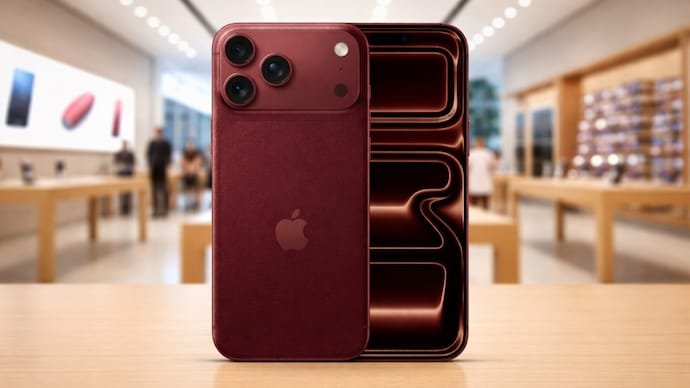
Apple may be preparing one of its most significant iPhone camera changes in years with the iPhone 18 Pro Max. A newly surfaced leak points to a main camera with a physical variable aperture, a feature Apple has never previously offered on an iPhone.
The more intriguing part of the latest claim is that the Technology could be limited to the larger iPhone 18 Pro Max rather than appearing on both Pro models. If that happens, Apple would create a more meaningful hardware distinction between the iPhone 18 Pro and iPhone 18 Pro Max than it has in several recent generations.
However, there is an important caveat. Earlier reports from analysts and leakers had suggested that both the iPhone 18 Pro and iPhone 18 Pro Max could receive variable-aperture main cameras. More recent leaked material has provided stronger evidence that at least the Pro Max is being developed with the technology, but it has not definitively established that the feature will be exclusive to that model.
Apple has not announced the iPhone 18 series or confirmed any of these camera specifications. The reports should therefore be treated as pre-launch information rather than final product specifications.
What is a variable aperture camera?
A variable aperture is a physical camera mechanism that changes the size of the opening through which light enters the lens.
Most iPhone cameras use a fixed aperture. In practical terms, that means the lens has one predetermined opening and cannot physically widen or narrow it while taking a photograph. Apple’s recent Pro models, for example, have used a fixed main-camera aperture.
A variable aperture changes that equation.
The camera can open the aperture wider when more light is needed and close it down when there is plenty of light. That gives the camera another optical control that can be used alongside shutter speed, ISO, computational photography and other image-processing techniques.
It can also influence depth of field, which determines how much of an image appears sharply focused in front of and behind the subject.
A wider aperture generally produces a shallower depth of field, helping separate a subject from the background. A narrower aperture can increase the area that appears in focus.
That is different from simply applying a software blur to a photograph. Computational portrait modes can convincingly simulate background separation, but a physical aperture changes the way light reaches the camera sensor before the image is processed.
Why the iPhone 18 Pro Max camera upgrade matters
Variable aperture would give Apple another way to control image capture at the hardware level.
In bright conditions, a camera could potentially reduce the amount of incoming light by narrowing the aperture. In darker environments, opening the aperture could allow more light to reach the sensor.
The feature could also be useful for video. Optical control over incoming light can help a camera maintain more appropriate exposure without relying entirely on electronic or software adjustments.
For photographers, the most noticeable benefit could be greater control over depth of field. Instead of relying solely on Apple’s computational photography algorithms to determine how much background blur an image should have, the physical optics could contribute to the result.
That does not mean every photograph taken with the iPhone 18 Pro Max would automatically look dramatically better. The final image still depends on the sensor, lens design, image signal processing, computational photography and Apple’s software.
The importance of variable aperture is therefore less about a single headline specification and more about giving Apple’s camera system another physical tool to work with.
New Sony IMX905 sensor reportedly linked to the upgrade
The variable aperture reports gained additional attention in July after a leaked diagnostic log reportedly revealed details about the iPhone 18 Pro Max’s camera hardware.
Notebookcheck reported that the material contained calibration information associated with a new Sony IMX905 main camera sensor. The reported data also included information related to an aperture actuator, providing a stronger indication that the variable-aperture system involves actual camera hardware rather than being merely a software feature.
The reported sensor has a 1.22-micrometre pixel size, according to the leaked information. That suggests the headline change may be the aperture mechanism rather than simply a major increase in sensor pixel size.
The same leaked material reportedly indicates that several other cameras could remain similar to those used in the previous generation, including the telephoto and ultrawide cameras.
None of this has been confirmed by Apple, and the material itself reportedly came from files associated with a security breach involving Tata Electronics. That makes it useful as a clue but not equivalent to an official Apple specification sheet.
Is variable aperture really exclusive to the Pro Max?
This is where the latest rumor becomes particularly interesting.
A recent claim attributed to Chinese leaker Ice Universe said the iPhone 18 Pro Max would “exclusively” feature a variable aperture. If accurate, that would make the camera one of the clearest hardware reasons to choose the larger and more expensive Pro Max.
But the exclusive claim conflicts with earlier reporting.
Apple supply-chain analyst Ming-Chi Kuo previously reported that the main rear camera on both iPhone 18 Pro models would receive variable aperture technology. Other reports during 2026 also described the feature as an iPhone 18 Pro and Pro Max upgrade rather than a Pro Max-only feature.
That means there are currently two competing possibilities.
- The variable aperture could appear on both the iPhone 18 Pro and iPhone 18 Pro Max.
- Apple could reserve the hardware for the larger iPhone 18 Pro Max, creating a new camera advantage for the flagship model.
Until Apple unveils the phones or more definitive supply-chain evidence emerges, the second scenario should not be treated as settled fact.
For buyers, this distinction could become important. If both Pro models receive the technology, the Pro Max’s camera advantage may remain relatively narrow. If only the Pro Max gets it, Apple would be giving consumers a stronger reason to pay more for the larger phone.
Apple has created Pro Max camera differences before
Apple has previously used camera hardware to distinguish its two Pro models.
The clearest recent example came with the iPhone 15 generation. The iPhone 15 Pro Max introduced a tetraprism telephoto camera that enabled a longer optical zoom range than the smaller iPhone 15 Pro.
That difference did not last forever. Apple subsequently expanded similar telephoto capabilities to both Pro models in later generations.
That history makes a Pro Max-exclusive variable aperture plausible as a product strategy, but it also shows why such differences do not necessarily remain permanent.
Apple can introduce a feature on its largest flagship first, evaluate the technology and Manufacturing economics, and eventually expand it across the Pro lineup.
If the variable aperture is expensive or difficult to manufacture at scale, limiting it initially to the Pro Max could also help Apple manage supply while giving its most expensive iPhone a more distinctive selling point.
What could variable aperture improve in everyday photography?
The technical specification sounds impressive, but its real value depends on how Apple implements it.
Better control in bright conditions
When a scene is very bright, reducing the amount of light entering the lens can help the camera manage exposure optically. That could be useful for outdoor photography and video, particularly when the photographer wants to preserve specific shutter-speed or motion characteristics.
More control over depth of field
A physical aperture can influence how much of a scene remains in focus. This could make portrait-style photography more flexible and potentially give users greater control over the transition between the subject and background.
Greater flexibility for video
Video presents a different challenge from still photography because exposure, shutter speed and motion blur interact continuously. A variable aperture could provide another method of adjusting exposure while allowing other settings to remain within a desired range.
More optical control before computational processing
Modern smartphones rely heavily on computational photography. Apple’s image-processing systems can combine multiple exposures, recover detail and create sophisticated portrait effects.
A variable aperture would not replace those systems. Instead, it could give them better optical information to work with before the computational stage begins.
Variable aperture is not new in smartphones
Apple would be entering a category that already exists elsewhere in the smartphone market.
Several flagship Android smartphones have experimented with or implemented variable-aperture camera systems. The technology is therefore not an entirely new concept in mobile photography.
What would make the iPhone 18 Pro Max notable is that it would be Apple’s first iPhone with a variable-aperture camera, rather than the industry’s first smartphone with the feature.
That distinction matters because Apple’s approach is usually less about being first with a technology and more about integrating hardware and software into a controlled user experience.
The question is therefore not simply whether Apple can make an aperture open and close. It is how the company will integrate that mechanism with its Camera app, computational photography pipeline and video features.
Could the iPhone 18 Pro Max use a larger camera advantage?
The camera rumor also fits into a broader pattern of Apple potentially making the Pro Max more distinct.
Recent leaks have pointed to differences in size, weight, battery capacity and other hardware details between the two Pro models. Some reports have also suggested that Apple could make the larger model physically bigger while retaining a broadly similar overall design language.
A camera feature exclusive to the Pro Max would strengthen that differentiation.
That could appeal particularly to users WHO treat the iPhone as a serious photography and video device. For ordinary users, however, the difference may be less important if Apple’s software continues to produce strong results from both Pro models.
The success of the feature will ultimately depend on the implementation. A variable aperture is useful, but its benefits are only meaningful if the lens, sensor and processing system take advantage of it effectively.
What the leaked camera information does and does not tell us
One of the most important lessons from the latest leaks is that individual pieces of leaked hardware information should not be treated as a complete product specification.
The reported diagnostic data provides clues about the main camera and its aperture mechanism. It does not establish Apple’s final marketing name for the feature, the exact aperture range, how much manual control users will receive or how the camera will behave in different shooting modes.
It also does not definitively prove that the Pro Max will be the only model to receive the technology.
Those details matter because the practical experience of a variable aperture depends heavily on its implementation.
For example, Apple could allow the camera to automatically select the aperture based on lighting conditions, or it could eventually provide photographers with some level of manual control. Those are very different user experiences.
How this could change iPhone photography
If Apple implements the feature well, the biggest change may be subtle rather than dramatic.
Smartphone cameras have already become extremely sophisticated. The next improvements are increasingly about controlling the way light is captured rather than simply increasing megapixel counts.
A variable aperture fits that direction. It gives the camera a physical mechanism for responding to different scenes and gives Apple’s image-processing system another input to work with.
For photographers, it could mean greater control. For casual users, the benefit may appear indirectly through automatic exposure, portraits and video.
That makes the technology potentially more useful than a specification that only looks impressive on a comparison chart.
When could Apple announce the iPhone 18 series?
Apple has not officially announced the iPhone 18 launch date or final specifications. The Pro models are widely expected to be unveiled in September 2026, although the exact event date remains unconfirmed.
There is also a larger change reportedly coming to Apple’s iPhone release strategy. Recent reports indicate that Apple may separate the launches of its premium and standard iPhone 18 models, with the Pro models arriving in the traditional September window and the standard iPhone 18 potentially following later.
That reported shift would make the upcoming Pro launch even more significant, although Apple has not formally confirmed the schedule.
For now, the safest conclusion is that the iPhone 18 Pro Max appears to be on track for a meaningful main-camera hardware change, with variable aperture among the strongest recurring rumors.
Should you wait for the iPhone 18 Pro Max?
For anyone primarily interested in smartphone photography, the variable-aperture rumor is worth watching.
It could become one of the most meaningful camera hardware changes Apple has introduced in several generations, particularly if the company gives users meaningful control over the aperture and combines it with its computational photography system.
But prospective buyers should not make a purchase decision based solely on leaks. The exact aperture range, image quality improvements, software controls, battery impact, pricing and differences between the Pro and Pro Max models remain unconfirmed.
Most importantly, the claim that the feature will be exclusive to the iPhone 18 Pro Max is not yet settled. Earlier and separate reports have pointed to both Pro models receiving variable aperture, while the latest leak suggests the larger model may have the exclusive advantage.
That uncertainty could be resolved once Apple officially introduces the iPhone 18 Pro lineup.
Bottom line
The iPhone 18 Pro Max could mark a significant change in Apple’s approach to smartphone camera hardware. A variable aperture would give the main camera physical control over how much light enters the lens, potentially improving exposure flexibility, depth-of-field control and video performance.
The reported Sony IMX905 sensor and aperture actuator information provide stronger clues than earlier speculation, but the evidence still comes from leaks rather than Apple itself.
The biggest unanswered question is whether Apple will make the technology a Pro-wide feature or reserve it for the Pro Max. Earlier reports support the former, while the latest claim points toward the latter.
If Apple does make variable aperture a Pro Max exclusive, it would represent another step toward differentiating its largest flagship from the smaller Pro model. If both Pro phones receive it, the feature would still be a major first for the iPhone, but the gap between the two models would remain smaller.
Either way, the camera may be one of the most important areas to watch when Apple finally reveals the iPhone 18 Pro series.
For breaking news and live news updates, like us on Facebook or follow us on Twitter and Instagram. Read more on Latest Technology on thefoxdaily.com.






COMMENTS 0