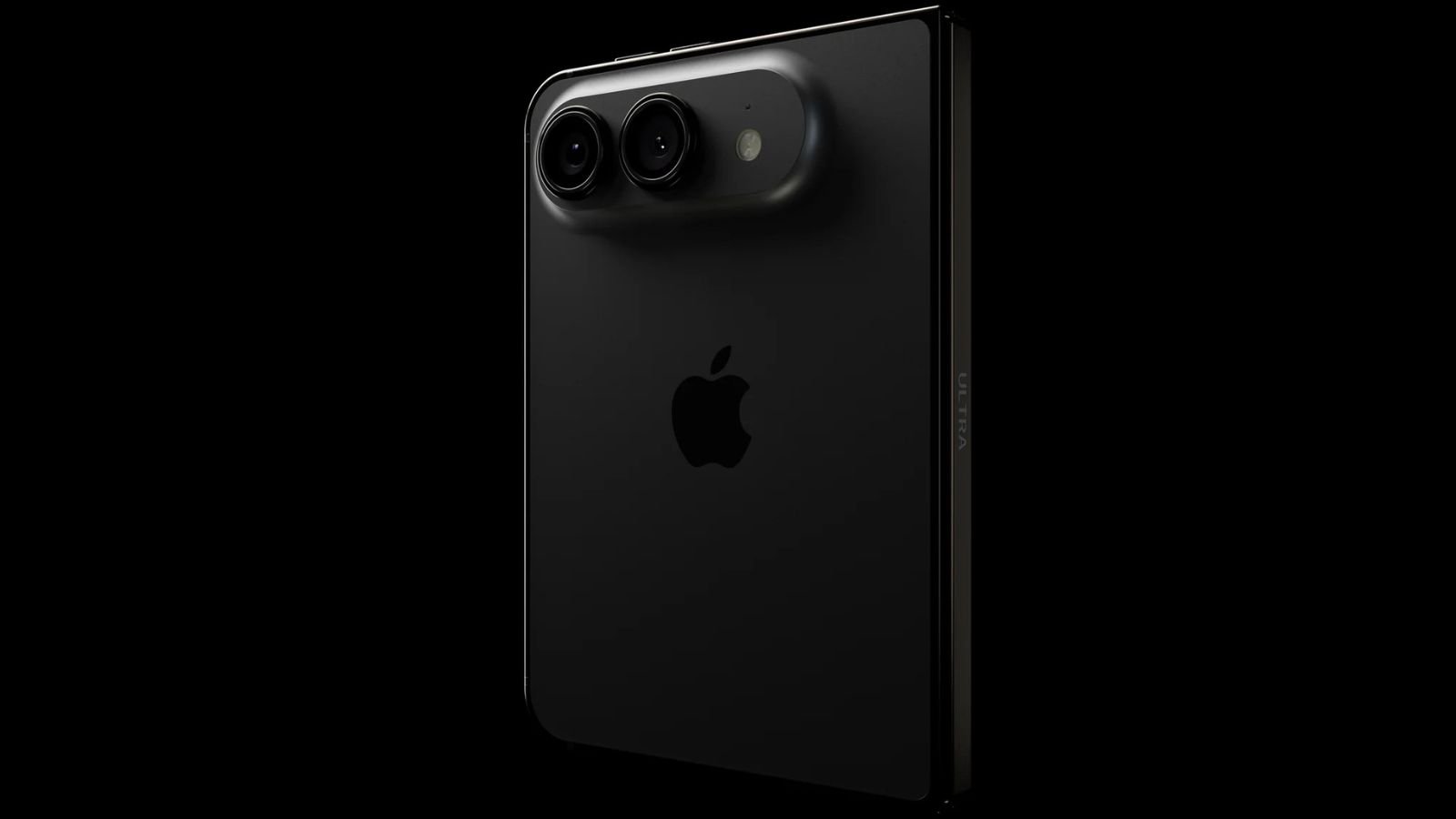
Apple is preparing to enter a smartphone category it has watched from the sidelines for years. The company is expected to unveil its first foldable iPhone at its September 9, 2026 event, potentially introducing a device that could become one of the most expensive products in the iPhone lineup.
Apple has not publicly confirmed the name iPhone Ultra, and several of the device’s specifications remain based on reports and supply-chain information rather than official announcements. But the picture emerging ahead of the launch is unusually detailed: a wide, book-style foldable, a roughly 7.8-inch internal OLED display, an ultra-thin body, Apple’s new A20 Pro processor and a price that could start above $2,400.
The launch is also taking place under a new Apple leadership structure. John Ternus became Apple CEO on September 1, 2026, succeeding Tim Cook, who has moved into the role of executive chairman. The September 9 event therefore becomes one of Ternus’ first major product presentations as CEO.
Here are six key things to know about Apple’s first foldable iPhone.
1. The foldable iPhone is expected to be unveiled on September 9
Apple has officially confirmed a special event for September 9 at 10 a.m. Pacific Time, with the company promoting the presentation under the “Surprise and shine” tagline. The event will be streamed online through Apple’s platforms.
The company has not announced a product called the iPhone Ultra, so the foldable’s final branding remains uncertain. Apple could use a completely different name when it takes the stage.
Still, multiple reports have consistently pointed to a foldable iPhone arriving alongside Apple’s next high-end iPhone models in September 2026. Supply-chain reports have also indicated that Apple’s component partners have been preparing for a fall launch.
The timing is particularly significant because Apple is entering a category that competitors have been developing for years. samsung, Huawei, Google and other manufacturers have already released several generations of Foldable Smartphones, giving Apple a substantial amount of existing market experience to compete against.
Apple’s challenge will be less about proving that a phone can fold and more about demonstrating why consumers should consider Apple’s version different from the Android foldables already available.
2. Its passport-like design could be unlike today’s typical foldables
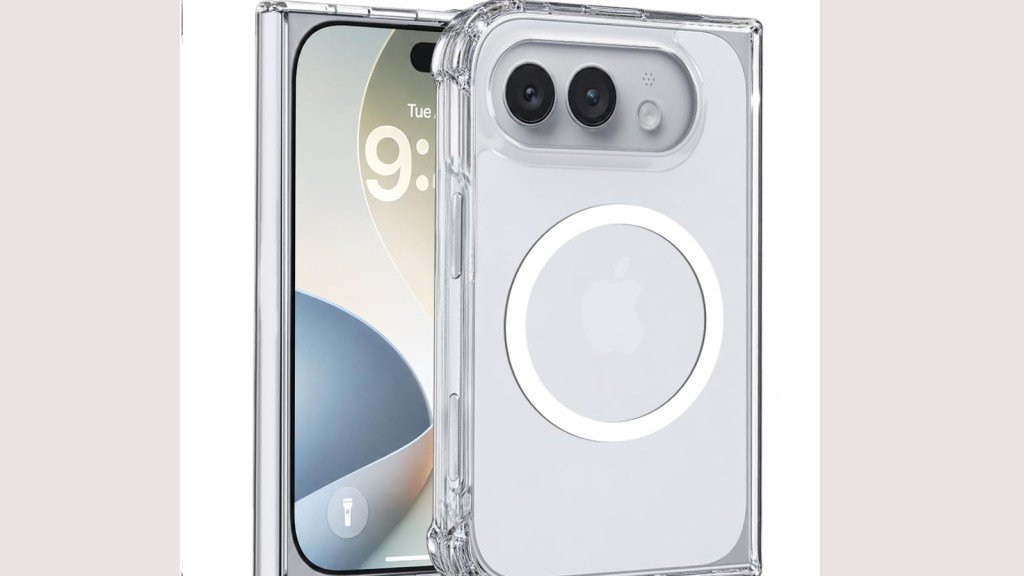
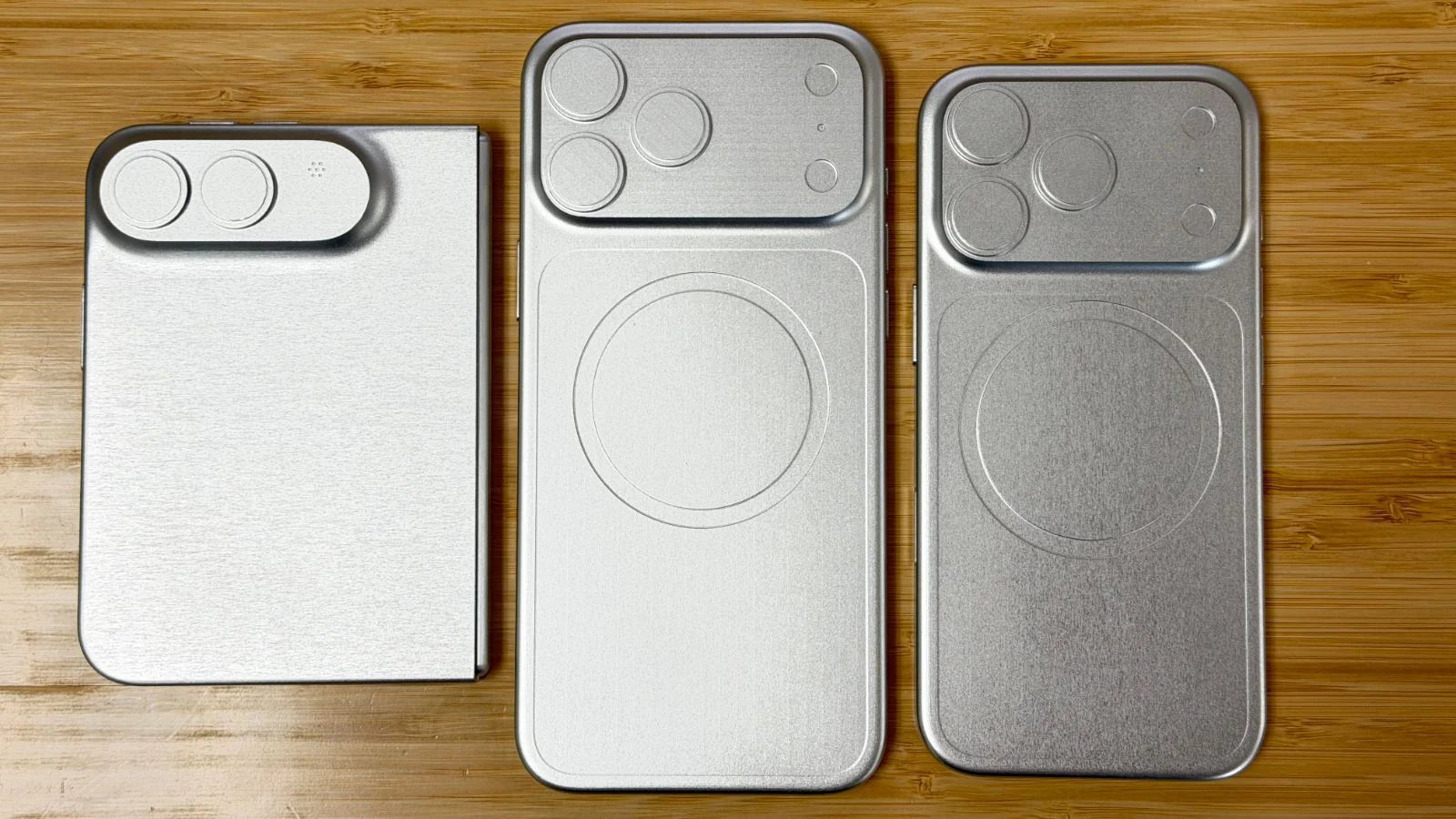
The biggest visual change could come from the proportions of the device. Current reports describe Apple’s foldable iPhone as a wide, relatively short book-style smartphone rather than a tall and narrow handset.
When closed, its shape has been compared to a passport. The design is expected to use a roughly 5.5-inch outer display and a much larger 7.8-inch internal display when opened.
That wider layout could make the phone more practical in both modes. The cover screen would function like a conventional smartphone, while the unfolded display would provide substantially more room for browsing, videos, reading documents and multitasking.
Reports have pointed to a 16:10 aspect ratio for the outer display and a more tablet-like 4:3 format for the internal screen. The result could be a device that feels closer to a compact tablet when opened than the elongated folding phones common today.
One of Apple’s main design objectives also appears to be reducing thickness. Industry reports have suggested an unfolded thickness of around 4.5mm. That would make it significantly thinner than most conventional foldable smartphones when fully opened.
There have also been reports of titanium being used in the frame and a redesigned hinge system. However, Apple has not yet confirmed the materials or final mechanical design.
3. The 7.8-inch screen could turn the iPhone into a mini tablet
The internal display may ultimately be the iPhone Ultra’s most important feature because it changes what the device can do when unfolded.
At around 7.8 inches, the internal OLED panel would approach the size of a compact tablet. That creates opportunities for applications that traditionally feel cramped on a smartphone.
Watching videos could benefit from the wider screen, while email, web browsing and documents could take advantage of the additional workspace. Multitasking could also become considerably more practical than on a conventional iPhone.
But screen size alone does not make a foldable useful. Apple needs to make sure iOS behaves differently when the phone is opened.
That is where the software could become more important than the hardware.
4. iOS 27 could be the real test for Apple’s foldable
One of the industry’s biggest unresolved foldable problems has been software. Many early foldable smartphones offered larger displays without fundamentally changing how applications behaved.
Apple has an opportunity to approach the problem differently with iOS 27, which is expected to include optimisations for the foldable form factor.
Reports have suggested that Apple could introduce features designed around the device’s changing screen size and partially folded positions. These could include improved multitasking, better adaptation of applications to the larger display and interface changes depending on how the phone is being held or folded.
A system resembling the split-screen experience found on iPadOS could make the inner display considerably more useful. Users could potentially work with two applications at the same time instead of simply viewing an enlarged version of the standard iPhone interface.
Apple could also use the hinge to create new interaction modes. Samsung popularised features that allow compatible applications to place controls or content differently when a foldable is partially opened. Apple is likely to develop its own interpretation rather than simply copying that approach.
This may ultimately be the iPhone Ultra’s biggest differentiator. Apple does not need to invent the foldable concept. It needs to make the interaction feel sufficiently polished that consumers believe the format is genuinely more useful.
5. A20 Pro and 2nm technology could make it a performance powerhouse
The foldable iPhone is expected to use Apple’s next-generation A20 Pro chip, which would make it one of the first Apple smartphones built around TSMC’s new 2nm manufacturing process.
The move from 3nm to 2nm is significant because a smaller manufacturing node can allow more transistors to be packed into a similar area while improving power efficiency. Reports have suggested potential gains of around 15% in performance and 30% in efficiency compared with the previous generation, although these figures remain expectations rather than Apple-confirmed specifications.
The chip is also expected to use advanced packaging Technology that could improve the relationship between processing power and memory. Reports have pointed to TSMC’s Wafer-Level Multi-Chip Module technology for Apple’s next-generation high-end chips.
For a foldable phone, efficiency is particularly important. Apple has to power two displays, a sophisticated hinge-related system, cameras and a powerful processor while keeping the chassis remarkably thin.
A more efficient processor could help offset some of those demands. It could also allow Apple to push on-device artificial intelligence and other computationally intensive features without consuming excessive battery power.
6. The price could be higher than $2,400 and availability may be limited
Price is likely to be one of the biggest barriers to the first foldable iPhone.
Analyst Ming-Chi Kuo has previously estimated that Apple’s foldable could start at around $2,400 to $2,500. A higher-capacity version could potentially move beyond the $3,000 mark.
That would put the device substantially above Apple’s traditional flagship iPhones and firmly into an ultra-premium category.
The high price would not be entirely unexpected. Foldable displays, specialised hinges, precision manufacturing and the need to fit high-end hardware into a very thin chassis all increase production costs. Apple is also likely to position its first foldable as a premium technology product rather than an affordable alternative to conventional iPhones.
For Indian buyers, a US price of $2,400 would already translate to well over Rs 2 lakh before accounting for local taxes and other costs. The eventual Indian retail price, assuming the device launches in the country, could therefore be considerably higher.
There is another potential problem: supply.
Reports have suggested that Apple could initially produce the foldable in relatively limited quantities. Analysts have also warned that memory shortages could constrain production of Apple’s upcoming premium phones, including the foldable.
That could create a familiar first-generation Apple product pattern: very high demand, restricted initial inventory and gradual expansion into additional markets.
Why Apple may launch the foldable as a luxury product
Apple does not necessarily need the first foldable iPhone to become a mainstream product immediately.
The company has repeatedly used premium positioning to introduce new product categories. A costly first-generation foldable would allow Apple to test consumer demand without immediately committing to the production volumes required for a mass-market iPhone.
The likely audience is therefore different from the customer looking for the best-value smartphone. Buyers could include technology enthusiasts, existing Apple users who want the latest form factor and consumers who view the device as a status product.
That positioning may also protect Apple’s conventional iPhone lineup. A foldable priced more than twice as high as some standard flagship models would complement rather than replace the mainstream iPhone range.
The foldable market needs Apple to do more than copy Samsung
Apple’s entry will inevitably be compared with Samsung’s Galaxy Z Fold series, but the two companies appear to be approaching the category from different directions.
| Feature | Expected iPhone Fold / Ultra | Typical premium book-style foldable |
|---|---|---|
| Form factor | Wide, passport-like design | Generally taller and narrower |
| Inner display | About 7.8 inches | Typically around 7.5–8 inches |
| Thickness | Reported around 4.5mm unfolded | Varies by model |
| Software | iOS with foldable-specific optimisation expected | Android-based foldable interfaces |
| Processor | Expected A20 Pro, 2nm | Varies by manufacturer |
| Positioning | Ultra-premium first-generation device | Premium segment with several price tiers |
Apple’s advantage is its control over hardware and software. Unlike Android manufacturers that have to accommodate a wide range of devices, Apple controls the processor, operating system and user interface.
That gives the company an opportunity to optimise the foldable experience more deeply from the beginning.
The crease remains one of the biggest unanswered questions
Any discussion of Apple’s first foldable eventually comes back to one issue: the screen crease.
OLED foldable panels have improved considerably, and newer hinges can reduce the visibility and mechanical impact of the crease. But eliminating the physical fold entirely remains one of the industry’s difficult engineering challenges.
Apple has reportedly been working on the foldable iPhone for years, and expectations are naturally high that the company will attempt to deliver a refined hinge and display solution.
Still, claims about a completely invisible crease should be treated cautiously until reviewers and consumers can examine finished retail devices.
The same applies to durability. A thinner body creates an obvious engineering challenge because Apple needs to protect the inner display and hinge without undermining the portability that makes the foldable attractive in the first place.
Will the iPhone Ultra change the smartphone market?
The arrival of Apple’s first foldable iPhone could have an impact beyond Apple’s own sales figures.
Apple has enormous influence over smartphone design and consumer expectations. When the company enters an established category, suppliers and competitors often respond by accelerating their own development efforts.
If Apple succeeds in making the foldable feel like a natural extension of the iPhone rather than an expensive experiment, it could help normalize foldable phones among consumers who have so far ignored them.
That is particularly relevant as the conventional smartphone market becomes increasingly mature. Modern premium phones are already extremely capable, and year-to-year improvements can be difficult for consumers to notice in daily use.
A foldable offers something fundamentally different: one device that can change its physical size and screen configuration depending on the task.
Apple’s success will depend on whether it can turn that physical novelty into a meaningful everyday advantage.
What remains unconfirmed before Apple’s launch
Despite the large volume of reports surrounding the device, several important details remain unofficial until Apple takes the stage.
The iPhone Ultra name has not been confirmed. Neither has Apple officially confirmed the reported 7.8-inch display, 4.5mm unfolded thickness, specific hinge design, final Camera system, starting price or initial market availability.
The rumored A20 Pro processor and 2nm manufacturing technology have stronger support from industry reporting, but even those specifications remain subject to Apple’s final announcement and implementation.
This distinction matters because first-generation Apple products often generate a large number of reports before launch, and some rumored features can change during the final stages of development.
Apple’s first foldable could be its biggest iPhone experiment in years
The iPhone Ultra represents a much bigger bet than simply adding another model to Apple’s annual lineup. It marks the company’s entry into an entirely different smartphone form factor at a time when established foldable manufacturers have already gained years of experience.
The expected combination of a 7.8-inch inner display, passport-style proportions, ultra-thin body, A20 Pro chip and iOS 27 optimisation suggests Apple is trying to solve several problems at once: portability, productivity, performance and software usability.
The reported price of more than $2,400 could keep the first-generation device out of reach for most consumers, while limited initial production could make it difficult to buy even for those willing to pay Apple’s premium.
But the first foldable iPhone does not need to sell like a conventional iPhone to matter. Apple needs to establish the form factor, prove that iOS can take advantage of a folding screen and create a foundation for future generations that could eventually become thinner, cheaper and more widely available.
For now, the most important question is not whether Apple can build a foldable phone. It clearly can. The real test is whether Apple can make consumers believe that an iPhone that opens into a mini tablet is worth changing the way they use their phone.
For breaking news and live news updates, like us on Facebook or follow us on Twitter and Instagram. Read more on Latest Technology on thefoxdaily.com.






COMMENTS 0