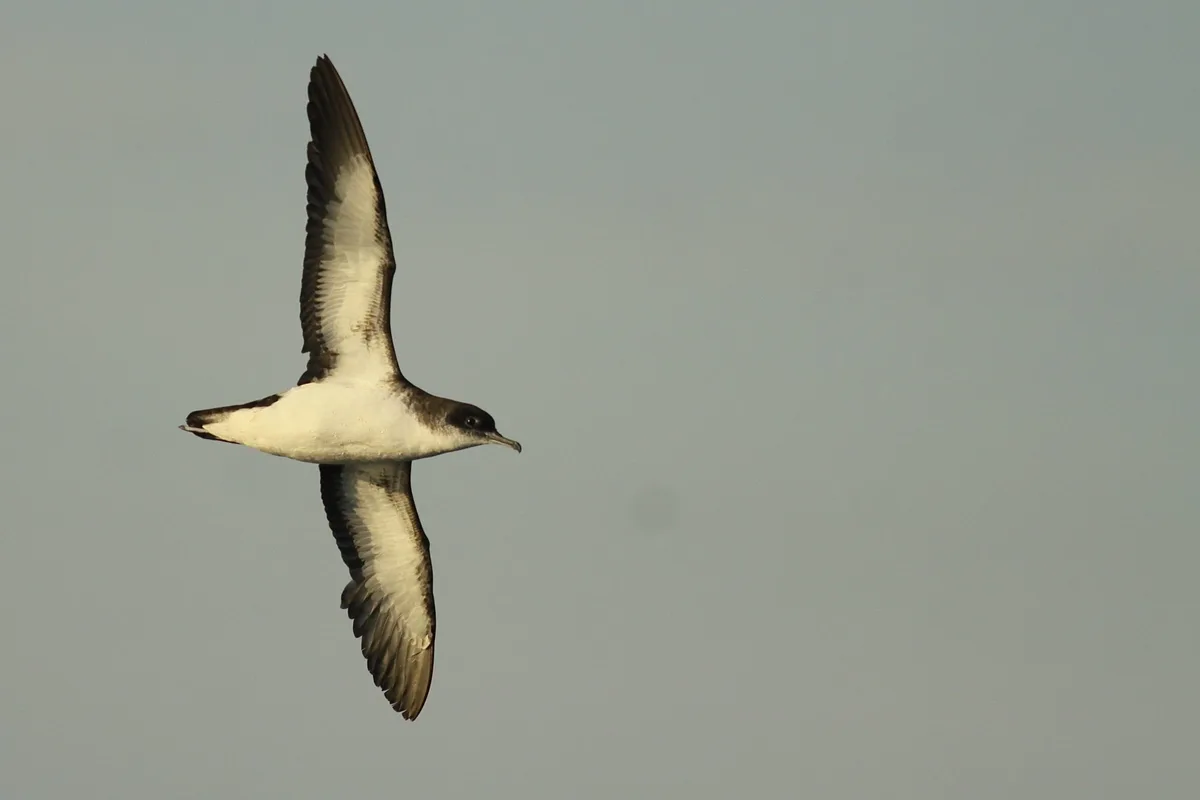
Jet lag is commonly associated with human travellers crossing time zones, but a similar phenomenon can affect wild seabirds. Researchers have found that Manx shearwaters returning to their breeding colonies can lose their sense of direction when their internal body clocks fall out of sync with local time.
The study, led by researchers at the University of Oxford, analysed two decades of GPS tracking data from Manx shearwaters travelling across the Atlantic and returning to colonies off the west coast of the United Kingdom. The findings revealed that rapid eastward flights could disrupt the birds’ internal sense of time, affecting their ability to navigate using the sun.
For experienced adult birds, the consequences were relatively small because they could correct their direction while flying. However, inexperienced birds undertaking their first foraging journeys could face much greater difficulties, potentially deviating hundreds of miles from their intended routes.
The research highlights the important role biological clocks play in animal navigation and demonstrates how even naturally occurring changes in the relationship between internal time and local time can affect the movements of wild animals.
How Jet Lag Affects Manx Shearwaters
Manx shearwaters spend much of their lives far out at sea, covering enormous distances while searching for food. Despite these long journeys, they return each year to islands off the west coast of the UK, where they breed in burrows.
During their travels, the birds rely on several natural cues to maintain their sense of direction. One important navigation mechanism is the sun compass, which allows them to use the sun’s position in the sky to determine their heading.
However, the sun moves across the sky as the Earth rotates. To interpret its position correctly, a bird must account for the time of day. Its internal biological clock helps it make this adjustment and maintain an appropriate heading.
When Manx shearwaters travel rapidly eastward across lines of longitude, their internal clocks can fall behind local time by approximately an hour or more. As a result, the birds may interpret the sun’s position incorrectly and adjust their flight direction in a way that takes them away from their intended route.
Dr Patrick Lewin, a behavioural and sensory ecologist at the University of Oxford who led the research, described the effect as a form of jet lag that can disrupt navigation.
“The bird’s internal clock can be subject to a jet lag phenomenon, manifesting as birds flying off course,” Lewin said.
The findings show that navigation depends not only on an animal’s ability to observe environmental cues but also on its capacity to interpret those cues using an accurate internal sense of time.
Why the Sun Compass Depends on an Accurate Body Clock
Many animals use the sun as a compass to help determine their direction of travel. For this system to work effectively, they must account for the sun’s changing position throughout the day.
Manx shearwaters use their biological clocks to connect the sun’s position with the time of day. This relationship allows them to maintain a consistent heading even as the sun appears to move across the sky.
Sunrise and sunset help keep the birds’ internal clocks aligned with the local day-night cycle. When birds travel across longitude lines, however, local time changes relative to their internal biological rhythms.
If a bird’s clock remains behind local time, the sun may appear to be in a different position than the bird’s internal timing system predicts. This mismatch can lead to errors in its calculated heading.
The Oxford researchers found that the resulting navigational errors were particularly noticeable when the birds flew eastward on their return journeys. Their internal clocks did not always adjust quickly enough to match the local time at their destination.
The effect illustrates how biological rhythms and environmental information work together in animal navigation. Even when the sun remains clearly visible, an inaccurate internal clock can undermine the information an animal derives from it.
Adult Birds Can Correct Their Direction During Flight
Although the study identified navigational errors associated with the birds’ disrupted body clocks, experienced adult Manx shearwaters appeared able to compensate for the effects.
The tracking data showed that adult birds generally experienced only limited deviations from their intended headings. At most, their flight paths veered by approximately 15 degrees before they corrected their course.
These adjustments meant the overall effect on their journeys was relatively small. According to Lewin, the errors added an estimated five kilometres to a journey of around 1,000 kilometres, equivalent to roughly three miles on a 600-mile trip.
The ability to correct their bearings is important because it prevents temporary errors in sun-based navigation from becoming major disruptions to the birds’ overall journeys.
The research also suggests that adult birds have navigational abilities that help them recover when their initial orientation becomes inaccurate. However, the study does not establish that every adult bird will respond in exactly the same way under all circumstances.
For experienced shearwaters, therefore, the jet lag effect appears to be a manageable navigational challenge rather than a major obstacle to returning to their colonies.
Why First-Time Foragers Could Face Greater Risks
The consequences may be more serious for young or inexperienced birds making their first foraging journeys. Unlike experienced adults, these birds may not have developed the same ability to recognise and correct navigational errors.
The study suggests that first-time foragers could deviate hundreds of kilometres from their intended routes when their sun compass is affected by a mismatch between internal time and local time.
One important difference is that inexperienced birds may lack a well-developed map sense that would help them reorient themselves after losing their way. Even if their sun compass provides an inaccurate heading, experienced birds may have other navigational knowledge that helps them recover.
Without that additional ability, young birds could continue travelling in the wrong direction for longer, increasing the distance between their actual flight path and their intended destination.
Lewin explained the potential consequences for inexperienced birds by contrasting their vulnerability with the relatively limited impact observed in adults.
“For adult shearwaters, this lag has very limited impact on their overall journey, with errors adding a calculated 5km to a 1,000km journey. However, for first-time migrant birds, such orientation shifts due to sun compass errors could result in deviations of hundreds of kilometres as they lack a map sense to help reorient them when they lose their way,” Lewin said.
The findings indicate that navigational experience may be an important factor in determining how animals respond when their internal biological clocks become misaligned with their surroundings.
Twenty Years of GPS Data Reveal the Effect in Wild Birds
Much of the existing research on biological clocks and animal navigation has been conducted under laboratory conditions. Such experiments allow researchers to control environmental factors and examine how changes in biological rhythms influence behaviour.
However, laboratory findings do not always reveal how animals respond to the same challenges in their natural environments. Wild animals face changing weather, long-distance movements and other conditions that can affect their behaviour.
To investigate the issue in free-ranging birds, Lewin and his colleagues examined 20 years of GPS tracking data from Manx shearwaters. The records allowed the researchers to study the relationship between the birds’ movements, their direction of travel and the effects of crossing longitude lines.
The analysis revealed a clear association between rapid eastward travel and navigational errors consistent with a mismatch between the birds’ internal clocks and local time.
The findings were reported in the journal Science. They provide evidence that the effects of biological clock disruption observed in controlled experiments can also occur in wild animals undertaking their normal movements.
By studying birds in their natural environment, the researchers were able to examine how the sun compass operates during real journeys rather than relying exclusively on observations made under experimental conditions.
Coastlines Did Not Prevent Navigational Errors
One particularly notable finding was that navigational errors persisted even when birds followed coastlines. These routes could potentially provide visible landmarks that might help animals maintain their bearings or recognise when they had moved away from their intended path.
However, the researchers observed that the birds still displayed orientation errors associated with their disrupted internal clocks. This supported the conclusion that the sun compass plays a central role in anchoring their sense of direction.
The result suggests that the presence of familiar landscape features does not necessarily eliminate the influence of biological clock disruption on navigation.
Although coastlines can offer potential visual cues, the study’s findings indicate that these cues did not fully prevent the errors associated with the birds’ interpretation of the sun’s position.
The observations strengthen the evidence that Manx shearwaters rely heavily on time-dependent solar information when determining their heading, even when other environmental features are available.
Independent Researcher Highlights the Importance of the Findings
Professor Richard Holland of Bangor University, who was not involved in the study, described the research as significant because it provided evidence from wild animals supporting findings previously obtained through more controlled experiments.
“It seems to confirm in wild animals what more controlled experimental studies have shown: reliance on the sun compass for animals that move during the day, even when it is not accurate,” Holland said.
Holland noted that the consequences of the observed errors remained unclear. The adult birds returned to their colonies, and the deviations recorded in their journeys were relatively small.
Nevertheless, he said the findings emphasised the importance of studying biological rhythms in different aspects of Animal Behaviour. Biological clocks influence multiple functions, and understanding their role can help researchers explain how animals respond to changes in their environments.
The study therefore offers more than an explanation for navigational errors. It provides evidence of how internal biological processes can shape the way animals interpret environmental information while moving through the natural world.
What the Study Reveals About Animal Navigation
The research highlights several important aspects of how animals navigate over long distances:
- Biological clocks help interpret the sun: Manx shearwaters use their internal sense of time to account for the sun’s changing position during the day.
- Rapid eastward travel can disrupt timing: Crossing lines of longitude can leave the birds’ internal clocks behind local time, creating errors in their sun compass.
- Adult birds can compensate: Experienced shearwaters generally corrected their headings, limiting the additional distance travelled.
- Inexperienced birds may be more vulnerable: First-time foragers could deviate hundreds of kilometres because they may lack a map sense that helps them recover when they lose their way.
- Natural observations support laboratory research: Two decades of GPS tracking data provided evidence of the phenomenon in wild birds.
These findings demonstrate that successful navigation depends on the interaction between environmental cues, biological timing and an animal’s experience. When one part of that system becomes inaccurate, the resulting errors can vary considerably depending on the animal’s ability to compensate.
Why the Findings Matter for Understanding Seabirds
Manx shearwaters undertake long journeys across open water and return to specific breeding colonies each year. Their ability to navigate effectively is therefore an important part of their life cycle.
The Oxford study shows that disruptions to their biological clocks can influence their flight paths, even when the effect on experienced adults is relatively small. For young birds, the same mechanism could have much greater consequences because they may not yet possess the navigational skills needed to correct an incorrect heading.
At the same time, the researchers and independent expert cautioned that the wider consequences of these errors remain uncertain. The observed adult birds returned to their colonies, and the study does not establish the full impact of such navigational deviations on the survival or long-term behaviour of inexperienced birds.
The findings nevertheless highlight the importance of biological rhythms in animal behaviour and show why scientists need to study navigation under natural conditions. By connecting long-term tracking data with the birds’ use of the sun compass, the research offers a clearer understanding of how internal clocks help wild animals find their way.
Conclusion
An Oxford University study has revealed that Manx shearwaters can experience a form of jet lag when rapid eastward journeys leave their biological clocks out of sync with local time. Because the birds rely on the sun as a compass, this mismatch can cause them to misjudge their direction and veer off course.
Experienced adults generally corrected their bearings, adding only a small distance to their journeys. First-time foragers, however, may face greater risks because they lack the same navigational experience and may be unable to recover quickly from orientation errors.
Based on 20 years of GPS tracking data, the findings provide evidence that biological clock disruption affects navigation in wild animals, reinforcing the importance of internal timing in how seabirds interpret the world around them.
For breaking news and live news updates, like us on Facebook or follow us on Twitter and Instagram. Read more on Latest Technology on thefoxdaily.com.




COMMENTS 0