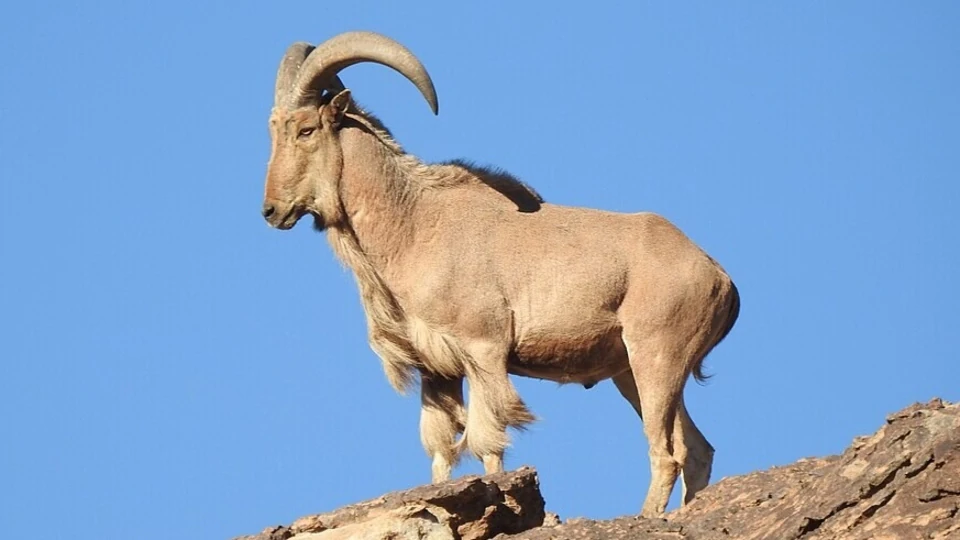
Animals introduced into a new environment can have consequences that extend far beyond their original purpose. In Texas, aoudad sheep, also known as Barbary sheep, were brought from northern Africa and released into the wild in the 1950s to support hunting opportunities. Decades later, their growing populations have raised concerns about competition with native wildlife, particularly desert bighorn sheep.
According to a 2025 Texas A&M AgriLife Extension fact sheet, aoudad were introduced into the wild in Palo Duro Canyon, Texas, in 1957. Since then, they have spread across several regions of the state and established substantial populations in habitats that overlap with native species.
Their expansion illustrates how introducing an exotic animal for hunting can create long-term wildlife management challenges. Aoudad are adapted to dry, rocky landscapes, can survive with limited access to standing water and eat a broad range of vegetation. These characteristics have helped them establish themselves in Texas, but they also allow the animals to compete with native wildlife for limited resources.
From northern Africa to Texas
Aoudad are native to the dry, mountainous regions of northern Africa. Also known as Barbary sheep, they are recognisable by their curved horns and distinctive appearance. The species is listed as vulnerable by the International Union for Conservation of Nature (IUCN), making its growing presence in Texas an unusual contrast to its conservation status in its native range.
An account from Texas Tech University in The Mammals of Texas, Seventh Edition states that fewer than 10,000 aoudad are thought to remain in their native range. Although the species faces conservation concerns in Africa, it has become well established in parts of the United States.
Aoudad were brought to the United States around 1900 and were kept in zoos and private preserves, according to the Texas Tech account. Releases into the wild began in the 1950s, first in New Mexico in 1950 and later in Texas in 1957.
The Texas A&M AgriLife Extension fact sheet explains that exotic wildlife species in Texas were introduced mainly for hunting purposes. Aoudad are considered an exotic species in the state, and their populations have subsequently expanded beyond their original release areas.
Texas permits hunting of exotic species under its applicable rules. The fact sheet notes that there are no closed seasons for exotic species in Texas, although hunters must hold a valid Texas hunting licence.
The original releases helped establish a population that would eventually spread across large areas of the state. What began as an effort to introduce an additional hunting species has since become a wildlife management issue because aoudad occupy environments also used by native animals.
How aoudad spread across Texas
The Texas Tech account provides details about the early introductions. In 1957, 31 aoudad were released southwest of Claude in Armstrong County. Another 13 were released near Quitaque in Briscoe County.
Over the following decades, the animals appeared far beyond these initial locations. The Texas A&M fact sheet reports that aoudad are now common in Texas, with established populations in the Edwards Plateau, Trans-Pecos, South Texas Plains and areas where the Rolling Plains meet the High Plains.
Private introductions also contributed to their spread into additional regions. As a result, their present distribution extends well beyond the areas where the original animals were released.
The Texas Tech account notes that an earlier estimate placed the state’s total aoudad population at more than 5,000 animals. More recent estimates cited in the account put the population at more than 30,000.
That increase highlights the species’ ability to establish itself in suitable habitats. However, the available figures should be understood as estimates rather than an exact count of every animal living in Texas.
Aoudad favour rough, rocky terrain and are skilled climbers. Their physical adaptations allow them to move through steep landscapes where finding food and water can be challenging for other animals.
They are also generalist feeders, meaning their diet is not restricted to a single type of vegetation. Depending on habitat conditions, rainfall and the season, they can consume grasses, woody plants or a combination of both.
Unlike animals that depend heavily on standing water, aoudad obtain much of their moisture from the plants they eat. This ability can help them survive in dry environments where water sources are limited or widely dispersed.
The animals also live in groups that can range from around 10 individuals to several hundred. Large groups can place substantial demands on local vegetation, particularly where food resources are already limited.
Why aoudad compete with native bighorn sheep
The expansion of aoudad populations has raised concerns because they share parts of Texas with native wildlife, including desert bighorn sheep and mule deer. The Texas A&M AgriLife Extension fact sheet identifies aoudad as major competitors with native Texas wildlife for food and habitat.
Competition can occur when different species depend on the same resources within a shared landscape. For aoudad and bighorn sheep, overlapping habitat preferences mean they may use the same rocky slopes, feeding areas and other parts of the environment.
Both species are adapted to dry, rugged terrain. This ecological similarity means that areas suitable for one can also attract the other, increasing the potential for competition when their populations overlap.
Food availability can become especially important in environments where vegetation is limited by low rainfall or difficult growing conditions. Because aoudad can eat both grasses and woody plants, their feeding habits may overlap with those of native herbivores across different habitats and seasons.
The Texas Tech account raises the possibility that aoudad and bighorn sheep may struggle to coexist in the same areas because of this competition. However, it also notes that the overall impact of aoudad on Texas wildlife and rangelands remains to be determined.
This distinction is important. Evidence that two species use similar habitats and food resources indicates the potential for competition, but determining the full ecological effect requires further assessment of local conditions, population levels and wildlife responses.
For wildlife managers, the challenge is to understand where competition is most significant and whether aoudad populations are affecting efforts to maintain or restore native species.
Disease transmission adds another concern
Competition for food and habitat is not the only potential problem associated with aoudad. The Texas A&M AgriLife Extension fact sheet also warns that the animals can transmit diseases to native wildlife and livestock, particularly when they are transported for hunting or breeding.
One example is Mycoplasma ovipneumoniae, a bacterium associated with respiratory disease in sheep. According to the fact sheet, aoudad can transmit this pathogen to bighorn sheep, for which infection can be deadly, even though it does not cause the same level of harm to aoudad.
Disease transmission is a concern because native bighorn populations can be vulnerable to outbreaks. When an introduced species carries a pathogen that has severe consequences for a native animal, contact between the populations can create an additional challenge for Wildlife Conservation.
The risk is not limited to animals living in the same location naturally. The fact sheet highlights the potential for disease transmission when aoudad are moved for hunting and breeding. Transporting animals between properties or regions can create opportunities for pathogens to spread beyond an established population.
According to the Texas Tech account, aoudad may also complicate efforts to reintroduce bighorn sheep into the Trans-Pecos region. Reintroduction programmes aim to restore native wildlife to suitable areas, but their success can depend on managing habitat conditions, disease risks and interactions with other species.
If aoudad occupy the same landscapes or carry pathogens that threaten bighorn sheep, conservation teams may face additional obstacles when attempting to establish or rebuild native herds.
However, the available accounts do not establish the total number of bighorn sheep affected by aoudad or quantify the full impact of disease transmission across Texas. The overall consequences for wildlife and rangelands remain an area requiring further assessment.
Could Texas aoudad help conserve the species in Africa?
The story of aoudad in Texas presents an unusual conservation question. Although their spread has raised concerns about competition with native wildlife, the species is considered vulnerable in its northern African range.
The Texas Tech account suggests that the population established in Texas could eventually become important for efforts to re-establish herds, given the species’ vulnerable status in its homeland.
That possibility does not remove the need to manage the animals’ effects on Texas ecosystems. Instead, it highlights the distinction between conserving a species and managing its impact when it lives outside its native range.
A species can face threats in its natural habitat while becoming abundant in an introduced environment. The conservation challenges in those two settings can be very different, depending on local wildlife communities, habitat conditions and the species’ population size.
For Texas, the immediate management priority described in the university accounts is to monitor aoudad and keep them away from areas where bighorn sheep are being re-established. Such measures could help reduce the potential for competition and disease transmission in sensitive locations.
The available information does not provide a detailed plan for controlling aoudad populations across the state or specify how their numbers should be managed in every region. The appropriate approach may depend on local conditions and the conservation objectives for native wildlife.
What the aoudad story reveals about introduced wildlife
The history of aoudad in Texas demonstrates how wildlife introductions can have consequences long after the original decision has been made. Animals released for hunting in the 1950s have spread into several regions, established large populations and created potential conflicts with native species.
Their success is partly linked to their adaptability. Aoudad can climb steep terrain, feed on different types of vegetation and obtain much of their moisture from plants. These traits help them survive in dry landscapes, but they can also make it difficult to prevent populations from expanding into suitable habitats.
Their presence alongside desert bighorn sheep creates concerns about competition for food and space. The possibility of transmitting respiratory disease adds another layer of risk, particularly in areas where conservation teams are attempting to restore native bighorn populations.
At the same time, the vulnerable status of aoudad in northern Africa complicates the broader picture. The Texas population may have potential value for future conservation efforts, even as wildlife managers assess the species’ effects on local ecosystems.
The Texas A&M AgriLife Extension and Texas Tech University accounts emphasise the need to monitor the species and consider its interactions with native wildlife. They also acknowledge that the full impact on Texas wildlife and rangelands has not yet been determined.
Conclusion
Aoudad sheep were introduced into Texas in 1957 as part of a wider effort to establish exotic wildlife for hunting. From the initial releases in Armstrong and Briscoe counties, the population spread across several regions and grew to an estimated size exceeding 30,000 animals in the figures cited by Texas Tech University.
Their adaptability has helped them thrive, but their overlapping habitat with desert bighorn sheep and other native animals has raised concerns about competition for food and space. Potential disease transmission, including the spread of respiratory pathogens that can be deadly to bighorn sheep, adds to the challenges facing wildlife managers.
The full ecological impact remains uncertain, and the species’ vulnerable status in its native African range introduces a further conservation consideration. The central challenge for Texas is to monitor aoudad populations, limit risks to native wildlife in sensitive areas and understand how an introduction made decades ago continues to shape the state’s ecosystems.
For breaking news and live news updates, like us on Facebook or follow us on Twitter and Instagram. Read more on Latest World on thefoxdaily.com.






COMMENTS 0