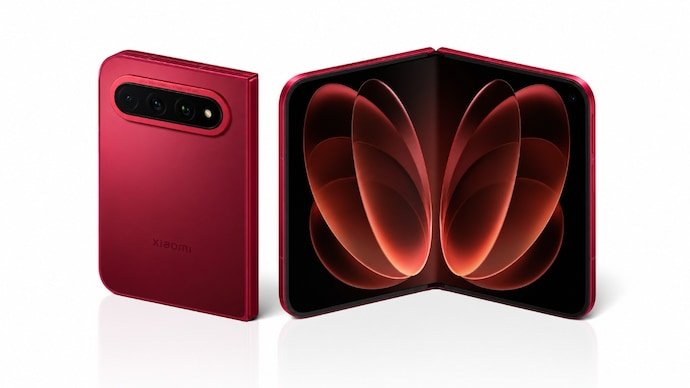
Xiaomi 18 Fold has officially launched in china as the company’s latest premium foldable smartphone, combining a wider book-style design with high-end hardware aimed at the growing flagship foldable market. The phone brings Xiaomi’s new Xring O3 AI processor, a Leica-backed triple rear camera system led by a 200-megapixel main sensor, two 120Hz AMOLED displays and a 6,000mAh battery.
The Xiaomi 18 Fold also stands out for its dimensions. Despite carrying a large battery and a tablet-like inner display, the device measures just 5.02mm when unfolded and weighs 219 grams. That puts Xiaomi’s latest foldable firmly in the race to make large-screen folding phones thinner and easier to carry.
The phone has initially been introduced for the Chinese market, with prices starting at CNY 10,999. Xiaomi has not yet announced an India launch date or confirmed global availability.
Xiaomi 18 Fold takes a wider approach to book-style foldables
The Xiaomi 18 Fold follows a design direction that is becoming increasingly important in the foldable smartphone market: making the closed phone wider and more usable while maintaining a large display when opened.
Instead of using an especially narrow outer screen that can feel restrictive for everyday typing and browsing, Xiaomi has opted for a 5.38-inch cover display. When unfolded, the phone opens into a 7.58-inch screen that gives it a more tablet-like workspace.
Xiaomi describes the device as a medium-fold solution. Its compact proportions when closed are designed to make the handset easier to carry, while the larger internal panel is intended for multitasking and productivity.
The approach also reflects the direction taken by several recent premium foldables, where manufacturers are trying to reduce the compromises between a conventional smartphone and a folding tablet.
7.58-inch 120Hz inner display is built for multitasking
The main attraction of the Xiaomi 18 Fold is its large internal AMOLED panel. The 7.58-inch foldable display supports a 120Hz refresh rate and can reach up to 4,000 nits of peak brightness.
The high refresh rate should make scrolling, animations and compatible games feel smoother, while the large screen gives users substantially more space for documents, websites, media and multiple applications.
Xiaomi is also using low-power Pol-less technology for the inner display. The technology is intended to reduce display-related power consumption, an important consideration on a foldable with a large high-refresh-rate panel.
The 5.38-inch outer AMOLED screen also supports 120Hz refresh rates and up to 4,000 nits of peak brightness. It is protected by Xiaomi Dragon Crystal Glass 3.0, giving the cover screen additional protection for normal everyday use.
Xiaomi 18 Fold specifications at a glance
| Feature | Xiaomi 18 Fold |
|---|---|
| Cover display | 5.38-inch AMOLED, 120Hz |
| Inner display | 7.58-inch foldable AMOLED, 120Hz |
| Peak brightness | Up to 4,000 nits |
| Processor | 3nm Xring O3 AI flagship chipset |
| RAM | Up to 16GB |
| Storage | Up to 1TB UFS 4.1 |
| Rear cameras | 200MP main + 50MP periscope telephoto + 50MP ultrawide |
| Front cameras | 16MP inner and outer cameras |
| Battery | 6,000mAh |
| Wired charging | 67W |
| Wireless charging | 50W |
| Thickness | 5.02mm unfolded, 10.68mm folded |
| Weight | 219 grams |
| Connectivity | 5G, Wi-Fi 7, Bluetooth 6.0, NFC, USB Type-C |
| SIM support | Dual Nano-SIM |
| Durability | IP58 and IP59 ratings |
| Software | Android 17-based HyperOS 4 |
Xring O3 is the Xiaomi 18 Fold’s biggest hardware statement
Under the hood, Xiaomi has equipped the 18 Fold with its new 3nm Xring O3 AI flagship processor. The move is significant because Xiaomi has been Investing heavily in its own silicon instead of relying entirely on third-party chip suppliers for its premium devices.
The Xring O3 is built as a deca-core processor and is paired with an advanced graphics architecture designed to support demanding workloads and AI-focused processing. Xiaomi is positioning the chip as the core of a flagship platform rather than simply another component in the phone.
The processor can be configured with up to 16GB of RAM and 1TB of UFS 4.1 storage. The highest-end configuration also uses LPDDR6 memory, adding another premium component to the specification sheet.
The importance of the Xring O3 goes beyond benchmark numbers. For Xiaomi, developing an in-house flagship processor gives the company greater control over how its hardware, operating system and AI features interact. It also strengthens Xiaomi’s position as Chinese smartphone brands increasingly seek more control over critical semiconductor technologies.
200MP Leica camera leads the triple-camera setup
Photography is another major focus of the Xiaomi 18 Fold. The foldable comes with a Leica-backed triple rear camera system, making it one of the more camera-focused book-style foldables currently available.
The primary camera uses a 200-megapixel sensor with an f/1.7 aperture and optical image stabilisation. The combination of high sensor resolution, a wide aperture and OIS is designed to improve flexibility across daylight and low-light photography.
The main camera is joined by a 50-megapixel periscope telephoto camera that provides 3.5x optical zoom and up to 7x optical-quality zoom. This gives the phone a dedicated long-range option instead of relying solely on digital cropping from the main sensor.
A 50-megapixel ultrawide camera completes the rear setup, giving users a wider field of view for landscapes, architecture, group shots and other situations where stepping back is not practical.
There are also 16-megapixel cameras on both the cover and inner displays for selfies and video calls. This arrangement lets users use the camera on whichever screen is more convenient while the phone is open or closed.
6,000mAh battery is unusually large for a thin foldable
Battery capacity has traditionally been one of the biggest challenges for foldable phones because manufacturers have to balance screen size, hinge mechanisms, thermal requirements and overall thickness.
Xiaomi has addressed that challenge with a 6,000mAh battery in the 18 Fold. The capacity is notably large for a flagship foldable and is intended to support the demands of a high-refresh-rate inner display, powerful processor and camera hardware.
The phone supports 67W wired charging and 50W wireless charging. The combination gives users both relatively fast wired charging and the convenience of wireless charging when speed is less important.
Battery capacity alone does not determine real-world endurance, however. Actual battery life will depend on display brightness, refresh rate, network use, gaming, camera usage and the efficiency of Xiaomi’s hardware and software. The large capacity does give Xiaomi more room to manage those demands.
Thin design does not come at the expense of weight
One of the more notable Xiaomi 18 Fold specifications is its thickness. The phone is just 5.02mm thick when unfolded and 10.68mm when folded.
It weighs 219 grams, which Xiaomi is highlighting as part of the device’s portability story. For a smartphone that transforms into a 7.58-inch tablet-style device, keeping the weight below many large conventional smartphones is an important engineering achievement.
The challenge with thin foldables is durability. The slimmer a device becomes, the more difficult it can be to fit structural reinforcement, batteries and a robust hinge system without compromising reliability.
Xiaomi has therefore combined the slim body with additional structural measures, including a strengthened aluminium frame and improvements to the hinge and protective glass. The company has also given the device IP58 and IP59 ratings for dust and water resistance.
HyperOS 4 brings Android 17 to the foldable
The Xiaomi 18 Fold runs Android 17-based HyperOS 4 out of the box. Software is especially important on foldables because the operating system has to adapt between the compact outer display and the larger internal screen.
The 7.58-inch panel offers enough space for multi-window use and productivity applications that would feel constrained on a standard smartphone. Xiaomi is also promoting the phone’s ability to support multiple apps side by side, making the internal display more useful for multitasking.
A foldable’s value therefore depends on more than screen size. App compatibility, split-screen controls, continuity between displays and intelligent window management all influence whether the larger panel feels genuinely useful or simply bigger.
Connectivity and other features
The Xiaomi 18 Fold includes a broad set of flagship connectivity options. It supports 5G, Wi-Fi 7, Bluetooth 6.0 and NFC, along with a USB Type-C port.
The device supports dual Nano-SIM connectivity, giving users flexibility for multiple mobile connections. Xiaomi has also included stereo speakers, Dolby Atmos support and spatial audio for a more immersive media experience.
Security features include both side-mounted fingerprint unlocking and face unlock. The phone also uses a three-microphone array designed to support calls, recordings and voice-based functions.
Combined with the large inner screen and powerful processor, these features make the Xiaomi 18 Fold more than a specification-focused experiment. Xiaomi is clearly positioning the device as a full flagship rather than a niche foldable.
Xiaomi 18 Fold price in China
The Xiaomi 18 Fold starts at CNY 10,999 for the model with 12GB of RAM and 256GB of storage. Using approximate currency conversions, that works out to around Rs 1.55 lakh, although an eventual Indian price would depend on taxes, duties and Xiaomi’s local pricing strategy.
The higher-storage and higher-memory configurations move the price significantly upward.
| Variant | China Price | Approx. INR |
|---|---|---|
| 12GB + 256GB | CNY 10,999 | About Rs 1.55 lakh |
| 12GB + 512GB | CNY 11,999 | About Rs 1.69 lakh |
| 16GB + 512GB | CNY 12,999 | About Rs 1.83 lakh |
| 16GB + 1TB | CNY 14,999 | About Rs 2.11 lakh |
| Ceramic Special Edition, 16GB + 1TB | CNY 15,999 | About Rs 2.25 lakh |
Xiaomi is also offering a Ceramic Special Edition with 16GB of RAM and 1TB of storage. Priced at CNY 15,999, it sits above the standard top-end model and pushes the foldable deeper into the ultra-premium segment.
Colours and availability
The Xiaomi 18 Fold is available in Black, Nishino Red and Warm Gold White. The red variant gives the device a more distinctive appearance, while the other finishes target buyers looking for more conventional premium styling.
Sales are beginning in China following the launch event, while pre-orders have been opened for Chinese buyers. Xiaomi has not confirmed an India launch date, India pricing or a broader global release at this stage.
That means the Chinese pricing should not be treated as an expected Indian retail price. Imported units can cost considerably more once taxes, Shipping, warranty considerations and retailer margins are taken into account.
Why the Xiaomi 18 Fold matters for the foldable market
The Xiaomi 18 Fold arrives at a significant point for premium Foldable Smartphones. The market is moving beyond early experiments and toward devices that are expected to deliver flagship performance, strong cameras and everyday durability while remaining close to conventional smartphones in size and weight.
Xiaomi is competing on several fronts at once. The wider outer display addresses usability, the 7.58-inch internal panel targets productivity, the Xring O3 provides a proprietary flagship processor, and the 200MP Leica camera gives the phone a strong imaging identity.
The company is also entering a market where Huawei, samsung and other manufacturers are pushing different interpretations of the foldable form factor. Xiaomi’s approach is not a tri-fold device; instead, it concentrates on making the traditional book-style format thinner, wider and more powerful.
The timing is particularly notable because Xiaomi’s launch comes alongside renewed competition in China’s premium foldable segment and ahead of expectations surrounding apple’s expansion into foldable smartphones.
What could determine the Xiaomi 18 Fold’s success
The specification sheet gives Xiaomi a strong starting point, but premium foldables are judged on more than processor speed or camera resolution.
Long-term hinge reliability, inner-screen durability, battery endurance, software optimisation and repairability can have a major impact on ownership. The phone’s relatively low weight and slim profile are impressive, but buyers will also want to know how those engineering choices perform after months or years of repeated folding.
Software support will be another important factor. A large inner screen becomes much more valuable when applications properly adapt to it and when the interface makes multitasking genuinely faster than using a conventional smartphone.
Finally, global availability could determine how widely the Xiaomi 18 Fold influences the wider foldable market. For now, Xiaomi has confirmed the device for China, leaving potential buyers in India and other regions waiting for information about an international launch.
Xiaomi 18 Fold: flagship ambition in a slimmer package
The Xiaomi 18 Fold combines several technologies that are increasingly defining the premium smartphone segment: an in-house AI-focused processor, high-resolution Leica imaging, a large foldable AMOLED Display, advanced memory, fast charging and a thin, relatively lightweight body.
Its 7.58-inch 120Hz inner display, 200MP Leica-backed camera, 6,000mAh battery and Xring O3 chipset make it one of Xiaomi’s most ambitious foldable launches yet. The pricing also places it firmly in the premium category, with the top standard version reaching CNY 14,999.
For now, the biggest unanswered question is whether Xiaomi will bring the 18 Fold beyond China. Until the company announces international pricing and availability, the Xiaomi 18 Fold remains primarily a Chinese-market flagship, but its combination of thinness, battery capacity, proprietary silicon and camera hardware shows how aggressively Xiaomi is approaching the next stage of foldable smartphones.
For breaking news and live news updates, like us on Facebook or follow us on Twitter and Instagram. Read more on Latest Technology on thefoxdaily.com.






COMMENTS 0