- What Happened to Air France Flight AF447?
- The Technical Failure That Triggered the Disaster
- Why the Court Found Airbus and Air France Guilty
- Why This Verdict Matters Beyond France
- How AF447 Changed Pilot Training Worldwide
- The Human Factor: Why AF447 Still Resonates Emotionally
- Why the Financial Penalties Are Being Criticized
- The Broader Aviation Industry Lesson
- Could Another AF447 Happen Today?
- Further Appeals Could Extend the Legal Battle
- How AF447 Became a Defining Aviation Story of the 21st Century
- Conclusion
The 2009 crash of Air France Flight AF447 has long haunted the aviation industry, not only because 228 people lost their lives in the middle of the Atlantic Ocean, but because the disaster exposed dangerous gaps in pilot training, aircraft Automation, and corporate accountability.
Now, after nearly two decades of investigations, courtroom battles, technical disputes, and emotional testimony from grieving families, a Paris appeals court has found Air France and Airbus guilty of corporate manslaughter.
The ruling marks a major turning point in one of the most closely watched aviation legal cases in Europe. While the financial penalties imposed on the companies are relatively small compared to their global revenues, the symbolic weight of the judgment is enormous.
The verdict also revives broader questions that continue to challenge the aviation industry today: How much should pilots rely on automation? When does a technical flaw become corporate negligence? And can modern aircraft systems create confusion during emergencies instead of preventing them?
What Happened to Air France Flight AF447?
Air France Flight AF447 departed Rio de Janeiro on May 31, 2009, bound for Paris Charles de Gaulle Airport. The aircraft, an Airbus A330 carrying passengers and crew from 33 countries, vanished from radar in the early hours of June 1 while crossing the Atlantic Ocean.
For days, the disappearance remained a mystery. Unlike many aviation accidents that occur near airports or populated regions, AF447 crashed into one of the most remote and deepest parts of the ocean.
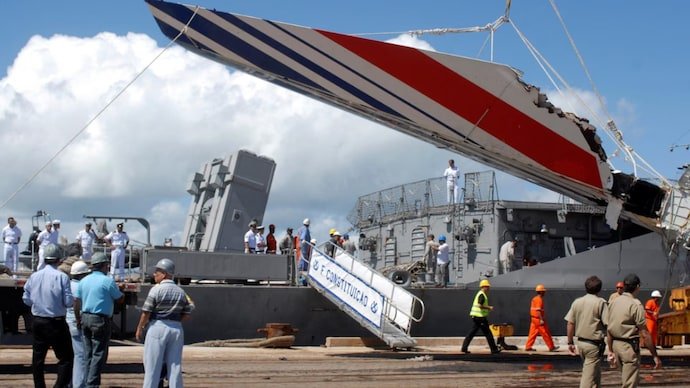
The aircraft’s wreckage and black boxes were not recovered until nearly two years later following an expensive and technically challenging underwater search operation.
| Key Facts About Flight AF447 | Details |
|---|---|
| Flight Number | Air France AF447 |
| Date of Crash | June 1, 2009 |
| Aircraft | Airbus A330-203 |
| Route | Rio de Janeiro to Paris |
| Fatalities | 228 passengers and crew |
| Crash Location | Atlantic Ocean |
| Black Boxes Recovered | 2011 |
The recovered flight data recorders revealed a terrifying sequence of events inside the cockpit.
The Technical Failure That Triggered the Disaster
Investigators from France’s BEA aviation safety agency concluded that the crash began with the temporary freezing of the aircraft’s pitot tubes sensors used to measure airspeed.
As the aircraft encountered high-altitude storm conditions over the Atlantic, ice crystals obstructed the sensors, causing inconsistent speed readings. The aircraft’s autopilot disconnected automatically because it could no longer trust the incoming data.
What happened next became one of the most studied cockpit failures in aviation history.
The pilots, suddenly forced to manually control the aircraft in turbulent weather at night, struggled to understand what was happening. Instead of stabilizing the aircraft, inappropriate control inputs caused the plane to enter an aerodynamic stall a condition where wings lose lift.
Crucially, the crew failed to recognize the stall despite repeated warnings.
The aircraft descended rapidly for more than four minutes before crashing into the ocean.
Why the Court Found Airbus and Air France Guilty
The legal case centered on a difficult but critical issue: whether corporate negligence contributed directly to the crash.
Prosecutors argued that both Airbus and Air France were aware of recurring issues involving pitot tube icing before the disaster occurred. Similar incidents had reportedly been documented on other flights.
According to arguments presented during the trial:
- Air France allegedly failed to provide sufficient pilot training for high-altitude manual flying scenarios.
- Airbus allegedly underestimated the risks associated with unreliable airspeed events.
- Both companies allegedly failed to react aggressively enough to earlier warning signs.
The appeals court ultimately concluded that the companies had committed acts of negligence serious enough to constitute corporate manslaughter under French law.
This reversed a 2023 lower court decision that had acquitted both companies.
Why This Verdict Matters Beyond France
The AF447 ruling is not just about a single crash from 2009. It reflects a growing global shift toward demanding greater accountability from Aerospace manufacturers and airlines.
Modern aviation is built on layers of automation. Commercial aircraft today are extraordinarily safe, but the AF447 tragedy exposed a hidden vulnerability: pilots can become overwhelmed when automated systems suddenly fail.
The case also highlights a tension that continues to exist across the industry:
- Aircraft are becoming more technologically advanced.
- Pilot workloads are increasing during rare emergencies.
- Training programs sometimes struggle to replicate real-world confusion.
AF447 changed how aviation authorities worldwide think about pilot preparedness.
How AF447 Changed Pilot Training Worldwide
One of the most significant consequences of the crash was the overhaul of airline pilot training programs.
Before AF447, many airlines emphasized automation management because modern aircraft spent most flights under autopilot control. Manual flying at high altitude was rarely practiced extensively.
After the crash, regulators and airlines introduced major reforms.
| Major Aviation Changes After AF447 | Industry Response |
|---|---|
| Stall Recovery Training | Expanded mandatory pilot training |
| Manual Flying Practice | Greater emphasis on high-altitude handling |
| Pitot Tube Design | Improved sensor technology and replacement programs |
| Cockpit Communication | Enhanced crew coordination procedures |
| Automation Awareness | Training focused on automation dependency risks |
Today, pilots receive more intensive instruction on how to recover from stalls and interpret conflicting instrument data under stress.
In many ways, AF447 became a case study for what aviation experts call “automation surprise” moments when pilots suddenly lose confidence in aircraft systems and become disoriented.
The Human Factor: Why AF447 Still Resonates Emotionally
Unlike many aviation disasters caused by a single catastrophic explosion or structural failure, AF447 unfolded slowly enough for the cockpit crew to remain conscious of the crisis until the final moments.
The cockpit recordings recovered from the black boxes revealed confusion, miscommunication, and escalating panic.
For families of the victims, those details made the tragedy even harder to process.
Many relatives spent years campaigning for accountability because they believed the disaster was preventable.
The appeals court ruling therefore carries emotional significance far beyond the modest financial fines imposed on the companies.
For many families, the judgment represents official acknowledgment that systemic failures contributed to the deaths of their loved ones.
Why the Financial Penalties Are Being Criticized
The court ordered Airbus and Air France to each pay fines of €225,000 the maximum penalty available for corporate manslaughter under French law.
Critics argue the fines are tiny compared to the financial scale of the companies involved.
Airbus generates billions of euros annually, while Air France remains one of Europe’s largest airlines.
To many observers, the penalties appear symbolic rather than punitive.
However, legal experts note that the reputational consequences may matter more than the monetary punishment.
Being formally convicted in connection with one of the world’s deadliest aviation disasters creates long-term legal and public relations implications.
The Broader Aviation Industry Lesson
The AF447 disaster fundamentally changed how the aviation world thinks about the relationship between humans and machines.
For decades, aviation Technology focused on minimizing pilot error through automation. Ironically, AF447 demonstrated that excessive dependence on automated systems can itself become dangerous.
This issue remains highly relevant today.
As aircraft manufacturers increasingly develop AI-assisted cockpit systems and more autonomous technologies, aviation regulators face a difficult balancing act:
- Technology can reduce routine mistakes.
- But pilots still need strong manual flying instincts.
- Rare emergencies require rapid human judgment.
AF447 is now frequently cited alongside other major aviation incidents involving automation confusion, including the Boeing 737 MAX crashes.
Both cases raised uncomfortable questions about whether modern pilots are always given enough information, training, or system transparency during emergencies.
Could Another AF447 Happen Today?
The aviation industry has implemented major reforms since 2009, making a repeat of the exact AF447 scenario less likely.
Aircraft sensors have improved. Pilot training is more comprehensive. Airlines place greater emphasis on upset recovery and manual flight skills.
However, aviation experts caution that new technological risks continue to emerge.
Modern cockpits remain highly complex environments where humans and automated systems must work seamlessly together. As aircraft software becomes more sophisticated, maintaining pilot understanding and situational awareness becomes increasingly important.
The core lesson of AF447 is therefore timeless: technology alone cannot guarantee safety.
Further Appeals Could Extend the Legal Battle
The case may not be over yet.
French legal experts expect further appeals to the country’s highest court. If that happens, the process could continue for several more years.
Future proceedings would likely focus less on the technical details of the crash and more on legal interpretations surrounding corporate negligence and criminal responsibility.
That means the AF447 case could continue shaping aviation law long after the disaster itself.
How AF447 Became a Defining Aviation Story of the 21st Century
Some aviation disasters fade from public memory after investigations conclude. AF447 did the opposite.
The crash became a defining example of modern aviation complexity because it involved:
- Advanced automation systems
- Human decision-making under stress
- Corporate accountability
- International legal scrutiny
- Oceanic search technology
- Pilot training reform
It also exposed a reality that many passengers rarely consider: even in an age of sophisticated aircraft computers, aviation safety still depends heavily on how humans respond when systems fail unexpectedly.
That uncomfortable truth continues to influence airlines, regulators, manufacturers, and pilots worldwide.
Conclusion
The French court’s decision to find Air France and Airbus guilty over the AF447 disaster closes one chapter in a tragedy that reshaped modern aviation but it does not end the larger conversation.
The crash of Flight AF447 forced the aviation industry to confront difficult questions about automation, pilot training, and corporate responsibility. It triggered major safety reforms that continue protecting passengers today.
For the families of the 228 victims, the ruling represents long-awaited recognition after nearly seventeen years of legal battles and emotional pain.
For the aviation industry, AF447 remains a powerful reminder that even the most advanced aircraft can become vulnerable when technology, training, and human judgment fail simultaneously.
And for future generations of pilots and engineers, the lessons of AF447 will likely remain embedded in aviation training manuals, cockpit design philosophy, and safety debates for decades to come.
For breaking news and live news updates, like us on Facebook or follow us on Twitter and Instagram. Read more on Latest World on thefoxdaily.com.




COMMENTS 0