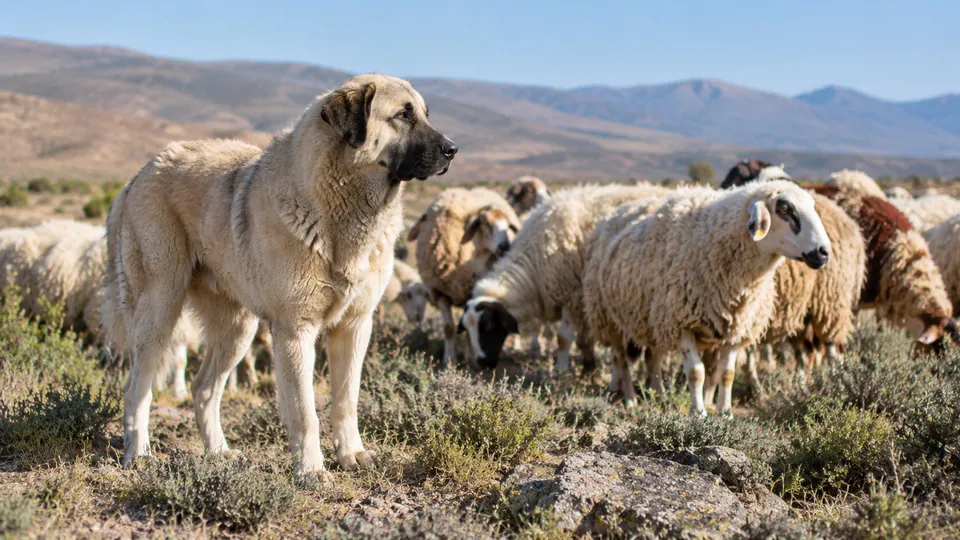
Livestock losses caused by predators such as cheetahs and jackals can create serious financial challenges for farmers, particularly in areas where livestock and wildlife share the same landscape. When predators attack cattle, sheep or goats, farmers may also resort to killing wild animals in retaliation, increasing the pressure on already vulnerable wildlife populations. In Namibia, the Cheetah Conservation Fund (CCF) began addressing this conflict in 1994 by placing specially trained livestock guarding Dogs on farms.
A review published in 2021 examined the program’s first 25 years and found that most surveyed farmers reported fewer livestock losses after receiving a guarding dog. According to the review, 91% of surveyed farmers reported reduced livestock losses, while 67% said they experienced no livestock losses during the year after a dog was placed on their farm. The findings suggest that livestock guarding dogs can be a useful tool for reducing conflict between farmers and predators, although the study does not establish that the dogs alone caused the reported improvements.
Led by Laurie Marker, the research team assessed dog placements made between 1994 and 2018. During that period, the CCF placed 634 livestock guarding dogs with farmers in Namibia. Researchers collected information covering 472 dogs through 1,567 farm surveys, examining livestock losses, farmer satisfaction, predator-control practices, dog health and unwanted behavior.
The program has particular significance for cheetah conservation because more than 90% of Namibia’s cheetahs live outside protected areas, according to the review. In these landscapes, cheetahs can come into contact with livestock farmers, creating the possibility of conflict when animals are lost. By helping farmers protect their herds, guarding dogs may reduce the perceived need to kill predators.
Why Namibia Introduced Livestock Guarding Dogs
Namibia’s livestock farmers face the challenge of protecting their animals in landscapes also inhabited by wild predators. Jackals, cheetahs and caracals can prey on livestock, and repeated losses may affect farmers’ incomes and livelihoods. For farmers already dealing with the costs of raising animals, even a relatively small number of predator attacks can become a substantial concern.
These losses can also have consequences for wildlife. When farmers believe that predators are threatening their livelihoods, they may use lethal control to prevent further attacks. Such responses can place additional pressure on wild animal populations and intensify conflict between conservation efforts and agricultural activities.
The Cheetah Conservation Fund introduced livestock guarding dogs as a practical way to address both sides of this problem. Instead of relying exclusively on killing predators after livestock attacks, farmers could use dogs that live alongside their herds and help deter potential threats.
The approach aims to make livestock protection compatible with Wildlife Conservation. If farmers experience fewer losses, they may have less reason to retaliate against predators. However, the 2021 review also highlighted that guarding dogs can affect wildlife themselves, meaning the approach requires responsible management rather than being treated as a risk-free solution.
How the CCF Livestock Guarding Dog Program Works
The program uses Anatolian shepherds and Kangal dogs, breeds originating in Turkey that have traditionally been used to guard livestock. Their role is to remain with the herd and provide a protective presence that can discourage predators from approaching vulnerable animals.
The CCF’s placement process begins when puppies are introduced to small livestock at approximately four weeks of age. This early contact helps them develop an association with the animals they will eventually protect. As the puppies mature, they become accustomed to remaining close to the herd instead of treating livestock as unfamiliar animals.
The dogs are placed on farms when they are between 10 and 12 weeks old. Before a placement takes place, the farm must pass an approval check. This process helps determine whether the farm is suitable for a guarding dog and whether the placement can be carried out under appropriate conditions.
Early bonding is an important part of the method because the dog is expected to live and work alongside livestock as it grows. A dog that stays with the herd can provide a continuing protective presence rather than responding only after a predator has attacked.
Nevertheless, the review showed that successful placement does not automatically guarantee that every dog will behave as intended. Some dogs developed behavioral problems, including remaining at home instead of accompanying the herd. The researchers therefore emphasized the importance of supervision, proper care and efforts to prevent or correct unwanted behavior.
What the 25-Year Review Found About Livestock Losses
The review found a substantial difference between farmers’ reported livestock losses before and after receiving a guarding dog. In the year before placement, 19% of respondents said they had lost more than 10 livestock animals. Another 7% reported losses exceeding 40 animals, illustrating the scale of the problem faced by some participating farmers.
After the dogs arrived, the reported pattern changed. During the following year, 67% of surveyed farmers said they had experienced no livestock losses. Meanwhile, only 2% reported losing more than 10 animals.
The findings indicate that many participating farmers experienced a considerable improvement in livestock protection after a dog was introduced. The broader review also reported that 91% of surveyed farmers said their livestock losses had declined.
These results help explain why the program received favorable responses from participating farmers. Livestock losses can directly affect farm income, and preventing attacks can reduce the financial pressure associated with replacing lost animals or taking additional measures to protect a herd.
However, the figures represent farmers’ survey responses rather than results from a controlled experiment. The study cannot conclusively demonstrate that the dogs were responsible for every reported change. Other factors may have influenced livestock losses, and the researchers cautioned that the survey findings should be interpreted carefully.
Jackal-Related Livestock Losses Fell by 45%
One of the most notable findings concerned the differences in reported losses attributed to individual predator species. According to the review, losses attributed to jackals fell by 45% in the year after a guarding dog was placed.
The reported reduction was smaller for other predators. Losses attributed to cheetahs declined by 16%, while losses attributed to caracals fell by 15%.
The differences suggest that the reported benefits varied depending on the predator involved. Jackals showed the largest decline in attributed livestock losses, while the reductions associated with cheetahs and caracals were more modest.
For cheetah conservation, the reported 16% decline is relevant because the program was designed partly to reduce the conflict that can arise when farmers lose livestock to predators. However, the results do not establish that guarding dogs will produce the same outcome on every farm or in every setting.
The figures also underline the importance of considering multiple predators when evaluating livestock-protection measures. Farmers may encounter different wildlife species, and a strategy that appears particularly effective against one source of loss may produce a different result against another.
Farmers Reported High Satisfaction With the Dogs
Farmer satisfaction was another important part of the review. Approximately 93% of respondents said the dogs met their expectations, while 99% said they would recommend the program to other farmers.
These responses suggest that the program was generally well received by the people WHO used it. Farmers’ willingness to recommend the approach indicates that many considered it a practical option for protecting livestock and managing encounters with predators.
The survey also included assessments of the dogs’ physical condition. Respondents rated 71% of the dogs in good condition and 22% in excellent condition.
These assessments provide information about the animals’ condition within the program, but they also need to be considered alongside the review’s findings about mortality, accidents and behavior. Guarding dogs operate in demanding environments, and their effectiveness depends partly on their welfare and ability to remain with the livestock they are meant to protect.
The high satisfaction figures therefore offer an encouraging indication of the program’s perceived value, while the other findings demonstrate why continuing attention to dog health and management remains necessary.
Did the Program Reduce Lethal Predator Control?
Reducing retaliatory killings is an important conservation objective behind the use of livestock guarding dogs. When farmers experience fewer predator-related losses, they may feel less pressure to kill wild animals to protect their herds.
The review found a decline in reported use of lethal predator control after dogs were placed on farms. Before receiving a dog, 13% of farmers said they used lethal control. After placement, the figure fell to 8%.
The researchers described this as a modest reduction. They suggested that the change could reflect evolving attitudes toward wildlife, but they did not establish that the dogs alone were responsible for the decline.
The results also do not demonstrate that the program eliminated retaliatory killings. Some farmers continued to report lethal control after receiving dogs, showing that the introduction of a guarding animal does not necessarily resolve every source of conflict between livestock production and wildlife.
Even so, the decrease provides a useful indication of how non-lethal livestock protection might contribute to conservation efforts. The approach offers farmers an alternative to relying exclusively on lethal methods, although its success depends on local conditions, dog management and the effectiveness of the protection provided.
Risks to the Dogs: Accidents, Mortality and Behavioral Problems
Although the review found positive outcomes for many farmers, it also documented considerable risks faced by the guarding dogs themselves. Their average lifespan was 56 months, and 32% of recorded deaths occurred before the animals reached two years of age.
Field accidents were identified as the leading cause of death. Snake bites accounted for more than half of these accidents, highlighting the hazards dogs can encounter while working in rural environments.
The findings show that livestock guarding is not without risks for the animals carrying out the work. Their daily environment can expose them to dangers that are difficult to eliminate completely, making proper care and attention to their safety important parts of the program.
Behavioral problems were reported in 28% of surveys. The most common issue was dogs staying at home instead of accompanying the herd. This behavior can undermine the purpose of a placement because the dog may not be present when livestock need protection.
The researchers emphasized the importance of early supervision and appropriate care to prevent or correct unwanted behavior. Introducing puppies to livestock at a young age helps establish the intended association, but continued management is also necessary as the dogs mature.
Unwanted Behavior Became Less Common Over Time
The review identified changes in certain behaviors across the program’s history. Dogs surveyed between 2010 and 2018 were 4.47 times less likely to chase game than dogs surveyed between 1994 and 2001.
This finding suggests that unwanted game-chasing behavior was reported less frequently in the later period than during the program’s early years. However, the result does not mean that such behavior disappeared entirely or that every dog became reliable around wildlife.
The researchers highlighted the importance of proper care and early supervision in addressing undesirable behavior. These measures are relevant because a dog introduced to protect livestock can create new problems if it chases or attacks wild animals.
For conservation programs considering similar approaches, the finding underscores the need to evaluate more than livestock-loss figures. The behavior of guarding dogs can influence their effectiveness, their welfare and their interactions with the wider ecosystem.
Wildlife Risks: Dogs Were Reported Killing Wild Animals
One of the review’s important qualifications concerns the impact of guarding dogs on wildlife. Reports of dogs killing wild animals, mostly jackals, appeared in 41% of surveys.
Most recorded incidents involved individual animals. However, a small number of surveys reported that 50 or more jackals had been killed, indicating that some incidents involved much larger numbers.
These findings introduce an important complication into the assessment of livestock guarding dogs. The animals may help reduce livestock losses and could lessen some pressures that lead farmers to kill predators, but the dogs themselves may also kill wild animals.
The authors said these ecological effects require further investigation. The available survey results do not provide a complete picture of the wider consequences for wildlife populations, nor do they establish the overall ecological impact of every dog placement.
This issue is particularly relevant when the objective is to reduce conflict between livestock production and wildlife conservation. A program cannot be judged solely by whether farmers report fewer losses; it is also necessary to consider whether the intervention creates other risks for wild animals.
Responsible management, appropriate supervision and continued monitoring are therefore important considerations when using guarding dogs. The review’s findings suggest that the method can offer meaningful benefits, but its wider conservation value depends on understanding and managing potential negative effects.
Why the Study’s Limitations Matter
The 2021 review covered a substantial period, examining placements made over 25 years. It included information on 472 dogs through 1,567 farm surveys, providing a broad record of farmers’ experiences with the program.
However, the authors cautioned that the survey results may underestimate livestock losses. This limitation matters because an incomplete record of losses could affect how the program’s effectiveness is assessed.
Another concern is the possibility that respondents gave answers they believed interviewers wanted to hear. If farmers felt pressure to report favorable experiences, their responses could have influenced the findings.
These limitations mean that the reported reductions should not be treated as definitive proof that the dogs caused every improvement. The study documents farmers’ reported experiences before and after placement, but it cannot rule out other explanations for the observed changes.
The findings also should not be interpreted as evidence that guarding dogs prevent all livestock losses, eliminate predator conflict or remove the need for other farm-management measures. The reported outcomes varied by predator species, and the review identified continuing problems involving dog behavior, mortality and wildlife impacts.
Nevertheless, the researchers concluded that the program had been successful overall. They recommended livestock guarding dogs for other areas experiencing similar livestock losses, while the study’s documented limitations and risks remain important considerations for future implementations.
What the Findings Mean for Cheetah Conservation
The program addresses a central challenge for wildlife conservation: how to protect wild predators while recognizing the economic pressures faced by people who share landscapes with them.
More than 90% of Namibia’s cheetahs live outside protected areas, according to the review. Their presence in these landscapes can bring them into contact with livestock operations, where attacks may create conflict between farmers and conservation objectives.
Livestock guarding dogs offer one possible way to reduce that conflict. The review found that most surveyed farmers reported lower livestock losses, with particularly substantial reductions in losses attributed to jackals. It also documented high farmer satisfaction and a decline in reported use of lethal predator control.
At the same time, the findings show that conservation interventions must be evaluated from several perspectives. The welfare of the dogs, their behavior around livestock and wildlife, and the possibility that they kill wild animals all form part of the broader picture.
The review does not establish that the same results would occur in every region or under every management system. Its recommendation to consider guarding dogs in other areas should therefore be understood alongside the need for suitable farm conditions, early bonding, supervision and continued monitoring.
Conclusion: A Promising Approach With Important Trade-Offs
The Cheetah Conservation Fund began placing livestock guarding dogs on Namibian farms in 1994 to reduce livestock losses and help limit conflict between farmers and wildlife. A review of the program’s first 25 years found that 91% of surveyed farmers reported reduced losses after receiving dogs, while 67% reported no livestock losses in the following year.
The review also recorded a 45% decline in livestock losses attributed to jackals, a 16% decline in losses attributed to cheetahs and a 15% decline in losses attributed to caracals. Most farmers expressed satisfaction with the dogs, and reported use of lethal predator control fell from 13% before placement to 8% afterward.
However, the findings were not uniformly positive. The dogs faced significant risks from field accidents, behavioral problems were reported in 28% of surveys, and reports of dogs killing wild animals appeared in 41% of surveys. The authors also warned that survey limitations could affect the accuracy of reported outcomes and prevent firm conclusions about causation.
Overall, the 2021 review concluded that the program had been successful and recommended livestock guarding dogs for other areas facing similar challenges. Its findings present the approach as a potentially valuable tool for livestock protection and wildlife conservation, provided that the benefits are balanced against the risks to dogs and wild animals and that outcomes continue to be monitored.
For breaking news and live news updates, like us on Facebook or follow us on Twitter and Instagram. Read more on Latest World on thefoxdaily.com.



COMMENTS 0