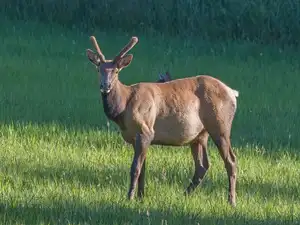
A 36-year ecological experiment on Washington’s Olympic Peninsula has revealed how removing elk from rainforest plots can reshape forest vegetation over time. Researchers found that shrubs became five to six times more abundant in areas where elk were excluded, while 46 plant species disappeared from the plots.
The findings highlight the important role elk play in maintaining plant diversity through their feeding habits and movement across forest ecosystems. Although some vegetation flourished without grazing pressure, the loss of smaller plant species showed that increased plant growth does not necessarily lead to greater biodiversity.
What Happened When Researchers Excluded Elk From Forest Plots?
The long-term study examined vegetation changes in rainforest areas of Washington’s Olympic Peninsula over 36 years. Researchers kept elk away from selected plots to observe how plant communities developed without the animals’ grazing and browsing.
Over the course of the experiment, shrubs became five to six times more abundant in the areas protected from elk. Without regular feeding by the large herbivores, shrub growth increased substantially.
However, the changes were not limited to an increase in shrub cover. Researchers also recorded the disappearance of 46 plant species from the experimental plots, indicating that some smaller plants did not persist as the vegetation community changed.
Why Elk Matter for Rainforest Plant Diversity
Elk influence forest vegetation by feeding on plants and altering the structure of the surrounding ecosystem. Their browsing can limit the growth of some shrubs and help prevent particular plant groups from becoming dominant.
When elk are absent, vegetation that would otherwise be eaten can expand. This may change the availability of space, light and other resources for smaller plants, potentially affecting which species survive in the forest.
The study illustrates how herbivores can influence biodiversity in ways that are not always obvious. Their feeding activity may reduce the abundance of certain plants while helping maintain conditions that support a wider range of species.
More Shrubs Did Not Mean Greater Plant Diversity
The contrast between increased shrub abundance and the disappearance of 46 plant species is a central finding of the experiment. The results show that a forest with more vegetation in one category may still experience a decline in overall plant diversity.
Although shrubs became substantially more abundant without elk, the loss of smaller plant species suggests that the balance between different types of vegetation changed over time. This highlights the difference between measuring how much vegetation grows and assessing how many plant species an ecosystem supports.
What the Findings Mean for Forest Conservation
The 36-year experiment provides evidence that large herbivores can have lasting effects on forest ecosystems. Understanding these effects is important for wildlife management, particularly when conservation decisions involve changes in animal populations.
The findings also demonstrate why long-term ecological studies are valuable. Plant communities can take years or decades to respond to changes in grazing pressure, and short-term observations may not capture the full consequences.
By showing that elk exclusion was associated with a major increase in shrub abundance alongside the disappearance of numerous plant species, the research highlights the role of wildlife in shaping the diversity of Washington’s rainforest ecosystems.
For breaking news and live news updates, like us on Facebook or follow us on Twitter and Instagram. Read more on Latest World on thefoxdaily.com.



COMMENTS 0