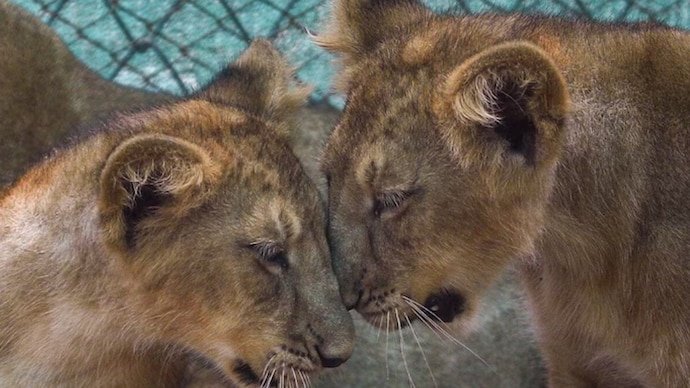
The debate over the future of Kuno National Park has resurfaced once again after local residents and activists used President Droupadi Murmu‘s visit to the wildlife reserve to press for the translocation of Asiatic lions from Gujarat’s Gir landscape. The demand, which dates back more than three decades, is rooted in Kuno’s original development plan as a second home for India‘s only wild lion population.
Members of the Kuno Sangharsh Samiti organized a protest in Sheopur district and submitted a memorandum seeking government action on the long-pending lion relocation project. The move has revived discussions surrounding wildlife conservation, local sacrifices made for the project, tourism potential, and the broader challenge of securing the future of the endangered Asiatic lion.
Why Kuno Was Originally Developed
Long before Kuno became internationally known for the cheetah reintroduction programme, the protected area was identified as the most suitable location for establishing a second habitat for Asiatic lions.
In the early 1990s, wildlife experts from the Wildlife Institute of India recommended Kuno as an alternative habitat for lions currently confined to the Gir region of Gujarat. Conservationists argued that concentrating an entire species in a single geographical area created significant risks.
A disease outbreak, natural disaster, forest fire, drought, or other unforeseen event could potentially threaten the entire wild lion population if all animals remained concentrated in one location.
To address this concern, Kuno was selected as the preferred site for establishing a second free-ranging lion population.
The Sacrifice of Local Communities
The creation of a suitable habitat required major changes on the ground.
Over the years, approximately 25 villages were relocated from the Kuno landscape to create a large, relatively undisturbed wildlife habitat. According to local groups, around 4,500 families were affected by the relocation process.
Many residents accepted displacement with the understanding that the area would eventually become home to Asiatic lions.
For local communities, the issue is therefore not only about wildlife conservation but also about fulfilling commitments made when the relocation programme was implemented.
Protesters argue that after decades of waiting, the original objective behind these sacrifices remains incomplete.
The Supreme Court’s Landmark 2013 Order
The lion translocation issue received significant legal backing in 2013 when the Supreme Court of India delivered a landmark judgment on the matter.
The court described Asiatic lions as part of India’s national heritage and directed authorities to proceed with the relocation of a portion of the Gir lion population to Kuno.
The judgment emphasized that wildlife conservation decisions should be guided by scientific considerations rather than regional interests.
Conservation experts widely viewed the ruling as a major step toward securing the long-term survival of the species.
However, despite the court’s direction, the relocation process has not been implemented, and lions remain confined to Gujarat’s Gir ecosystem.
Why Conservationists Want a Second Lion Habitat
One of the strongest arguments supporting lion translocation is the need to reduce extinction risk.
The Asiatic lion population has grown significantly over the past few decades, representing one of India’s major wildlife conservation successes. However, nearly the entire wild population continues to inhabit a relatively limited geographical area.
This concentration creates vulnerability.
Conservation scientists often point to examples from around the world where species suffered severe population declines due to disease outbreaks or environmental disasters affecting a single habitat.
Establishing a second independent population is considered a standard conservation strategy for reducing such risks.
A geographically separate population in Kuno would act as a safeguard and strengthen the species’ long-term survival prospects.
The Rise of the Cheetah Project
The conversation surrounding Kuno changed dramatically when India launched its ambitious cheetah reintroduction programme.
Beginning in 2022, African cheetahs were introduced into Kuno National Park as part of efforts to restore a species that had become extinct in India decades earlier.
The project transformed Kuno into a globally recognized conservation site and shifted public attention away from the lion relocation proposal.
Some observers questioned whether lions and cheetahs could coexist within the same broader landscape.
However, supporters of lion translocation argue that the two initiatives are not mutually exclusive. They contend that modern wildlife management practices can accommodate multiple large carnivore species within appropriately managed habitats.
According to local campaigners, Kuno’s size and ecological diversity make it capable of supporting both conservation objectives.
Economic Benefits for Sheopur
Beyond ecological considerations, local residents view lion relocation as a significant economic opportunity.
Wildlife tourism has become an important driver of economic growth in several regions of India. National parks that host iconic species often generate employment opportunities in hospitality, transportation, guiding services, handicrafts, and related sectors.
Residents believe that adding Asiatic lions to Kuno’s wildlife profile would further increase visitor numbers and attract greater Investment to the region.
Supporters argue that tourism revenue could provide long-term benefits for communities that previously sacrificed land and livelihoods for the conservation project.
For many local youths, expanded tourism is seen as a pathway to employment and economic development.
Why the Issue Remains Controversial
Despite scientific recommendations and judicial support, the proposal has faced significant obstacles.
Wildlife management decisions often involve complex ecological, administrative, and political considerations. Concerns have been raised about the logistics of relocation, long-term monitoring requirements, habitat readiness, and management responsibilities.
At the same time, Gujarat’s successful conservation of Asiatic lions has created strong regional attachment to the species.
As a result, discussions about moving lions outside Gir have frequently become sensitive and politically charged.
The prolonged delay has frustrated conservationists WHO argue that every year without a second population increases risk to the species.
President Murmu’s Visit Brings New Attention
President Droupadi Murmu’s visit provided local groups with an opportunity to revive public discussion on the issue.
The memorandum submitted during the visit highlighted Kuno’s original purpose, the relocation of villages, the Supreme Court ruling, and the conservation rationale behind creating a second habitat.
Activists urged authorities to reconsider the proposal and take concrete steps toward implementing the long-pending plan.
While no immediate Policy announcement emerged from the visit, the demonstration succeeded in bringing the issue back into the national spotlight.
What Happens Next?
The future of Asiatic lion translocation remains uncertain.
Wildlife experts continue to support the creation of a second free-ranging lion population, while local residents maintain that promises made during village relocations should be honored.
At the same time, Kuno’s role as the center of India’s cheetah programme adds a new dimension to conservation planning in the region.
The challenge for policymakers will be balancing scientific recommendations, conservation priorities, local expectations, and administrative considerations.
For now, President Murmu’s visit has reignited a debate that has shaped wildlife policy discussions for more than thirty years. Whether the renewed attention leads to concrete action remains to be seen, but the demand for bringing Asiatic lions to Kuno National Park is once again firmly back on the national conservation agenda.
For breaking news and live news updates, like us on Facebook or follow us on Twitter and Instagram. Read more on Latest India on thefoxdaily.com.






COMMENTS 0