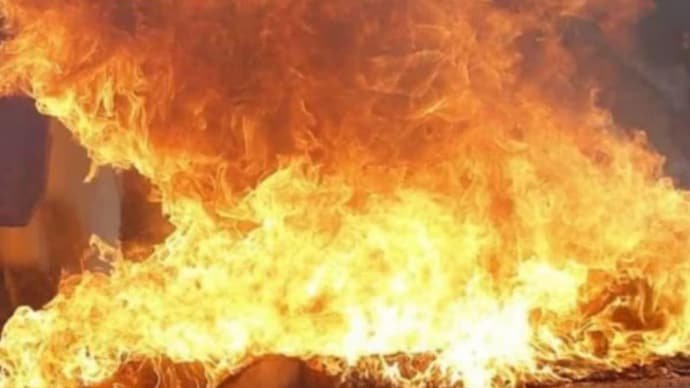
At least 22 people were killed after a fire broke out during a wedding celebration in Kinshasa, the capital of the Democratic Republic of Congo, turning a night of celebration into a deadly disaster.
The blaze erupted late Friday, September 4, and continued into the early hours of Saturday inside a building in the Lingwala district of northern Kinshasa. Several people were injured and taken to hospitals, while the provisional death toll raised by the local authorities could still increase.
People attending the wedding reportedly struggled to escape as flames and smoke spread through the building. Witnesses and other people outside the venue attempted to help victims, with some injured and deceased people seen along the roadside in the immediate aftermath.
The exact cause of the fire has not yet been established. Authorities are expected to examine the building’s electrical systems, layout, emergency exits and other possible contributing factors as part of the Investigation.
Fire breaks out during wedding celebration
The tragedy unfolded while a wedding ceremony was taking place at a party venue in Lingwala. The building housed a reception hall where guests had gathered to celebrate the marriage.
According to local authorities, the fire began during the night and rapidly created panic among people inside. As guests attempted to flee, the building’s narrow corridors and limited space made movement extremely difficult.
A fire inside a crowded event venue can become dangerous within minutes because a large number of people may attempt to reach the same exit simultaneously. Smoke can also reduce visibility and cause confusion, making it harder for people to identify safe escape routes.
In Kinshasa, where many buildings are located in densely populated urban areas, the speed with which emergency crews can reach a scene can also make a major difference to the outcome of a fire.
At least 22 people dead, death toll could rise
Norbert Mushinga, the mayor of Lingwala, said the provisional death toll had reached 22. He warned that the figure could increase because several people were injured and the authorities were still assessing the full consequences of the fire.
Several injured victims were transported to medical facilities in Kinshasa for treatment. Hospitals and emergency personnel were required to deal with casualties while authorities worked to establish the identities of those who died.
A provisional death toll is common in the immediate aftermath of a major disaster. Authorities must verify information from the scene, hospitals and families before announcing a final number.
For relatives, that process can be particularly difficult when a large number of people were attending the same event and communication becomes chaotic after the incident.
Guests struggled to escape through narrow passages
The physical layout of the building appears to have played an important role in the unfolding disaster. Reports from the scene described narrow hallways crowded with people attempting to escape.
When a fire spreads through an enclosed venue, the evacuation process can quickly become dangerous. People at the back of a crowd may be unable to move forward, while smoke can make it difficult to see exits.
Panic can further complicate an evacuation because people tend to rush toward the same familiar doorway rather than using alternative routes.
Local reports also indicated that the venue had a limited exit, creating a bottleneck as guests tried to leave. The role of the building’s evacuation arrangements will likely be an important part of the official investigation.
Victims were carried outside as people tried to help
In the aftermath of the fire, several victims were reportedly taken or laid outside the building while attendees and bystanders tried to help those who had survived.
The scenes underscored the speed at which the celebration had turned into an emergency. People who had arrived for a wedding suddenly found themselves attempting first aid, carrying injured guests and searching for family members.
Such situations can overwhelm untrained bystanders, particularly when emergency medical teams have not yet arrived and the number of casualties is high.
Despite the chaos, the immediate efforts of attendees and residents can be critical in moving victims away from smoke and flames and getting them toward medical care.
Cause of the Kinshasa wedding fire remains unknown
Authorities have not yet confirmed what started the fire.
The investigation is expected to examine several possibilities, including an electrical fault, problems involving decorations or another accidental source. Local officials said the exact origin would have to be established through a detailed investigation rather than speculation.
The question of how the fire started is only one part of the inquiry. Investigators will also need to determine how quickly the flames spread, whether emergency exits were adequate, whether the building complied with safety requirements and whether emergency crews were able to reach the scene quickly enough.
These factors can be critical in determining why one fire results in limited damage while another causes a large number of deaths.
Interior minister visits the scene
Congo’s Deputy Prime Minister and Interior Minister Jacquemin Shabani visited the site on Saturday morning.
Shabani described the incident as a tragedy as authorities began examining the scene and assessing the scale of the damage.
The presence of senior government officials reflects the seriousness of the incident and the political pressure that often follows a disaster involving significant loss of life.
Authorities must now balance the immediate needs of injured people and bereaved families with the longer investigation into whether the tragedy could have been prevented.
Lingwala fire raises questions about building safety
The tragedy has renewed attention on fire-safety conditions in Kinshasa’s densely populated neighbourhoods.
The capital has experienced rapid urban expansion, but growth in buildings and population has not always been accompanied by equivalent improvements in emergency Infrastructure.
That can create several vulnerabilities. Narrow roads can slow fire engines, crowded neighbourhoods can make access difficult and buildings may lack modern fire alarms, sprinklers, emergency lighting or sufficient exits.
For Entertainment venues where large numbers of people gather, those weaknesses can become especially dangerous.
A building may appear suitable under normal conditions but become extremely difficult to evacuate when smoke, darkness and panic are added to the situation.
Why crowded wedding venues can become high-risk during fires
Wedding receptions often involve many people gathered in an enclosed space for several hours. Tables, chairs, decorations, sound equipment and other temporary arrangements can reduce the amount of free space available for movement.
Decorations can also potentially become fuel if they are made from highly combustible materials or are placed too close to electrical equipment and lighting.
That does not mean decorations caused the Kinshasa fire. Authorities have not established the source of the blaze.
However, the disaster highlights why crowded venues require clear evacuation routes that remain accessible throughout an event, rather than exits being treated as secondary spaces.
Evacuation becomes the decisive factor once a fire starts
Fire safety is not determined solely by preventing a fire. Once flames appear, the ability of people to leave the building quickly can determine how many survive.
A venue with several clearly marked exits can allow people to divide into different evacuation routes. A building with one narrow doorway can create a dangerous bottleneck.
Emergency exit doors must also remain accessible during an event. Furniture, equipment, decorations or crowds can unintentionally reduce the usable width of a passage.
The circumstances reported in Lingwala make the building’s evacuation arrangements an important area for investigators to examine.
Kinshasa has faced repeated fire emergencies
The wedding disaster is not an isolated example of the challenges faced by Kinshasa.
Local media have reported multiple fires in the city, particularly during the dry season. The combination of dense settlements, rapid urban development and limited emergency infrastructure can make fires more difficult to contain.
When buildings are closely packed, flames can potentially spread to neighbouring properties. At the same time, emergency vehicles may encounter congested streets or limited access.
These conditions make prevention and building-level safety especially important because emergency services may not always be able to reach a burning structure during the earliest and most critical minutes.
Dry season can increase fire risks
Kinshasa’s dry season is associated with conditions in which fires can become more frequent or difficult to control.
Dry weather can increase the vulnerability of combustible materials, while strong winds can help flames spread.
Urban fire risk is also influenced by factors unrelated to weather, including electrical infrastructure, cooking practices, fuel storage, building materials and Emergency Response capacity.
The investigation into Friday night’s fire will therefore need to separate the immediate ignition source from the conditions that allowed the disaster to become so deadly.
The role of emergency services is likely to face scrutiny
Whenever a major building fire claims many lives, questions naturally arise over whether emergency crews arrived quickly enough, whether sufficient equipment was available and whether firefighters could access the location effectively.
Those questions should be addressed through the official investigation rather than assumptions based on eyewitness accounts alone.
Firefighters in densely built urban districts can face significant obstacles, including congested roads, inadequate water supplies and narrow access points.
Even a well-equipped fire service can struggle when a venue is difficult to reach or when a fire has already spread throughout a crowded building.
The authorities will therefore need to look at both emergency response and preventive safety measures.
Families now face the most difficult phase
Behind the official casualty figures are families attempting to locate relatives who attended the wedding.
Some families may have received immediate confirmation that relatives were safe, while others may have had to visit hospitals or wait for authorities to identify victims.
The identification process can take time, particularly when several people are killed in the same disaster.
Authorities will also need to provide clear information about the deceased, injured people receiving treatment and any remaining unidentified victims.
For families who lost relatives during what was supposed to be a celebration, the psychological consequences may continue long after the physical damage has been assessed.
A wedding celebration became a mass-casualty event
The circumstances of the Kinshasa disaster demonstrate how quickly an ordinary social gathering can turn into a mass-casualty emergency.
Guests entered the building expecting an evening of celebration. Within a short period, they were confronted with smoke, flames and a desperate effort to escape.
That sudden shift makes preparation essential. Emergency planning for venues is most effective when it is done before anything goes wrong, because people have very little time to make decisions once a fire is spreading.
Clear exits, unobstructed pathways, functioning fire equipment and staff familiar with emergency procedures can all contribute to reducing the consequences of a fire.
What investigators will need to establish
The investigation into the Lingwala fire will likely have several objectives.
First, authorities will need to establish the point and cause of ignition. Second, they will need to reconstruct how quickly the fire spread through the building. Third, investigators will examine the conditions that affected evacuation, including the number and width of exits.
They may also assess electrical installations, fire-prevention equipment, emergency lighting, occupancy levels and the building’s compliance with applicable safety requirements.
The response time of emergency services will be another important part of the reconstruction.
Establishing these facts is crucial not only for accountability but also for preventing another mass-casualty fire in a different venue.
The tragedy exposes a wider urban safety problem
The deaths in Lingwala point toward a broader challenge facing rapidly growing cities.
Urban expansion can happen much faster than the development of fire stations, roads, water systems, building inspection capacity and emergency planning.
As populations grow, more people gather in commercial and entertainment buildings that may not have been designed to accommodate large crowds.
This creates a dangerous mismatch between the scale of urban life and the infrastructure needed to keep people safe.
Kinshasa’s recurring fire incidents demonstrate why urban safety cannot be treated as a secondary concern. Fire prevention requires coordination between building authorities, municipal administrations, emergency services, venue operators and the public.
Why the death toll may not be final
The official count of 22 deaths remains provisional.
Several people were injured, and authorities warned that the number of fatalities could increase depending on the condition of those receiving treatment and the continuing identification of victims.
In major disasters, the first casualty figure is often based on information available at the scene. A final figure may only emerge after hospitals report deaths, missing people are accounted for and forensic identification is completed.
For that reason, authorities are expected to update the death toll as the investigation and medical response continue.
What happens after the investigation?
Once investigators establish the cause and contributing factors, authorities may face questions about whether the venue complied with safety standards.
If shortcomings are identified, the incident could prompt renewed inspections of wedding halls, entertainment venues and other buildings where large gatherings take place.
Such inspections may focus on emergency exits, electrical installations, fire extinguishers, occupancy limits and evacuation procedures.
The effectiveness of those measures will depend on whether regulations are consistently enforced and whether buildings found to present serious risks are required to make improvements.
Kinshasa wedding fire highlights the cost of inadequate safety
The Kinshasa wedding fire has left at least 22 people dead and several others injured, turning a celebration in Lingwala into one of the city’s latest deadly fire tragedies.
The provisional toll could rise, while the exact cause of the blaze remains under investigation. Reports that guests struggled to escape through narrow passages make evacuation conditions a particularly important part of the inquiry.
The tragedy has also highlighted the broader fire-safety challenges facing densely populated parts of Kinshasa, where rapid urban growth can outpace emergency infrastructure.
For the victims’ families, however, the wider questions about urban planning and fire safety cannot lessen the immediate loss. Their first need is clear information, medical care for survivors and proper identification and treatment of those who died.
For authorities, the task is more lasting: determine exactly how the fire started, understand why it became so deadly and ensure that the lessons are applied to other crowded venues across the capital.
A wedding should end with memories of celebration, not a search for missing relatives along the streets of a city. The Kinshasa tragedy now places renewed pressure on officials to strengthen fire prevention, evacuation standards and emergency response before another gathering becomes another disaster.
For breaking news and live news updates, like us on Facebook or follow us on Twitter and Instagram. Read more on Latest World on thefoxdaily.com.



COMMENTS 0