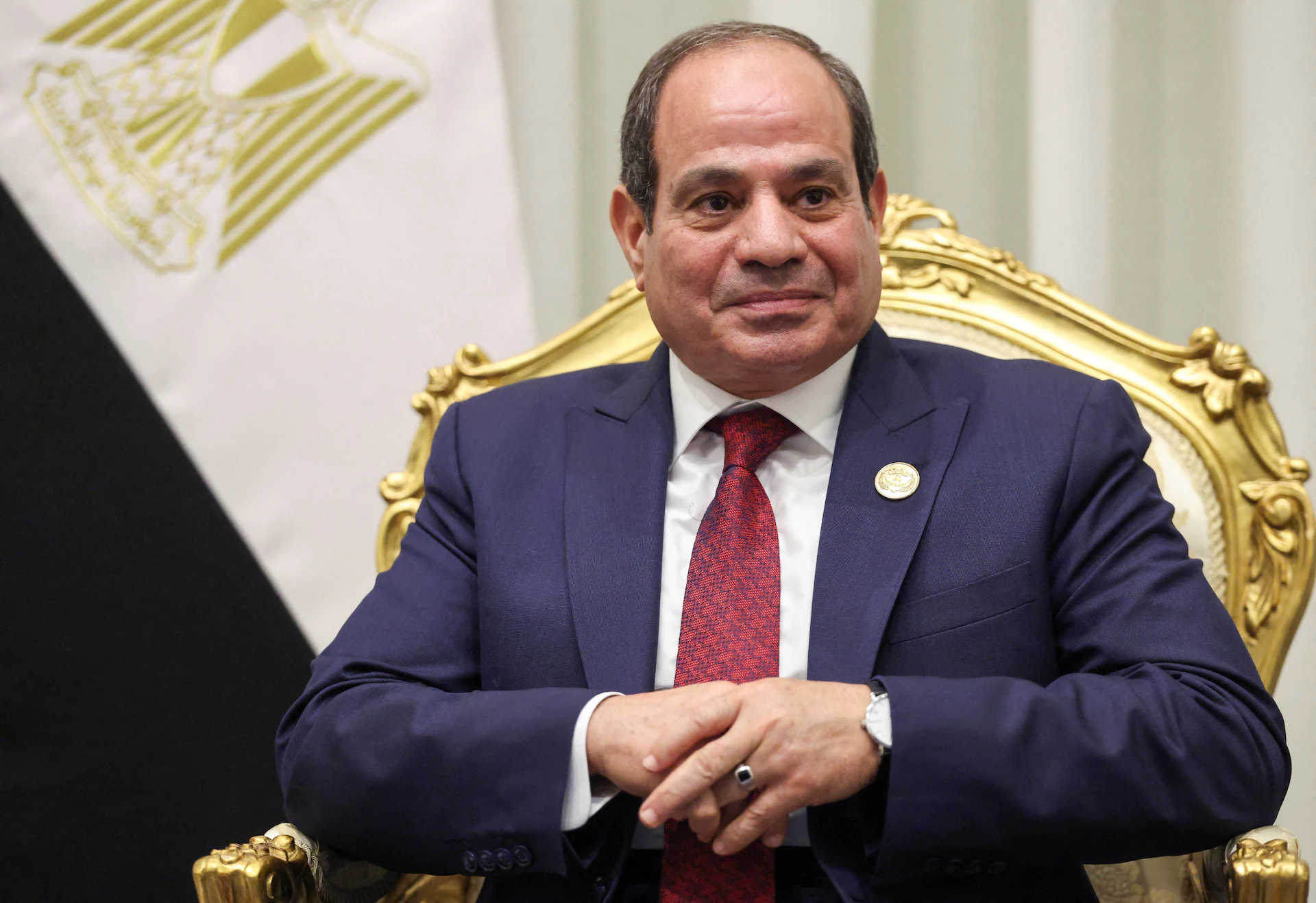
Egyptian President Abdel Fattah al-Sisi has said Egypt is prepared to take any measures necessary to defend Saudi Arabia if requested, as renewed Houthi attacks on the kingdom raise security concerns across the region. Sisi also called for an emergency session of the Egyptian parliament to obtain authorisation for potential action, underscoring the strategic relationship between Cairo and Riyadh.
Speaking at a graduation ceremony at the Egyptian Military Academy on October 17, Sisi said Egypt would not allow Saudi Arabia’s security and stability to be threatened. He stressed that Cairo was not seeking to attack another country but was prepared to act defensively if the situation required it.
Shortly after the president’s remarks, Egypt’s parliament announced that it would hold a plenary session at 1 p.m. local time on Sunday, October 18. The announcement followed Sisi’s request for lawmakers to consider the authorisation he said would be necessary if Saudi Arabia asked Egypt for assistance.
The developments come amid renewed fighting in Yemen following the collapse of a truce, with Yemen’s Iran-aligned Houthi movement carrying out attacks on Saudi targets, according to the report. The situation has renewed attention on regional security cooperation, Egypt’s relationship with Saudi Arabia and the potential implications for the wider Middle East.
Why Sisi wants parliament’s authorisation to defend Saudi Arabia
Sisi said Egypt would be prepared to respond if Saudi Arabia requested assistance, but he also acknowledged the need for parliamentary approval. His appeal for an emergency session was intended to secure the authorisation he said would be required before Egypt could take such action.
“It is inconceivable that we would allow Saudi Arabia, its security or stability to be harmed,” Sisi said at the military academy graduation ceremony.
The Egyptian president said Cairo was not seeking to attack anyone and framed the potential intervention as a defensive measure. His remarks signalled support for Saudi Arabia while leaving the question of any specific Egyptian military response dependent on a request from Riyadh and the necessary authorisation in Egypt.
Sisi also said Egypt would act in accordance with the guidance of Saudi King Salman and Crown Prince Mohammed bin Salman. The statement highlighted the importance Cairo places on coordination with the Saudi leadership as tensions surrounding Yemen intensify.
Addressing the parliamentary approval requirement, Sisi said:
“I know this requires the approval of the Egyptian parliament, and I ask that an emergency session be held so that it can give us that authorisation if we are asked.”
The request does not, by itself, establish that Egypt has decided to deploy troops or launch military operations. Rather, it indicates that Sisi wants the necessary political authorisation in place should Saudi Arabia formally seek Egyptian assistance.
Egyptian parliament calls emergency session for October 18
Egypt’s parliament announced shortly after Sisi’s remarks that it would convene a plenary session at 1 p.m. on Sunday, October 18, corresponding to 1000 GMT. The announcement came in response to the president’s request.
However, parliament did not disclose the session’s agenda in its announcement. The timing followed Sisi’s public appeal for lawmakers to approve potential action to defend Saudi Arabia if the kingdom requested assistance.
The parliamentary process is significant because it introduces a formal legislative step into Egypt’s response to the regional security situation. Sisi’s remarks made clear that he considered approval necessary before the country could take the proposed action.
The session’s announcement should not be interpreted as confirmation that parliament has already authorised military intervention. At the time of the announcement, the stated purpose of Sisi’s request was to obtain approval in the event that Saudi Arabia asked Egypt to act.
Any subsequent decision would depend on the parliamentary process, the nature of a Saudi request and the measures Egyptian authorities ultimately considered necessary.
Houthi attacks on Saudi Arabia intensify regional security concerns
The immediate backdrop to Sisi’s announcement is a renewed escalation of the conflict involving Yemen’s Houthi movement and forces aligned with the internationally recognised Yemeni government, which is backed by Saudi Arabia.
According to the report, the Houthis have in recent days attacked Riyadh’s international airport and Saudi Aramco, the kingdom’s state oil company. The attacks came after a truce collapsed and fighting resumed between the Houthis and Saudi-backed government forces.
The reported attacks have added to security concerns for Saudi Arabia, which has been directly involved in the Yemen Conflict for years. Threats to major transport infrastructure and energy facilities can also have implications beyond the immediate conflict, given Saudi Arabia’s importance in regional trade and global energy markets.
The available information does not establish the full extent of the damage caused by the reported attacks or provide a comprehensive assessment of their operational impact. Nevertheless, the incidents form the immediate context for Cairo’s renewed expression of support for Riyadh.
Who are the Houthis?
The Houthis are an armed political and military movement based in Yemen and aligned with Iran. They have fought the internationally recognised Yemeni government and have been involved in a prolonged conflict that has drawn in regional powers, including Saudi Arabia.
Saudi Arabia intervened in Yemen in 2015 as part of a coalition supporting the Yemeni government against the Houthis. The conflict has since remained a major source of regional tension, with military confrontations and diplomatic efforts shaping relations between the parties.
The latest escalation, following the collapse of a truce, has once again placed Yemen’s conflict at the centre of regional security discussions. Sisi’s comments indicate that Egypt is prepared to consider a defensive role if Saudi Arabia formally requests its assistance.
Sisi refers to Saudi King Salman and Crown Prince Mohammed bin Salman
Sisi said Egypt would act in accordance with guidance from Saudi King Salman and Crown Prince Mohammed bin Salman. His remarks followed a visit by the Saudi leaders to Egypt on September 15, when they met the Egyptian president.
The discussions included security and navigation in the Red Sea, according to the report. These issues are important to both countries because instability around the region can affect maritime movement, commercial activity and wider security interests.
The September meeting took place after fighting in Yemen had reignited. The subsequent escalation has reinforced the importance of communication between Cairo and Riyadh as both governments assess developments and consider their responses.
Sisi’s latest statement also signals that Egypt’s approach would be coordinated with Saudi Arabia rather than based solely on an independent decision to intervene. His request for parliamentary approval provides a further domestic political dimension to that position.
Egypt and Saudi Arabia share longstanding strategic and economic ties
Egypt and Saudi Arabia are close strategic and economic partners, with cooperation extending across regional security, investment and financial support. Their relationship has been particularly important to Egypt during periods of economic pressure.
Following the military ouster of Islamist president Mohamed Morsi in 2013, Saudi Arabia and other oil-rich Gulf states provided Egypt with billions of dollars through aid, central-bank deposits and investments.
This financial assistance helped underpin the relationship between Cairo and Gulf capitals. Saudi support has formed part of a broader economic relationship involving financial cooperation and investment, alongside shared concerns about regional stability.
The relationship is not limited to financial matters. Both countries have also worked together on security issues, including developments in Yemen and the protection of important regional waterways.
Sisi’s willingness to consider measures to defend Saudi Arabia reflects this longstanding partnership. At the same time, any military action would involve decisions about the scope of assistance, the legal and political authorisation required, and the wider implications for Egypt’s regional relationships.
Egypt previously joined the Saudi-led coalition in Yemen
Egypt has a history of involvement in the Yemen conflict. In 2015, Cairo joined the Saudi-led coalition that intervened to support the internationally recognised Yemeni government against the Houthis.
That earlier participation provides important context for Sisi’s current statement. Egypt has previously worked alongside Saudi Arabia on the Yemen issue, meaning the latest offer of potential assistance comes against a background of existing security cooperation.
However, the latest request for parliamentary authorisation should not automatically be treated as a decision to repeat the same military role. Sisi said Egypt was prepared to act if asked, and his appeal focused on obtaining the approval he said would be required in those circumstances.
The nature of any future Egyptian involvement would depend on developments in Yemen, the requirements communicated by Saudi Arabia and the decisions taken by Egypt’s political leadership and parliament.
What Egypt’s position could mean for the wider Middle East
Egypt’s public declaration of support for Saudi Arabia comes at a time of renewed tension involving the Houthis and Saudi-backed forces in Yemen. It also highlights the importance regional governments place on protecting national security, energy infrastructure and maritime routes.
For Saudi Arabia, potential Egyptian assistance would build on an established strategic relationship. For Egypt, the issue involves balancing support for a key regional partner with the political, security and operational considerations associated with any military commitment.
The emphasis on parliamentary authorisation is also significant. Sisi has indicated that a potential response would require formal approval, while the emergency session gives lawmakers an opportunity to address the request. The announcement alone, however, does not establish what decision parliament will make or whether Saudi Arabia will formally seek Egyptian intervention.
The Red Sea dimension adds another layer to the relationship. Sisi’s September meeting with the Saudi leadership included discussions on security and navigation in the waterway, according to the report. Continued instability in and around Yemen could therefore have implications for a wider set of regional interests beyond the immediate battlefield.
Any further escalation would need to be assessed against the positions of the governments and armed groups involved, as well as the status of diplomatic efforts to contain the conflict.
What happens next after Sisi’s request?
The immediate next step is the Egyptian parliament’s announced plenary session on October 18. Although the session was scheduled following Sisi’s request, parliament had not disclosed its agenda at the time of the announcement.
The central question is whether lawmakers will grant the authorisation requested by the president and under what circumstances it could be used. Even if approval is granted, Sisi’s remarks indicate that potential action would depend on Saudi Arabia asking Egypt for assistance.
There is also uncertainty over the course of the fighting in Yemen. The collapse of the truce and the reported Houthi attacks on Saudi targets have created a more difficult security environment, but the available information does not establish whether the escalation will lead to a formal Saudi request for Egyptian military support.
For now, Cairo has publicly affirmed its readiness to defend Saudi Arabia if asked, while seeking parliamentary backing for that possibility. The developments underscore the close ties between Egypt and Saudi Arabia and the continuing regional significance of the Yemen conflict.
For breaking news and live news updates, like us on Facebook or follow us on Twitter and Instagram. Read more on Latest World on thefoxdaily.com.





COMMENTS 0