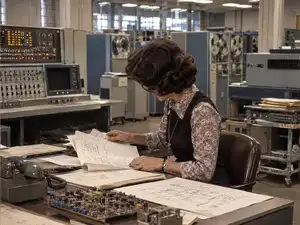
Long before smartphones, mobile networks and internet-based communication became part of everyday life, telephone companies faced a major technical challenge: how to handle large volumes of calls without allowing their systems to become overwhelmed. One inventor who helped solve this problem was Erna Schneider Hoover, a computer scientist and mathematician whose work at Bell Laboratories changed how telephone networks managed incoming traffic.
In 1971, Hoover received US Patent No. 3,623,007 for her invention, known as a feedback control monitor for a stored-program data-processing system. The technology helped telephone exchanges respond to sudden increases in call volume by monitoring incoming traffic and adjusting how the system processed calls.
Her achievement was significant not only because it improved telephone service but also because it demonstrated how software could control complex communication infrastructure. At a time when computing was still developing as an engineering discipline, Hoover helped establish principles that influenced electronic switching systems for decades.
From Philosophy and Mathematics to Bell Laboratories
Hoover’s path into computer technology was unusual. Born in Irvington, New Jersey, in 1926, she developed an early interest in science and intellectual problem-solving. Her academic journey, however, began in the humanities rather than in engineering or computer science.
She attended Wellesley College and graduated in 1948 with a degree in medieval history. She later continued her education at Yale University, where she earned a doctorate in philosophy and the foundations of mathematics in 1951.
Her studies in logic and mathematics would eventually prove valuable in a field that was beginning to rely increasingly on computer-based decision-making. After completing her doctorate, Hoover taught philosophy and logic at Swarthmore College before joining Bell Telephone Laboratories in 1954.
At the time, computer science was not yet an established career path in the way it is today. Telephone networks largely depended on mechanical and hard-wired switching equipment, while engineers were exploring electronic alternatives that could handle growing demand more efficiently.
Hoover entered this emerging area of research and developed expertise in the systems and programming techniques needed to control electronic telephone exchanges.
The Telephone Network Problem Her Invention Addressed
Telephone exchanges connect callers by establishing a route between two telephone lines. When someone dials a number, switching equipment identifies the destination and connects the relevant circuits. The process must happen quickly and reliably, even when thousands of people are attempting to make calls at the same time.
As telephone usage expanded, managing this traffic became increasingly complicated. During busy periods, a large number of incoming calls could place excessive demands on switching equipment. If the system could not manage those demands, its performance could deteriorate, potentially affecting other callers and disrupting service.
Traditional switching equipment relied heavily on physical circuits and electromechanical components. Bell Labs wanted to move towards electronic switching systems controlled by stored computer programs, giving telephone exchanges greater flexibility and the ability to process calls more intelligently.
Hoover’s contribution addressed a critical part of this transition: preventing the computer controlling the exchange from becoming overwhelmed when call traffic suddenly increased.
How Hoover’s Computerized Call-Control System Worked
Hoover developed a program based on stored program control, an approach in which instructions stored in a computer’s memory determine how a telephone exchange operates.
Rather than allowing incoming calls to place unlimited demands on the system, her program monitored the frequency of incoming traffic and adjusted the rate at which calls were accepted and processed. This helped the exchange manage its available resources during periods of unusually high demand.
The system effectively introduced a form of automated traffic management into telephone switching. It could respond to changing conditions instead of relying entirely on fixed operating procedures.
The central idea was to keep the switching computer functioning efficiently even when the number of incoming calls exceeded normal levels. By managing the workload, the program reduced the risk of system overload and helped maintain more reliable telephone service.
Hoover later explained that she designed the executive program to handle situations in which too many calls arrived, keeping the computer operating efficiently rather than allowing it to fail under pressure.
The Hospital Story Behind the Invention
One of the most widely remembered details of Hoover’s invention is where she first began developing the idea. According to accounts of her career, she started sketching plans for the system while recovering in a hospital maternity ward after giving birth to her second daughter.
She continued working on the concept at the hospital and later at home. The unusual setting highlights how the invention emerged from a practical engineering problem that required a new way of thinking about computer control.
Hoover’s work was not simply about making telephone exchanges faster. It was about ensuring that a complex system could remain stable when demand changed unexpectedly. That approach to managing computing resources would become increasingly important as communication networks grew in size and complexity.
The No. 1 Electronic Switching System and the Succasunna Installation
Hoover’s work became closely associated with Bell Labs’ No. 1 Electronic Switching System, commonly known as No. 1 ESS. It was one of the first large-scale electronic telephone switching systems and represented a major change in how telephone exchanges were designed and operated.
The system used a central computer to interpret telephone signals, make decisions and send instructions to the switching network. Because its operating instructions were stored in software, engineers could introduce or modify certain services by changing the program rather than rebuilding large parts of the physical equipment.
The first No. 1 ESS public-network installation was introduced in Succasunna, New Jersey, in 1965. It demonstrated how stored-program computers could control telephone switching on a practical scale.
Hoover played an important role in the development of the system. She worked on its software architecture and wrote specifications for the computer and its operating system. Her call-control work helped make the system more capable of handling fluctuations in telephone traffic.
The Succasunna installation became an important milestone in the transition from traditional electromechanical exchanges to computer-controlled telephone networks.
The 1971 Patent That Recognised Her Contribution
Hoover’s invention was recognised through US Patent No. 3,623,007, titled Feedback Control Monitor for Stored Program Data Processing System. The patent was issued on November 23, 1971.
It is widely regarded as one of the early software patents, reflecting a period when computer programs were beginning to play a central role in controlling industrial and communication systems.
The patent described a method for controlling the processing of tasks in an electronic switching system. Its purpose was to help the computer prioritise operations and respond to changing workloads, particularly when call volumes increased sharply.
The significance of the invention extended beyond a single telephone exchange. It showed how software could actively manage the performance of a large technical system, rather than merely carry out a fixed sequence of instructions.
Breaking Barriers as a Woman in Technology
Hoover’s achievements also came at a time when women were significantly underrepresented in engineering and computing. Technical leadership positions at major research laboratories were overwhelmingly held by men, making her professional progress particularly notable.
Her expertise and contributions earned her a promotion to technical supervisor, making her the first woman to supervise a technical department at Bell Labs. In 1978, she became a technical department head, reaching another senior leadership position at the organisation.
Her career demonstrated that expertise in mathematics, logic and software could open new paths in fields traditionally dominated by electrical and mechanical engineering.
She also worked on other major technology programmes during her time at Bell Labs, including software associated with the Safeguard anti-ballistic missile system. Her responsibilities extended into areas such as artificial intelligence and large-scale information systems.
Why Her Invention Still Matters
Modern communication networks are vastly more sophisticated than the telephone exchanges of the 1960s and 1970s. They handle voice calls, messages, video streams and enormous volumes of digital information across interconnected systems.
Yet one fundamental challenge remains familiar: networks must manage demand without allowing sudden traffic increases to overwhelm their resources.
The principle behind Hoover’s work was to monitor system activity, respond to changing workloads and allocate processing capacity in a controlled way. These ideas remain relevant to the broader field of network management and computer systems engineering.
Her invention should not be confused with the technologies that directly route modern internet traffic or manage today’s mobile networks. Those systems have developed through decades of work by many engineers and researchers. However, Hoover’s contribution helped establish an important foundation for computer-controlled communication infrastructure.
Her work also illustrates why software is so important to modern technology. Hardware provides the physical infrastructure, but software determines how that infrastructure responds, prioritises tasks and manages resources under pressure.
Recognition and a Lasting Legacy
Hoover retired from Bell Labs in 1987 after more than three decades at the organisation. Her achievements continued to receive recognition long after her retirement.
In 2008, she was inducted into the National Inventors Hall of Fame for her contribution to computerized telephone switching. She also received recognition from Wellesley College and other organisations for her work in technology and education.
Beyond her engineering career, Hoover supported higher education in New Jersey and served in roles connected with the state’s higher-education institutions. Her professional life therefore extended beyond invention to include leadership and public service.
Erna Schneider Hoover’s story is a reminder that some of the most consequential technological breakthroughs are not always the most visible. Her call-control system did not change the appearance of a telephone or introduce a new way for people to dial numbers. Instead, it helped make the network behind those calls more dependable.
By developing software that could respond intelligently to surges in telephone traffic, Hoover helped solve a problem that was central to the expansion of modern communications. Her 1971 patent remains an important milestone in the history of Software Engineering and a lasting example of how an idea rooted in mathematics and logic can transform everyday technology.
For breaking news and live news updates, like us on Facebook or follow us on Twitter and Instagram. Read more on Latest World on thefoxdaily.com.






COMMENTS 0