A US Air Force F-16 fighter jet crashed in rural Michigan on Thursday while participating in a routine training exercise, with the pilot ejecting safely before the aircraft went down.
The fighter jet, which was operating from a National Guard base in Alpena, was taking part in scheduled training when the accident occurred. Military officials said the pilot survived the crash and was taken to a local hospital for medical treatment.
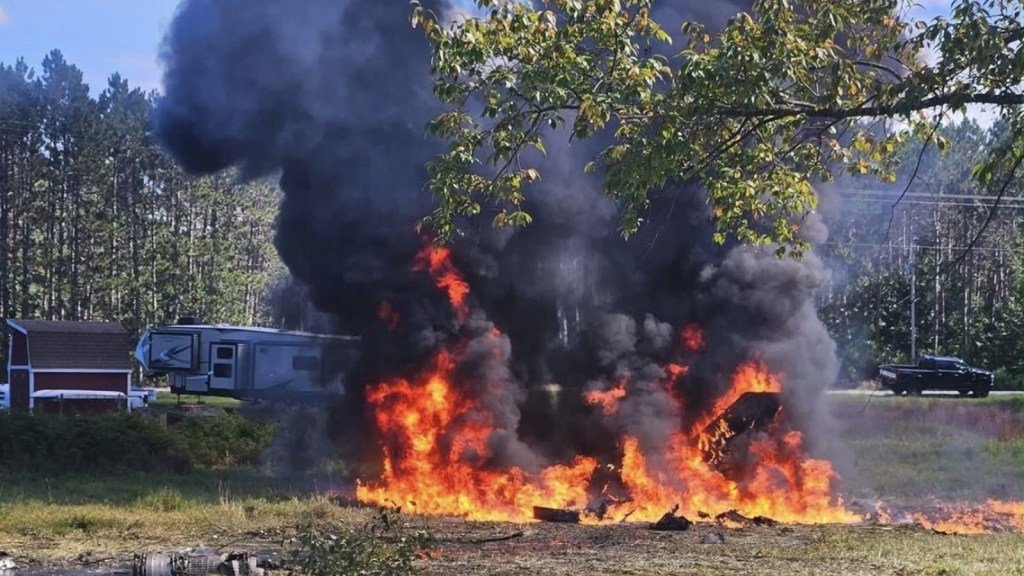
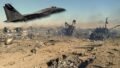
The incident brought emergency responders to the rural area as witnesses reported hearing a powerful crash and seeing a large plume of dark smoke rising into the air. Images shared on Social Media showed smoke visible above the crash area.
The aircraft involved was an F-16 fighter jet from Texas. The circumstances that led to the crash were not immediately disclosed, and officials had not announced a cause for the accident.
Pilot ejects before F-16 crashes
Sgt. Derek Gutierrez, a public affairs specialist with the 149th Fighter Wing, confirmed that the pilot ejected from the aircraft safely.
Gutierrez said the pilot was receiving medical treatment at a local hospital following the crash. He did not release the pilot’s identity or provide details about any injuries, citing military policy.
The safe ejection was a critical development in the incident. Modern fighter aircraft are equipped with ejection systems designed to allow pilots to escape an aircraft during an emergency when remaining inside the jet is no longer considered survivable.
Although the pilot successfully ejected, the military’s decision to provide medical treatment reflects the potential physical stresses involved in an emergency ejection and subsequent landing.
Training exercise was underway near Alpena
The F-16 was participating in training exercises at a National Guard base in Alpena, a community in northern Michigan located about 190 miles, or 305 kilometres, north of Detroit.
Military training flights involving fighter aircraft are conducted to prepare pilots for a wide range of operational situations. Such exercises can involve demanding flight manoeuvres and simulated combat scenarios, although the specific training activity underway when this F-16 crashed was not detailed in the information released by military officials.
The location of the accident in a rural area meant that witnesses nearby were able to hear and see the crash from their homes.
Witnesses describe loud crash and heavy smoke
People living near the crash site reported hearing a loud impact followed by visible smoke.
Wendy Sobeck said she and her husband initially believed there had been a vehicle accident near their rural home because of the sound.
“We thought there was a car accident outside our house. We saw big billowing black smoke. We couldn’t tell what it was, so my husband got into his pickup truck and saw what happened,” Sobeck said.
According to Sobeck, aircraft debris could be seen scattered across a field. She also described additional explosions continuing after the initial crash.
The account provides an indication of how dramatic the accident appeared to people on the ground, although the exact sequence of events and the source of the reported explosions would need to be established by investigators.
Social media images show smoke over crash area
Images and reports from the scene quickly circulated on social media following the accident. Posts described the aircraft as having crashed in northern Michigan and reported that the pilot had successfully ejected.
Such early reports can provide immediate information about an incident, but they do not necessarily establish the official circumstances of an aircraft accident. Military authorities remain responsible for confirming details involving the aircraft, pilot and investigation.
In this case, the military spokesman confirmed the pilot’s safe ejection and hospital treatment but did not provide additional information about the pilot’s condition or identity.
F-16 crash investigation will determine what happened
The cause of the crash was not immediately available. Determining why a military aircraft crashes generally requires examination of the aircraft, flight information, maintenance records, pilot reports and other available evidence.
Investigators can also examine debris at the crash site to determine whether the aircraft experienced a mechanical problem, an operational issue or another type of emergency before the pilot ejected.
At this stage, there is not enough information to establish what caused the F-16 to go down during the Michigan training exercise.
The pilot’s account could eventually become an important part of the investigation, particularly because the pilot ejected before the aircraft crashed. Investigators may seek information about what the pilot experienced in the final moments of the flight and what prompted the ejection.
Why F-16 training remains demanding
The F-16 Fighting Falcon is a single-engine multirole fighter aircraft designed for demanding military operations. Its capabilities allow pilots to conduct air-to-air and air-to-ground missions, making proficiency training an important part of maintaining operational readiness.
Training flights are designed to allow pilots to practise procedures and manoeuvres in controlled environments. Even when an exercise is routine, however, Military Aviation involves inherent risks because aircraft operate at high speeds and under significant physical and mechanical demands.
Emergency procedures, including the use of ejection seats, are therefore an essential part of fighter-pilot training.
The Michigan crash demonstrates the importance of those emergency systems. The aircraft was lost, but the pilot was able to leave the jet before the crash and receive medical attention.
Crash occurred in rural area
The rural setting of the accident also helped shape the initial response from people nearby. Witnesses described seeing smoke and aircraft debris in a field rather than the aircraft striking a densely populated area.
Details about possible damage to property or injuries on the ground were not immediately provided in the supplied military account.
Authorities will also need to secure and examine the crash site as part of the investigation. Military aircraft can contain components and materials that require controlled handling following an accident.
The presence of debris and continuing reports of explosions made the scene potentially hazardous for people approaching the area before emergency and military personnel had assessed it.
Pilot’s condition remains limited to official information
Military officials confirmed that the pilot was receiving treatment at a local hospital but declined to provide details about the person’s identity or injuries.
That means reports circulating online about the pilot’s specific condition should be treated separately from the information officially confirmed by the military.
The successful ejection is the clearest confirmed detail regarding the pilot’s immediate survival, while the extent of any injuries remains undisclosed.
Medical evaluations following an emergency ejection can be important because pilots can experience significant forces during the escape sequence and landing. The hospital treatment therefore does not by itself indicate the severity of the pilot’s condition.
What happens next
The focus will now shift toward the investigation into the crash and the condition of the pilot.
Investigators will work to reconstruct the aircraft’s final moments and determine what prompted the emergency. The examination of the wreckage and other available evidence will be important in establishing whether the crash resulted from an aircraft malfunction, an operational problem or another factor.
Further official information may also clarify the exact training activity underway, the location of the crash and whether the accident caused damage or injuries on the ground.
For now, the key confirmed outcome is that the F-16 was lost during a training exercise in rural Michigan, while its pilot successfully ejected and was taken to a local hospital.
The incident highlights both the risks associated with military flight training and the importance of emergency systems that can give pilots a chance to survive when an aircraft can no longer safely remain airborne. Until investigators release additional findings, the cause of the Michigan F-16 crash remains undetermined.
For breaking news and live news updates, like us on Facebook or follow us on Twitter and Instagram. Read more on Latest World on thefoxdaily.com.


COMMENTS 0