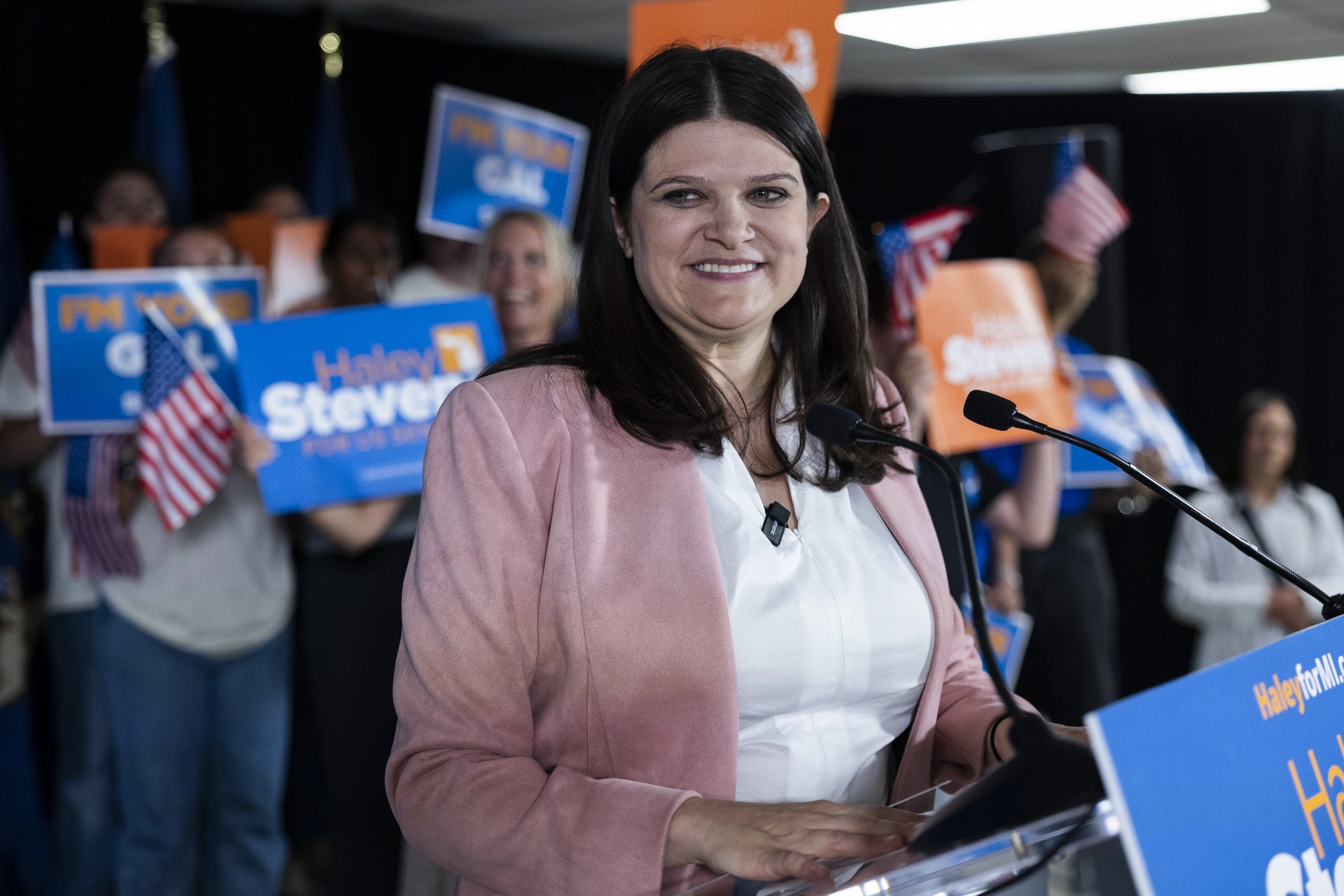
Michigan Democratic Representative Haley Stevens has endorsed Republican Senate candidate Mike Rogers, delivering a major political setback to her party’s nominee, Abdul El-Sayed, just days before the US Midterm Elections. The announcement followed a public dispute between Stevens and El-Sayed over an outside campaign advertisement that the congresswoman described as antisemitic.
Stevens announced her decision in a video posted on Sunday, saying El-Sayed had made it clear that she was no longer welcome in his campaign. She had initially planned to support the Democratic nominee at a campaign event but instead appeared alongside Rogers at a church in Detroit before publicly endorsing him.
The development has intensified divisions among Michigan Democrats during the final stretch of one of the country’s closely watched Senate contests. The race could play an important role in determining which party controls the US Senate after the November 3 midterm elections.
Haley Stevens Announces Endorsement of Republican Mike Rogers
Stevens confirmed her support for Rogers in a video addressed to Michigan voters. Referring to the disagreement with El-Sayed, she said the Democratic nominee had told her to stay away from his campaign.
“Hey, Michigan, as you may have seen, our Democratic nominee for U.S. Senate, Abdul, said that I was no longer welcome in his campaign and that I should stay away.”
She then explained that she had accepted his position and would support the Republican candidate instead.
“And he’s right, and that’s why I am endorsing Mike Rogers for the United States Senate today. I don’t belong in Abdul’s campaign.”
The endorsement marked a significant change from Stevens’ position just days earlier. She had indicated that she would support the Democratic ticket and was expected to attend a Sunday campaign event in Detroit alongside El-Sayed.
Instead, she appeared with Rogers at a church in Detroit. Rogers spokesperson Abby Ronson confirmed the appearance and said the Republican candidate welcomed Stevens’ support.
Dispute Over Antisemitic Campaign Advertisement Triggered Fallout
The disagreement between Stevens and El-Sayed centred on an advertisement produced by an outside political group. Stevens described the advertisement as antisemitic and expected the Democratic nominee to condemn it publicly.
El-Sayed did not accept her demand, arguing that Stevens was reopening disagreements from a primary contest that had already concluded. He accused her of focusing on an issue that threatened to distract from the general-election campaign.
Responding to Stevens’ criticism, El-Sayed said she was “intent on relitigating a primary that ended three months ago.”
The dispute became increasingly public in the days before the planned Detroit event, with both politicians issuing critical statements. Their disagreement created concern among Democratic allies who feared that the conflict could weaken the party’s efforts to consolidate support ahead of Election Day.
NBC News reported on Saturday that El-Sayed’s campaign had asked Stevens not to attend its remaining campaign events following the exchange. Stevens later referred to that decision in her endorsement video.
Stevens Changes Plans for Detroit Campaign Event
Stevens had been expected to appear with El-Sayed at a campaign gathering in Detroit as part of efforts to demonstrate party unity after the Democratic primary. The planned appearance was particularly important because the Senate race is being closely watched by national political organisations.
However, the disagreement over the advertisement disrupted those plans. Rather than joining the Democratic nominee, Stevens appeared alongside Rogers at a church in Detroit before announcing her endorsement.
Rogers’ spokesperson Abby Ronson confirmed that Stevens had attended the event with the Republican candidate. Speaking to NBC News before the endorsement was announced, Ronson said, “Mike welcomes her.”
The appearance gave Rogers an opportunity to highlight support from a prominent Democratic politician who had previously competed against El-Sayed for the party’s Senate nomination.
Democratic Allies React to Stevens’ Decision
Stevens’ endorsement has angered Democratic allies of El-Sayed, who had spent the weekend responding to her criticism of the party’s nominee. Her decision to appear with Rogers and publicly support his candidacy added another layer to the dispute.
The timing has been particularly sensitive because campaigns are attempting to reach undecided voters and encourage supporters to participate in early voting. Public disagreements between prominent party figures can complicate those efforts by shifting attention away from candidates’ policy positions and campaign messages.
Stevens’ move has also raised questions about the level of support El-Sayed can expect from Democrats who backed her during the primary. However, the endorsement alone does not establish how voters will respond or whether it will change the result of the Senate contest.
Stevens’ Congressional Staff Begin Resigning
The political consequences of the endorsement appeared to extend beyond the Senate campaign and into Stevens’ congressional office.
A person familiar with the matter confirmed that Stevens’ longtime chief of staff, Justin German, and several other members of her congressional staff were resigning following her decision to endorse Rogers.
The reported departures indicate that the endorsement has created divisions within Stevens’ own political operation. German had been a longtime member of her congressional team, making his reported resignation a notable development.
However, the available information does not establish the individual reasons behind every staff member’s decision to leave. The departures were reported in connection with Stevens’ endorsement, but further details about the internal discussions were not provided.
Could the Endorsement Affect the Michigan Senate Race?
Michigan is a key battleground in the fight for control of the US Senate. The contest between El-Sayed and Rogers has attracted national attention because the outcome could influence the balance of power in Washington.
Stevens’ endorsement is politically significant because she is a Democratic member of Congress who had previously competed against El-Sayed for the party’s nomination. Her decision to back the Republican candidate could create difficulties for Democrats seeking to present a united front.
However, the impact on the final result remains uncertain. More than two million votes had already been cast in Michigan through mail-in ballots and early in-person voting by the time Stevens announced her endorsement.
That early voting figure means a substantial number of voters had already made their choices before the announcement. It is therefore unclear how much influence Stevens’ decision could have on the remaining electorate.
What Happens Next Before Election Day?
With the November 3 election approaching, El-Sayed and Rogers are entering the final stage of their campaigns amid heightened political attention. The disagreement involving Stevens has added an unexpected development to the contest and created questions about Democratic unity.
Stevens has made her position clear by endorsing Rogers, while El-Sayed’s campaign had already asked her to stay away from its events. The Republican campaign has welcomed her support, although the precise electoral consequences remain unknown.
The coming days will show whether the controversy influences voter engagement or remains largely an internal dispute among Michigan political figures. With millions of ballots already cast, the Senate race will ultimately be decided by voters across the state.
For breaking news and live news updates, like us on Facebook or follow us on Twitter and Instagram. Read more on Latest World on thefoxdaily.com.




COMMENTS 0