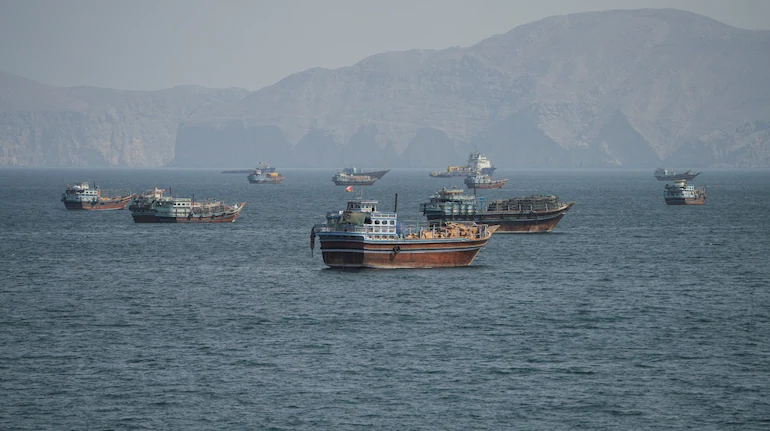
Iran has reported the destruction of navigational aid systems in the southern part of the Strait of Hormuz, adding to concerns over maritime security in one of the world’s most strategically important shipping routes. An unnamed official from the Iranian Revolutionary Guards Navy told state media on Monday, November 9, that no unauthorised vessels had transited the waterway overnight.
The official did not identify who destroyed the navigation systems, explain when the damage occurred or specify which equipment was affected. The statement also provided no details about the number of vessels that used the strait during the period or whether commercial shipping operations had been directly disrupted.
The announcement comes amid heightened tensions between Iran and the United States, repeated reports of incidents involving commercial vessels and continuing uncertainty over access to the Strait of Hormuz. The latest development raises questions about how ships will navigate the area if essential maritime guidance systems are unavailable.
Iran reports destruction of navigation aids in Strait of Hormuz
According to Iranian state media, a Revolutionary Guards Navy official said navigational aid systems in the southern section of the Strait of Hormuz had been destroyed. The official added that no unauthorised vessels crossed the maritime route overnight.
Navigation aids are important for helping ships determine their positions, follow designated shipping channels and avoid hazards. Depending on the equipment involved, these systems can include navigational buoys, beacons, lights and electronic positioning or guidance infrastructure.
However, the Iranian statement did not clarify whether the reported destruction involved physical navigation markers, electronic systems or another form of maritime infrastructure. It also did not establish whether the damage affected the entire southern passage or only specific locations.
Another significant unanswered question concerns responsibility. The official did not say whether the systems were destroyed in a military operation, damaged during recent confrontations or affected by another incident. Without further information, the circumstances surrounding the damage remain unclear.
The claim that no unauthorised vessels transited overnight also does not mean that all shipping through the strait stopped. Iran’s statement referred specifically to vessels considered unauthorised and did not provide a complete account of commercial maritime movements.
Why the Strait of Hormuz is strategically important
The Strait of Hormuz connects the Persian Gulf with the Gulf of Oman and the wider Arabian Sea. It lies between Iran to the north and Oman and the United Arab Emirates to the south, making it a critical passage for international maritime trade.
The waterway is particularly important to the global energy market because a substantial share of internationally traded oil and petroleum products normally passes through it. Major oil-producing countries, including Saudi Arabia, Iraq, Kuwait, the UAE and Iran, depend on Gulf shipping routes to transport energy supplies to international customers.
Liquefied natural gas shipments from Qatar also make the strait important to global gas markets. Disruptions can therefore affect not only oil prices but also energy supply chains, shipping costs and the availability of fuel in importing countries.
The geography of the passage makes navigation especially important. Although the strait is relatively narrow compared with open ocean routes, it carries large commercial vessels through designated shipping channels. Safe passage requires coordination, accurate positioning and awareness of other vessels operating in the area.
Any damage to navigational infrastructure can complicate these operations. Even when ships are technically able to continue sailing, reduced access to reliable navigation information can increase the risk of collisions, grounding or accidental entry into restricted waters.
Recent shipping incidents have increased concerns over maritime safety
The latest announcement follows a series of reported incidents involving commercial vessels in and around the Strait of Hormuz. Iran’s Revolutionary Guards Navy has repeatedly accused ships of attempting to use unauthorised routes or switching off navigation and identification systems while passing through the area.
In recent statements, Iranian military authorities claimed that several oil tankers had caught fire after striking naval mines while using routes Tehran considered unauthorised. The claims have not all been independently verified, and details about the vessels, their crews and the circumstances of the reported incidents have remained limited.
On November 8, Iran’s Revolutionary Guards Navy said two oil tankers were burning after hitting naval mines in or near the strait. The announcement followed earlier claims involving additional tankers and raised further concerns among shipping operators about the risks of navigating the waterway.
The United States has disputed aspects of Iran’s accounts of maritime conditions. US Central Command has previously said internationally recognised primary transit routes had been cleared of sea mines by American forces. The competing statements underline the difficulty of establishing a complete and independently verified picture of maritime security in the region.
There have also been reports of explosions on Qeshm Island, located near the Strait of Hormuz, over the weekend. Iranian media reported blasts in parts of southern Iran, although officials did not provide a complete explanation of what caused them or establish a direct connection with the destruction of the navigation systems.
Separately, the US military said it had disabled a commercial vessel attempting to breach its naval blockade of Iran. The incident added another dimension to the confrontation over which ships can enter or leave Iranian ports and under what conditions.
Iran and the United States remain locked in a maritime confrontation
The Strait of Hormuz has become a major point of tension during the wider conflict involving Iran, the United States and Israel. Military operations that began in February 2026 have expanded the confrontation beyond direct strikes, with maritime security and access to the Gulf becoming central issues.
Iran has sought to exercise control over shipping movements through the waterway, while Washington has maintained restrictions on maritime activity connected with Iranian ports. Both sides have made competing claims about security, freedom of navigation and responsibility for incidents involving commercial vessels.
The US position has emphasised the need to keep internationally recognised shipping routes open and protect commercial traffic. Iran, meanwhile, has argued that vessels must follow its announced navigation restrictions and has warned against ships it considers to be cooperating with the American military.
These competing positions have created uncertainty for shipping companies. A vessel may face different assessments of whether a particular route is safe or authorised depending on which authority it consults.
The latest report about destroyed navigation aids adds to that uncertainty. If ships cannot rely on some of the usual navigational infrastructure, operators may need additional guidance and updated safety information before deciding whether to enter or cross affected areas.
What the destruction of navigation systems could mean for commercial shipping
Navigation systems are essential to the safe movement of large commercial vessels, particularly in narrow waterways with heavy traffic. Ships use a combination of satellite positioning, onboard radar, electronic charts, automatic identification systems and physical maritime markers to determine their location and avoid hazards.
Physical aids such as buoys and beacons help identify channels, shallow areas and navigational hazards. Electronic systems provide additional information that allows bridge crews to monitor their position and coordinate movements with other vessels.
If some of these systems are destroyed, vessels may have to depend more heavily on alternative navigation methods and updated instructions from maritime authorities. The actual consequences would depend on which systems were affected, how extensive the damage was and whether backup arrangements remained available.
Ships could also face additional operational costs. Companies may need to obtain updated risk assessments, arrange alternative routing or delay departures while waiting for clearer information. Longer waiting periods and changes to established routes can increase fuel consumption, insurance costs and delivery times.
For oil tankers and liquefied natural gas carriers, delays in the Strait of Hormuz can have wider consequences because their cargoes are linked to international energy supply chains. Even a temporary reduction in shipping activity can create uncertainty for traders, refiners and importing countries.
However, the latest Iranian statement does not establish that the strait has been completely closed or that all commercial vessels have been prevented from passing. The distinction between restrictions on unauthorised ships and a total suspension of maritime traffic is important when assessing the actual impact.
Could the incident affect global oil prices?
The Strait of Hormuz is closely watched by energy markets because of the volume of oil and gas transported through the passage. Any development that threatens the safety or continuity of shipping can influence expectations about future supply.
When traders fear that tanker movements could be disrupted, oil prices may come under upward pressure. Shipping companies and insurers may also reassess the risks of operating in the region, potentially increasing freight and insurance costs.
The impact depends on the scale and duration of any disruption. A brief incident that does not affect normal commercial movements may have a limited effect, while a prolonged restriction or repeated attacks on vessels could create more serious supply concerns.
Energy-importing countries in Asia are particularly exposed to developments in the Gulf because they depend heavily on imported crude oil and natural gas. India, China, Japan and South Korea are among the major economies with significant interests in maintaining stable energy shipments through the region.
For India, disruptions could affect crude oil procurement costs, refinery operations and the price of imported energy. Higher international oil prices can increase pressure on the country’s import bill and influence domestic fuel pricing, depending on market conditions and government policies.
Nevertheless, the destruction of navigation aids alone does not establish that oil supplies have been interrupted. A clearer assessment will require information about the affected systems, vessel movements and the extent of any operational restrictions.
Diplomatic efforts continue as maritime tensions persist
The latest maritime development comes as diplomatic efforts to reduce tensions between Washington and Tehran continue. Both sides have faced pressure to find a way out of the conflict, although their positions on sanctions, nuclear issues, military restrictions and control of shipping routes remain far apart.
Iran has transmitted a nuclear proposal through Qatar, which has been involved in diplomatic communication between the two countries. Tehran has linked further negotiations to demands that include sanctions relief, the release of frozen assets and compensation for war-related damage.
Washington has maintained that nuclear issues must remain central to any agreement. The two sides have not publicly announced a comprehensive settlement that resolves the wider conflict or guarantees unrestricted maritime access.
US President Donald Trump said on November 8 that fresh American strikes against Iran were highly unlikely if negotiations made progress. He nevertheless indicated that the possibility of further military action would depend on whether Tehran agreed to a strong deal.
The diplomatic situation remains uncertain because military activity and shipping incidents have continued alongside negotiations. The latest report about damaged navigation systems is another reminder that maritime security will be an important issue in any effort to stabilise the region.
What remains unclear about Iran’s latest announcement?
Several important details are still missing from the Iranian statement. The unnamed Revolutionary Guards Navy official did not identify the navigation systems that were destroyed, the location of the damage or the party responsible.
It is also unclear whether the systems were used by commercial shipping, military vessels or both. The statement did not explain whether alternative navigation arrangements were operating or whether ships had received new instructions from Iranian authorities.
There is no detailed independent confirmation of the reported destruction or its immediate impact on shipping. Information from maritime monitoring organisations, shipping companies and other regional authorities will be important in establishing whether normal commercial movements have been affected.
The number of vessels that crossed the strait overnight also remains unknown. Iran’s reference to unauthorised vessels should not be interpreted as confirmation that no ships passed through the waterway at all.
Strait of Hormuz remains a key focus of regional security
Iran’s announcement about the destruction of navigational aid systems has added another layer of uncertainty to an already tense maritime environment. The claim that no unauthorised vessels crossed overnight highlights Tehran’s continued emphasis on controlling access to the southern Strait of Hormuz.
For shipping operators, the immediate concern will be whether the damaged systems affect safe passage and whether reliable alternative navigation arrangements are available. For energy markets, the central question is whether the latest development leads to further restrictions on tanker movements.
Until more details emerge, the extent of the damage and its consequences remain uncertain. What is clear is that the Strait of Hormuz continues to be a critical pressure point in the confrontation between Iran and the United States, with developments there carrying implications for international shipping, energy supplies and regional security.
For breaking news and live news updates, like us on Facebook or follow us on Twitter and Instagram. Read more on Latest World on thefoxdaily.com.






COMMENTS 0