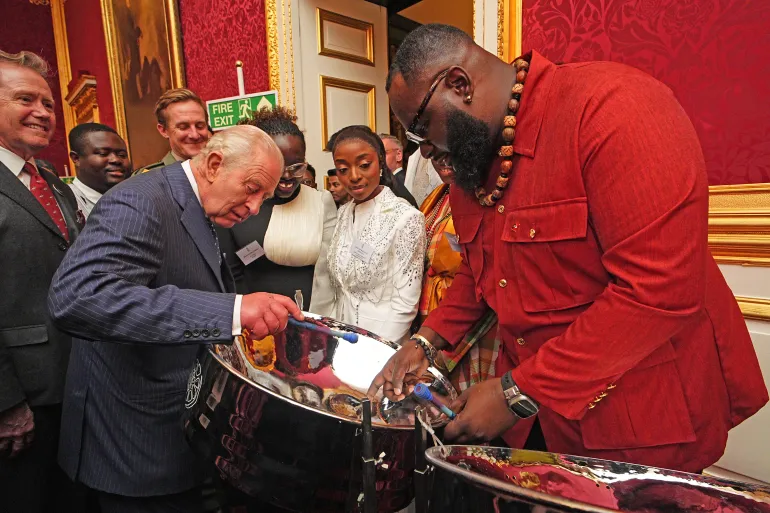
King Charles III has begun a nine-day Caribbean tour in the Bahamas, where he is expected to acknowledge the suffering caused by slavery and colonialism amid growing calls for Britain to apologise for its role in the transatlantic slave trade. The visit will also focus on climate change, environmental protection and the challenges facing vulnerable island nations.
The 77-year-old monarch began the tour on Tuesday, with planned visits to the Bahamas and Guyana before being joined by Queen Camilla for the final leg in Antigua and Barbuda. The visit will include the Commonwealth Heads of Government Meeting (CHOGM), scheduled to take place in St John’s from November 1 to 4.
The tour comes amid renewed pressure from Caribbean nations seeking recognition, accountability and reparations for the historical consequences of slavery. Although modern British monarchs have expressed remorse over the country’s role in the slave trade, no formal apology has been issued, and the UK government has resisted calls for financial compensation.
King Charles Expected to Acknowledge Suffering Caused by Slavery
During his first stop in the Bahamas, King Charles is expected to address the historical legacy of slavery while recognising the achievements and cultural identity of Caribbean communities.
At a planned youth rally, he is expected to say that some of the most joyful, hopeful and vibrant aspects of Bahamian culture emerged from a painful past.
“Some of what is best in Bahamian culture today, the most joyful, the most hopeful, the most bright, was born out of darkness.”
The monarch is also expected to acknowledge the suffering experienced by people in the islands and beyond during the era of slavery, while emphasising the importance of present-day achievements and future opportunities.
“Only right that we should acknowledge the great suffering of the past in these islands and beyond, even as we rejoice in the successes of the present, and build new opportunities for the future.”
The planned remarks come as several former British colonies seek a stronger response from the monarchy and the British government to the legacy of colonisation and the transatlantic slave trade, which benefited Britain’s economy and royal ancestors over centuries.
Charles has previously described slavery as one of the darkest periods in British history. During the current tour, he is expected to address colonial history at each stage of the visit, although the palace has presented the trip as an opportunity to look towards the future as well as acknowledge the past.
Caribbean Nations Renew Calls for Slavery Reparations
The question of reparations has become a central issue surrounding the royal visit. Several Caribbean nations have called on Britain to take further steps towards addressing the lasting consequences of slavery, including demands for formal apologies, accountability and financial or other forms of compensation.
Last month, Jamaica, where King Charles remains head of state, filed a petition in an appeals court in London to advance its campaign for reparations for the African ancestors who suffered under centuries of enslavement.
The move reflects continuing efforts by Caribbean countries to pursue recognition and remedies for the historical harms associated with slavery and colonial rule.
Guyana’s President Irfaan Ali, who is scheduled to meet Charles during the visit, has said that acknowledging the darkest periods of British history is only the beginning of the process.
“Now, moving to the apology is the next step,” Ali said.
Ali has called for accountability from the former empire, accusing it of exploiting the region, destroying lives and contributing to underdevelopment. His remarks underline the distinction between recognising historical suffering and taking further action to address its consequences.
While Charles is expected to acknowledge the suffering caused by slavery, the palace has not announced a formal apology or a commitment to reparations as part of the tour.
Commonwealth Secretary-General Says Time Has Come to Discuss Reparations
Commonwealth Secretary-General Shirley Ayorkor Botchwey has also weighed in on the debate ahead of the leaders’ meeting in Antigua and Barbuda.
Speaking to Sky News, Botchwey said it would not hurt for the king to apologise for Britain’s role in the slave trade. She also argued that the time had come to discuss reparations, whether through financial payments or other measures.
Botchwey said the issue would be among the subjects leaders could discuss during the Commonwealth summit in St John’s. She indicated that conversations could address the broader question of reparatory justice and that the Commonwealth would support countries involved in those discussions.
However, she declined to elaborate on whether the British government and the Royal Family should pursue reparations themselves.
The UK government has resisted calls for financial compensation, citing the complexity of the issue and the financial implications of such proposals. The debate therefore remains centred on whether historical acknowledgement should be followed by a formal apology or other measures to address the effects of slavery.
Charles’s Caribbean visit is taking place against this backdrop of competing expectations. Caribbean leaders and campaigners are pressing for stronger action, while the palace has emphasised engagement, dialogue and a forward-looking approach.
Royal Family’s Earlier Encounters With Calls for Reparations
The current tour follows earlier royal visits that encountered public demands for an acknowledgement of slavery and colonialism. One notable example was Prince William and Princess Catherine’s visit to Jamaica in 2022, when they faced anti-monarchy protests and calls for reparations.
The protests highlighted continuing disagreements over the legacy of Britain’s historical relationship with Caribbean nations and the future of constitutional ties between some former colonies and the monarchy.
Charles’s visit comes as those discussions continue across the region. Several countries are examining their historical relationship with Britain and seeking to determine what recognition or action should follow from the record of enslavement and colonial rule.
Although the king has previously expressed remorse over Britain’s role in slavery, the monarchy has not formally apologised. The distinction between expressions of regret and a formal apology remains important to those calling for reparations.
Climate Change and Island Resilience Also on the Agenda
Alongside the debate over slavery, King Charles is expected to highlight climate change and the threats facing low-lying islands during his Caribbean tour.
The palace has said the visit will provide opportunities for the monarch to meet young people, engage with communities and discuss pressing challenges, including environmental protection. Charles has long supported environmental causes and is expected to visit conservation organisations working to protect vulnerable ecosystems.
In the Bahamas, he is expected to draw attention to the particular risks faced by low-lying island nations as climate change intensifies pressure on communities and their environments.
“Our world cries out for healing.”
The planned remarks are expected to connect environmental challenges with the need for cooperation and resilience. Island nations are particularly concerned about climate-related threats, while many argue that they contribute relatively little to the pollution responsible for global warming.
Botchwey highlighted this imbalance, noting that many countries most affected by climate change are not major polluters but nevertheless experience severe consequences.
Climate resilience schemes are expected to feature in discussions during the Commonwealth Heads of Government Meeting. Leaders will also consider investment and trade opportunities for member countries.
King Charles to Visit Conservation Projects in Guyana and Antigua and Barbuda
Environmental protection will be a practical component of the royal tour. Charles is expected to meet organisations involved in conservation work, including a rainforest conservation initiative in Guyana and a coral restoration project in Antigua and Barbuda.
The planned visits reflect the monarch’s longstanding interest in environmental issues and the importance of protecting ecosystems that support local communities and biodiversity.
Rainforests play a significant role in storing carbon and supporting diverse forms of wildlife, while coral reefs provide habitats for marine species and help sustain coastal communities. Conservation programmes in these areas are among the initiatives that Caribbean and other Commonwealth countries are working to strengthen.
The tour is expected to bring together environmental concerns and wider discussions about sustainable development. For island nations, climate resilience involves protecting ecosystems while helping communities prepare for the effects of environmental change.
Commonwealth Summit to Focus on Trade, Investment and Climate Resilience
The final stage of the tour will take place in Antigua and Barbuda, where Charles will attend the Commonwealth Heads of Government Meeting alongside Queen Camilla.
The summit is scheduled for November 1 to 4 in St John’s. It will bring together leaders from the Commonwealth’s 56 member countries, with discussions expected to cover investment, trade and climate resilience, as well as the possibility of conversations about reparatory justice.
Botchwey described the Commonwealth as an important source of cooperation at a time when the international situation is increasingly unstable.
She said the meeting would be unlike previous summits and highlighted the importance of addressing the challenges confronting member countries.
Although the summit’s economic and environmental priorities are central to the agenda, the legacy of slavery is also expected to remain part of the discussions. Botchwey said leaders could address reparatory justice in Antigua and Barbuda, with the Commonwealth supporting countries involved in those talks.
Palace Says Tour Will Balance Historical Reflection With Future Priorities
Buckingham Palace has sought to present the Caribbean tour as both a recognition of difficult historical experiences and an opportunity to discuss future challenges.
A palace spokesperson said the visit represented a continuation of Charles’s longstanding engagement with the region and his efforts to understand and educate people about Britain’s historical wrongs.
The tour will therefore combine speeches acknowledging the suffering caused by slavery with meetings focused on young people, environmental protection and cooperation among Commonwealth members.
However, the question of whether acknowledgement should lead to a formal apology or reparations remains unresolved. Caribbean leaders have continued to press for further action, while the British government has resisted financial compensation.
Charles’s visit is expected to keep these questions in focus as he meets leaders and communities across the Bahamas, Guyana and Antigua and Barbuda. The outcome of the discussions, particularly during the Commonwealth summit, may help clarify how member countries intend to approach the debate over historical responsibility and reparatory justice.
What to Know About King Charles’s Caribbean Tour
- Tour duration: Nine days across three Caribbean countries.
- First stop: The Bahamas, where Charles is expected to acknowledge the suffering caused by slavery.
- Other destinations: Guyana and Antigua and Barbuda.
- Main historical issue: Calls for Britain to apologise for the transatlantic slave trade and consider reparations.
- Commonwealth summit: Scheduled for November 1 to 4 in St John’s, Antigua and Barbuda.
- Environmental priorities: Climate resilience, rainforest conservation and coral restoration.
The Caribbean tour places King Charles at the centre of an ongoing debate about Britain’s colonial past and its responsibilities in the present. His expected acknowledgement of historical suffering may contribute to discussions, but calls for a formal apology and reparations remain outstanding.
At the same time, the visit will highlight climate change and the need for stronger environmental resilience across vulnerable island nations. The discussions in the Bahamas, Guyana and Antigua and Barbuda are expected to reflect both the region’s unresolved historical concerns and its priorities for the future.
For breaking news and live news updates, like us on Facebook or follow us on Twitter and Instagram. Read more on Latest World on thefoxdaily.com.






COMMENTS 0