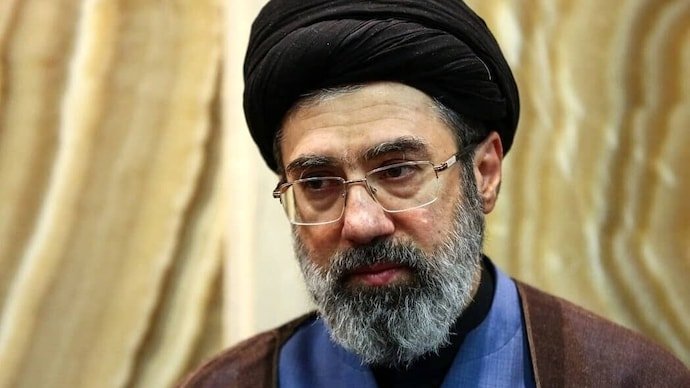
- Understanding the Context: Who is Mojtaba Khamenei?
- What Happened: The Nature and Severity of the Injuries
- From Central Authority to Distributed Power
- Communication in Secrecy: A Leadership Operating in the Shadows
- Civilian Leadership on the Sidelines
- Why This Matters: Regional and Global Implications
- A Historical Comparison: When Leadership Health Shapes Power
- The Unique Angle: A Hybrid Power Model Emerging
- What Comes Next: Predictions and Future Outlook
- Conclusion: A Leadership Crisis That Is Reshaping a Nation
The reported Mojtaba Khamenei injury has triggered intense global attention not only because of the severity of his condition, but also due to its far-reaching implications for Iran’s political system. According to multiple reports, Iran’s current supreme leader has suffered extensive physical injuries, including severe burns to his face and lips, multiple surgeries on his leg, and limited mobility. While he remains mentally alert, his ability to communicate and lead in traditional ways has been significantly affected.
This situation raises critical questions: Who is really governing Iran right now? How is power being exercised behind the scenes? And what does this mean for regional stability and global Diplomacy? The answers point to a deeper transformation within Iran’s leadership one that extends far beyond a single individual’s health.
Understanding the Context: Who is Mojtaba Khamenei?
Mojtaba Khamenei, long seen as a powerful but relatively low-profile figure within Iran’s political ecosystem, rose to prominence following the death of his father. Unlike his predecessor, whose leadership style was highly centralized and publicly visible, Mojtaba’s tenure appears to be unfolding under extraordinary constraints.
Historically, Iran’s supreme leader has held near-absolute authority over Military, political, and religious institutions. This role is not merely symbolic it is the cornerstone of the Islamic Republic’s governance model. However, the current circumstances suggest a shift away from that centralized model toward something more fragmented and dynamic.
What Happened: The Nature and Severity of the Injuries
The reported injuries are not minor. They include:
- Severe burns to the face and lips, affecting speech
- Multiple surgeries on one leg, with a prosthetic expected
- Surgical intervention on one hand, with gradual recovery
These physical limitations have fundamentally altered how leadership is exercised. Public appearances, speeches, and direct engagement once essential tools of authority are now absent. Instead, communication reportedly occurs through handwritten messages delivered via secure, multi-step channels.
This shift may sound almost archaic, but in reality, it reflects a high-security adaptation to both physical vulnerability and perceived external threats.
From Central Authority to Distributed Power
One of the most significant consequences of the Mojtaba Khamenei injury is the apparent redistribution of power within Iran’s leadership structure.
Traditionally, Iran’s governance model has revolved around a single dominant authority. Today, however, decision-making appears increasingly influenced if not controlled by senior military officials, particularly within the Islamic Revolutionary Guards Corps (IRGC).
The Rise of Military Leadership
The IRGC has long been a powerful institution in Iran, but current developments suggest its role is expanding even further. With limited direct access to the supreme leader and slower communication channels, military commanders are stepping in to fill the decision-making vacuum.
This evolution can be understood as a shift from:
- Centralized leadership → Collective decision-making
- Public authority → Covert influence
- Civilian-military balance → Military dominance
In practical terms, this means that strategic decisions especially those related to National Security, defense, and foreign policy are increasingly shaped by military perspectives.
Communication in Secrecy: A Leadership Operating in the Shadows
The reported method of communication handwritten notes passed through a human relay system highlights an extraordinary level of secrecy. This is not merely a logistical workaround; it is a strategic response to security concerns.
The fear of targeted attacks has reportedly led even senior officials to avoid direct contact. This creates a unique governance model where:
- Information flow is slow and highly controlled
- Decision-making becomes layered and indirect
- Accountability becomes harder to trace
While such a system may enhance security, it also introduces inefficiencies and potential misalignments in policy execution.
Civilian Leadership on the Sidelines
Another major development is the apparent marginalization of civilian leadership. Key figures in Iran’s government are reportedly focusing on domestic administration rather than strategic policymaking.
This raises important questions about governance balance. In most political systems, a healthy equilibrium between civilian and military authority is essential. When that balance shifts too far in one direction, it can lead to:
- Reduced diplomatic flexibility
- Increased risk of Conflict escalation
- Limited public accountability
The reported collapse of diplomatic talks with the United States illustrates this dynamic. Military opposition to negotiations appears to have outweighed diplomatic considerations, signaling a more hardline approach to foreign policy.
Why This Matters: Regional and Global Implications
The Mojtaba Khamenei injury is not just a domestic issue it has significant implications for the broader Middle East and global Geopolitics.
1. Increased Military Influence Could Harden Iran’s Foreign Policy
Military-led decision-making often prioritizes security and strategic advantage over diplomacy. This could lead to a more assertive or even confrontational approach in regional conflicts.
2. Slower Decision-Making in Critical Moments
The indirect communication system may delay responses during crises. In a region where timing is crucial, such delays could have serious consequences.
3. Uncertainty for International Negotiations
Global powers engaging with Iran may find it harder to identify who holds real authority. This ambiguity complicates negotiations and increases the risk of miscalculation.
A Historical Comparison: When Leadership Health Shapes Power
This is not the first time a leader’s health has influenced national governance. History offers several examples where physical limitations led to shifts in power structures.
| Leader | Country | Impact of Health on Governance |
|---|---|---|
| Franklin D. Roosevelt | USA | Delegated responsibilities during declining health |
| Leonid Brezhnev | Soviet Union | Power shifted to inner circle |
| Mao Zedong | China | Late-stage decisions influenced by close aides |
In each case, reduced physical capacity did not eliminate leadership but it transformed how power was exercised. Iran appears to be entering a similar phase, though under very different political and cultural conditions.
The Unique Angle: A Hybrid Power Model Emerging
What makes this situation particularly noteworthy is the emergence of what could be described as a hybrid governance model.
Rather than a complete transfer of power, Iran seems to be operating under a system where:
- The supreme leader retains symbolic and final authority
- Military leaders drive operational decisions
- Civilian officials manage administrative functions
This hybrid structure is unusual and potentially unstable. It combines elements of centralized authority with decentralized execution, creating both flexibility and friction.
What Comes Next: Predictions and Future Outlook
Looking ahead, several scenarios could unfold:
1. Gradual Consolidation of Military Power
If current trends continue, the military could become the dominant force in Iran’s governance, even if the formal structure remains unchanged.
2. Return to Centralized Leadership
If Mojtaba Khamenei recovers sufficiently, he may reassert direct control, restoring a more traditional leadership model.
3. Internal Power Struggles
Ambiguity in authority often leads to competition among power centers. This could result in internal tensions or factional conflicts.
4. Strategic Isolation or Aggressive Posturing
Depending on how decisions are made, Iran could either become more isolated or adopt a more assertive stance in regional affairs.
Conclusion: A Leadership Crisis That Is Reshaping a Nation
The Mojtaba Khamenei injury is more than a personal health issue it is a catalyst for systemic change within Iran. While the country’s leadership remains intact on the surface, the underlying dynamics are shifting in profound ways.
From the rise of military influence to the sidelining of civilian leaders and the adoption of covert communication methods, Iran is entering a new phase of governance. Whether this transformation leads to greater stability or increased uncertainty will depend on how these evolving power structures adapt in the months ahead.
For now, one thing is clear: the center of power in Iran has not disappeared but it is no longer where it used to be.
For breaking news and live news updates, like us on Facebook or follow us on Twitter and Instagram. Read more on Latest World on thefoxdaily.com.



COMMENTS 0