- What Was Operation Sindoor?
- The Muridke Admission: Why It Matters
- The Most Sensitive Revelation: Pakistani Officials at Terrorist Funerals
- Why This Is a Diplomatic Problem for Pakistan
- The Drone Admission: A Rare Public Acknowledgement
- The Mention of Strategic Airbases
- The Information War Behind the Conflict
- Why Terror Groups Are Speaking So Openly
- The Regional Security Implications
- How This Impacts Pakistan’s Global Image
- A Rare Glimpse Behind the Narrative Wall
- Conclusion
For weeks, Pakistan projected Operation Sindoor as proof that it had successfully resisted Indian Military pressure. Television debates, political speeches and social media campaigns inside Pakistan celebrated what was described as a “strategic victory” against India.
But a series of explosive public statements by senior Lashkar-e-Taiba (LeT) figures may have severely weakened that narrative.
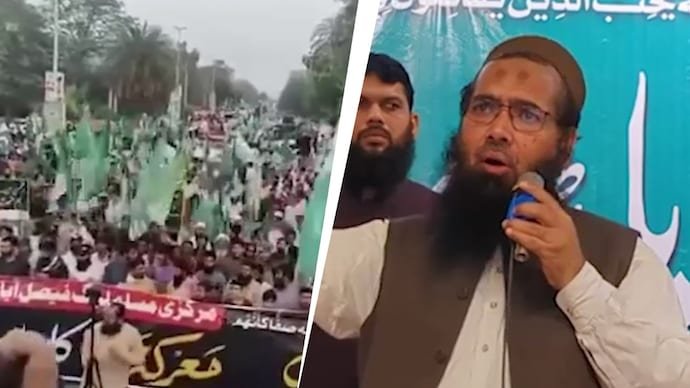
Videos accessed by India Today TV reportedly show top Lashkar operatives openly discussing the destruction caused by Indian strikes between May 7 and May 10, including damage to terror-linked infrastructure, drone penetration deep into Pakistani territory and the participation of senior Pakistani officials at funerals of militants killed during the operation.
The remarks are significant because they appear to publicly confirm what India has argued for years: that terror groups operating against India maintain deep operational, ideological and logistical links with sections of Pakistan’s establishment.
More importantly, the statements expose a widening contradiction between Pakistan’s official messaging and the admissions now emerging from within the country’s own extremist networks.
What Was Operation Sindoor?
Operation Sindoor marked one of the most intense phases of military escalation between India and Pakistan in recent years.
According to Indian accounts, the operation targeted terror-linked infrastructure and strategic sites associated with groups accused of orchestrating attacks against India.
The strikes reportedly involved:
- Precision drone operations
- Cross-border targeting
- Intelligence-driven strikes
- Attacks on terror logistics infrastructure
- Disruption of operational networks
Pakistan initially downplayed the scale of the strikes, insisting that Indian operations caused limited damage while presenting the conflict domestically as a victory.
However, the latest speeches from Lashkar leaders appear to tell a different story.
The Muridke Admission: Why It Matters
One of the most consequential revelations came from senior Lashkar operative Saifullah Khalid during a rally in Faisalabad.
While addressing supporters, Khalid reportedly described the aftermath of Indian strikes on Muridke — a location internationally associated with Lashkar-e-Taiba’s operational infrastructure.
“We were collecting the remains, scattered pieces, and rags of our martyrs from Markaz Taiba Muridke.”
That statement is politically explosive for several reasons.
1. It Suggests Significant Damage
The language used by Khalid strongly implies devastating destruction at the Muridke complex.
Pakistan had previously attempted to minimise reports of major losses linked to Indian operations.
2. It Reinforces India’s Position on Muridke
India has long accused Pakistan of allowing terror groups such as Lashkar-e-Taiba to operate from facilities like Muridke.
The United States and United Nations have also previously linked the organisation to global terrorism networks.
Any direct acknowledgement by Lashkar figures regarding casualties and infrastructure damage there strengthens India’s diplomatic argument internationally.
3. It Contradicts “Victory” Messaging
Victory celebrations typically avoid discussing catastrophic operational losses.
The fact that these admissions emerged during “victory rallies” reveals how difficult it may have become to fully conceal the scale of damage internally.
The Most Sensitive Revelation: Pakistani Officials at Terrorist Funerals
Perhaps the most politically damaging statement came from Hafiz Abdul Rauf, identified as a senior Lashkar commander and caretaker linked to Muridke.
In his speech, Rauf reportedly acknowledged that senior Pakistani military officers and government officials attended funeral prayers for militants killed during the strikes.
“The Corps Commander was also present… The Chief Secretary, IG Punjab, MNS, MP, everyone came.”
If accurate, this admission carries enormous implications.
Why This Is a Diplomatic Problem for Pakistan
For decades, Pakistan has officially denied state support for terror organisations operating against India.
Islamabad has consistently argued that:
- Terror groups are independent actors
- Pakistan itself is a victim of terrorism
- The state does not sponsor extremist networks
- Anti-India militant groups are not protected institutionally
But Rauf’s comments appear to undermine that position publicly.
The alleged attendance of:
- Senior Army officers
- Punjab officials
- Political representatives
- Security establishment figures
at funerals of militants killed in Indian strikes raises uncomfortable international questions.
Critics of Pakistan’s security establishment have long argued that certain militant groups function as strategic assets within the country’s regional policy framework.
These latest statements are likely to intensify those accusations.
The Drone Admission: A Rare Public Acknowledgement
Another striking revelation from Rauf’s speech involved Pakistan’s inability to stop Indian drones.
“Drones spread across Pakistan like a shadow, and we could not intercept them.”
That statement matters militarily because modern drone warfare is increasingly central to regional conflicts.
Drone penetration deep inside Pakistani territory would suggest:
- Intelligence gaps
- Air defence vulnerabilities
- Surveillance weaknesses
- Operational surprise
- Potential electronic warfare limitations
Public acknowledgement of such vulnerabilities is unusual during periods of military confrontation.
The Mention of Strategic Airbases
Rauf also referenced attacks on key military locations including:
- Noor Khan
- Shorkot
- Rahim Yar Khan
- Bahawalpur
These are highly sensitive references because Pakistan had earlier attempted to downplay reports involving strategic military sites.
The mention of Noor Khan is particularly notable because of the airbase’s importance within Pakistan’s military infrastructure.
Historically, strategic air installations are among the most protected and politically sensitive assets in any country.
Even indirect acknowledgement of strikes near such locations becomes geopolitically significant.
The Information War Behind the Conflict
Modern military conflicts are no longer fought only with missiles and drones.
They are also fought through narratives.
Operation Sindoor appears to have triggered a parallel information war between India and Pakistan over:
- Who inflicted greater damage
- Whose defences held stronger
- Which side controlled escalation
- How international audiences perceived the conflict
In this context, the Lashkar speeches become especially important because they potentially disrupt Pakistan’s domestic messaging.
Governments often rely on tightly controlled narratives during conflicts to:
- Maintain morale
- Project strength
- Avoid panic
- Preserve deterrence credibility
- Control political fallout
But public statements from non-state actors can sometimes complicate those efforts.
Why Terror Groups Are Speaking So Openly
One of the biggest unanswered questions is why Lashkar leaders appeared willing to discuss operational losses so publicly.
Several possibilities exist.
Martyrdom Messaging
Extremist groups often frame casualties as proof of sacrifice and ideological commitment rather than defeat.
By emphasising “martyrs,” leaders may be attempting to preserve morale among supporters.
Internal Signalling
The speeches may also serve as internal communication within militant networks, reassuring members that leadership remains active despite losses.
Public Pressure
If local populations already witnessed damage or casualties, total denial may no longer be sustainable domestically.
Religious Mobilisation
References to historic Islamic battles and religious symbolism suggest attempts to frame the conflict in ideological rather than purely military terms.
The Regional Security Implications
The revelations may have wider consequences beyond India-Pakistan relations.
International observers will likely scrutinise:
- Pakistan’s counterterrorism commitments
- The relationship between militant groups and state structures
- Regional escalation risks
- The expanding role of drones in South Asian conflict
- The possibility of future covert or precision operations
The developments also reinforce a broader trend visible globally: the blurring of lines between state actors, proxy networks and asymmetric warfare.
How This Impacts Pakistan’s Global Image
Pakistan has spent years attempting to improve its international image regarding counterterrorism concerns.
The country has repeatedly argued that it has:
- Cracked down on extremist financing
- Restricted banned organisations
- Cooperated internationally
- Reduced militant operational capacity
However, speeches openly referencing military officials attending funerals linked to militants could damage those efforts diplomatically.
India is likely to use these remarks aggressively in future international forums to strengthen its long-standing position on cross-border terrorism.
A Rare Glimpse Behind the Narrative Wall
Conflicts between nuclear-armed neighbours are often accompanied by intense propaganda, controlled information and competing national narratives.
What makes these speeches unusual is that they potentially provide rare unscripted glimpses behind official messaging.
Whether intended or accidental, the remarks appear to reveal:
- Operational losses
- Security vulnerabilities
- State-militant overlap
- Internal military pressure
- The real scale of disruption caused by the strikes
That is why the videos have attracted so much attention.
Conclusion
The latest revelations from Lashkar-e-Taiba leaders have transformed Operation Sindoor from a conventional military confrontation into a larger geopolitical and diplomatic Controversy.
What Pakistan publicly projected as a victory is now facing uncomfortable scrutiny after extremist leaders themselves appeared to acknowledge severe damage, drone penetration, operational disruption and visible involvement of senior Pakistani officials at militant funerals.
For India, the statements may strengthen its long-standing argument regarding Pakistan-based terror infrastructure and state complicity.
For Pakistan, the challenge is now twofold: managing the military fallout of the operation while also containing the narrative damage created by admissions emerging from within its own extremist ecosystem.
And in the modern era of information warfare, that second battle can sometimes prove just as consequential as the first.
For breaking news and live news updates, like us on Facebook or follow us on Twitter and Instagram. Read more on Latest World on thefoxdaily.com.




COMMENTS 0