- Primary Keyword: Trump Doral Golf Club security incident
- Understanding the Incident: What Happened and How It Unfolded
- Context Matters: Why Timing Changes Everything
- How Security at High-Profile Venues Actually Works
- Comparison: Minor Disruption vs Major Breach
- The Bigger Picture: Why Incidents Like This Are Increasing
- Real-World Impact: What This Means for Public Safety
- Expert Insight: The Importance of Behavioral Threat Detection
- What Happens Next?
- Future Outlook: Are Security Measures Enough?
- Conclusion: A Small Incident With Larger Implications
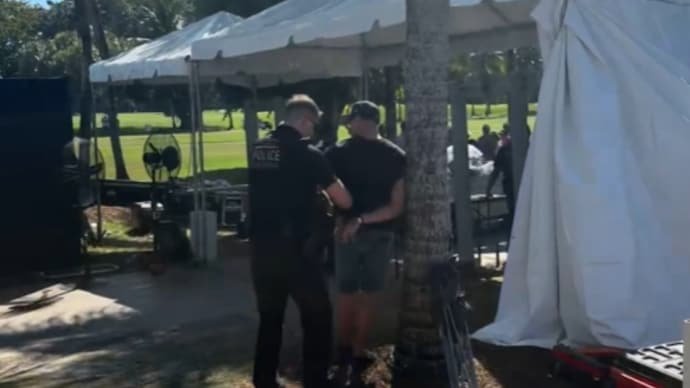
Security concerns surrounding high-profile political figures have once again taken center stage after a man was arrested at Trump Doral National Golf Club in Miami. The incident, which unfolded at a routine screening checkpoint, involved a suspect triggering alarms, refusing to comply with security personnel, and ultimately being taken into custody.
While no injuries were reported and the situation was quickly contained, the timing is critical. It comes just days after a far more serious breach at a major political event in Washington, intensifying scrutiny around how security agencies are handling evolving threats. So what exactly happened, and why does it matter beyond a single arrest?
Primary Keyword: Trump Doral Golf Club security incident
Understanding the Incident: What Happened and How It Unfolded
The disruption occurred during standard entry screening procedures at the golf club, a property known for hosting prominent guests and events. According to officials, the individual triggered security alarms and became increasingly uncooperative when approached by personnel.
The situation escalated when the suspect allegedly made physical contact with an officer, prompting immediate intervention. law enforcement responded swiftly, restraining and arresting the individual before the situation could escalate further.
Crucially, the incident was contained at the outermost layer of security the screening checkpoint preventing any breach into more sensitive areas of the property.
Quick Breakdown of Events
| Aspect | Details |
|---|---|
| Location | Trump Doral National Golf Club, Miami |
| Trigger | Security alarm activation at screening |
| Behavior | Non-compliance and physical contact with officer |
| Response | Immediate restraint and arrest |
| Outcome | No breach, no injuries, suspect in custody |
Context Matters: Why Timing Changes Everything
This incident cannot be viewed in isolation. It occurred shortly after a significant Security Breach at a high-profile political gathering in Washington. In that case, an armed individual reportedly managed to cross initial security barriers, triggering a major Emergency Response.
When two incidents happen so close together one involving a breach attempt and another involving disruptive behavior at a secured location it highlights a pattern: security systems are increasingly being tested, both intentionally and unintentionally.
This is not necessarily a sign of failure, but rather a reflection of the growing complexity of modern security environments.
How Security at High-Profile Venues Actually Works
To understand why the Trump Doral Golf Club security incident is important, it helps to break down how layered security systems operate.
- Outer Perimeter Screening: Initial checkpoints where visitors are scanned and verified
- Controlled Access Zones: Restricted areas requiring additional clearance
- Inner Security Rings: Highly protected zones reserved for high-profile individuals
In this case, the system worked as intended. The disruption was identified and neutralized at the first layer, preventing any escalation.
This reinforces a key point: effective security is not about preventing every incident it’s about containing threats before they evolve.
Comparison: Minor Disruption vs Major Breach
| Factor | Trump Doral Incident | Recent Washington Breach |
|---|---|---|
| Threat Level | Low | High |
| Weapons Involved | None reported | Firearms and multiple weapons |
| Security Outcome | Contained at checkpoint | Initial breach before containment |
| Impact | Localized disruption | National security concern |
This comparison highlights an important distinction: not all security incidents are equal, but each one provides valuable insights into system strengths and vulnerabilities.
The Bigger Picture: Why Incidents Like This Are Increasing
There are several reasons why disruptions at high-profile venues appear to be happening more frequently:
- Heightened political polarization: Public figures attract stronger emotional reactions
- Increased accessibility: Public venues hosting elite individuals create exposure points
- Social media amplification: Incidents gain rapid visibility, encouraging copycat behavior
- Evolving threat profiles: Not all risks come from organized actors many are unpredictable individuals
This shift means security agencies must prepare not just for coordinated threats, but also for spontaneous disruptions.
Real-World Impact: What This Means for Public Safety
For the general public, incidents like the Trump Doral Golf Club security incident may seem distant. But they have real-world implications.
Security protocols at high-profile venues often influence broader safety practices in airports, hotels, and large events. When systems are tested, lessons are learned and those lessons shape future policies.
For example:
- Improved screening technologies
- Better training for handling non-compliant individuals
- Faster response coordination between agencies
In this sense, even minor incidents contribute to long-term improvements in public safety Infrastructure.
Expert Insight: The Importance of Behavioral Threat Detection
One of the most overlooked aspects of modern security is behavioral analysis. Not every threat is identified through weapons or alarms many are detected through patterns of behavior.
In this case, the suspect’s refusal to comply and physical interaction with officers likely triggered escalation protocols.
Security experts increasingly emphasize:
- Reading intent through behavior
- De-escalation techniques
- Rapid risk assessment
This human element is becoming just as important as Technology in preventing incidents.
What Happens Next?
The suspect now faces legal consequences, including charges related to disorderly conduct and resisting arrest. While the case itself may not have national implications, it adds to a growing dataset of incidents that security agencies analyze to refine their strategies.
Authorities are also likely to review the incident internally not because of failure, but to identify areas for improvement.
Future Outlook: Are Security Measures Enough?
Looking ahead, one key question remains: are current security systems equipped to handle the evolving nature of threats?
The answer is both yes and no.
Yes, because layered security continues to prevent escalation in many cases just like this one.
No, because threats are becoming more unpredictable, requiring constant adaptation.
We can expect future changes such as:
- More advanced screening technologies
- AI-assisted threat detection
- Stronger coordination between federal and local agencies
Conclusion: A Small Incident With Larger Implications
The Trump Doral Golf Club security incident may not rank among the most serious threats in recent memory, but it is far from insignificant.
It highlights how quickly routine situations can escalate, how important early detection is, and how security systems are continuously being tested in real-world conditions.
Most importantly, it serves as a reminder that modern security is not static it is an evolving system that must adapt to new challenges every day.
In a world where even minor disruptions can signal larger trends, paying attention to these moments is not just useful it’s necessary.
For breaking news and live news updates, like us on Facebook or follow us on Twitter and Instagram. Read more on Latest World on thefoxdaily.com.




COMMENTS 0