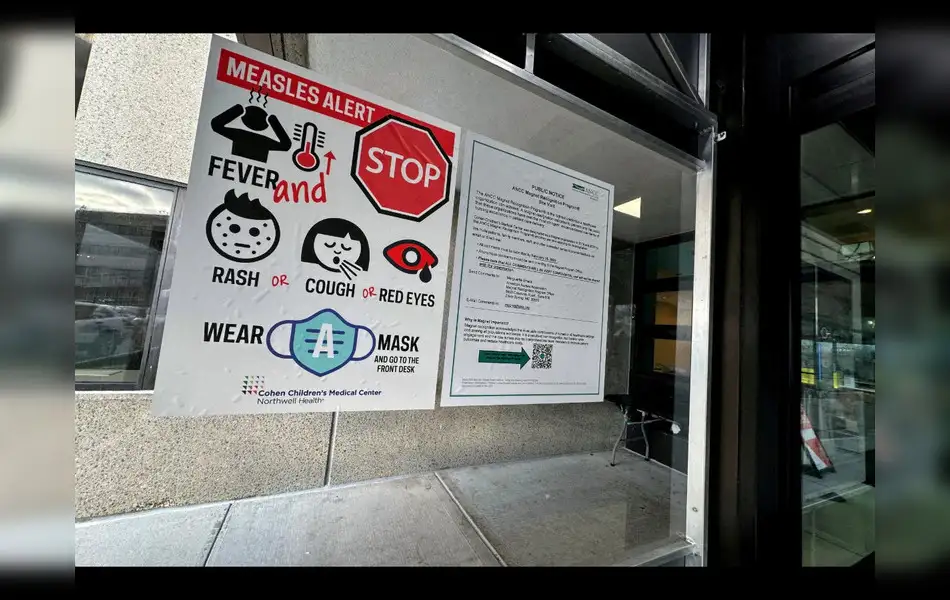
The US measles outbreak has crossed 5,000 confirmed cases in 2026. The latest available CDC figures, covering cases reported through November 12, put the national total at 5,412, with infections recorded across 47 jurisdictions. The CDC says 96% of reported cases were associated with outbreaks, while Vaccination data show that the overwhelming majority of infected people were unvaccinated or had an unknown vaccination status.
Measles Outbreak in US: Cases Cross 5,400 as Deaths Reported in Pennsylvania, New York and Wisconsin; Symptoms, Vaccine and Prevention
The United States is facing its worst measles resurgence in decades, with more than 5,400 confirmed infections in 2026 and multiple measles-associated deaths. Pennsylvania has reported the highest number of cases, while health officials are urging people to check their vaccination records, recognise early symptoms and seek medical advice promptly after possible exposure.
US Measles Cases Cross 5,400 in 2026
The measles outbreak in the United States has expanded significantly, with the Centers for Disease Control and Prevention (CDC) reporting 5,412 confirmed cases as of November 12, 2026. The infections were reported across 47 jurisdictions, including several states experiencing substantial outbreaks.
The latest figure is more than double the 2,289 cases recorded during the whole of 2025. The United States has not experienced this level of measles activity in decades, with the 2026 total representing the highest annual case count since 1991.
According to the CDC, 96% of confirmed cases this year were associated with outbreaks. This includes infections linked to outbreaks that began in both 2025 and 2026, showing that transmission has continued across multiple communities.
Pennsylvania has emerged as one of the hardest-hit states. Its Department of Health reported 1,561 cases across 46 counties in its latest update, published on November 16. The state has also recorded seven measles-associated deaths during 2026.
New York has reported a measles-associated death, while Wisconsin health officials have reported two deaths, including an infant. These state-level figures highlight the seriousness of the outbreak, particularly for children and people who are not protected by vaccination.
There is a difference between state and federal death counts. The CDC’s national dashboard lists six measles-related deaths for 2026, while individual state health departments have reported additional deaths using their own case investigations. The discrepancy follows a change in the CDC’s method of tracking measles deaths, which now relies on National Center for Health Statistics mortality data.
US Loses Measles Elimination Status After Resurgence
The outbreak has also led to a major Public Health setback. International health experts have determined that the United States has lost its measles-elimination status, which it had maintained since 2000.
Measles elimination does not mean that a country has completely eradicated the virus. It means that continuous transmission of the same measles virus has been interrupted for at least 12 months. Imported infections can still occur, but they should not lead to sustained domestic transmission.
The latest outbreak has demonstrated that the virus can spread for extended periods when it enters communities with insufficient vaccination coverage. The loss of elimination status reflects the continuing transmission that public health authorities have struggled to contain.
Vaccination coverage is an important part of the problem. CDC data show that only 92.4% of US kindergarteners received the required measles-mumps-rubella (MMR) vaccinations during the 2025–26 school year. That is below the approximately 95% coverage generally needed to maintain community protection against measles outbreaks.
Lower vaccination rates in particular communities can create gaps in protection even when national coverage appears relatively high. When the virus reaches these populations, it can spread rapidly among people who have not developed immunity.
Why Is Measles So Contagious?
Measles is a highly contagious viral disease that spreads through the air when an infected person breathes, coughs or sneezes. It can spread among people who share the same indoor space, even without direct physical contact.
The virus can remain infectious in the air for up to two hours after an infected person has left a room. Someone who enters that space during this period may still be exposed.
Measles can also spread before an infected person develops the characteristic rash. People may transmit the virus for up to four days before the rash appears, making it difficult to identify and isolate every infectious person immediately.
According to the CDC, as many as nine out of 10 susceptible people who come into close contact with an infected person may become infected. This makes measles substantially more contagious than many other common respiratory infections.
Although measles was declared eliminated in the United States in 2000, the virus continues to circulate in several parts of the world. International travel can introduce infections into the country, after which transmission may continue in communities where vaccination coverage is low.
Measles Symptoms: Early Signs You Should Not Ignore
One of the challenges in identifying measles is that its early symptoms can resemble those of common respiratory illnesses. The infection usually begins with fever and cold-like symptoms before the characteristic rash develops.
According to the CDC, symptoms generally appear around seven to 14 days after exposure, although the timing can vary.
1. High Fever
A high fever is one of the earliest signs of measles. The temperature can rise above 104 degrees Fahrenheit, or approximately 40 degrees Celsius, particularly as the rash begins to appear.
2. Persistent Cough
An infected person may develop a cough during the initial stage of the illness. This symptom can make measles difficult to distinguish from other respiratory infections without considering the accompanying signs and possible exposure history.
3. Runny Nose
A runny nose is another common early symptom. It may appear alongside fever and coughing, creating a pattern that resembles an ordinary cold.
4. Red and Watery Eyes
Measles can cause conjunctivitis, commonly known as pink eye. The eyes may become red, watery and irritated, often appearing alongside other early symptoms.
5. White Spots Inside the Mouth
Small white spots known as Koplik spots may develop inside the mouth, usually two to three days after the initial symptoms begin. These spots are a characteristic sign of measles, although they may not appear in every patient.
6. Red Skin Rash
The measles rash typically appears three to five days after the first symptoms. It often begins as flat red spots near the hairline and face before spreading downwards to the neck, chest, arms, legs and feet.
Small raised bumps may also develop, and individual spots can merge as the rash spreads. Fever may rise further when the rash appears.
Anyone experiencing these symptoms after possible exposure should contact a healthcare provider immediately. It is important to call before visiting a clinic or hospital because a person with measles can infect other patients and healthcare workers in waiting areas.
Can Measles Become Life-Threatening?
Measles is not simply a childhood rash or a short-lived fever. Although many people recover, the infection can cause serious complications, hospitalisation and death.
Children younger than five, adults older than 20, pregnant women and people with weakened immune systems face a greater risk of severe complications.
Pneumonia
Pneumonia is one of the most serious complications associated with measles and is a leading cause of measles-related deaths among young children. The infection can affect the lungs and make breathing difficult.
According to the CDC, as many as one in 20 children with measles may develop pneumonia. Severe cases may require hospital treatment.
Encephalitis
Measles can sometimes cause encephalitis, a condition involving inflammation of the brain. It can lead to seizures, hearing loss and long-term neurological disabilities.
The CDC estimates that approximately one in every 1,000 children infected with measles develops encephalitis.
Ear Infections and Diarrhoea
Ear infections are another possible complication, occurring in approximately one in 10 children with measles. Some patients may also experience diarrhoea, which can contribute to dehydration, particularly in young children.
Pregnancy Complications
Measles infection during pregnancy can increase the risk of premature birth and low birth weight. Pregnant women who may have been exposed should contact a healthcare provider promptly rather than waiting for symptoms to appear.
Immune System Damage
Measles can also affect the immune system after the initial illness has passed. The virus may damage immune cells that help the body recognise and fight infections encountered previously.
This effect is sometimes described as immune amnesia. It can leave people more vulnerable to other infections for months or, in some cases, longer after recovering from measles.
Rarely, a person who recovered from measles can develop a fatal neurological condition called subacute sclerosing panencephalitis (SSPE) years later. It is a long-term complication associated with a previous measles infection.
Measles Vaccine: How Effective Is the MMR Shot?
Vaccination remains the most effective way to prevent measles. The measles, mumps and rubella (MMR) vaccine protects against all three viral diseases and has played a central role in reducing measles infections worldwide.
The CDC recommends two doses of the MMR vaccine for children. The first dose is generally administered between 12 and 15 months of age, while the second is given between four and six years.
Adults without documented evidence of immunity should generally have at least one MMR dose. Certain groups, including international travellers, healthcare workers, students at post-secondary institutions and people at increased risk during outbreaks, may need two doses.
How Much Protection Does the MMR Vaccine Provide?
The effectiveness of the vaccine increases with the recommended two-dose schedule.
- One dose: Approximately 93% effective at preventing measles.
- Two doses: Approximately 97% effective at preventing measles.
Two doses provide strong, long-lasting protection for most people. Vaccinated individuals can occasionally develop measles after exposure, but breakthrough infections are uncommon and are generally less likely to result in severe illness or onward transmission.
The MMR vaccine is considered safe and effective. Most side effects are mild and may include soreness at the injection site, fever, a mild rash or temporary joint discomfort. Serious side effects are rare.
People who are unsure about their vaccination history should check their medical records and discuss their immunity with a healthcare provider. An additional dose may be recommended in certain circumstances.
Who Should Not Receive the MMR Vaccine Without Medical Advice?
Although the MMR vaccine is suitable for most people who need protection, it is not recommended for everyone in every circumstance.
People who are pregnant should generally wait until after pregnancy to receive the MMR vaccine because it is a live attenuated vaccine. Individuals with severely weakened immune systems or a history of serious allergic reactions to a previous dose or vaccine component should also consult a healthcare professional before vaccination.
People who have recently received certain blood products or have specific medical conditions may need to delay vaccination. A healthcare provider can assess individual circumstances and recommend an appropriate schedule.
Pregnant women, infants and people with weakened immunity who may have been exposed to measles should seek medical advice immediately rather than attempting to manage the risk themselves.
What to Do If You Have Been Exposed to Measles
People who have been in the same indoor space as someone with confirmed or suspected measles should contact a healthcare provider as soon as possible, even if they feel healthy.
Medical professionals can review vaccination records, previous infection history and other evidence of immunity to determine whether further action is necessary.
For people who are not immune, two medical interventions may help reduce the risk of developing measles after exposure, depending on how much time has passed and the person’s medical circumstances.
- MMR vaccination: Receiving the vaccine within 72 hours of initial exposure may provide protection or help make the illness milder.
- Immune globulin: Certain people at high risk of severe disease may be given immune globulin within six days of exposure. It provides antibodies that may help prevent infection or reduce its severity.
These interventions are time-sensitive. People should not wait for symptoms before contacting a healthcare provider after a known exposure.
How to Avoid Measles and Prevent Its Spread
Because measles spreads so easily through the air, prevention requires a combination of vaccination, awareness and prompt action after exposure.
- Complete the recommended vaccination schedule: Ensure children receive both MMR doses at the recommended ages and check whether adults have adequate documented immunity.
- Check vaccination records before travelling: International travel can increase exposure to measles. People planning trips should confirm that they are fully vaccinated before departure.
- Take exposure warnings seriously: If health authorities identify a location or community with measles transmission, follow their recommendations and contact a healthcare provider if you may have been exposed.
- Avoid exposing others when symptoms appear: Anyone with suspected measles should stay home and avoid public places while following medical guidance.
- Call before visiting a healthcare facility: Inform the doctor or hospital about possible measles exposure so staff can arrange an assessment without exposing other patients.
- Protect vulnerable people: Keep suspected or confirmed cases away from infants, pregnant women and people with weakened immune systems.
People with measles should generally remain at home until the fifth day after the rash appears, following healthcare guidance. They should also avoid contact with people who are not already infected.
People who have been exposed but are not immune may need to take additional precautions for up to 21 days after exposure, depending on medical advice and whether they receive preventive treatment.
When Should You Seek Emergency Medical Care?
Most importantly, people should not ignore symptoms that suggest measles is becoming severe. Rapid deterioration requires urgent medical assessment.
The CDC identifies several warning signs that require emergency care:
- Difficulty breathing or breathing faster than normal.
- Pain while breathing or coughing.
- Signs of dehydration, including reduced urination, dry mouth or crying without tears.
- A persistent fever or severe headache.
- Confusion, reduced alertness or extreme weakness.
- Blue colour around the mouth, low energy or difficulty feeding in young children.
If any of these symptoms occur, emergency medical care should not be delayed. Someone should call the hospital before arrival and explain that the patient may have measles so healthcare workers can take precautions to prevent further transmission.
Why Falling Vaccination Coverage Is a Major Concern
The resurgence of measles in the United States has renewed attention on declining childhood vaccination coverage. Although the country previously achieved elimination status, that achievement depended on maintaining high levels of immunity across communities.
The CDC estimates that more than 95% of people in a community generally need to be vaccinated to maintain strong community protection. When coverage falls below that level, the virus can spread more easily, particularly in areas where large numbers of people remain unvaccinated.
National averages can also conceal local vulnerabilities. A state may have relatively high overall vaccination coverage while individual schools, neighbourhoods or communities have much lower rates. These pockets of susceptibility can allow outbreaks to grow after an infected person introduces the virus.
The 2025–26 kindergarten vaccination figure of 92.4% indicates that the United States has fallen below the coverage level associated with strong community protection. Approximately 280,000 kindergartners were estimated to be at risk during that school year.
Improving vaccination coverage is therefore essential not only to protect individual children but also to reduce the chances of infections reaching infants who are too young to receive routine vaccination and people who cannot safely receive the vaccine for medical reasons.
US Measles Outbreak: What Happens Next?
The latest outbreak is a reminder that measles can return even after a country has successfully interrupted domestic transmission. International travel, declining vaccination coverage and gaps in community immunity can create conditions in which the virus spreads again.
Pennsylvania’s growing case count and the deaths reported by several states show that the consequences extend beyond temporary fever and skin rashes. Thousands of infections have placed pressure on healthcare services, while severe complications have affected children and other vulnerable patients.
The loss of the United States’ measles-elimination status adds further urgency to the public health response. Re-establishing elimination will require sustained interruption of transmission, effective outbreak investigations and stronger vaccination coverage.
For individuals and families, the most important steps are straightforward: check MMR vaccination records, follow medical advice after exposure, recognise early symptoms and avoid contact with others if infection is suspected.
Measles is highly contagious, but it is also preventable. Maintaining high vaccination coverage and responding quickly to suspected infections remain the most effective ways to protect communities and prevent further life-threatening outbreaks.
For breaking news and live news updates, like us on Facebook or follow us on Twitter and Instagram. Read more on Latest World on thefoxdaily.com.





COMMENTS 0