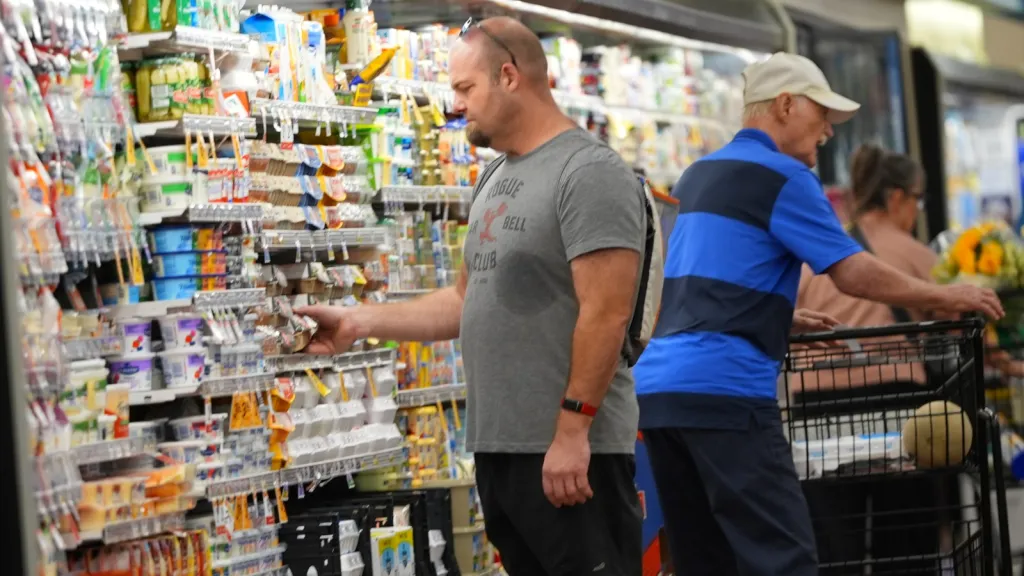
The UK government is urging households to prepare for emergencies by keeping essential supplies at home, including three days’ worth of food and water, cash, first-aid equipment and a battery-powered radio. The advice forms part of the government’s “Be Ready” campaign, which aims to help people cope if severe weather, cyberattacks or other major disruptions affect everyday services.
According to the guidance outlined in the campaign, households should prepare to manage for at least 72 hours if electricity, communications, transport or access to essential supplies becomes unavailable. The recommendations include nine litres of drinking water per person for three days, non-perishable food, a torch, blankets, essential medicines and alternative ways to receive emergency information.
UK Prime Minister Andy Burnham has described the advice as a sensible precaution rather than a reason to panic. The campaign reflects concerns that emergencies do not necessarily have to involve a direct military conflict to disrupt daily life. Severe storms, infrastructure failures, cyber incidents and hostile activity targeting critical systems can also affect the services people rely on.
The government’s message is that households with basic provisions may be better able to manage an interruption while emergency services and infrastructure operators work to restore normal conditions.
Why Is Britain Asking Households to Prepare for 72 Hours?
The three-day recommendation is intended to help families cope during the initial period of a major emergency, when electricity, transport, communications or deliveries may be disrupted. Even a temporary interruption can make it harder to buy groceries, charge phones, access online banking or obtain everyday necessities.
Keeping food and water at home reduces the immediate need to travel to shops or depend on deliveries during a disruption. Cash can also be useful if card payments or electronic payment systems become unavailable, while a battery-powered or wind-up radio may provide access to official information if internet and mobile services are affected.
The campaign does not mean the government expects a disaster to occur imminently. Instead, it encourages people to take practical steps before an emergency develops, rather than trying to obtain essential supplies after shops, transport networks or payment systems have already been affected.
For households with children, older relatives, people who need regular medication or pets, advance preparation can also help ensure that specific needs are not overlooked during a disruption.
Severe Weather Has Already Disrupted Homes and Essential Services
Recent storms in Britain illustrate how extreme weather can interfere with electricity supplies and daily routines. According to reporting cited in the supplied source, Storm Goretti, which struck in January, left tens of thousands of homes without power across parts of the Midlands, south-west England and Wales. Winds reportedly approached 100 miles per hour.
Power cuts can affect more than lighting. They may interrupt heating, prevent some household appliances from operating, limit access to electronic communications and create difficulties for people who depend on powered medical equipment. Transport disruption can also delay deliveries and make it harder for residents to reach shops or other essential services.
These effects help explain why emergency preparation focuses on several types of supplies rather than food alone. Drinking water, warm clothing, blankets, first-aid materials and a reliable way to receive information can all become important when normal services are temporarily unavailable.
The campaign also comes amid concerns about the potential effects of El Niño, a natural climate pattern that can influence temperatures and weather conditions in different parts of the world. Such changes can put pressure on agricultural production, food availability and energy systems, although their effects vary by region and are not uniform.
For households, the broader lesson is that disruptions can arise from different causes. Preparing a modest emergency supply is intended to provide a buffer against temporary shortages or interruptions, rather than predict the timing or severity of any particular event.
Spain and Portugal’s 2025 Blackout Highlighted Infrastructure Risks
A major power outage affecting Spain and Portugal in April 2025 demonstrated how a disruption to electricity infrastructure can affect large numbers of people within a short period.
The supplied report, citing The Guardian, says the outage affected approximately 55 million people and left the two countries without electricity for several hours. The incident was linked in the report to voltage instability in the electricity network.
A widespread blackout can affect transport, communications, businesses, payment systems and other services that depend on reliable electricity. Shops may struggle to process electronic payments, while households can lose access to internet connections and the ability to charge devices. Depending on the circumstances, disruptions can also affect refrigeration and the distribution of perishable food.
The blackout is relevant to Britain’s preparedness campaign because it illustrates how an infrastructure failure can have consequences beyond the immediate electricity supply. It does not, by itself, establish that Britain faces an identical risk or that the same circumstances will recur.
Keeping drinking water, shelf-stable food, a radio and some cash at home can help households manage the initial effects of a similar service interruption. These measures cannot prevent a blackout, but they can reduce dependence on services that may temporarily stop working.
Cyberattacks Could Affect Payments, Communications and Food Supplies
Cybersecurity is another major concern behind the push for household preparedness. Digital systems support many services that people use every day, from online payments and business operations to logistics and the distribution of food and other essential goods.
A serious cyber incident could disrupt these systems, potentially delaying deliveries or making some services temporarily inaccessible. The extent of any disruption would depend on which systems were affected, how quickly organisations responded and whether alternative arrangements were available.
The supplied report says 32 UK government websites were taken offline as a precaution after a security flaw was identified in PHP, a programming language used by millions of websites. It also reports that the UK’s National Cyber Security Centre sent 50,000 alerts to organisations affected by the vulnerability.
The incident illustrates how a software vulnerability can prompt organisations to take protective action, including temporarily taking systems offline while risks are assessed or fixes are applied. However, the reported precautionary shutdowns should not automatically be interpreted as evidence that all the affected websites had been successfully attacked.
Food distribution is another area of concern. The chief executive of the Cold Chain Federation was reported by the BBC as warning that Russian cyber-hackers were targeting the UK and understood vulnerabilities in the food supply system.
Cold-chain operations are particularly important for products that need to remain within controlled temperature ranges during storage and transport. Disruptions affecting logistics, scheduling or supporting digital systems could create challenges for food businesses, although the consequences would depend on the nature and scale of an incident.
For consumers, keeping some non-perishable food at home provides a limited safeguard against short-term difficulties in accessing supplies. It is not a substitute for resilient infrastructure, effective cybersecurity or the work of businesses and public authorities to maintain essential services.
Why Is the UK Concerned About Russia?
Britain’s preparedness efforts also reflect wider concerns about hostile state activity and the security of critical infrastructure. The risks discussed in the supplied report include potential interference with electricity supplies, communications networks and infrastructure connecting the UK with other countries.
Such activity is often discussed in the context of hybrid warfare, a broad term used for combinations of military and non-military methods intended to weaken or pressure another country. Depending on the circumstances, these methods can include cyber operations, espionage, disinformation or suspected sabotage.
The central concern is that infrastructure can be disrupted without a conventional military attack taking place on British territory. An incident involving a digital network, an undersea cable or another essential asset could have consequences for businesses, public services and households.
The supplied report attributes the description “state-sponsored terrorism” to Defence Secretary Wes Streeting when discussing these threats. That characterisation should be understood as an attributed political statement rather than a finding that every suspected incident involving infrastructure is terrorism.
The report also says Russian spy ships have been tracked monitoring undersea pipelines and cables connecting Britain with continental Europe and other regions, citing The Guardian. Undersea infrastructure carries important communications links and supports energy connections, making its security a concern for governments and infrastructure operators.
Other European countries have also raised concerns about suspected sabotage operations, including reported fires and explosions at defence facilities. The existence of such concerns does not mean every incident has been conclusively attributed to a foreign government. Investigations and publicly available evidence are needed to establish responsibility in individual cases.
For British households, the practical response recommended by the campaign is not to attempt to assess intelligence or predict hostile activity. It is to maintain basic supplies so that a temporary disruption does not immediately leave a family without essential items.
What Should Families Keep at Home?
The government’s guidance recommends keeping enough supplies to manage for three days. The precise quantities and items needed will vary according to household size, health requirements, climate and individual circumstances.
- Drinking water: Keep nine litres of drinking water per person for three days, with additional water where possible for cooking and washing. Households should consider their specific needs when deciding how much to store.
- Non-perishable food: Store tinned goods and other foods that can be kept safely without refrigeration. Choose items that household members normally eat and check whether a tin opener or other preparation equipment is needed.
- A battery-powered or wind-up radio: A radio can help people receive emergency information if internet access, mobile networks or other communication services are disrupted. The campaign specifically recommends an FM radio.
- A torch and spare batteries: These can provide lighting during a power cut without relying on mains electricity. Keeping spare batteries with the torch can make it easier to use when needed.
- Blankets, sleeping bags and warm clothing: These supplies can help people stay warm if heating is interrupted, particularly during cold weather.
- A first-aid kit and essential medicines: Keep basic first-aid supplies and any necessary medicines. People who depend on regular prescriptions should plan ahead according to their medical needs.
- Hygiene supplies: Hand sanitiser, wet wipes and toiletries can help maintain basic hygiene if normal water access or household facilities are disrupted.
- Cash and payment cards: A small amount of cash may be useful if electronic payments are unavailable. Keeping payment cards available provides an alternative when card systems continue to operate.
- Important documents and emergency contacts: Maintain copies of essential documents and a written list of emergency contact numbers, so important information remains accessible if a phone cannot be used.
- A charged power bank: A power bank can help keep a mobile phone charged for as long as its stored energy lasts. It should be charged in advance and checked periodically.
- Supplies for babies and pets: Families should include baby food and other necessary childcare items, as well as suitable food and water for pets.
Households should store supplies in a place where they can be accessed easily and check them periodically. Food and medicines should be monitored for expiry dates, while batteries and power banks should be checked to ensure they are ready for use.
People with disabilities, older residents and those who need powered medical equipment may require additional planning. Where possible, households should consider how they would obtain help and maintain access to essential care if transport or communications were disrupted.
Why Cash and Offline Information Still Matter
Cash remains part of the recommended emergency kit because many everyday transactions depend on electronic systems. If a payment network, electricity supply or internet connection fails, some shops and services may be unable to accept digital payments for a period of time.
Keeping some cash at home can provide an alternative, although it does not guarantee that shops will remain open or have goods available during an emergency. Payment cards may still work in some circumstances, so the guidance includes both cash and cards rather than relying on a single payment method.
Offline access to information is equally important. A charged phone is useful, but it may become less helpful if mobile networks are disrupted or its battery runs out. A battery-powered or wind-up radio offers another way to receive broadcasts, while a written list of emergency contacts ensures that important numbers are not available only on a digital device.
These preparations are intended to give households more than one way to access essential resources. The aim is to reduce dependence on any single system during the early stages of an emergency.
Does the Campaign Mean Britain Expects an Immediate Crisis?
No. The campaign’s stated purpose is to encourage practical preparation, not to announce that a disaster is imminent. Severe weather, technical failures and cyber incidents are different types of risks, and the advice does not establish that any one of them is about to occur.
Nor does keeping three days of supplies at home eliminate the risks associated with a major emergency. A prolonged disruption could last longer than 72 hours, while the needs of people requiring regular medical care or specialised assistance may go beyond a standard household checklist.
Preparedness is therefore best understood as one part of a wider response. Public authorities and infrastructure operators remain responsible for protecting essential services, responding to emergencies and communicating reliable information. Households can complement those efforts by making reasonable arrangements for their own immediate needs.
The guidance also does not require families to buy excessive quantities of goods or empty supermarket shelves. Building a basic supply gradually, choosing food that can be used as part of ordinary meals and checking stored items can make preparation more manageable.
What Britain’s Be Ready Campaign Means for Households
Britain’s recommendation to keep food, water, cash and other essentials at home reflects the range of events that can interrupt everyday services. Severe storms can cut power, infrastructure failures can affect communications and payments, and cyber incidents can create difficulties for organisations responsible for essential supplies.
The government’s suggested three-day emergency kit is designed to help people manage while services are disrupted and the situation develops. Its core elements are straightforward: nine litres of drinking water per person, non-perishable food, a first-aid kit, a torch, warm bedding, essential medicines, cash and a way to receive emergency information without relying entirely on the internet.
The advice is not a prediction that Britain is about to face a major crisis. It is a call for households to take proportionate precautions before they are needed. By preparing in advance and tailoring supplies to their own circumstances, families can be better equipped to deal with temporary interruptions to the services on which daily life depends.
For breaking news and live news updates, like us on Facebook or follow us on Twitter and Instagram. Read more on Latest World on thefoxdaily.com.






COMMENTS 0