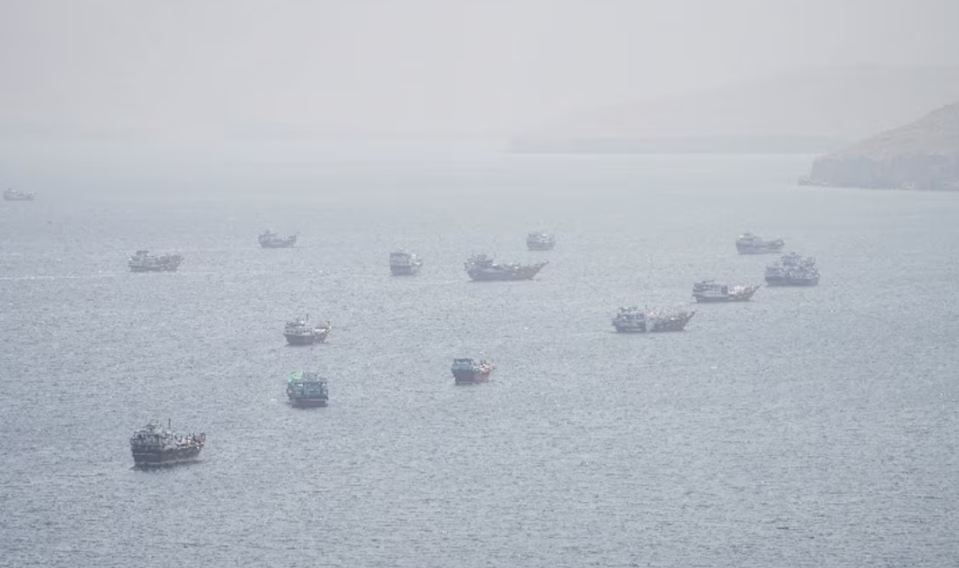
Strait of Hormuz shipping tensions: Fresh reports of an attack on a vessel moving through the Strait of Hormuz have intensified concerns about global oil supplies, while Saudi Arabia temporarily shut its strategically important East-West oil pipeline after a drone attack.
The developments come after a sharp rise in crude prices, with Brent crude recently moving back above $100 a barrel. With shipping routes through the Gulf already heavily disrupted by the widening Middle East conflict, any additional threat to alternative oil-export routes could put further pressure on energy markets.
Projectile Reportedly Hits Vessel in Strait of Hormuz
The UK Maritime Trade Operations agency, or UKMTO, said it had received a report that a projectile struck a vessel while it was transiting the Strait of Hormuz.
As of early Sunday, the extent of damage and the condition of the crew were not known, according to the maritime agency.
The report adds another layer of uncertainty to one of the world’s most important energy shipping routes. The Strait of Hormuz connects the Persian Gulf with the Gulf of Oman and the wider Arabian Sea, making it a crucial passage for oil and gas exports from major Middle Eastern producers.
Continued attacks involving commercial vessels could increase shipping risks, insurance costs and transportation expenses. More importantly, sustained disruption could force energy markets to price in a larger risk premium.
Saudi Arabia Shuts East-West Oil Pipeline After Drone Attack
Saudi Arabia has also temporarily closed its East-West oil pipeline as a precaution following a drone attack. Saudi Arabia and Iraq said the drone attack originated from Iraq, where Iranian-backed militias operate.
The pipeline stretches approximately 1,200 kilometres across the Arabian Peninsula and has become especially important during the disruption of shipping through the Strait of Hormuz.
It had been carrying approximately 4 million to 5 million barrels of oil per day, equivalent to roughly 4% to 5% of global oil supply, according to the report.
The temporary closure therefore matters beyond Saudi Arabia. If the pipeline remains unavailable for an extended period, the disruption could reduce the amount of Middle Eastern crude reaching international markets through an alternative route.
Why the East-West Pipeline Is So Important
Saudi Arabia’s East-West pipeline provides a land-based alternative to transporting oil through the Strait of Hormuz.
That alternative has become particularly valuable during the current conflict because maritime flows through the strait have been severely affected.
The pipeline allows Saudi crude to move from oil-producing areas in the country’s east toward export facilities on the Red Sea coast. From there, shipments can potentially reach international markets without passing through the Strait of Hormuz.
This makes the pipeline an important component of Saudi Arabia’s strategy for maintaining export flexibility during regional disruptions.
| Key Development | Details |
|---|---|
| Latest shipping incident | UKMTO reported a projectile hitting a vessel in the Strait of Hormuz |
| Vessel damage | Extent was unknown at the time of the report |
| Crew status | Unknown at the time of the report |
| Saudi pipeline | East-West oil pipeline |
| Pipeline length | Approximately 1,200 km |
| Recent pipeline throughput | About 4 million–5 million barrels per day |
| Share of global supply | Approximately 4%–5% |
| Pipeline status | Temporarily shut as a precaution |
Oil Prices Could Face Fresh Upward Pressure
The latest incidents come after Oil Prices had already climbed sharply during the previous week.
Brent crude moved back above $100 a barrel as traders assessed the potential impact of attacks on tankers, disruptions around the Strait of Hormuz and the expanding role of Iran-aligned forces in the region.
Energy markets are particularly sensitive to developments around the Gulf because even the threat of supply disruption can cause buyers, traders and refiners to adjust their expectations.
If shipping risks increase further, oil prices could receive another risk premium. The effect would depend on how long the disruptions last, how much crude remains available through alternative routes and whether major producers can compensate for lost flows.
Saudi Arabia Faces a New Security Challenge
Saudi Arabia has so far been able to use its pipeline network to reduce some of the impact caused by disruption around the Strait of Hormuz.
The reported attack on the East-West pipeline creates a different type of risk because it targets an alternative transportation route.
Satellite images showed black smoke rising from an area of the pipeline south of Medina. Saudi authorities said there were some injuries and that damage was being assessed, but they did not immediately provide details on the effect on oil exports.
There was no immediate claim of responsibility for the pipeline attack.
Houthis Add Pressure Around the Red Sea
The energy supply concerns are not limited to the Strait of Hormuz.
Iran-aligned Houthi forces in Yemen have also been advancing along the Red Sea region. The Houthis have previously posed a major security concern for commercial shipping around the Bab el-Mandeb Strait, another strategically important maritime chokepoint.
Four Yemeni government sources said the Houthis had seized the strategic island of Perim, located in the middle of the Bab el-Mandeb Strait.
The location is important because the Bab el-Mandeb provides a maritime connection between the Red Sea and the Gulf of Aden. Any prolonged disruption there could further complicate shipping routes between Europe, the Middle East and Asia.
Saudi Crown Prince Seeks U.S. Military Assistance
Saudi Arabia’s security concerns have also created pressure on the United States.
Three sources told Reuters that Saudi Crown Prince Mohammed bin Salman spoke with U.S. President Donald Trump on Thursday and requested U.S. military assistance in fighting the Houthis.
According to the sources, Washington did not agree to intervene directly for now but offered intelligence assistance.
Trump later confirmed that he had spoken with the Saudi leader. He also said that the Houthis had contacted his administration and asked Washington not to become directly involved in the conflict.
The situation creates a difficult strategic choice for Washington. Greater military involvement could help protect an important U.S. ally and shipping routes, but it could also widen an already expanding regional conflict.
Strait of Hormuz Remains at the Centre of the Energy Crisis
The Strait of Hormuz is particularly important because of its role in transporting energy from the Persian Gulf to global consumers.
For decades, the waterway has been one of the most closely watched chokepoints in the global oil market. Even when the physical flow of crude is not completely stopped, threats to commercial vessels can affect freight rates, insurance premiums and the willingness of shipping companies to operate in the region.
When alternative routes are available, they can reduce some of the immediate impact. However, alternatives often have limited capacity and may not be able to fully replace the volume that normally passes through the strait.
Iran Says Hormuz Talks May Not Reopen the Strait
Iran’s Foreign Ministry said on Friday that Tehran would attend a meeting with Gulf Arab states in Oman on Monday to discuss the future of the Strait of Hormuz.
However, a senior Iranian official told Reuters that the meeting was unlikely to produce an immediate breakthrough or a signed agreement.
The talks were initiated by Oman and are expected to include discussions about the strait and regional security. Iraq is also expected to attend.
An Iranian source said an agreement concerning routes through the strait between Iran and Oman would be presented at the meeting. However, the source said the strait would not reopen unless several conditions communicated by Iran to the United States were met.
Iran Seeks Recognition of Its Control Over the Strait
One of the major points of disagreement concerns Iran’s position on the Strait of Hormuz.
Iran wants its control of the strait to be recognised and has sought the ability to collect fees from ships using the waterway. Washington rejects that position.
Oman, which controls the opposite side of the strait, has been involved in diplomatic efforts aimed at managing the situation.
The disagreement illustrates why restoring normal shipping conditions could be difficult even if diplomatic talks continue. The dispute is not simply about maritime traffic; it is connected to broader questions involving sovereignty, security and the wider conflict between Iran and the United States.
Why the Latest Attacks Matter for Global Oil Markets
The significance of the latest developments lies in the combination of multiple risks rather than any single incident.
- Strait of Hormuz: A reported vessel attack raises concerns about maritime security and oil shipments.
- Saudi East-West pipeline: The temporary shutdown removes an important alternative route from immediate operation.
- Red Sea: Houthi activity creates additional risks for shipping through another major chokepoint.
- Oil prices: Brent has already returned above $100 a barrel amid growing supply concerns.
- Military escalation: Saudi Arabia’s request for U.S. assistance could increase geopolitical uncertainty.
- Diplomacy: Oman-hosted talks could influence whether shipping conditions improve or deteriorate further.
What Happens If Disruptions Continue?
The impact on the global economy will depend heavily on the duration and scale of the disruptions.
A short-lived incident could create a temporary spike in oil prices without causing a major physical shortage. Traders could gradually reduce the risk premium if shipping resumes normally and alternative supplies remain available.
A prolonged disruption would be more serious. Higher crude prices could increase fuel costs for consumers and businesses, raise transportation expenses and put additional pressure on inflation.
Oil-importing economies would be particularly exposed because higher crude prices can increase the cost of petrol, diesel, aviation fuel, manufacturing and logistics.
What to Watch Next in the Strait of Hormuz Crisis
Markets will closely monitor whether commercial shipping continues through the Strait of Hormuz, whether the Saudi East-West pipeline resumes operations and whether further attacks occur along the Red Sea corridor.
The outcome of the Oman meeting will also be important. A credible agreement that improves shipping access could reduce some of the risk premium currently embedded in oil prices. Conversely, failure of diplomacy combined with additional attacks could increase concerns about prolonged supply disruptions.
Investors will also watch the response of Saudi Arabia, the United States, Iran and the Houthis because decisions by these actors could determine whether the current energy disruption remains contained or spreads across multiple transportation routes.
Strait of Hormuz Shipping Crisis: Bottom Line
The reported attack on a vessel in the Strait of Hormuz and Saudi Arabia’s temporary closure of its East-West pipeline have intensified fears over the security of global energy supplies.
The developments are particularly significant because the Saudi pipeline has been an important alternative route while shipping through the Strait of Hormuz has faced severe disruption.
At the same time, Houthi advances around the Red Sea and Bab el-Mandeb are creating additional pressure on global shipping. With Brent crude already above $100 a barrel, further attacks or prolonged disruptions could keep energy markets volatile.
The key question for global markets is now whether diplomatic efforts can restore safer shipping routes before supply disruptions become deeper and more persistent. Until there is greater clarity, oil prices, freight costs and inflation expectations are likely to remain highly sensitive to every development around the Strait of Hormuz and the wider Middle East.
For breaking news and live news updates, like us on Facebook or follow us on Twitter and Instagram. Read more on Latest Business on thefoxdaily.com.






COMMENTS 0