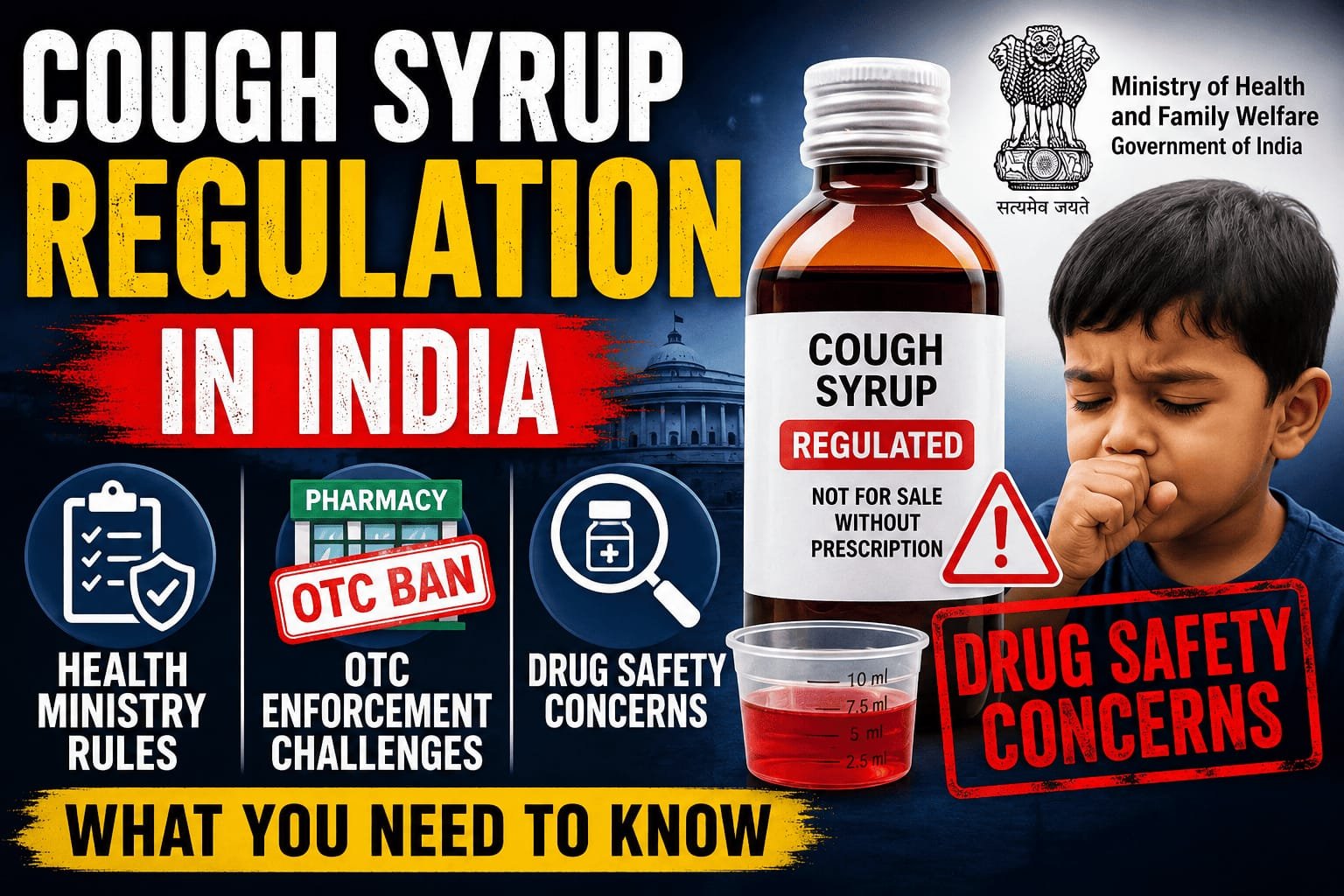
India’s recent push to regulate the sale and use of cough syrups has reignited a long-standing debate about pharmaceutical oversight, accessibility, and public safety. The Health Ministry’s directive comes amid growing concern over inappropriate use, counterfeit formulations, and the availability of cough syrups without proper medical supervision in some parts of the country.
However, even as policymakers strengthen rules, health experts and public policy observers are raising a critical question: can these regulations be effectively enforced beyond major cities?
As one expert noted, “Enforcement in smaller localities and towns could prove more difficult.” This concern highlights the gap between regulatory intent and ground-level implementation in India’s vast and diverse healthcare landscape.
What the New Focus on Cough Syrup Regulation Means
Cough syrups are widely used across India for treating seasonal infections, cold symptoms, and respiratory discomfort. While many formulations are safe when used correctly, misuse or unsupervised consumption can lead to health risks, especially in children.
The Health Ministry’s recent focus is part of a broader effort to ensure:
- Stricter prescription compliance for certain formulations.
- Improved quality control and manufacturing oversight.
- Reduction in over-the-counter misuse of combination syrups.
- Better tracking of distribution channels.
The goal is to reduce preventable adverse events while maintaining access to essential medicines.
Why Cough Syrup Regulation Is Being Tightened
India has previously witnessed concerns related to cough syrup safety, including cases involving adulterated or substandard products in the broader pharmaceutical supply chain. While most medicines in regulated markets are safe, isolated incidents have raised questions about monitoring systems.
Experts also point out that cough syrups are sometimes misused for their sedative or euphoric effects, which adds another layer of regulatory concern.
Additionally, pediatric safety remains a major priority, as children are more vulnerable to dosing errors and harmful ingredients when medicines are used without proper guidance.
The Enforcement Challenge: Why Smaller Towns Matter
While urban pharmacies are generally more regulated and digitally integrated, enforcement becomes significantly more complex in semi-urban and rural regions.
Key challenges include:
- Large number of unregistered or loosely regulated pharmacies.
- Limited inspection manpower from drug control authorities.
- Informal medicine sales in small shops and local vendors.
- Lack of awareness among consumers about prescription requirements.
- Variable record-keeping practices.
These factors make it difficult to ensure uniform compliance across the country.
Comparison: Urban vs Rural Enforcement of Drug Regulations
| Urban Areas | Smaller Towns & Rural Areas |
|---|---|
| Digitized pharmacy records | Paper-based or no records |
| Higher regulatory inspections | Limited inspection coverage |
| Licensed pharmacies dominate | Mix of licensed and informal sellers |
| Greater public awareness | Low awareness of prescription rules |
| Easier enforcement tracking | Difficult monitoring of OTC sales |
An Insight Competitors Often Miss: The Real Issue Is Not Only Regulation, But Behavior
While policy discussions often focus on laws and enforcement, public health experts emphasize that consumer behavior plays an equally important role.
In many communities, cough syrups are still perceived as “quick relief” remedies rather than controlled medications. This perception leads to self-medication, repeated dosing, and reliance on pharmacy recommendations without medical consultation.
Changing this mindset requires long-term public awareness campaigns, not just regulatory crackdowns.
Role of Pharmacies in the Supply Chain
Pharmacies serve as the final checkpoint between manufacturers and patients. Their role in enforcing prescription requirements is critical.
However, challenges arise when:
- Pharmacists face commercial pressure to sell over-the-counter products.
- Customers demand quick, no-prescription access.
- Smaller outlets lack trained staff.
- Monitoring systems are weak or inconsistent.
Strengthening pharmacy training and accountability is often seen as a key solution.
Why Pediatric Safety Is Central to the Debate
Cough syrups are commonly used in children, making dosing accuracy and ingredient safety especially important.
Health experts stress that improper use in children can lead to adverse reactions, particularly when multiple medications are combined or used without medical supervision.
This is why regulatory authorities are increasingly focusing on restricting unsupervised access to certain formulations.
Possible Solutions to Strengthen Enforcement
Experts suggest a multi-layered approach to improve compliance:
- Stronger digital tracking of drug sales.
- More frequent inspections in high-risk areas.
- Clear labeling of prescription-only medicines.
- Training programs for pharmacists.
- Public awareness campaigns on safe medication use.
- Stricter penalties for violations.
Such measures could help bridge the gap between policy and practice.
Prediction: India’s Drug Regulation System Will Move Toward Digital Monitoring
The future of pharmaceutical regulation in India is likely to rely heavily on digitization.
Experts anticipate greater use of:
- E-pharmacy tracking systems.
- Barcode-based medicine verification.
- Centralized prescription databases.
- AI-driven monitoring of distribution patterns.
These tools could significantly improve transparency and reduce unauthorized sales, especially in remote regions.
Why This Issue Goes Beyond Cough Syrups
Although cough syrups are currently in focus, the enforcement challenge reflects a broader issue in India’s healthcare system: ensuring consistent regulation across a vast and diverse population.
The same challenges apply to antibiotics, painkillers, and other commonly used medicines that are sometimes misused without prescriptions.
Addressing this requires systemic improvements rather than isolated policy changes.
Conclusion
The Health Ministry’s renewed attention to cough syrup regulation is an important step toward improving drug safety and preventing misuse. However, experts caution that enforcement—especially in smaller towns and rural areas—remains a significant hurdle.
Without stronger monitoring systems, better pharmacy regulation, and increased public awareness, gaps between policy and practice may persist.
Ultimately, the success of such initiatives will depend not just on rules on paper, but on how effectively they are implemented in the everyday reality of India’s healthcare system.
For breaking news and live news updates, like us on Facebook or follow us on Twitter and Instagram. Read more on Latest Health on thefoxdaily.com.





COMMENTS 0