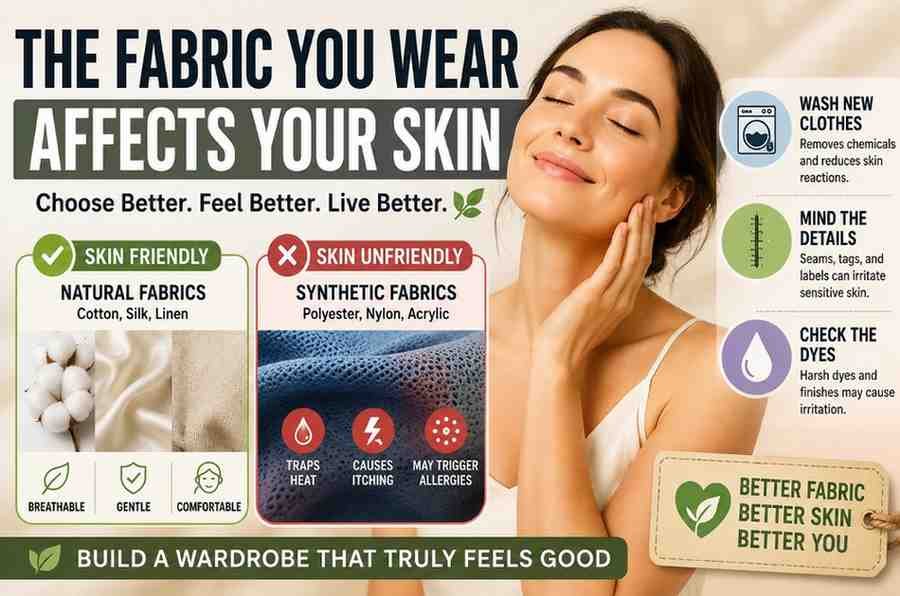
- How the right fabric can prevent irritation, improve comfort, and protect long-term skin health
- Why Fabrics Can Irritate Sensitive Skin
- Wash Before You Wear: A Simple but Essential Rule
- Natural Fabrics: The Safest Choice for Sensitive Skin
- Bamboo Fabric: Natural Comfort with a Twist
- Synthetic Fabrics: The Hidden Triggers
- Natural vs Synthetic Fabrics: A Clear Comparison
- Best Fabrics for Eczema and Skin Conditions
- Hidden Irritation Triggers Most People Ignore
- How to Build a Skin-Friendly Wardrobe
- Unique Insight: Fabric Choice and Sustainability
- Frequently Asked Questions
- Conclusion: Choose Comfort, Choose Smart
Choosing the best fabrics for sensitive skin isn’t just about comfort—it’s about protecting your skin from irritation, allergies, and long-term damage. If you’ve ever worn a shirt that felt fine at first but later became itchy or uncomfortable, you’ve already experienced how fabric directly impacts your skin.
This guide goes beyond basics. It explains why fabrics irritate skin, which materials are safest, what to avoid, and how to build a truly skin-friendly wardrobe. Whether you have sensitive skin, eczema, or simply want smarter clothing choices, this article gives you expert-level clarity.
Why Fabrics Can Irritate Sensitive Skin
Skin reactions to clothing are more common than most people realize. The causes are often hidden in texture, chemistry, and even how the fabric behaves over time.
Friction and Fiber Texture
Rough or stiff fibers can rub against the skin, leading to redness, itching, and irritation—especially in areas like the neck, waist, and underarms.
Heat and Moisture Retention
Non-breathable fabrics trap sweat and heat, creating a humid Environment where irritation, rashes, and even infections can develop.
Chemical Residues
Many garments are treated with chemicals during Manufacturing—such as dyes, wrinkle-resistant coatings, or preservatives. These can trigger allergic reactions in sensitive individuals.
Laundry Products
Sometimes, the issue isn’t the fabric itself but the detergent or fabric softener. Strong fragrances and additives can worsen skin sensitivity.
Wear and Tear Over Time
Clothing that feels soft initially can become rough after repeated washing, especially synthetic blends that degrade faster.
Wash Before You Wear: A Simple but Essential Rule
New clothes often carry hidden irritants like:
- Dust and storage particles
- Chemical residues from production
- Unsettled dyes
Expert tip: Washing new garments before wearing them significantly reduces the risk of irritation—especially for sensitive skin.
Natural Fabrics: The Safest Choice for Sensitive Skin
Natural fabrics are widely considered the best option because they are breathable, soft, and less likely to trap heat or irritants.
Top Skin-Friendly Natural Fabrics
- Cotton: The gold standard. Soft, breathable, and ideal for everyday wear.
- Linen: Lightweight and cooling—perfect for hot climates.
- Hemp: Durable, antimicrobial, and becomes softer over time.
- Silk: Smooth and gentle, reduces friction and helps regulate temperature.
- Cashmere: Extremely soft and luxurious, though more expensive.
Is Wool Safe?
Traditional wool can feel itchy due to coarse fibers. However, Merino wool is much finer and often suitable for sensitive skin.
Bamboo Fabric: Natural Comfort with a Twist
Bamboo fabric is often marketed as natural, but most versions are semi-synthetic due to chemical processing.
Why people still love it:
- Ultra-soft texture
- Good breathability
- Moisture-wicking properties
- Quick-drying
Key insight: Bamboo offers comfort similar to natural fabrics but isn’t entirely chemical-free.
Synthetic Fabrics: The Hidden Triggers
Synthetic materials are widely used because they are cheap and durable—but they can be problematic for sensitive skin.
Common Synthetic Fabrics
- Polyester
- Nylon
- Acrylic
- Spandex (Elastane)
- Polypropylene
Why They Cause Irritation
- Trap heat and sweat
- Limit airflow
- Increase friction
- May contain chemical residues
Real-world insight: Synthetic clothes often feel fine at first but become itchy after multiple washes due to fiber breakdown.
Natural vs Synthetic Fabrics: A Clear Comparison
| Factor | Natural Fabrics | Synthetic Fabrics |
|---|---|---|
| Breathability | High | Low |
| Comfort | Soft and gentle | Can feel sticky or rough |
| Moisture Control | Good | Poor |
| Durability | Moderate | High |
| Skin Safety | Safer | Higher irritation risk |
Best Fabrics for Eczema and Skin Conditions
If you have conditions like eczema or psoriasis, fabric choice becomes even more important.
Recommended
- Cotton: Soft, breathable, easy to wash
- Silk: Smooth and non-irritating
- Bamboo viscose: Gentle and moisture-wicking
Best to Avoid
- Polyester and nylon
- Coarse wool
- Rough or textured fabrics
Expert tip: Choose fabrics that stay soft even after frequent washing.
Hidden Irritation Triggers Most People Ignore
- Tags and labels: Often cause itching at the neck or waist
- Seams: Thick stitching can rub against skin
- Dyes: Bright colors may contain more chemicals
- Tight clothing: Increases friction and heat buildup
Quick fix: Go for tagless, loose-fitting designs whenever possible.
How to Build a Skin-Friendly Wardrobe
Smart Shopping Tips
- Choose at least 50% natural fibers
- Prefer 100% cotton for daily wear
- Avoid heavily processed fabrics
- Always feel the fabric before buying
Care Routine Matters
- Use fragrance-free detergents
- Avoid harsh fabric softeners
- Wash new clothes before use
- Rinse thoroughly to remove residue
Unique Insight: Fabric Choice and Sustainability
Here’s something most guides miss—skin-friendly fabrics are often eco-friendly too.
- Natural fibers are biodegradable
- Synthetics contribute to microplastic pollution
- Fewer chemicals mean safer production and wear
Bottom line: What’s good for your skin is often good for the planet.
Frequently Asked Questions
What is the most skin-friendly fabric?
Cotton is widely considered the safest due to its softness and breathability.
Is organic cotton better?
Yes, it contains fewer chemicals and is less likely to irritate sensitive skin.
Are synthetic fabrics always bad?
Not always, but they are more likely to trap heat and cause discomfort.
What fabrics should I avoid?
Polyester, nylon, acrylic, and rough wool are common irritants.
Conclusion: Choose Comfort, Choose Smart
The best fabrics for sensitive skin prioritize breathability, softness, and minimal chemical exposure. Natural materials like cotton, linen, and silk remain the safest choices for everyday comfort and long-term skin health.
As clothing options expand, the responsibility is yours to read labels, understand materials, and make informed decisions.
Your skin is in constant contact with your clothes—make sure that relationship is a healthy one.
Invest in the right fabrics today, and your skin will thank you tomorrow.
For breaking news and live news updates, like us on Facebook or follow us on Twitter and Instagram. Read more on Latest Health on thefoxdaily.com.

COMMENTS 0