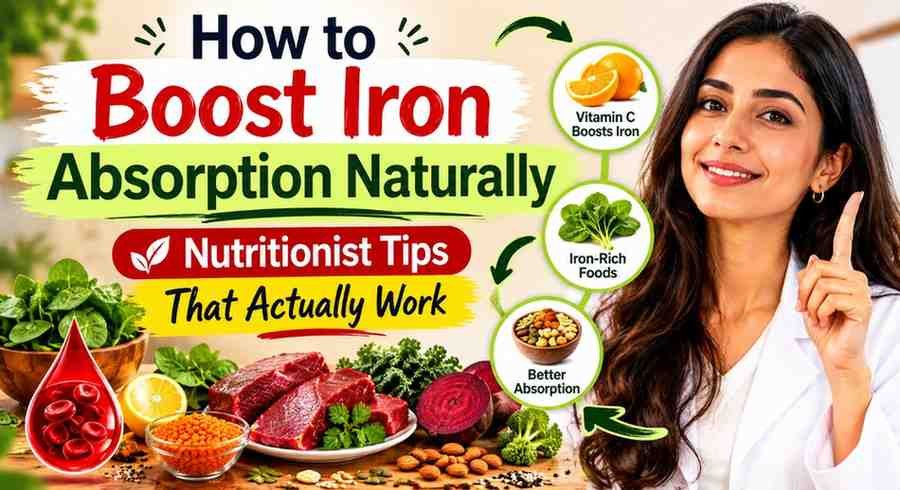
Introduction: Iron deficiency is one of the most common nutritional issues worldwide, affecting millions of people especially women, teenagers, and those following plant based diets. But here’s the surprising part: many people consume enough iron, yet their bodies fail to absorb it efficiently. So, what’s going wrong?
This is where the concept of boosting iron absorption becomes crucial. Instead of drastically changing your meals or relying solely on supplements, nutrition experts emphasize smarter food combinations and timing strategies. In this article, we break down exactly how to increase iron absorption naturally, why it matters, and how small tweaks can lead to big health improvements.
Understanding Iron Absorption: Why It’s Not Just About What You Eat
Iron comes in two forms: heme iron (found in animal products) and non heme iron (found in plant based foods). The body absorbs heme iron more easily, while non heme iron requires specific conditions to be effectively utilized.
This difference explains why even a balanced diet can sometimes fail to prevent iron deficiency. The key lies in bioavailability how much iron your body can actually absorb and use.
Key Factors That Influence Iron Absorption
- Enhancers: Nutrients that improve absorption
- Inhibitors: Compounds that block absorption
- Meal timing: When you consume certain foods matters
- Gut health: A healthy digestive system improves nutrient uptake
Top Nutritionist Tips to Boost Iron Absorption Naturally
1. Pair Iron Rich Foods with Vitamin C
This is one of the most effective and widely recommended strategies. Vitamin C significantly enhances non heme iron absorption by converting it into a form that’s easier for the body to absorb.
Examples of smart combinations:
- Spinach + lemon juice
- Lentils + tomatoes
- Iron-fortified cereals + orange juice
Even adding a small squeeze of lemon to your meals can make a noticeable difference.
2. Avoid Tea and Coffee Around Meals
Tea and coffee contain compounds called tannins and polyphenols, which can inhibit iron absorption.
Best practice: Avoid consuming tea or coffee at least 1 2 hours before or after meals that contain iron.
3. Don’t Mix Calcium-Rich Foods with Iron-Rich Meals
Calcium competes with iron for absorption. While both nutrients are essential, consuming them together can reduce iron uptake.
Example: Avoid pairing milk or cheese with iron-rich meals like leafy greens or legumes.
4. Cook in Cast Iron Utensils
This simple kitchen habit can naturally increase the iron content of your food. Cooking acidic foods like tomato-based dishes in cast iron pans can significantly boost iron levels.
It’s a subtle but effective long term strategy.
5. Include Fermented and Soaked Foods
Phytates (found in grains and legumes) can block iron absorption. However, soaking, sprouting, or fermenting these foods reduces phytate levels.
Examples:
- Soaked beans and lentils
- Fermented foods like idli, dosa, or yogurt
6. Add More Iron Enhancers to Everyday Meals
Beyond vitamin C, certain compounds like beta carotene (found in carrots and sweet potatoes) also help improve iron absorption.
Common Iron Absorption Inhibitors You Should Know
| Inhibitor | Found In | Effect on Iron |
|---|---|---|
| Tannins | Tea, coffee | Reduce absorption significantly |
| Calcium | Dairy products | Competes with iron |
| Phytates | Whole grains, legumes | Bind iron and reduce uptake |
| Oxalates | Spinach, beet greens | Limit absorption despite high iron content |
Why Boosting Iron Absorption Matters More Than You Think
Iron plays a critical role in producing hemoglobin, which carries oxygen throughout the body. Poor iron absorption can lead to fatigue, weakness, dizziness, and reduced immunity.
In teenagers and young adults, it can also affect focus, mood, and academic performance. For women, especially during menstruation, maintaining proper iron levels is even more important.
Real-World Impact: Small Changes, Big Results
What makes these nutritionist-backed strategies powerful is their simplicity. You don’t need expensive supplements or restrictive diets.
Instead, consider this comparison:
- Approach 1: Increase iron intake without changing habits → Limited results
- Approach 2: Optimize absorption with smart combinations → Significantly better outcomes
This shift from “what you eat” to “how you eat” is often overlooked but highly effective.
Expert Insight: Timing Is Everything
One of the most underrated aspects of improving iron absorption is meal timing.
For example:
- Have tea/coffee between meals, not during
- Consume fruits rich in vitamin C alongside meals
- Space out calcium supplements away from iron rich foods
These adjustments require minimal effort but deliver measurable benefits over time.
Future Outlook: Personalized Nutrition Is the Next Step
As awareness grows, experts predict a shift toward personalized nutrition strategies. Instead of generalized diet plans, individuals will tailor food combinations based on their absorption efficiency, lifestyle, and health conditions.
Technology, including wearable health trackers and AI-driven diet analysis, may soon help people optimize nutrient absorption in real time.
Conclusion: Smarter Eating Beats Drastic Diet Changes
Boosting iron absorption doesn’t require a complete diet overhaul. By making small, intentional changes like pairing iron with vitamin C, avoiding inhibitors during meals, and improving food preparation methods—you can significantly enhance your body’s ability to use iron effectively.
The bottom line: It’s not just about eating more iron it’s about absorbing it better.
With these practical, nutritionist approved strategies, you can protect your energy levels, improve overall health, and avoid the silent impact of iron deficiency one smart meal at a time.
For breaking news and live news updates, like us on Facebook or follow us on Twitter and Instagram. Read more on Latest Health on thefoxdaily.com.




COMMENTS 0