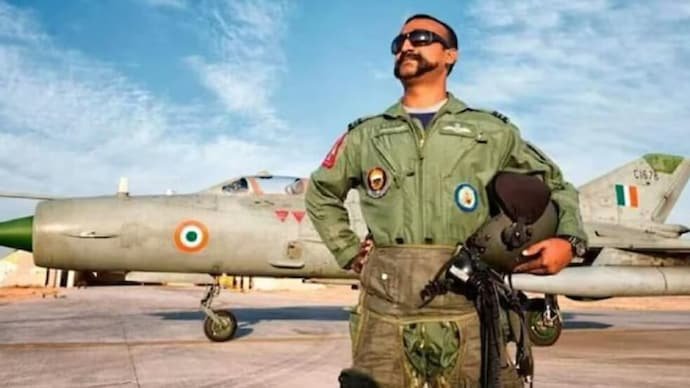
Group Captain Abhinandan Varthaman, the Indian Air Force fighter pilot who became nationally known after shooting down a Pakistani F-16 during the 2019 India–Pakistan aerial confrontation, has begun a new chapter in Civil Aviation.
The decorated officer has joined Goa-based regional airline FLY91 as a pilot after retiring from the Indian Air Force earlier this year. Sources said Varthaman joined the airline in August, although details about his exact flying responsibilities have not been disclosed.
The move marks a major transition for one of the most recognisable Indian military aviators of the past decade. Varthaman spent nearly 22 years in the IAF before leaving the service on March 31, 2026. His new role will take him from high-performance fighter aviation to commercial airline operations.
A spokesperson for FLY91 declined to provide details, saying information about individual employees was a private matter. Reports, however, indicate that Varthaman is undergoing the process required for commercial flying and is expected to operate the airline’s ATR 72-600 aircraft after completing the necessary training and regulatory requirements.
From MiG-21 pilot to commercial aviation
Varthaman’s transition from military aviation to a passenger airline is notable because the aircraft and operating environments are dramatically different, even though both demand extensive pilot training, discipline and strict adherence to procedures.
During his IAF career, Varthaman flew fighter aircraft and became associated with the MiG-21 Bison during the 2019 confrontation with Pakistan. Commercial aviation, by contrast, involves multi-sector passenger operations, airline procedures, crew coordination, route planning and civilian aviation regulations.
The move follows his retirement at the rank of Group Captain, a position he reached in 2021 after being promoted from Wing Commander. An official government document listing the recipients of the Vir Chakra also identified him as “Wing Commander (Now Group Captain) Varthaman Abhinandan.”
His transition does not diminish the significance of his military career. Instead, it reflects a second career path increasingly available to experienced military aviators who move into the commercial aviation sector after leaving active service.
Why Abhinandan Varthaman became a national figure
Varthaman became internationally recognised following the aerial confrontation between India and Pakistan on February 27, 2019, one day after Indian Air Force aircraft conducted strikes at Balakot.
During the subsequent Pakistani aerial response, Varthaman was among the Indian pilots who engaged Pakistani aircraft. Flying a MiG-21 Bison, he was credited with shooting down a Pakistani F-16 before his own aircraft was hit.
He then ejected and landed in territory controlled by Pakistan, where he was captured.
His detention lasted three days. Pakistan released him on March 1, 2019, and his return to India became a widely watched event.
The episode transformed Varthaman from an IAF fighter pilot into a household name. Images of him in Pakistani custody and later footage of his return to India became defining moments in the aftermath of the 2019 conflict.
What made the episode particularly unusual was the combination of aerial combat, the loss of his aircraft, his survival after ejecting and his subsequent detention across the border.
The F-16 engagement and the MiG-21 Bison
The February 2019 aerial engagement remains one of the most discussed episodes in modern Indian military aviation.
According to the citation associated with his gallantry award, Varthaman engaged Pakistani aircraft despite facing a numerically superior force. His MiG-21 Bison was eventually hit, forcing him to eject.
The Indian government and military credited him with bringing down an F-16 during the engagement. He has since been widely described as the only MiG-21 pilot credited with shooting down an F-16 in aerial combat.
The incident also drew attention because the MiG-21 is an older-generation fighter compared with the F-16, which was designed as a highly capable multirole combat aircraft and remains in service with multiple air forces around the world.
For India, the encounter became a prominent example of the continuing role that training, tactics and pilot skill can play even when aircraft belong to different generations.
Why Varthaman received the Vir Chakra
Varthaman was awarded the Vir Chakra for his actions during the February 2019 aerial combat.
The Vir Chakra is one of India’s wartime gallantry awards. The official 2021 government list records Varthaman among its recipients and notes that he had by then been promoted to Group Captain.
The award citation praised his conduct during the engagement and highlighted what it described as an exceptional sense of duty.
His actions were assessed in the context of an aerial battle in which Indian aircraft confronted a larger Pakistani force. Despite the tactical danger, Varthaman engaged the opposing aircraft and continued the mission until his own MiG-21 was hit.
The recognition made his name closely associated with the 2019 aerial confrontation and helped establish his public image as one of the most prominent Indian fighter pilots of the period.
From Wing Commander to Group Captain
Varthaman entered the public spotlight as a Wing Commander. He was later promoted to the rank of Group Captain in 2021.
The promotion came after his return from captivity and after the award of the Vir Chakra had formally recognised his role in the 2019 engagement.
The rank of Group Captain is a senior officer rank in the Indian Air Force and is broadly equivalent to the rank of Colonel in the Indian Army.
His progression also reflected that the 2019 combat episode was only one part of a much longer military career. Varthaman had joined the IAF in 2004 and spent years in operational aviation before becoming widely known outside military circles.
By the time he left the force in 2026, he had built a career extending well beyond the single dogfight that made him famous.
Why he has moved to FLY91
Varthaman’s move to commercial aviation comes as India’s civilian aviation industry continues to expand.
FLY91 is a relatively young regional airline that began commercial operations in March 2024. The Goa-based carrier operates ATR 72-600 turboprop aircraft and has bases in Goa and Hyderabad.
The ATR 72-600 is designed for regional passenger operations and is very different from the MiG-21 Bison that Varthaman flew during his military career.
In a fighter aircraft, pilots are trained for high-speed manoeuvring, tactical engagements and mission-specific operations. In a regional airliner, the focus shifts toward safe passenger transportation, predictable operating procedures, crew resource management, navigation and efficient operation of scheduled flights.
The technical transition therefore requires additional civilian training and regulatory compliance even for a highly experienced military pilot.
How fighter pilots transition to airlines
Military flying experience provides a strong foundation for civil aviation, but an experienced fighter pilot does not automatically become qualified to operate a commercial passenger aircraft.
A former military pilot moving into Indian commercial aviation must meet the requirements established by the Directorate General of Civil Aviation. Depending on an individual’s qualifications and military flying record, the process can include verification of service and flying experience, required examinations, medical fitness assessments, aircraft-specific training and other regulatory checks.
Airline pilots must also complete type-specific training for the aircraft they will operate. Experience flying a fighter aircraft does not itself qualify a pilot to command or serve as a crew member on an ATR 72-600.
Reports indicate that Varthaman is currently going through training associated with his new commercial role. His extensive military flying background provides valuable experience, but the transition still requires him to meet the standards applicable to civilian airline operations.
What changes when a fighter pilot flies passengers?
The most obvious difference between Varthaman’s former and current careers is the mission.
A fighter pilot is trained to operate in highly dynamic environments where speed, tactical awareness and rapid decision-making are central. The aircraft are designed for combat and can be exposed to extreme manoeuvres and demanding conditions.
Commercial airline operations have a different priority: safety, consistency and repeatability.
A regional airline pilot may fly several sectors in a day, operating between airports according to published schedules and strict operational procedures. The work involves detailed preparation before departure, communication with air traffic control, monitoring Weather and aircraft systems, coordinating with the cockpit crew and ensuring passengers reach their destination safely.
Despite those differences, some skills carry across strongly from military aviation. Situational awareness, cockpit discipline, communication, emergency response and the ability to make decisions under pressure are fundamental to both forms of flying.
For that reason, former military pilots have long been part of the commercial aviation workforce in India and elsewhere.
FLY91’s regional aviation role
Varthaman’s association with FLY91 also places his next career phase within India’s growing regional aviation market.
FLY91 began commercial operations in March 2024 and has focused on regional connectivity. Its use of ATR 72-600 aircraft reflects the economics of serving shorter routes where turboprop aircraft can be suited to passenger demand and airport Infrastructure.
The airline currently operates from Goa and Hyderabad, giving it a presence in two important aviation markets.
For an experienced pilot transitioning into airline flying, such an operation offers a very different Environment from the IAF but still requires rigorous standards and disciplined cockpit procedures.
Varthaman’s involvement is therefore notable not because he is moving away from aviation, but because he is moving from one of aviation’s most demanding military roles into a very different professional form of flying.
Why his retirement matters
Varthaman’s retirement from the IAF marks the end of a career that became closely tied to a defining military episode in recent Indian history.
The 2019 aerial combat occurred at a time of heightened India-Pakistan tensions and quickly became an international story after the capture of an Indian pilot following the loss of his MiG-21.
For the IAF, the episode was followed by significant attention on air combat tactics, aircraft capabilities and pilot training. For the public, Varthaman became a symbol of composure under pressure.
His return to civilian life now carries a different significance. Rather than leaving aviation altogether, he is continuing as a professional pilot, this time in an industry responsible for carrying passengers on scheduled commercial flights.
The next chapter for a famous Indian pilot
Varthaman’s career has now moved through three very different phases: combat aviation, senior service in the Indian Air Force and commercial flying.
His journey from a MiG-21 cockpit to an ATR 72-600 cockpit represents a remarkable change in aircraft, mission and operating environment, while keeping him in the profession he has spent much of his adult life mastering.
For passengers, his name will remain associated with the events of February 2019. For the aviation industry, however, his latest role will be judged by the same standards applied to every commercial pilot: training, competence, discipline and safe operations.
FLY91 has not publicly disclosed details of Varthaman’s specific responsibilities, and the airline has cited employee privacy. Reports indicate that he joined in August and is undergoing the required process before undertaking commercial flying duties.
The transition nonetheless closes one of the most widely followed chapters of his military career. The fighter pilot who became famous after a 2019 aerial engagement is now preparing to fly passengers in civilian airspace, beginning a very different chapter in an aviation career that continues beyond the Indian Air Force.
For breaking news and live news updates, like us on Facebook or follow us on Twitter and Instagram. Read more on Latest India on thefoxdaily.com.



COMMENTS 0