
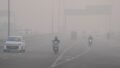
Delhi recorded its lowest minimum temperature of the season so far at 16.2°C on Monday morning, October 26, 2026, while the national capital’s Air Quality deteriorated to an Air Quality Index (AQI) of 178 by 10 am. The latest readings from the India Meteorological Department (IMD) and the Central Pollution Control Board (CPCB) point to cooler mornings alongside rising pollution levels as October draws to a close.
Although Delhi’s overall air quality has remained largely in the moderate category this month, pollution has worsened at several monitoring locations. Forecasts from the Air Quality Early Warning System indicate that the city could experience poor air quality between October 26 and October 28, with conditions potentially fluctuating between poor and moderate over the following six days.
Delhi Records Season’s Lowest Minimum Temperature at 16.2°C
The minimum temperature in Delhi fell to 16.2°C on Monday morning, marking the lowest reading recorded so far this season. The decline signals the gradual arrival of cooler morning conditions in the national capital as the post-monsoon season progresses.
Minimum temperatures are an important indicator of changing seasonal conditions, particularly as Delhi moves towards winter. Cooler mornings, however, do not necessarily mean that pollution levels will improve. Weather conditions and local emissions can influence air quality independently of the temperature recorded at a particular time.
The latest temperature reading comes as Delhi continues to experience fluctuations in pollution levels. While the city’s average air quality has mostly remained moderate during October, individual monitoring stations have begun reporting poorer conditions.
Delhi AQI Rises to 178 on Monday Morning
Delhi’s AQI stood at 178 at 10 am on Monday, placing the city in the upper part of the moderate category under India’s national air quality classification system.
The capital’s 24-hour average AQI was 153 at 4 pm on Sunday, October 25. The difference between the Sunday average and Monday morning reading reflects conditions at different reporting times; the two figures should not be treated as directly equivalent measurements.
According to an analysis of CPCB data by Hindustan Times, Delhi’s average AQI over the seven days leading up to October 25 was 194. The publication described this as the second-lowest average for the corresponding week across the 12-year period from 2015 to 2026.
The relatively lower weekly average provides historical context, but it does not mean pollution is absent or that every neighbourhood has experienced similar conditions. The latest station-level readings indicate that some parts of Delhi are already facing poorer air quality than the citywide average suggests.
22 Monitoring Stations Report Poor Air Quality
Localised pollution is becoming more noticeable across the capital. On Monday morning, 22 of Delhi’s 56 operational air quality monitoring stations recorded AQI levels in the poor category. The remaining 34 stations reported moderate air quality.
The distribution shows why a citywide AQI figure may not fully reflect the conditions residents experience in their immediate surroundings. Pollution can vary between neighbourhoods because of differences in traffic, local emissions, construction activity and other environmental factors. The supplied monitoring data, however, does not identify the specific sources responsible for the latest station-level readings.
When some monitoring stations report poor air quality while others remain moderate, exposure can differ depending on where people live, work or travel. Residents may therefore find that local conditions are worse than the overall city figure indicates.
Delhi Air Quality Forecast: Poor AQI Likely Until October 28
The Air Quality Early Warning System has forecast that Delhi’s air quality is likely to remain in the poor category from October 26 to October 28, according to the IMD forecast bulletin.
“The air quality is likely to be in the ‘poor’ category from 26.10.2026 to 28.10.2026. The outlook for the subsequent six days: The air quality is likely to be in the ‘poor’ to ‘moderate’ category,” the bulletin said.
The forecast suggests that pollution could remain a concern over the next several days, even if conditions subsequently improve at some monitoring locations. The outlook for the following six days allows for a range of conditions, from poor to moderate, rather than promising a sustained improvement.
Forecasts can change as weather conditions and emissions patterns evolve. Residents should follow updated CPCB readings and official air quality advisories for the latest assessment of conditions.
What Delhi’s AQI Categories Mean
The CPCB classifies air quality into six categories based on the recorded AQI. These categories help communicate pollution levels and the potential health implications associated with them.
| AQI range | Air quality category |
|---|---|
| 0–50 | Good |
| 51–100 | Satisfactory |
| 101–200 | Moderate |
| 201–300 | Poor |
| 301–400 | Very poor |
| 401–500 | Severe |
With a reading of 178 at 10 am on Monday, Delhi remained within the moderate category, which covers AQI values from 101 to 200. However, the reading was close to the threshold for poor air quality, which begins at 201.
A moderate AQI should not be interpreted as a guarantee that the air is harmless to everyone. Air pollution can affect people differently, particularly those with respiratory or cardiovascular conditions, children, older adults and people who spend extended periods outdoors.
Delhi’s October Pollution Trend: Mostly Moderate, With Poor-AQI Days
Delhi’s air quality has remained largely moderate through October, according to the supplied CPCB data. The city briefly entered the poor category on October 21, 22 and 23 before the latest readings returned to the moderate range at the citywide level.
The CPCB’s 24-hour average AQI for October 25 was 153. Hindustan Times reported that this figure was lower than Delhi’s AQI on 62% of days over the preceding three years, placing it around the middle of the recent range and slightly towards the lower side.
That comparison offers a longer-term perspective on the latest reading, but it should be considered alongside the current forecast and the differences between monitoring stations. A comparatively lower AQI than on many days in previous years does not eliminate the health risks associated with pollution.
The seven-day average of 194 also highlights the difference between a longer reporting period and a single reading. While the weekly average was reported as relatively low compared with the same week in earlier years, the latest forecast points to a possible deterioration over the next few days.
How Residents Can Respond to Poor Air Quality
With the early warning system forecasting poor air quality through October 28, residents can take practical steps to reduce exposure when pollution levels rise. The most appropriate precautions depend on individual health, outdoor activity and local conditions.
- Check local AQI readings: Use official CPCB updates to understand whether pollution levels near home or work are moderate or poor.
- Reduce strenuous outdoor activity during poor conditions: Consider moving intense exercise indoors when local AQI readings worsen, particularly if you are sensitive to air pollution.
- Follow medical advice: People with asthma or other heart and lung conditions should follow their clinician’s guidance and any applicable public health advisories.
- Pay attention to symptoms: If outdoor exposure triggers breathing difficulty or other concerning symptoms, move to a less polluted environment and seek medical help when necessary.
These measures can help people make informed decisions, but individual precautions cannot resolve the broader sources of urban air pollution. Changes in citywide air quality depend on emissions, weather and the effectiveness of pollution-control measures.
What to Watch in the Coming Days
Two developments will be important to monitor as Delhi moves towards the end of October: the progression of minimum temperatures and the direction of air quality readings.
The minimum temperature of 16.2°C marks a seasonal low so far, but the supplied information does not establish how quickly temperatures will fall further. Future readings from the IMD will provide a clearer picture of the seasonal trend.
For air quality, the immediate concern is the forecast of poor conditions from October 26 to October 28. The performance of individual monitoring stations, the citywide AQI and subsequent forecasts will help determine whether pollution worsens or begins to ease after that period.
Residents should distinguish between the current reading, the 24-hour average and the forecast. Each describes a different aspect of air quality, and none alone guarantees what conditions will be in a particular neighbourhood later in the day.
Conclusion
Delhi recorded its lowest minimum temperature of the season so far at 16.2°C on Monday morning, October 26, while its AQI reached 178 at 10 am. Although the citywide reading remained in the moderate category, 22 of 56 operational monitoring stations reported poor air quality.
The seven-day average AQI leading up to October 25 was 194, which Hindustan Times identified as the second-lowest average for the corresponding week in the 2015–2026 period. Nevertheless, the latest forecast warns that Delhi’s air quality is likely to enter the poor category between October 26 and October 28, with poor-to-moderate conditions possible over the following six days.
As cooler mornings arrive, residents should continue monitoring official weather and pollution updates. The immediate priority is to track the forecast deterioration and take reasonable precautions when local air quality worsens.
For breaking news and live news updates, like us on Facebook or follow us on Twitter and Instagram. Read more on Latest India on thefoxdaily.com.





COMMENTS 0