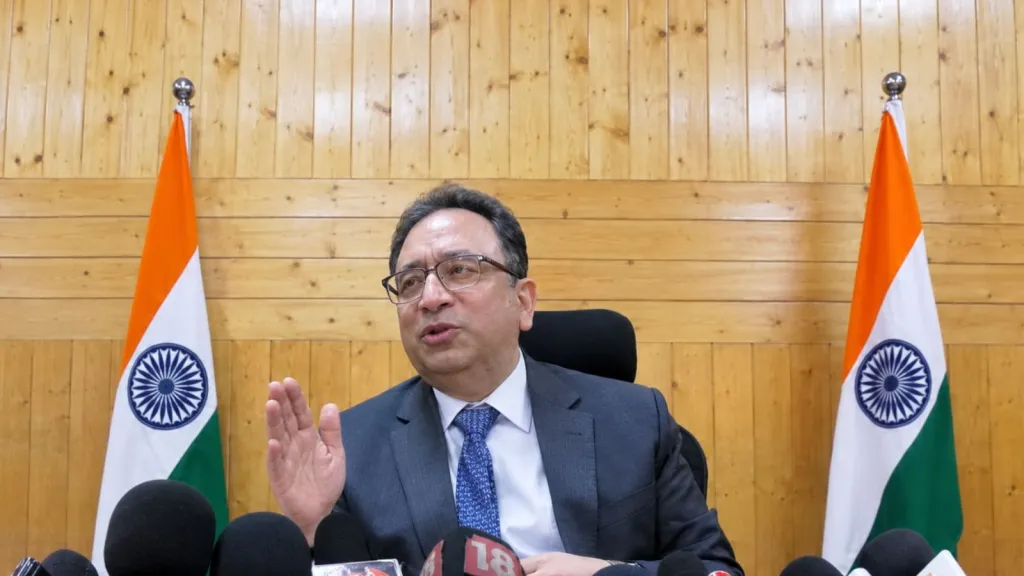
Ladakh Chief Secretary Ashish Kundra has defended the Centre’s proposed constitutional safeguards for the Union Territory, saying talks with local leaders stalled partly because of disagreements over the name and structure of a proposed elected body. He said Ladakh would not become a state or a Union Territory with a legislature, arguing that the government was instead working on a special arrangement tailored to the region’s needs.
Kundra’s remarks came a day after discussions between the Union Ministry of Home Affairs (MHA) and Ladakh leaders ended without a significant breakthrough. He described the rejection of the Centre’s draft proposal by local representatives as unfortunate and urged both sides to continue negotiations with mutual trust and patience.
The disagreement centres on how Ladakh should receive constitutional protection for its land, natural resources, culture and political representation. The Centre has proposed a special constitutional provision referred to as Article 371K, alongside a directly elected Union Territory-level body. Ladakh leaders, however, have raised concerns about the proposed body’s authority and structure.
The stalled talks also triggered a sharp response from climate activist Sonam Wangchuk, who accused the Centre of going back on commitments made during earlier discussions. The contrasting accounts from Kundra and Wangchuk highlight the differences that remain between the government’s proposed framework and the expectations of Ladakh’s representatives.
Why Did Ladakh Talks Stall With the Centre?
According to Kundra, one of the main points of disagreement during the October 15 meeting was the name of the proposed elected body. The Centre suggested several possible names, including “Union Territory-level Frontier Agency”, and invited the Ladakh delegation to recommend alternatives.
Local leaders wanted the institution to be called a legislature or an assembly. Kundra said the government had already decided that Ladakh would not receive statehood or become a Union Territory with a legislature, making those names inconsistent with the proposed arrangement.
He said the Centre was developing what he described as a sui generis model, meaning a unique framework designed specifically for Ladakh rather than one that directly replicates an existing administrative structure.
“The discussion became somewhat stuck on the question of the name,” Kundra said while explaining the negotiations. He maintained that the disagreement over terminology was part of a wider discussion about the powers and design of the proposed institution.
The dispute over the name reflects a deeper difference over the nature of the arrangement being negotiated. For the Centre, the proposal is intended to provide constitutional safeguards through a special framework. For Ladakh’s representatives, the scope of democratic representation and the authority of the proposed body remain central concerns.
Centre Rules Out Statehood and a Legislature
Kundra reiterated that the Centre’s position was that Ladakh would neither become a state nor a Union Territory with a legislature. Instead, the government wants to establish a directly elected Union Territory-level body under a specially designed constitutional arrangement.
He said the government remained committed to finding a political solution that would fulfil the aspirations of Ladakh’s people. He also called on local leaders to approach the negotiations with “mutual trust, openness of mind and patience”.
However, the Centre’s stated position creates a clear limit on what the negotiations can deliver. If statehood and a conventional legislature are ruled out, the final arrangement will depend on how much authority and protection can be incorporated into the alternative framework.
The key question is therefore not only what the new body will be called, but also what powers it will exercise, how its members will be elected and how effectively it will protect Ladakh’s interests.
What Is Article 371K and Why Has It Been Proposed for Ladakh?
The Centre has proposed a special constitutional provision referred to as Article 371K to provide protections tailored to Ladakh. According to Kundra, the proposed provision would establish a directly elected Union Territory-level body and clearly specify safeguards concerning land, natural resources, culture and other matters.
The proposal follows demands for stronger constitutional protection in Ladakh, including calls for inclusion under the Sixth Schedule of the Constitution. Kundra said the government had suggested an alternative route through a provision modelled on the broader approach of Article 371, with a specific arrangement written for Ladakh.
He said constitutional safeguards were the fundamental requirement and argued that more than one constitutional model could meet that objective.
It is important to distinguish the proposal from an enacted constitutional provision. The discussions described by Kundra concern a proposed framework. The supplied information does not establish that Article 371K has been formally incorporated into the Constitution or that the proposed safeguards have already taken legal effect.
Why the Centre Says the Sixth Schedule Is Not the Right Fit
The Sixth Schedule has been one of the major demands associated with Ladakh’s movement for constitutional protection. It provides a framework for autonomous arrangements in certain tribal areas of northeastern India.
Kundra said the provision developed within a particular geographical, historical and cultural context, particularly in regions where minority tribal communities require protection against discriminatory action by a majority tribe.
He argued that Ladakh’s circumstances differ from those settings and said the relevance of the Sixth Schedule was therefore not the same in the Union Territory’s case.
According to Kundra, the demand for Sixth Schedule status was followed by calls for statehood or a Union Territory with a legislature. The Centre subsequently proposed developing a separate constitutional solution that could address the underlying demand for safeguards without adopting either of those political arrangements.
The central disagreement is whether the proposed alternative will provide protections and democratic authority that Ladakh’s representatives consider adequate. The government’s position is that a special provision can meet the region’s needs, while the stalled negotiations show that the details have not yet secured agreement.
What Was Included in the Centre’s 32-Page Draft Proposal?
Kundra said the Ministry of Home Affairs provided a 32-page document to Ladakh’s leaders on the morning of October 16. The document set out elements of the proposed framework and explained which protections the government intended to incorporate into the Constitution and which would require separate legal measures.
According to the Chief Secretary, the proposed Article 371K would clearly establish a directly elected Union Territory-level body and specify protections for land, natural resources, culture and related issues.
He also said that not every provision could be included directly in a constitutional amendment. A separate regulation would be made under Article 240, according to his explanation.
The meeting covered several questions concerning the proposed institution and how it would operate. These included:
- Name of the body: The Centre suggested several names, while local leaders preferred a legislature or assembly.
- Delimitation: Discussions included the process of determining electoral constituencies.
- Nominated members: The sides considered the role of nominated representatives in the proposed structure.
- Women’s representation: The negotiations addressed women’s participation in the body.
- Ex-officio membership: The sides discussed membership linked to other official positions.
- Constitutional safeguards: The draft outlined proposed protections for land, natural resources, culture and other matters.
These issues will help determine the practical reach of the proposed arrangement. Constitutional protections may establish broad principles, but the institution’s composition, electoral arrangements and relationship with the administration will influence how those protections operate in practice.
Why Kundra Criticised Ladakh Leaders’ Rejection of the Draft
Kundra said the Centre expected Ladakh’s representatives to study the 32-page document and explain how they wanted to proceed. He expressed surprise that the delegation had dismissed the proposal within approximately two hours of receiving it.
He said officials from Delhi had spent three to four weeks preparing the documents and had worked on them in good faith. According to Kundra, the delegation’s response that the proposal was worthless and contained no meaningful constitutional safeguards was therefore disappointing.
The Chief Secretary’s account presents the breakdown as a failure to engage with the government’s draft in sufficient detail. The delegation, however, has raised concerns about whether the proposal fulfils the commitments it believes were made during earlier discussions.
Kundra also said the Ladakh leadership submitted a three-page document during the negotiations. He argued that it was a memorandum of understanding rather than a draft legislative document, and therefore could not by itself serve as the basis for preparing a bill.
The distinction matters because an MoU records areas of agreement or proposed commitments, while a constitutional amendment or legislative measure must set out provisions in a form that can be formally enacted. The two sides appear to differ not only over the substance of the arrangement but also over how the proposed agreement should be translated into law.
Disagreement Over the Proposed MoU
Kundra said the three-page document submitted by the Ladakh delegation included a provision stating that certain Acts of Parliament would not apply unless the proposed body gave its consent on specified subjects.
He questioned whether that provision would effectively revive an arrangement associated with Article 370, which has already been abrogated. His remarks indicate that the government considers at least some of the delegation’s proposed conditions incompatible with the constitutional framework it is prepared to offer.
The supplied account does not provide the complete text of the delegation’s document or the Centre’s full 32-page proposal. It is therefore not possible to assess every disputed clause or determine the precise legal implications of the competing proposals from these statements alone.
Nevertheless, the disagreement illustrates the difficulty of converting broad political commitments into specific legal provisions. The parties must agree on both the protections being offered and the extent of the new body’s authority before a final framework can move forward.
Chief Secretary’s ACR Becomes Another Point of Disagreement
Kundra said the discussions also stalled over who would write the Chief Secretary’s Annual Confidential Report (ACR). He maintained that the matter was governed by the Transaction of Business Rules and did not belong in a constitutional amendment or legislation establishing the proposed body.
The disagreement raises a broader question about the relationship between the elected institution and the administrative machinery of Ladakh. The authority of the proposed body will depend partly on how its powers interact with the existing administration and the officials responsible for implementing government decisions.
For local leaders, the extent to which the bureaucracy comes under the authority of the elected body appears to be an important part of the democratic arrangement they are seeking. Wangchuk specifically complained that the Chief Secretary would not be under the proposed assembly.
The two sides therefore appear to have different expectations about the institutional relationship between elected representatives and senior officials. Kundra’s position is that administrative matters such as the ACR should be handled under existing rules rather than incorporated into the constitutional framework.
Resolving such questions will be important if the proposed body is to exercise meaningful authority while operating within the existing administrative structure of the Union Territory.
Sonam Wangchuk Accuses Centre of Going Back on Promises
Hours before Kundra explained the government’s position, climate activist Sonam Wangchuk criticised the outcome of the October 15 meeting and accused the Centre of reneging on commitments made during earlier talks.
Wangchuk said Ladakh’s representatives had expected only minor differences but were surprised by the extent of the disagreement. He described the outcome as a setback and said people in the region were saddened, surprised and angry.
According to Wangchuk, discussions in May had included assurances that Ladakh would receive a special assembly with authority extending to the bureaucracy, including the Chief Secretary. He also said the Centre had indicated that constitutional protections would be provided through an Article 371-based arrangement instead of the Sixth Schedule.
Wangchuk argued that the latest proposal did not meet those expectations. He said the assembly would be small and that the Chief Secretary would not come under its authority, presenting these issues as evidence that the government had retreated from earlier commitments.
His account differs from Kundra’s explanation. While the Chief Secretary maintains that the Centre is developing a tailored constitutional model and that the draft contains safeguards, Wangchuk argues that the proposal falls short of what Ladakh’s representatives understood had been promised.
The supplied information does not include the complete records of the May discussions or the full text of the draft proposal. The precise extent of the differences between the earlier discussions and the latest document therefore cannot be independently established from the statements alone.
What the Stalled Ladakh Talks Mean for Constitutional Safeguards
The failure to reach a significant breakthrough leaves several major questions unresolved. The Centre has ruled out statehood and a conventional Union Territory legislature, while proposing a directly elected body supported by a special constitutional provision. Ladakh’s representatives have questioned whether that framework would deliver the level of political authority and protection they seek.
The proposed Article 371K is central to the next stage of negotiations because it is intended to provide constitutional safeguards for land, natural resources, culture and other regional concerns. But the effectiveness of such a framework will depend on the final wording, the powers assigned to the elected body and the legal mechanisms used to implement its protections.
The disagreement over the body’s name is only one part of the dispute. Delimitation, nominated membership, women’s representation, the relationship with senior officials and the legal status of the delegation’s proposed MoU all point to substantive questions about how the institution would function.
The competing accounts also underline a gap in expectations. The Centre says it has offered a distinct model designed for Ladakh, while Wangchuk and other local representatives have argued that the draft does not fulfil assurances made in earlier discussions.
For negotiations to progress, both sides will need to clarify the powers and protections being proposed, identify which provisions can be incorporated into the Constitution and determine how the elected body will interact with the administration. Until those issues are resolved, the future structure of Ladakh’s political representation and the scope of its proposed constitutional safeguards will remain contested.
For breaking news and live news updates, like us on Facebook or follow us on Twitter and Instagram. Read more on Latest India on thefoxdaily.com.





COMMENTS 0