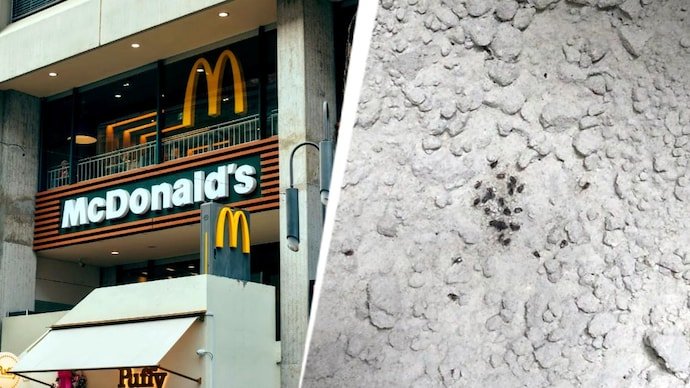
The Maharashtra Food and Drug Administration (FDA) has suspended the food Business licences or registrations of 13 establishments across the state after inspections uncovered serious hygiene, storage and food-safety violations. Among those facing action are a McDonald’s outlet in Colaba and the Bombay Presidency Radio Club in South Mumbai.
The enforcement drive has brought unusually prominent food establishments under regulatory scrutiny. FDA inspections reported live flies and cockroaches in kitchens, food kept on floors, inadequate pest-control measures, poorly maintained refrigeration facilities and other conditions that regulators said failed to meet food-safety requirements. :contentReference[oaicite:0]{index=0}
The action is part of a broader enforcement campaign under Maharashtra Food Safety Commissioner Tukaram Mundhe, WHO took charge in May. In one recent statewide drive, officials inspected 89 hotels, restaurants and roadside eateries, issued improvement notices to 71 establishments and suspended the licences of 13. :contentReference[oaicite:1]{index=1}
The inspections matter not simply because well-known businesses were involved, but because the findings illustrate the range of problems food regulators look for: pest infestation, contamination risks, inadequate temperature control, unsafe storage, poor personal hygiene and failure to correct previously identified deficiencies.
What triggered the Maharashtra FDA crackdown?
The latest action follows an intensified inspection campaign targeting food establishments across Maharashtra. The FDA has been carrying out inspections of restaurants, hotels, dhabas and other food businesses to check compliance with food-safety and hygiene requirements.
The regulator’s approach has included both initial inspections and reinspections. That distinction is important because an establishment can receive an improvement notice after deficiencies are identified and then be given an opportunity to correct them.
In some of the cases now attracting attention, inspectors returned to establishments that had previously been told to rectify problems. The subsequent inspections found that significant deficiencies remained.
That was particularly notable at the McDonald’s outlet in Colaba, where the FDA said 18 of 20 deficiencies listed in an earlier improvement notice had not been rectified during a reinspection. :contentReference[oaicite:2]{index=2}
Bombay Presidency Radio Club kitchen found with flies and cockroaches
The Bombay Presidency Radio Club in Colaba was among the most prominent establishments to face action following an FDA inspection on August 19.
According to the regulator’s findings, the establishment recorded a non-compliance rate of 47 per cent during the inspection. Officials reported live flies in kitchen areas and dead cockroaches, along with other conditions that raised concerns about food contamination and hygiene. :contentReference[oaicite:3]{index=3}
The inspection also identified peeling paint and plaster on the ceiling above food-preparation areas. Washing powder and other chemicals were reportedly stored close to food, while some food items were kept directly on the floor.
Refrigerators used for non-vegetarian food were also reported to be unclean. Officials further flagged improper thawing practices and an inadequately sealed kitchen door that could allow pests or contaminants to enter.
Other reported observations included garbage bins positioned near cooking stoves and spitting marks on the premises.
The FDA suspended the establishment’s food business licence and directed it to stop purchasing, selling and distributing food while the suspension remains in force. The action applies to its food operations rather than necessarily shutting down every activity of the club. :contentReference[oaicite:4]{index=4}
Why the Radio Club findings are significant
The inspection highlights why food-safety regulation goes beyond checking whether food appears fresh when it reaches a customer’s plate.
A commercial kitchen is a chain of interconnected controls. Pest prevention, food storage, cleaning, temperature management, waste disposal, employee hygiene and the physical condition of the premises all contribute to food safety.
A kitchen can therefore face a significant contamination risk even when the food itself has not been shown to have caused an illness. Conditions such as live pests near food, chemicals stored close to ingredients or damaged surfaces above preparation areas are warning signs because they can create pathways for contamination.
The FDA’s action demonstrates the preventive Nature of food-safety enforcement: regulators do not necessarily have to wait for a customer to become ill before taking action against conditions that could compromise food.
McDonald’s Colaba outlet failed to rectify most earlier deficiencies
The FDA also suspended the food business licence of a McDonald’s Family Restaurant kiosk at Metro House in Colaba, operated by Hardcastle Restaurants Pvt Ltd.
The action followed a reinspection on August 19. According to the FDA, 18 of the 20 serious deficiencies listed in an earlier improvement notice remained unresolved.
The reported deficiencies included uncalibrated refrigeration equipment, live cockroaches, inadequate pest traps, rotting food waste on the kitchen floor, dirty cleaning cloths and dust-covered light fixtures without protective shields.
Officials also reported that employees handled ready-to-eat food without washing their hands after handling dirty footwear and soiled cleaning cloths.
These findings are particularly relevant to ready-to-eat food because such products may not undergo another cooking stage that would eliminate contaminants introduced during handling.
The FDA also questioned the storage and maintenance of the outlet’s food-preparation environment, making the case an example of why routine food-safety controls must operate consistently rather than only during regulatory inspections.
FDA questions claim involving cheese and paneer
The McDonald’s inspection also raised a separate issue concerning the description of certain food ingredients.
Officials flagged the alleged use of a processed non-dairy or analogue preparation identified as “GO Cheese SAUCE” despite customer-facing claims concerning the use of real cheese and paneer.
The issue is distinct from the hygiene violations because it concerns the composition or description of a food product rather than simply the cleanliness of the kitchen.
McDonald’s India said it maintains a zero-tolerance approach to food-safety issues and respects the regulatory process. The company said it was reviewing the FDA’s observations and maintained that its food-quality, safety and hygiene systems include the use of real cheese and real paneer.
The competing positions mean that the FDA’s observations and the company’s response should be treated separately while the regulatory process continues.
Other Mumbai establishments also face licence action
The crackdown was not limited to the Radio Club and McDonald’s. Several other Mumbai establishments were also subjected to regulatory action.
Novaara restaurant in Malad, operated by Ingenious Kitchens Pvt Ltd, faced suspension after a reinspection found that 14 of 25 serious deficiencies listed in an earlier improvement notice had not been corrected.
The reported problems included old kitchen utensils and equipment that did not conform to food-safety standards, inadequate grease and cockroach traps in drainage lines and incomplete medical examination records for food handlers.
At Status Restaurant in Nariman Point, the FDA acted following a customer complaint. Officials reportedly observed an employee washing his face directly over clean food utensils, creating a risk of wastewater splashing onto equipment intended for food use.
Inspectors also identified dirty crockery, stagnant water, grease and oil deposits, rust and food waste, along with shortcomings involving personal protective equipment.
Khar Gymkhana in Khar West also faced regulatory action after officials found problems involving food storage and preparation areas. The findings reportedly included poor cleanliness, inadequate segregation between raw and prepared food, lack of hot water for washing utensils and improper thawing of frozen food.
Bajrang Sweet Mart in Santacruz West and ASM Hotels and Hospitality Services Pvt Ltd in Andheri West were also among Mumbai establishments facing action.
Food storage emerged as a recurring problem
One of the clearest themes across the inspections is that food safety is heavily dependent on storage practices.
Food kept directly on floors can be exposed to dirt, moisture, pests and other contaminants. Raw and prepared food stored without proper separation can create cross-contamination risks. Refrigeration equipment that is not properly maintained can also affect temperature control.
These issues are especially important for businesses handling meat, dairy products, cooked food and other perishable items, where inadequate storage conditions can accelerate spoilage.
The FDA’s findings at several establishments indicate that enforcement is not focused on a single type of violation. Inspectors are examining the entire food-handling environment, from the condition of the kitchen to the way ingredients are stored and employees handle ready-to-eat products.
Five establishments suspended in Pune division
The enforcement drive also extended to Maharashtra’s Pune division. During a special inspection campaign conducted between August 17 and 20 under the “Safe Food, Safe Drug, Safe Maharashtra” initiative, the FDA suspended the licences of five establishments.
The establishments included Baba’s Kitchen in Mulshi, Ambrosios, Shrinath Food Corner in Hinjewadi and a KFC outlet operated by Sapphire Foods in Bavdhan, among others.
According to FDA officials, inspectors found unauthorised food colouring and substantial quantities of stale food at Baba’s Kitchen. Ambrosios was reported to have unhygienic conditions and cockroaches.
The KFC outlet faced action over storage-related deficiencies. Officials said its storage facility did not have the required approval under the FSSAI licence.
Inspectors also reported a malfunctioning cold-storage air-conditioning system that resulted in water leakage and ice accumulation over food containers. Some food boxes were reportedly kept directly on the floor and against walls.
The findings demonstrate that even large branded food chains are subject to the same regulatory requirements as independent restaurants and roadside food businesses.
Chhappan Bhog action linked to insect-infested flour
In Chhatrapati Sambhajinagar, the FDA suspended the licence of Chhappan Bhog Thali Restaurant and Banquet Hall following a surprise inspection.
Officials reported finding jowar and bajra flour infested with insects and stored for use. According to the FDA, workers told inspectors that the flour would still be used after the insects were manually removed.
That practice raises an obvious food-safety concern: removing visible insects does not necessarily restore the quality or safety of contaminated or poorly stored food ingredients.
The regulator also highlighted the risks associated with prolonged storage of grains and flour. Moisture can contribute to mould growth and insect infestation, potentially compromising ingredients before they are used in cooking.
The restaurant was also found to lack dedicated storage arrangements separating food, packaging materials, chemicals and employees’ personal belongings.
Food kept in refrigerators and freezers was reportedly not properly stored or labelled, raising concerns about cross-contamination, chemical contamination and the possible use of expired products.
Officials also said the restaurant did not maintain records demonstrating that water used for food preparation had been tested.
Why water testing and food-handler records matter
Food safety does not end with ingredients and cooking equipment. Water used during preparation can also become part of the food-production chain.
That is why regulators look at whether establishments maintain appropriate records concerning water quality and other food-safety controls.
Similarly, medical examination records for food handlers are part of the broader hygiene framework. Employees who work directly with food can potentially become a route through which contamination reaches consumers if appropriate hygiene and Health controls are not maintained.
The deficiencies reported in Maharashtra therefore cover both physical conditions and management systems. A clean-looking kitchen on the day of an inspection is not enough if there is no reliable system for cleaning, pest control, temperature monitoring and employee hygiene.
Why improvement notices matter in food-safety enforcement
An improvement notice is an important part of the regulatory process because it gives a food business an opportunity to correct identified deficiencies.
The Maharashtra cases show why follow-up inspections can be significant. At both the McDonald’s Colaba outlet and Novaara restaurant, the FDA said substantial portions of earlier deficiencies remained unresolved when inspectors returned.
That can turn an initial compliance problem into a more serious regulatory matter.
For consumers, it also illustrates why food-safety enforcement is not simply about issuing penalties. Regulators need to determine whether businesses actually correct the conditions that led to the original notice.
The wider statewide action
The latest suspensions form part of a larger enforcement push rather than a single Mumbai operation.
Recent inspections covered establishments in Mumbai, Pune division, Nagpur, Nashik, Amravati and the Chhatrapati Sambhajinagar and Parbhani areas.
Among the establishments facing action outside Mumbai were Du Brothers Shawarma in Nagpur, Avanti Snacks in Nashik and Pintu Yadav Sweets in Amravati. Three establishments in the Chhatrapati Sambhajinagar and Parbhani areas also faced action over sanitation and food-safety concerns.
The statewide spread is significant because it shows that the regulatory drive is not limited to high-profile restaurants in major urban locations. Smaller food businesses, hotels, sweet shops and roadside establishments can also fall within the inspection programme.
What the crackdown means for customers
For consumers, the immediate takeaway is that food-safety compliance is being examined at multiple levels, including pest control, food storage, employee hygiene and equipment maintenance.
Customers cannot independently verify every aspect of a commercial kitchen, which makes regulatory inspections an important part of the food-safety system.
At the same time, a licence suspension is a regulatory action based on identified deficiencies and should not automatically be interpreted as proof that every food item served by an establishment was contaminated or that every customer was exposed to illness.
The purpose of enforcement is to identify risks, stop unsafe practices and require corrective action.
What happens after a food licence is suspended?
A suspension can prevent an establishment from carrying out the food-related activities covered by the regulatory order while the suspension remains in force.
The business may then need to address the deficiencies identified by inspectors and satisfy the regulator that the relevant requirements have been met before food operations can resume under the applicable process.
This makes the inspection findings important not only for the establishments involved but also for the broader regulatory system. A successful enforcement action ultimately depends on whether businesses correct the underlying problems rather than simply waiting for the public attention surrounding a suspension to disappear.
A broader warning for restaurants and food businesses
The Maharashtra FDA’s latest drive sends a clear message to food businesses: compliance cannot be treated as a paperwork exercise.
Keeping a food licence valid requires more than displaying a certificate. Kitchens need functioning pest-control systems, appropriate storage, clean equipment, proper food handling and adequate employee hygiene. Businesses must also act on deficiencies identified during inspections.
The McDonald’s reinspection is particularly illustrative because the FDA said most of the deficiencies identified earlier had remained unresolved despite a substantial compliance report submitted by the outlet.
For restaurants, hotels, clubs and food chains, the practical lesson is straightforward: corrective measures need to be visible in the actual kitchen and storage areas, not merely documented in compliance paperwork.
What to watch next
The next important development will be whether the suspended establishments rectify the deficiencies and satisfy the Maharashtra FDA’s requirements for resuming food operations.
The regulator’s broader campaign is also likely to remain under scrutiny as inspections continue across Maharashtra. The recent findings suggest that authorities are focusing on both large branded outlets and smaller establishments, with particular attention to pest control, food storage, hygiene and compliance with earlier notices.
The crackdown also comes at a time when food businesses face growing pressure to maintain consumer trust. For customers, the most important outcome will not simply be the number of licences suspended, but whether inspections lead to sustained improvements in the way food is stored, prepared and served.
The bottom line
The Maharashtra FDA’s action against 13 food establishments highlights the consequences of failing to meet food-safety and hygiene requirements. The cases range from pest infestations and dirty kitchens to inadequate refrigeration, unsafe storage and unresolved deficiencies identified during earlier inspections.
The suspension of the McDonald’s Colaba outlet has attracted particular attention because inspectors reported live cockroaches, poor storage and other hygiene issues, while the company says it maintains rigorous food-safety standards and is reviewing the observations.
The Bombay Presidency Radio Club case is similarly notable because the FDA reported live flies, dead cockroaches, food-storage problems and other sanitation concerns at a prominent South Mumbai establishment.
But the broader story is larger than any individual restaurant. The inspections across Mumbai, Pune division and other parts of Maharashtra show that food safety depends on consistent controls at every stage, from purchasing and storage to preparation, employee hygiene and pest management.
For businesses, the message is that regulatory compliance has to work in practice. For consumers, the inspections underline why food-safety oversight remains an important public-health function, particularly when kitchens handle food for large numbers of people every day.
For breaking news and live news updates, like us on Facebook or follow us on Twitter and Instagram. Read more on Latest India on thefoxdaily.com.






COMMENTS 0