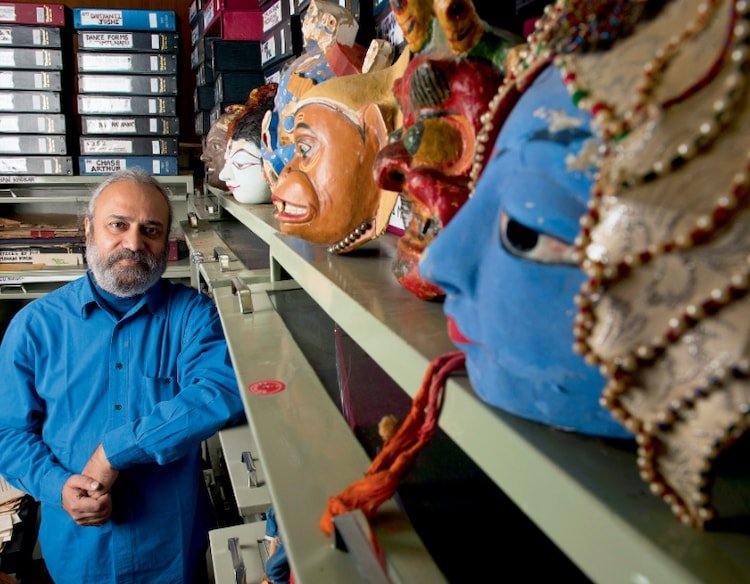
Some archives impress because of the rarity of what they contain. Others leave an impression because of their sheer scale. The Mohan Khokar Dance Collection at the Indira Gandhi National Centre for the Arts (IGNCA) in New Delhi manages to do both.
Housed largely across three rooms, the collection represents decades of an extraordinary effort to document, preserve and understand Indian dance. Its holdings stretch across at least 200 years of dance history and include everything from books and journals to photographs, costumes, ornaments, sculptures, newspaper clippings, programme notes, correspondence and even objects that might appear insignificant at first glance.
On the death anniversary of legendary dance scholar and historian Mohan Khokar, observed on September 17, the collection offers a remarkable reminder of what can happen when one person’s curiosity becomes a lifelong mission to preserve cultural memory.
It is not simply an archive in the conventional sense. It is a record of the people, institutions, performances, publications and everyday material that collectively shaped the history of Indian dance.
A Small Space Holding an Enormous Dance History
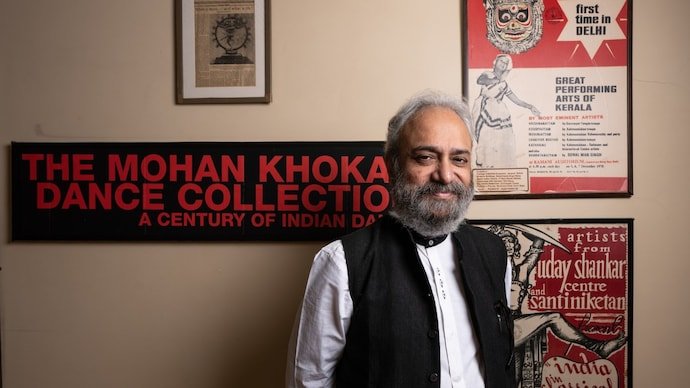
The physical size of the Mohan Khokar Dance Collection can initially seem almost surprising. Much of the archive is housed in three relatively small rooms at IGNCA. Yet the amount of material contained within them is vast.
The experience begins even before visitors enter those rooms. Seven thematic glass-window displays at the reception showcase selected treasures from the collection, including figurines, costumes, masks and ornaments. These displays provide an introduction to the breadth of the archive and the different ways in which dance has been represented and remembered.
On the first floor, an A-Z glossary pays tribute to veteran individuals and organisations that played important roles in the development of Indian Classical Dance. The presentation turns a collection of archival material into something closer to a visual journey through the country’s dance history.
A passage leading toward the main collection adds another layer. Its walls feature striking poster art and photographs of important figures associated with Indian dance, including Uday Shankar and Balasaraswati.
By the time visitors reach the three principal rooms, the significance of Khokar’s collecting instinct has already become apparent.
Mohan Khokar Collected Almost Everything Connected to Dance
What makes the collection particularly unusual is not just the number of objects but the range of material Khokar considered worth saving.
His archive contains conventional research material such as newspaper and magazine clippings, books, journals, photographs and programme notes. But alongside these are objects that might easily have been discarded: artist brochures, packaging boxes, lottery tickets featuring dancers, and even boxes associated with products such as phuljadi and agarbatti.
These seemingly ordinary objects become valuable when viewed as pieces of cultural history. They show how dance existed beyond the stage and how dancers appeared in popular imagery, advertising, print Culture and everyday life.
This approach gives the collection an unusual character. It does not document Indian dance only through major performances or celebrated personalities. It also captures the surrounding material culture that can otherwise disappear with time.
For researchers, that breadth can be particularly valuable. A programme note may reveal how a performance was presented to an audience. A newspaper clipping can show how a dancer was discussed at a particular moment. A photograph can preserve a costume, stage arrangement or artistic collaboration that may no longer exist.
Put together, such fragments can help reconstruct the history of Indian dance in ways that a conventional catalogue of performances alone cannot.
Artefacts Turn the Archive Into a Visual History
The collection extends well beyond paper records. Dance-related terracotta, bronze and wooden sculptures and paintings are also part of its holdings.
These artefacts offer another perspective on the relationship between movement and visual art. Indian dance has long existed alongside sculpture, painting, temple traditions, costume, Music and ritual practices. Preserving objects from these interconnected worlds helps demonstrate that dance history cannot always be separated from the broader history of Indian art.
One of the most striking features of the collection is the sheer number of boxes dedicated to individual dancers. These boxes occupy much of the available space, each representing a body of material gathered around a particular personality.
The result is an archive that can feel both carefully organised and overwhelming at the same time. There is simply so much to explore that the collection resists a quick visit.
Its scale also reflects the persistence behind Khokar’s work. Collecting this material required more than an interest in dance. It required the discipline to recognise that seemingly minor documents could become important historical evidence decades later.
Khokar Was a Pioneer Beyond His Role as a Collector
Mohan Khokar’s importance to Indian dance history cannot be understood only through the archive that bears his name.
He was a scholar, critic, researcher, educator, arts promoter and organiser who contributed to the institutional development of dance as well as its documentation.
In the 1940s, he took on the demanding task of piecing together the history of Indian dance at a time when much of that history was scattered across personal memories, publications, institutions and physical records.
He was also the first male student from North India to study at Rukmini Devi Arundale’s Kalakshetra Foundation in what was then Madras. The experience placed him within one of India’s important centres for the study and practice of classical dance.
His career later took him to the Maharaja Sayajirao University of Baroda, where he became the founder-head of its dance department.
The university was the first institution to offer a dance course at the graduation level, marking an important development in the formal academic study of dance in India.
These achievements help explain why Khokar’s collecting work was more than a private hobby. His professional life was deeply connected to the documentation, teaching, organisation and institutionalisation of dance.
What the Mohan Khokar Dance Collection Contains
The scale of the archive becomes clearer through its numbers. The collection is described as the single-largest archive of Indian classical dance, with material covering at least two centuries of dance history.
Its holdings include approximately 4,000 books, 5,000 journals, more than 50,000 images, around 1,500 artefacts and over 100,000 press clippings. The collection also includes negatives, slides and audio and video recordings.
These categories represent different forms of historical evidence. Books and journals preserve scholarship and contemporary writing. Press clippings document public discussion. Photographs preserve visual records of dancers and performances. Artefacts provide evidence of material and artistic traditions.
Audio and video recordings add another dimension by preserving movement, music and performance in forms that written records cannot fully capture.
Together, the materials create a layered picture of Indian dance rather than a single narrative.
The Personal Papers Make the Archive Even More Valuable
One of the most revealing aspects of the collection is its personal material.
Khokar preserved correspondence with artists, including the responses he received from them. He also retained wedding invitations sent to him by dancers.
Such documents may not appear to be conventional historical sources, but they can reveal Relationships and networks within the dance community. They provide glimpses into how artists communicated, maintained professional and personal connections, and participated in a wider cultural ecosystem.
For researchers, these personal records can complement formal publications and performance documentation. They can help place major artistic developments within the relationships and communities that surrounded them.
This is one reason the archive feels so different from a collection containing only books or museum objects. It captures both public and private traces of dance history.
How the Collection Reached IGNCA
The journey of the archive from the Khokar family’s care to a public cultural institution began with its donation to IGNCA in 2018.
Mohan Khokar’s son, Ashish Khokar, a dance scholar and editor-publisher of Attendance, and his mother, renowned dance guru M.K. Saroja, donated the collection to the institution.
The transfer involved an enormous quantity of material. The collection arrived in 136 cartons, and the IGNCA team needed nearly two years to work through the contents.
The preservation effort was helped by the Khokar family’s own approach to archiving. Mohan Khokar was known to make copies of materials as backups, reflecting his Awareness that preservation required redundancy as well as collection.
The arrival of the archive at a public institution therefore represented more than a change of location. It created the possibility of making an enormous body of privately assembled knowledge accessible to researchers and members of the public.
COVID-19 Slowed the Work, But the Archive Continued to Take Shape
The process of cataloguing and presenting such a large collection was already a demanding task when the COVID-19 Pandemic disrupted work around the world.
The pandemic slowed the pace at which the collection could be processed. Yet the work continued, and the team associated with the Mohan Khokar Dance Collection has been able to catalogue and present selected material to the public.
That process is particularly important because an archive of this size cannot become useful simply by being placed in a room. Researchers need to know what exists, where it is located and how different pieces of material relate to one another.
Cataloguing transforms a mass of collected objects into a research resource. It also helps ensure that rare material can be identified rather than remaining hidden among thousands of unrelated items.
Why Individual Objects Can Tell Bigger Stories
The power of the collection becomes especially clear when individual objects are viewed within their historical context.
The sight of Kathak dancer Sitara Devi’s ghungroos, for example, connects an everyday performance object with one of the most recognisable names in Indian dance history.
A Nataraja idol brings another dimension, linking the archive to the visual and cultural symbolism associated with dance. A printed advertisement for a dance costume by a tailor demonstrates how the needs of performers intersected with commercial and urban life.
Postal stamps featuring dance-related imagery show how dancers and dance traditions could enter another form of public representation.
None of these objects alone can explain the entire history of Indian dance. Their value comes from the context surrounding them. When assembled alongside photographs, press reports, publications and personal correspondence, they become pieces of a much larger historical puzzle.
A Dance Museum Built From Memory
The Mohan Khokar Dance Collection ultimately challenges the idea of what an archive should look like.
It contains the expected material of scholarship, but it also preserves ephemera that many collectors might have ignored. That combination makes it possible to study not only famous performances and celebrated dancers but also the cultural environment in which Indian dance developed.
A traditional museum might display a handful of significant objects. The Khokar collection offers something different: a dense network of documents and artefacts that can be examined from countless directions.
For a researcher studying a particular dancer, it may offer photographs, press clippings, publications and correspondence. For someone examining the history of Indian classical dance institutions, it can provide a different set of records. For visitors simply interested in India’s artistic heritage, the costumes, ornaments, sculptures and personal objects offer an immediate visual connection to the past.
That breadth is also what makes the collection overwhelming. Even spending weeks with it would not necessarily be enough to absorb everything it contains.
Why the Mohan Khokar Archive Matters Today
The importance of the Mohan Khokar Dance Collection lies partly in the fact that cultural history is often lost through ordinary acts of disposal.
Old newspapers are thrown away. Programme leaflets become damaged. Photographs fade. Invitations are discarded after events. Commercial packaging is treated as waste. Personal letters can disappear when families move or generations change.
For Khokar, these fragments were worth saving because each could contribute to a larger understanding of Indian dance.
That collecting philosophy has given researchers access to material that might otherwise have vanished. It has also ensured that the history of Indian dance can be approached through multiple perspectives rather than through only the most famous names and performances.
The donation to IGNCA adds another important dimension. The archive is no longer dependent solely on one family’s ability to preserve it. Its presence within a public cultural institution creates a pathway for future scholarship, cataloguing and public engagement.
One Man’s Vision, Preserved for Future Generations
The Mohan Khokar Dance Collection is extraordinary because its story is ultimately about both preservation and vision.
Khokar recognised value in material that others might have considered temporary. He collected the grand and the ordinary, the scholarly and the commercial, the personal and the public. Over decades, those fragments accumulated into a record of Indian dance spanning generations.
The result is an archive containing more than 4,000 books, 5,000 journals, over 50,000 images, around 1,500 artefacts and more than 100,000 press clippings, alongside recordings, negatives, slides and personal documents.
Its transfer to IGNCA in 2018 ensured that this enormous body of material could move from a family archive toward a public cultural resource.
As Ashish Khokar has said of the collection, “Seeing is believing.” That sentiment captures the unusual power of the archive. Its importance is not limited to the numbers attached to it. It is visible in the ghungroos, photographs, sculptures, advertisements, letters, costumes and countless fragments that collectively tell the story of a living artistic tradition.
The collection amazes because of what it preserves. It overwhelms because of how much remains to be discovered.
And perhaps that is the most fitting legacy of Mohan Khokar: a lifetime spent saving the traces of Indian dance has created a resource that can keep revealing new stories long after its collector is gone.
For breaking news and live news updates, like us on Facebook or follow us on Twitter and Instagram. Read more on Latest India on thefoxdaily.com.






COMMENTS 0