- A Simple Example, A Powerful Message
- Beyond Fuel: A Critique of Identity Politics
- The “Hypocrisy” Argument: Politics Behind Closed Doors
- Unusually Strong Language: Strategy or Frustration?
- Labour Day Context: Why the Message Matters More
- Identity vs Governance: A Long-Running Political Debate
- Real-World Impact: Does This Change Anything?
- A Contrarian Voice Within the System
- Future Outlook: Rhetoric or Real Shift?
- Conclusion: A Message That Resonates Beyond Politics
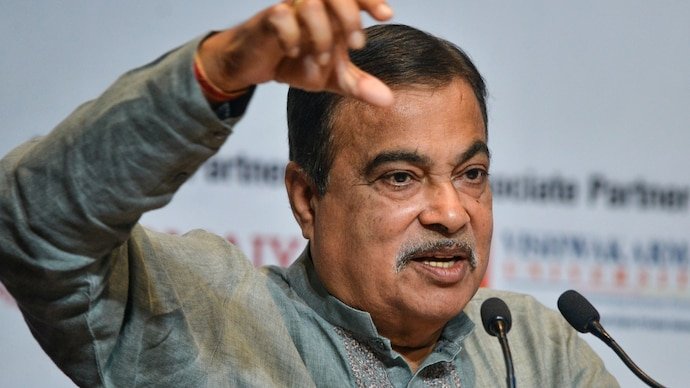
In a political Environment often dominated by caste equations and religious narratives, Union Minister Nitin Gadkari delivered a blunt and unusually direct message: when it comes to essentials like fuel, there is no discrimination. Speaking at a Labour Day event in Nagpur, Gadkari pointed out that Hindus and Muslims pay the same price for petrol, diesel, and gas using this simple but powerful example to challenge identity-based politics.
Who said it? Nitin Gadkari, one of India’s senior-most ministers known for his pragmatic approach. What did he say? That fuel prices do not differ by caste or religion, and politics built on such divisions lacks real value. When? During a Labour Day address. Where? Nagpur, Maharashtra. Why? To call out what he sees as hypocrisy and inefficiency in caste-driven political narratives. How? Through a mix of sharp criticism, real-world examples, and an unusually strong warning to politicians.
A Simple Example, A Powerful Message
Gadkari’s core argument was striking in its simplicity: essential goods do not recognize identity. Fuel prices whether petrol, diesel, or cooking gas are determined by economic and policy factors, not by caste or religion. By highlighting this, he reframed a complex political debate into a relatable everyday reality.
This approach matters because it cuts through ideological arguments and speaks directly to lived experience. Every citizen, regardless of background, feels the impact of fuel prices. By using this universal factor, Gadkari effectively questioned the relevance of divisive political narratives in addressing real issues.
Beyond Fuel: A Critique of Identity Politics
While the fuel price example grabbed attention, the deeper message was a critique of caste-based and religion-driven politics. Gadkari made it clear that he distances himself from such approaches, suggesting they offer little tangible benefit to society.
His remarks reflect a broader debate within Indian Politics: should elections be fought on identity or Governance? For decades, caste equations have played a crucial role in determining electoral outcomes across many states. However, voices like Gadkari’s are increasingly emphasizing development, Infrastructure, and economic performance as more meaningful metrics.
This doesn’t mean identity politics is disappearing but it does indicate a growing tension between traditional electoral strategies and emerging governance-focused narratives.
The “Hypocrisy” Argument: Politics Behind Closed Doors
One of the most striking parts of Gadkari’s speech was his accusation of hypocrisy among political leaders. He claimed that those who publicly raise caste slogans often privately seek personal favors, such as political tickets for family members.
This criticism taps into a long-standing concern in Indian politics: the gap between public rhetoric and private actions. Dynastic politics, backdoor negotiations, and informal lobbying are frequently discussed but rarely addressed so directly in public speeches.
By highlighting this contradiction, Gadkari positioned himself as a critic not just of caste politics, but of political opportunism in general.
Unusually Strong Language: Strategy or Frustration?
Gadkari’s warning stating that he would “kick” those who talk about caste stood out for its unusually aggressive tone. In Indian political discourse, such blunt language is rare, especially from senior ministers.
This raises an important question: was this a calculated strategy or a moment of candid frustration?
- Strategic Angle: Strong language grabs attention and ensures the message cuts through media noise.
- Emotional Angle: It may reflect genuine frustration with persistent identity-based politics.
Either way, the statement achieved its immediate goal it sparked conversation and shifted focus to the underlying issue.
Labour Day Context: Why the Message Matters More
The setting of the speech Labour Day is significant. This day traditionally focuses on workers’ rights, economic equality, and social justice. By choosing this platform to criticize caste politics, Gadkari linked the issue to economic fairness.
His argument implicitly suggests that real equality lies in access to resources, opportunities, and economic stability not in identity-based political mobilization. In other words, he reframed equality from a social identity lens to an economic one.
Identity vs Governance: A Long-Running Political Debate
India’s political landscape has long balanced two competing forces:
| Approach | Focus | Impact |
|---|---|---|
| Identity Politics | Caste, religion, community | Strong voter mobilization, but often divisive |
| Governance Politics | Development, infrastructure, economy | Broad appeal, but harder to communicate emotionally |
Gadkari’s remarks clearly align with the second approach. However, the reality is more complex identity and governance often intersect, and successful political strategies typically combine both.
Real-World Impact: Does This Change Anything?
The immediate impact of such statements is largely rhetorical they shape public discourse rather than policy. However, over time, repeated messaging from influential leaders can influence how campaigns are framed.
If more politicians adopt a similar tone, several shifts could occur:
- Greater emphasis on economic issues like inflation and infrastructure
- Reduced overt reliance on caste-based campaigning
- Increased scrutiny of political hypocrisy
However, it is equally possible that identity politics will continue to dominate, given its deep roots in India’s social and electoral fabric.
A Contrarian Voice Within the System
What makes Gadkari’s remarks particularly notable is that they come from within the political system, not from outside critics. This gives his statement a different weight it is not an external critique, but an internal reflection.
Leaders who challenge prevailing political strategies from within often signal underlying shifts, even if those shifts are gradual and uneven.
Future Outlook: Rhetoric or Real Shift?
Looking ahead, Gadkari’s comments raise an important question: is this the beginning of a broader shift in political messaging, or simply an isolated statement?
Three possible scenarios emerge:
- Status Quo: Identity politics continues to dominate elections.
- Hybrid Model: Parties balance identity narratives with governance-focused messaging.
- Gradual Shift: Increasing focus on development and economic issues over time.
The most likely outcome is the hybrid model, where both approaches coexist reflecting the complexity of India’s electorate.
Conclusion: A Message That Resonates Beyond Politics
Nitin Gadkari’s remarks on fuel prices and caste politics go beyond a single speech they touch on a fundamental question about what should drive political discourse in India. By using a simple, relatable example, he challenged deeply entrenched narratives and called for a shift toward more practical, outcome-based politics.
Whether this message leads to meaningful change remains to be seen. But it has already achieved one thing: it has reignited a crucial debate about the role of identity in shaping policy, governance, and the future of Indian democracy.
In a landscape often defined by division, the idea that some aspects of life like fuel prices remain equal for all may seem basic. Yet, as Gadkari’s speech shows, sometimes the simplest truths carry the most powerful political weight.
For breaking news and live news updates, like us on Facebook or follow us on Twitter and Instagram. Read more on Latest India on thefoxdaily.com.





COMMENTS 0