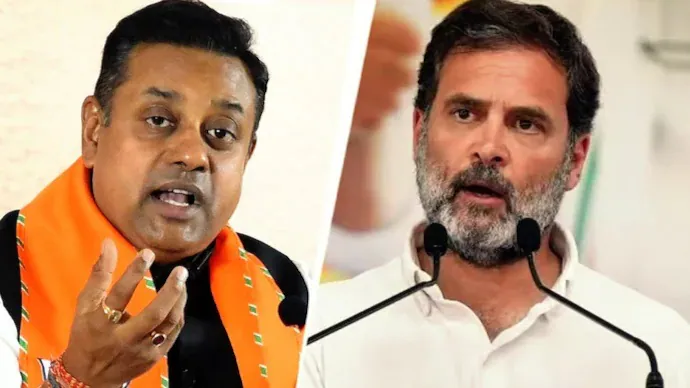
Bharatiya Janata Party (BJP) national spokesperson Sambit Patra on Wednesday accused Congress leader Rahul Gandhi of seeking foreign guidance to destabilise India and bring about a “regime change” without elections. Addressing a press conference in Bhubaneswar, Odisha, Patra alleged that Gandhi and his political associates were attempting to create unrest in the country to revive the Congress leader’s political fortunes.
The BJP leader claimed that Gandhi had travelled abroad to seek guidance from billionaire investor George Soros and his associates on how to remove India’s democratically elected government. Patra also alleged that individuals associated with the opposition had spoken in favour of regime change and suggested that some were willing to support violence to achieve that objective.
These were allegations made by Patra at a political press conference. The information provided did not include independent evidence substantiating his claims about Gandhi’s alleged foreign consultations or a coordinated plan to destabilise the country.
Patra’s remarks come amid continuing political confrontations between the BJP and the Congress over the opposition’s role, the functioning of democratic institutions and competing claims about threats to India’s political stability.
What Sambit Patra Said About Rahul Gandhi
Speaking to reporters in Bhubaneswar, Patra accused the Congress of attempting to generate unrest in India as part of an effort to strengthen Rahul Gandhi’s political position.
He alleged that the opposition party was trying to create an atmosphere of anarchy to help relaunch Gandhi, whom he described as having repeatedly failed politically.
“An attempt is being made to spread anarchy in the country to relaunch Rahul Gandhi, who has failed several times earlier,” Patra alleged.
The BJP spokesperson linked these accusations to what he described as efforts by opposition figures and their associates to bring about regime change without following the electoral process. He claimed that Gandhi had travelled abroad to obtain guidance from George Soros and people associated with the billionaire investor.
Patra did not establish the alleged consultations through evidence presented in the account of the press conference. His comments should therefore be understood as the BJP leader’s political accusations rather than independently verified findings.
The allegations also reflect a broader political dispute over the legitimacy of opposition activities and the meaning of calls for changes in government. In a parliamentary democracy, governments can change through elections, while political parties and activists can advocate policy changes, protest and criticise those in power within the applicable legal framework.
BJP Leader Links Allegations to George Soros
Patra specifically named George Soros, a billionaire investor and philanthropist, while making his allegations against Rahul Gandhi. The BJP spokesperson claimed that Gandhi had sought advice from Soros and his associates about destabilising India and removing the government without elections.
The reference to Soros places the remarks within a recurring political controversy in India concerning foreign influence, international advocacy and allegations of interference in domestic affairs.
However, the material provided does not establish that Gandhi met Soros or his associates for the purpose alleged by Patra. It also does not contain documentary evidence demonstrating that a foreign-backed plan to overthrow India’s elected government exists.
Distinguishing between political allegations and verified evidence is particularly important when claims involve foreign actors and the alleged subversion of democratic institutions. Statements made by political leaders can indicate the position of their parties, but the claims themselves require supporting evidence before they can be treated as established facts.
Patra’s press conference did not, in the account provided, include independently verified details of the alleged meetings, the dates of any consultations or the specific actions supposedly planned by the individuals he named.
Patra Alleges Opposition Figures Are Advocating Regime Change
During the press conference, Patra referred to Neha Bora, Prashant Bhushan and Sanjay Raut while discussing what he described as a push for regime change.
He alleged that the purpose of their statements had been made clear and claimed that some people had expressed support for violence if it became necessary to achieve their objectives.
“Their purpose has been stated by Neha Bora, Prashant Bhushan, and Sanjay Raut, regime change. For that, if violence becomes necessary, some people have even come out in its support,” Patra said.
The remarks formed part of the BJP leader’s broader argument that opposition activities were intended to undermine the government rather than operate through the democratic process.
However, the account of the press conference did not provide the complete statements made by the individuals Patra named or the context in which they were delivered. Without those details, it is not possible to independently determine whether their remarks supported the interpretation presented by the BJP spokesperson.
The distinction between advocating a change of government through elections and calling for the removal of a government outside the constitutional process is significant. Political criticism, public demonstrations and demands for a government to resign do not, by themselves, establish a conspiracy to overthrow the government or an endorsement of violence.
Any assessment of the statements cited by Patra would require examining their precise wording, context and supporting evidence rather than relying exclusively on a political opponent’s interpretation.
Ramlila Ground Rally on November 1 Draws Political Criticism
Patra also criticised what he described as a planned rally at Delhi’s Ramlila Ground on November 1. He alleged that the date was significant because it coincides with the anniversary of the 1984 anti-Sikh riots.
The BJP spokesperson described the Congress and its associates as “enemies of India” and argued that the planned rally was inappropriate given its date.
He further said that the Sikh community would give those involved a befitting reply. The comments added a community-related dimension to the BJP’s criticism of the opposition’s political activities.
The 1984 anti-Sikh violence remains a deeply sensitive subject in India’s political and social history. Thousands of Sikhs were killed in violence that followed the assassination of then Prime Minister Indira Gandhi. The events have continued to influence public debate about accountability, justice and the treatment of the Sikh community.
Patra’s criticism centred on the proposed timing of the rally and the political message he believed it represented. However, the information provided did not include the organisers’ explanation for selecting November 1, the rally’s confirmed agenda or an official response to the BJP leader’s objections.
Without that information, the reason for the proposed date cannot be independently established from the account of Patra’s remarks alone.
Why November 1 Is a Sensitive Date
November 1 is associated with the anniversary of the violence against Sikhs in 1984. The killings followed Indira Gandhi’s assassination on October 31 that year by two of her Sikh bodyguards.
The violence affected Sikh communities in Delhi and other parts of India. The events remain a source of grief for survivors and families of victims, while questions about accountability and justice have remained part of public and political debate for decades.
Patra invoked this history to challenge the planned Ramlila Ground rally, arguing that the date was inappropriate. His remarks suggest that the BJP intends to make the rally’s timing part of its criticism of the Congress and other opposition figures.
At the same time, determining the significance of a political event requires considering the organisers’ stated purpose and the circumstances surrounding the date. The information available here does not establish whether the rally’s timing was selected to coincide with the anniversary or whether the organisers had provided another explanation.
The issue illustrates how historical events can become part of contemporary political disputes, particularly when public gatherings take place on dates associated with communal violence or national tragedy.
Patra Invokes Prime Minister Narendra Modi’s Vijaya Dashami Speech
Patra also referred to Prime Minister Narendra Modi’s Vijaya Dashami address while explaining his allegations against Rahul Gandhi and the opposition.
According to Patra, the Prime Minister had delivered an important message about people who hurt the nation’s honour, undermine its pride, attempt to divide the country and express hatred towards Indian culture.
The BJP spokesperson connected the speech to his own criticism of Gandhi, arguing that those who travel abroad to seek guidance on removing a democratically elected government fall into the category described by the Prime Minister.
“Yesterday, the PM also defined who these enemies are: those who travel abroad to seek directions on how to remove a democratically elected government in India,” Patra said.
His comments framed the dispute as a question of national loyalty and the legitimacy of political opposition. The remarks also linked the BJP’s criticism of Gandhi to the Prime Minister’s broader message about national unity and cultural identity.
However, Patra’s interpretation of Modi’s speech does not independently establish the allegations he made against Gandhi. The supplied account did not include the full speech or evidence confirming that the Prime Minister’s remarks specifically referred to Gandhi or the alleged foreign consultations.
Congress-BJP Political Tensions Remain in Focus
The latest remarks highlight the continuing confrontation between the BJP and the Congress, India’s principal national political rivals. Both parties regularly challenge each other’s positions on governance, national security, democratic institutions and political accountability.
The BJP’s accusation that Rahul Gandhi is seeking foreign support to destabilise India represents a serious charge. The Congress leader’s international engagements, political speeches and criticism of the government would need to be assessed on their specific merits rather than treated as evidence of a conspiracy simply because they involve foreign travel or international contacts.
Similarly, claims that opposition figures are supporting violence require clear evidence about the statements in question and the context in which they were made.
The available account focuses on Patra’s allegations and does not include a response from Rahul Gandhi or the Congress to the specific claims made at the Bhubaneswar press conference. Their position on these particular accusations therefore cannot be established from the information provided.
The dispute also raises a broader question about how political parties describe their opponents. Terms such as “regime change” can refer to different political outcomes depending on the context, ranging from an electoral defeat of the incumbent government to demands for a change outside the established constitutional process.
Understanding the distinction requires attention to the precise statements made, the actions proposed and the evidence available. Political rhetoric alone does not establish that a person or organisation is involved in unlawful activity.
What Is Known About the Allegations?
The details reported from Patra’s press conference establish the nature of the BJP spokesperson’s accusations, but several aspects remain unverified in the available account.
- Rahul Gandhi’s alleged foreign consultations: Patra claimed Gandhi travelled abroad to seek guidance from George Soros and his associates on destabilising India. The account did not provide independent evidence substantiating this claim.
- Alleged plans for regime change: Patra accused opposition figures and their associates of seeking to remove the government without elections. The complete statements and supporting evidence were not provided.
- Claims about violence: The BJP leader alleged that some people had expressed support for violence. The account did not reproduce the full remarks on which he based the allegation.
- Proposed Ramlila Ground rally: Patra criticised a rally he said was planned for November 1, citing the anniversary of the 1984 anti-Sikh riots. The organisers’ explanation for the date was not included.
- Prime Minister’s speech: Patra linked Modi’s Vijaya Dashami address to his accusations against Gandhi, but the full speech was not included in the supplied report.
- Congress response: No response from Gandhi or the Congress to these specific allegations was included in the available account.
Why the Claims Require Context and Verification
Accusations that a political leader intends to destabilise the country or remove an elected government outside the electoral process carry significant implications. Such claims should be distinguished from ordinary political disagreements, criticism of government policies or demands for a change in leadership.
India’s democratic system allows opposition parties to challenge the government, campaign against its policies, organise public demonstrations and seek to replace the ruling party through elections. These activities are distinct from a plan to overthrow the constitutional order through unlawful means.
Likewise, international meetings and contacts are not, by themselves, evidence of a conspiracy. Establishing the substance and purpose of any alleged consultation requires reliable information about what occurred and what was discussed.
In this case, the available account records Patra’s allegations but does not independently verify the alleged foreign guidance, a coordinated plan to destabilise India or an endorsement of violence by the people he named.
The same standard of context applies to the proposed rally at Ramlila Ground. Its timing has been criticised by Patra because of the anniversary of the 1984 anti-Sikh riots, but the available information does not establish the organisers’ reasoning or provide their response to the criticism.
Conclusion
BJP national spokesperson Sambit Patra has accused Rahul Gandhi of seeking foreign guidance to destabilise India and bring about regime change without elections. Speaking at a press conference in Bhubaneswar, Patra linked his allegations to billionaire investor George Soros, comments attributed to several opposition figures, a proposed November 1 rally at Ramlila Ground and Prime Minister Narendra Modi’s Vijaya Dashami speech.
Patra also criticised the planned rally because its reported date coincides with the anniversary of the 1984 anti-Sikh riots and argued that the Sikh community would respond to those involved.
However, the available account does not provide independent evidence establishing the alleged foreign consultations or a coordinated plan to remove the government outside the electoral process. It also does not include the complete statements cited by Patra or a response from Rahul Gandhi and the Congress.
The controversy highlights the sharp political divisions between the BJP and the Congress, as well as the importance of distinguishing political accusations from verified facts. Further context from the individuals named and the organisers of the proposed rally would be needed to assess the claims fully.
For breaking news and live news updates, like us on Facebook or follow us on Twitter and Instagram. Read more on Latest India on thefoxdaily.com.





COMMENTS 0