The Delhi University Students’ Union election has triggered an internal review within the Congress after its student wing, the National Students’ Union of India, failed to win any of the four central-panel posts in the 2026 contest.
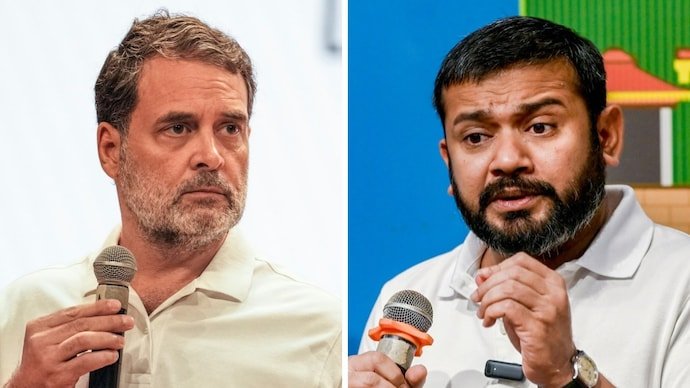
Congress leader Rahul Gandhi has now sought answers from the NSUI leadership, with sources saying he questioned Kanhaiya Kumar and NSUI national president Vinod Jakhar about how the organisation’s campaign ended in such a poor result despite being in a close contest for the DUSU president’s post during counting.
Gandhi held a meeting with Kumar and Jakhar on Monday, with Congress organisation general secretary K.C. Venugopal also present. The discussion focused on the election result, campaign strategy, candidate selection and the handling of the student body’s internal organisation.
According to sources, Gandhi asked the NSUI leaders why the organisation could not convert its position in the presidential contest into a victory. He is learnt to have asked, “We were very close to winning the presidential seat, then what happened?”
The meeting comes after a result that has raised questions within the Congress about its ability to translate its broader youth outreach efforts into electoral strength on university campuses.
NSUI draws a blank in DUSU central panel
The final DUSU result was sharply different from the position seen during parts of the counting process. ABVP won three of the four central-panel positions, with Yash Dabas securing the president’s post, Riya Chhawdi winning secretary and Lakshya Raj Singh taking the joint-secretary position.
The vice-president’s post went to Independent candidate Deepanshu Shokeen, a former NSUI member WHO had sought the Congress student organisation’s ticket before entering the election independently.
Shokeen secured 30,615 votes for the vice-president’s position. ABVP’s Ishu Maurya received 16,910 votes, while NSUI candidate Vir Chatrath polled 4,313 votes.
The presidential race was considerably closer. ABVP’s Yash Dabas defeated NSUI candidate Vijay Shankar Meena by 2,053 votes, securing 24,576 votes against Meena’s 22,523.
The result marked the first time since 2015 that NSUI failed to win a seat on the DUSU central panel, according to election-result reporting.
For the Congress, the outcome was therefore not simply a defeat in one university election. The party had been looking to strengthen its connection with younger voters, making the DUSU contest an important test of its student organisation and campus-level mobilisation.
Why Rahul Gandhi sought answers from Kanhaiya Kumar
Sources said Gandhi’s questions were focused on how the election strategy had been executed rather than simply on the final vote tally.
The Congress leadership is understood to have examined several parts of the campaign, including the selection of candidates, ticket distribution, coordination and the ability of the organisation to maintain support among students until polling day.
Venugopal also reportedly questioned Kumar about the outcome. Sources said the Congress organisation general secretary pointed to Kumar’s role in the candidate-selection process and sought an explanation for the gap between expectations and the final result.
The questions assumed greater significance because NSUI’s presidential candidate remained competitive during the counting process. At one stage, Vijay Shankar Meena led the presidential contest, with the margin between him and the ABVP candidate becoming extremely narrow in several rounds.
After nine rounds, the NSUI and ABVP candidates were separated by only one vote, while after 11 rounds Meena was still ahead by 338 votes. The eventual result, however, went in favour of ABVP’s Yash Dabas.
That shift from a closely fought presidential race to a complete absence of NSUI representation on the central panel appears to have prompted the Congress leadership to examine what happened during the campaign.
Deepanshu Shokeen’s victory becomes a key point of discussion
One of the most sensitive issues discussed in the internal review was the candidature of Deepanshu Shokeen.
Shokeen had been active in student Politics since 2023 and had campaigned for NSUI during the 2023 and 2024 DUSU Elections. He sought an NSUI ticket again for the 2026 election but ultimately contested as an Independent.
His eventual victory in the vice-presidential contest made the ticket decision particularly significant for the Congress. Shokeen won by more than 13,000 votes over the ABVP candidate, while the official NSUI candidate finished far behind.
Sources said Gandhi specifically asked Kumar and Jakhar why Shokeen had not been accommodated within the organisation’s candidate lineup.
The two leaders reportedly told him that the conditions Shokeen had sought while discussing the ticket were not considered reasonable. Gandhi, however, was said to have questioned the manner in which the dispute had been handled.
The episode has become one of the clearest examples of the organisational challenge facing NSUI in the election. A former member who had previously campaigned for the organisation ended up winning one of the four central-panel posts as an Independent, while the official NSUI candidate failed to secure the position.
Congress leader disputes claim over Shokeen’s ticket
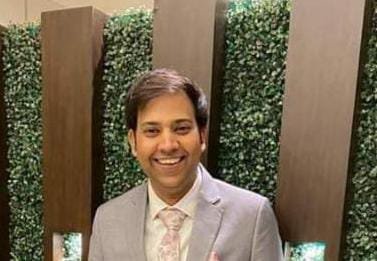
The account of how Shokeen’s candidature unfolded has also been disputed within the Congress.
Congress leader Amitabh Dubey challenged the claim that Shokeen was simply denied a ticket. In a post on X, Dubey said Shokeen had been offered the presidential ticket but declined it before choosing to contest the vice-presidential election independently.
The differing accounts highlight an unresolved question over the sequence of events surrounding the ticket decision. While sources cited in the internal review said Gandhi questioned why Shokeen was not accommodated, Dubey’s version suggested that an offer had been made and rejected.
Regardless of the competing accounts, Shokeen’s result became a significant feature of the election. His campaign demonstrated that a candidate outside the official panels could build substantial support among students and win one of the four central positions.
ABVP wins three posts as NSUI misses all four
The final result gave ABVP control of three positions on the DUSU central panel.
- President: Yash Dabas of ABVP
- Vice-President: Deepanshu Shokeen, Independent
- Secretary: Riya Chhawdi of ABVP
- Joint Secretary: Lakshya Raj Singh of ABVP
The result was notable because NSUI had candidates in all four central-panel contests but failed to secure any of them.
For the presidential contest, however, the final numbers showed that the Congress-backed student organisation was not far behind ABVP. The 2,053-vote gap between Dabas and Meena was substantially narrower than the margins in some of the other contests.
The contrast between the close presidential contest and the overall central-panel outcome has become part of the Congress leadership’s assessment of the campaign.
DUSU result comes amid Congress’s youth outreach
The election has also raised questions because of its timing. The Congress has been attempting to increase its engagement with younger voters through initiatives aimed at students and first-time voters.
Rahul Gandhi’s “Chhatron Ki Goonj” outreach has been part of that broader effort, bringing student-related discussions into the party’s political engagement in different parts of the country.
The DUSU election therefore offered a direct campus-level test of whether such outreach was translating into organisational support among university students.
The result provides no simple measure of the Congress’s wider standing among young voters because DUSU elections involve a specific electorate, local campus issues, individual candidates and student organisations with their own organisational structures.
Nevertheless, the outcome has prompted Congress leaders to examine the relationship between national-level youth messaging and the work of the party’s student wing at the campus level.
Gen-Z politics adds another dimension
The Congress leadership’s review also reportedly touched on the changing political engagement of Gen-Z voters.
Young voters have increasingly participated in political conversations through campus organisations, Social Media platforms and issue-based movements. University elections can therefore reflect a mixture of traditional student politics and newer forms of political mobilisation.
For established student organisations, that creates a challenge in maintaining an active campus presence while responding to issues that matter directly to students.
The DUSU campaign included concerns around student accommodation, campus facilities and safety. These issues gained additional attention following the collapse of a building housing students in Delhi’s Satya Niketan area earlier in September.
The election was held with a turnout of 40.46 per cent, higher than the turnout recorded in the previous two years. The participation level underlined the continued relevance of student elections as a platform for campus-level political competition.
What the Congress review could examine
The meeting between Gandhi and the NSUI leadership has put several organisational questions on the table.
- Candidate selection: Whether the final slate reflected the organisation’s strongest campus-level candidates.
- Ticket distribution: Whether disagreements with prospective candidates were handled in a way that prevented electoral fragmentation.
- Campaign management: Whether the organisation’s campaign was sufficiently coordinated across the university’s colleges and student networks.
- Youth outreach: Whether national initiatives aimed at younger voters are reaching students through sustained campus-level organisation.
- Gen-Z engagement: Whether NSUI’s political messaging is addressing the issues and communication styles that resonate with today’s university students.
These questions are particularly relevant after Shokeen’s independent victory. His campaign showed that a former NSUI member could move outside the organisation and still build a substantial electoral base among Delhi University students.
A setback that has triggered an internal assessment
The DUSU result has given the Congress leadership a specific electoral outcome to examine at a time when the party is seeking to deepen its connection with younger voters.
NSUI’s failure to win any of the four central-panel posts stands in contrast to the close presidential contest, while Shokeen’s independent victory has added another layer to the debate over candidate selection and internal organisation.
Rahul Gandhi’s meeting with Kanhaiya Kumar, Vinod Jakhar and K.C. Venugopal indicates that the result is being treated within the party as an organisational issue requiring a detailed review rather than simply as an isolated student-election loss.
For NSUI, the immediate challenge is to determine why its presidential candidate remained competitive but the organisation ultimately failed to secure any central-panel position, and what lessons the leadership draws from the ticket dispute involving Shokeen.
The DUSU election has therefore become a test case for the Congress’s student strategy: not only how it campaigns during an election, but also how it selects candidates, manages internal disagreements and converts broader youth outreach into sustained campus-level support.
For breaking news and live news updates, like us on Facebook or follow us on Twitter and Instagram. Read more on Latest India on thefoxdaily.com.





COMMENTS 0