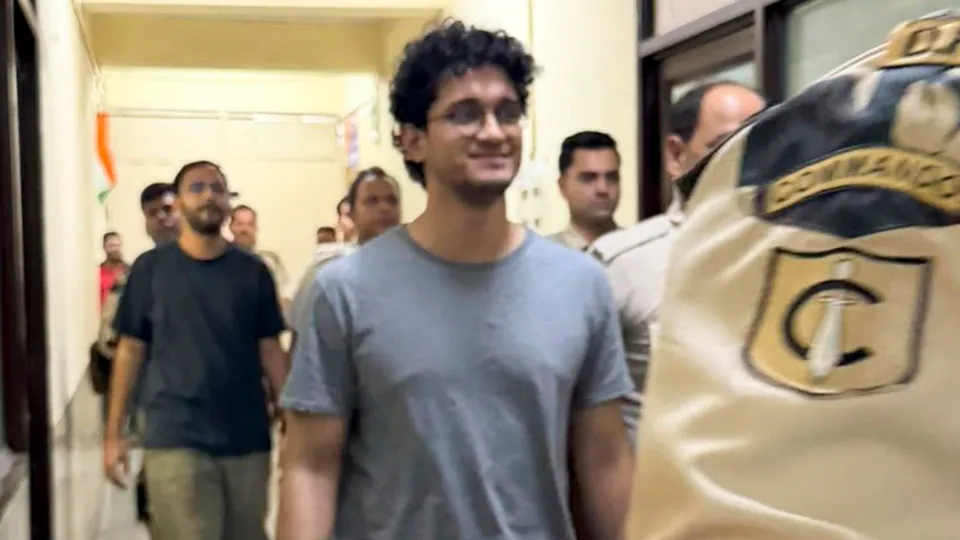
Cockroach Janta Party (CJP) spokespersons Saurav Das and Ashutosh Ranka have been remanded to judicial custody for another two days after a special executive magistrate at Mandir Marg police station extended their detention in connection with an alleged breach of protest-related restrictions at Jantar Mantar.
After the hearing on Monday, Das criticised the proceedings and questioned the grounds on which the authorities rejected their sureties. Speaking as he left the court in a police van, he claimed that the process offered no justice and described the proceedings as a “police court”.
The case centres on allegations that Das and Ranka entered Jantar Mantar despite having signed bonds to maintain peace. The site has been de-notified as a protest location, and police have alleged that the CJP leaders repeatedly used social media to call for demonstrations at locations not designated for protests.
The special executive magistrate’s order cited concerns about a possible breach of peace and gave the two leaders two days to submit written representations, with an advance copy to be provided to the investigating officer. The extension keeps them in custody while their submissions are considered.
Why Saurav Das said there was no justice
Das made his remarks after the court hearing, challenging the reasoning behind the rejection of the sureties and the continued custody of the two CJP spokespersons.
“We’re in an emergency. There is no justice. This is a police court and you see what is happening. Just look at the ground that they have taken,” Das said while leaving in a police van.
His comments were made during an interaction with Smita Sharma Journalist, a YouTube channel. Das’s statement reflected his criticism of the proceedings and the grounds cited by the authorities for continuing the detention.
However, his remarks represent his account of the case. The magistrate’s order sets out a different concern, focusing on the alleged breach of the peace bonds, the leaders’ previous conduct and the possibility of disturbances if protests are held at non-designated locations.
The central issue is therefore whether the authorities have sufficient grounds to treat the alleged entry into Jantar Mantar as a breach of the undertaking and whether continued preventive action is justified under the applicable procedure.
What did the court say about extending their custody?
The special executive magistrate’s order said Das and Ranka had “deliberately breached” the bonds they signed on October 11. According to the order, their conduct raised concerns about their willingness to comply with legal restrictions and maintain public peace.
The magistrate referred to the leaders’ previous conduct and the submissions made by both sides while explaining the decision to extend their custody.
“Considering the imminent apprehension, past conduct of the respondent and the submissions advanced on both sides, I deem it fit that an opportunity be given to the respondents to file and place on record their submissions in writing within 2 days, with advance copy to the Investigating Officer,” the order stated.
The order also referred to police allegations that the CJP leaders had repeatedly used social media to encourage protests at locations that were not designated for demonstrations, including Jantar Mantar and Connaught Place.
According to the magistrate, the investigating officer’s application was supported by material raising concerns about a possible breach of peace and disturbance of public tranquillity. The order said these concerns required proper consideration before the matter could be decided.
The two-day extension gives Das and Ranka an opportunity to submit their arguments in writing. The order does not, by itself, establish that the allegations against them have been finally determined.
Why were Saurav Das and Ashutosh Ranka detained?
Das, Ranka and their associate Ajinkya Shinde were detained on October 13 after allegedly entering Jantar Mantar, which had been de-notified as a designated protest site.
A video shared by the CJP on social media reportedly showed the individuals jumping over locked gates to enter the premises. Police alleged that the group had violated restrictions and breached the undertakings they had previously given to maintain peace.
The case centres on the leaders’ alleged entry into the site despite having signed peace bonds. Such undertakings are intended to require individuals to maintain peace and comply with specified conditions. The authorities argued that entering the restricted location and calling for demonstrations amounted to a breach of those commitments.
Following their detention, Das and Ranka were initially sent to five days of judicial custody. Shinde, meanwhile, was released on a personal bond and a surety of Rs 5,000.
The earlier court order had referred to the peace bonds signed by the CJP leaders and stated that their alleged entry into Jantar Mantar breached the undertaking. The latest extension reflects the magistrate’s continued concerns about the possibility of further disturbances.
However, the police allegations and the court’s assessment of the material presented should be distinguished from a final determination of every disputed fact. Das and Ranka have challenged the grounds for their continued detention.
Why were their sureties rejected?
The rejection of sureties has become a central point of dispute in the proceedings. Sureties are individuals who provide a legally recognised guarantee in support of a person’s release, subject to the applicable conditions.
According to the supplied report, Das questioned the grounds on which the court rejected the sureties presented on behalf of the two leaders. The magistrate’s order referred to concerns about the respondents’ past conduct and the possibility of a fresh breach of peace.
The court also gave the leaders an opportunity to place their submissions in writing within two days, requiring an advance copy to be provided to the investigating officer.
The surety dispute matters because the question of release is separate from the allegations concerning entry into Jantar Mantar. The authorities have relied on the alleged breach of peace bonds and the risk of further disturbance, while Das has publicly criticised the reasoning behind the decision.
The precise legal outcome will depend on the proceedings and the applicable rules. The extension means the two leaders will remain in judicial custody during the additional period specified by the magistrate.
Abhijeet Dipke was also arrested before being released
The case has also involved CJP founder Abhijeet Dipke, who was briefly arrested after being picked up by police on October 16 while travelling towards Connaught Place.
The CJP had called for a march titled “Lehra Do Tiranga” at Central Park in Connaught Place that day. Dipke was released the following day by a special executive magistrate on a conditional bail bond.
One of the principal conditions of his release was that he ensure there was no breach of peace on his part for a period of one year.
Dipke’s release followed the earlier detention of Das, Ranka and Shinde. While Shinde was released on a personal bond and surety, Das and Ranka remained in custody after being remanded for five days and subsequently receiving a further two-day extension.
The different outcomes illustrate that the authorities have dealt separately with the individuals involved. The conditions attached to Dipke’s release also show that maintaining peace remains a central issue in the proceedings connected with the CJP’s protest activities.
What is the dispute over Jantar Mantar as a protest site?
Jantar Mantar has historically been associated with demonstrations and public campaigns in New Delhi. Its status as a protest location is central to the current case because authorities have de-notified it as a designated site for demonstrations.
Police have alleged that the CJP leaders entered the premises despite the restrictions and used social media to call for protests at locations that were not officially designated for that purpose.
For the authorities, the issue concerns compliance with restrictions and the potential for public disorder. The magistrate’s order cited the possibility of a breach of peace and disturbance of public tranquillity as reasons for considering the police application.
For the CJP leaders, the continued detention and rejection of sureties have become grounds for challenging the proceedings. Das’s comments after the hearing reflected his objection to the way the case was being handled.
The broader question is how restrictions on demonstrations are applied and how authorities balance public-order concerns with the ability to organise protests. The immediate proceedings, however, concern the specific allegations against Das and Ranka, the peace bonds they signed and the material placed before the magistrate.
What happens next in the case?
The magistrate has directed Das and Ranka to submit their written representations within two days, with an advance copy to the investigating officer. The additional period of custody allows the proceedings to continue while their submissions are placed on record.
The key issues include whether the alleged conduct breached their October 11 peace bonds, whether the concerns raised by the police justify continued preventive action and how the authorities should assess the sureties submitted on their behalf.
The leaders’ objections to the rejection of sureties and the grounds for their detention remain part of the dispute. Any further decision will depend on the submissions, the material considered by the magistrate and the applicable legal framework.
The extension should not be confused with a final ruling on every allegation. It is a decision to continue custody for a further two days while the authorities and the respondents address the concerns set out in the order.
Conclusion
The judicial custody of CJP spokespersons Saurav Das and Ashutosh Ranka has been extended by two days following allegations that they breached peace bonds by entering Jantar Mantar, a de-notified protest site in Delhi.
Das has criticised the proceedings, saying there is no justice and questioning the rejection of their sureties. The magistrate, meanwhile, cited the alleged breach of their undertakings, their past conduct and police concerns about a possible disturbance of public peace.
The two leaders have been given an opportunity to submit written arguments within the specified period. Their case remains focused on the alleged breach of peace bonds, the grounds for continued custody and the conditions under which they may be released.
The next stage will depend on the written submissions and the magistrate’s consideration of the material before the court. Until further decisions are made, the allegations against the CJP leaders and their objections to the proceedings remain central to the case.
For breaking news and live news updates, like us on Facebook or follow us on Twitter and Instagram. Read more on Latest India on thefoxdaily.com.






COMMENTS 0