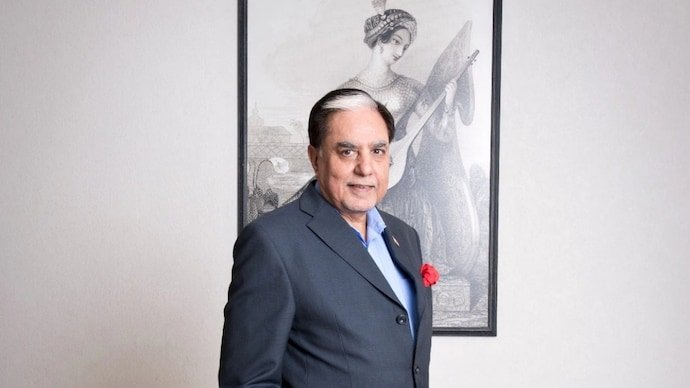
The National Company Law Tribunal has put the brakes on a controversial repayment plan involving Zee Group founder Subhash Chandra, temporarily suspending an earlier order that allowed him to settle his personal insolvency proceedings by paying Rs 6.25 crore against admitted claims of Rs 22,006.57 crore.
A five-member special bench has now taken up the case after an earlier two-member bench concluded that the opinions delivered during the proceedings did not produce a clear majority capable of being implemented.
The special bench has stayed the operation of the August 25 order and directed Chandra, in his capacity as a personal guarantor, not to sell, transfer or otherwise alienate his properties, either directly or indirectly, while the matter is reconsidered.
The development means the Rs 6.25-crore repayment plan cannot presently be treated as the final resolution of Chandra’s personal insolvency case. Instead, the dispute has moved back into the tribunal process, where the larger bench will examine the conflicting positions and determine how the case should proceed.
Why the NCLT stopped the earlier repayment order
The immediate issue is not simply the size of Chandra’s proposed payment. It is also the unusual procedural history that preceded the August 25 approval.
The case was initially heard by a two-member NCLT bench. The judicial and technical members reached different conclusions about whether Chandra’s repayment plan should be approved and, if so, how broadly it should apply.
One member supported approval of the plan only for creditors who had voted in favour of it. Under that approach, dissenting creditors, including financial institutions, would have retained the ability to pursue other recovery remedies.
The other member rejected the repayment plan, citing serious issues in the process followed by the resolution professional.
Because of the split decision, the matter was referred to a third member.
That third member subsequently approved the repayment plan on August 25, subject to specific exclusions concerning claims submitted on behalf of certain groups of individuals.
The matter then returned to the original two-member bench. On August 31, that bench found that the three opinions did not establish a majority view.
That finding ultimately led to the formation of the five-member special bench.
How three different opinions created a legal deadlock
The unusual structure of the proceedings is central to understanding why the case has been reopened.
The original technical member rejected the repayment plan. The original judicial member supported a more limited version that would have applied only to creditors backing the proposal. The third member approved the plan and treated it as binding on creditors, including those who had voted against it.
Those positions were materially different.
The issue was therefore not simply whether two members agreed and one disagreed. The three opinions did not line up in a way that produced a single majority position on the legal effect of the repayment plan.
Once the original bench determined that no effective majority had emerged, the matter had to be placed before a larger panel.
The NCLT president subsequently constituted the five-member special bench to hear the case afresh.
What was the Rs 6.25-crore repayment plan?
Under Chandra’s proposed repayment plan, Rs 6.25 crore was to be distributed among creditors, while another Rs 25 lakh was earmarked toward the costs of the insolvency process.
The contrast with the admitted claims is striking.
The insolvency proceedings recorded admitted claims of Rs 22,006.57 crore against Chandra in his capacity as a personal guarantor. The Rs 6.25-crore repayment therefore represented only a tiny fraction of those admitted claims.
Calculated against the full admitted claim figure, the proposed creditor recovery is roughly 0.03%, implying a haircut of almost 99.97% within Chandra’s personal-guarantor insolvency proceedings.
That calculation explains why the original order attracted considerable attention from lenders and the wider financial community.
However, the numbers need to be understood carefully. The Rs 22,006.57 crore figure does not mean that Chandra personally borrowed Rs 22,006 crore in cash.
Why Chandra is facing Rs 22,006 crore in claims
The central distinction in the case is between being a borrower and being a personal guarantor.
The underlying loans were raised by companies associated with the Essel Group. Chandra had provided personal guarantees in connection with some of those borrowings.
A personal guarantee creates an obligation that can become relevant when the principal borrower defaults. The guarantor can consequently face separate insolvency proceedings concerning the guarantees, even though the original loans were taken by companies rather than the individual guarantor.
That is why the enormous figure attached to Chandra’s insolvency case should not be described simply as his personal borrowing.
The Rs 22,006.57 crore figure represents admitted creditor claims in the personal-guarantor proceedings.
This distinction also matters when interpreting the proposed Rs 6.25-crore settlement. The plan concerns the insolvency process involving Chandra’s personal guarantee obligations. It does not automatically mean that all underlying corporate debts have disappeared.
What the Rs 6.25-crore figure does and does not mean
The headline numbers can make the case appear straightforward: creditors claim more than Rs 22,000 crore, while Chandra proposes to pay only Rs 6.25 crore.
The legal and financial reality is more complicated.
The value that creditors can recover from a personal guarantor depends on the assets and liabilities within the relevant insolvency process, as well as the recovery available through the principal borrowers, collateral and other legally available mechanisms.
A large admitted claim does not necessarily mean that an equivalent amount can be recovered from the guarantor’s personal estate.
Similarly, a repayment plan involving Rs 6.25 crore should not automatically be interpreted as the final economic loss suffered by every lender on the original corporate loans.
The corporate borrowers, Security arrangements and other recovery avenues remain separate issues governed by their respective legal and financial structures.
This is one of the most important points for readers trying to understand the case: the NCLT proceedings concern Chandra’s personal-guarantor obligations, not a blanket cancellation of Rs 22,000 crore of corporate borrowing.
Why creditors challenged the plan
The extremely low proposed recovery has been a major point of contention among lenders.
Several financial institutions have objected to the repayment arrangement and questioned aspects of the insolvency process, including issues surrounding creditor voting and the treatment of entities connected to Chandra and his family.
Creditors have also argued that the plan should not produce an outcome that leaves dissenting lenders without the recovery avenues they believe remain available to them.
The voting structure became particularly important because creditors representing a substantial portion of the voting share supported the plan, while other lenders opposed it.
That disagreement ultimately became intertwined with the question of whether an approved repayment plan could bind creditors that had voted against it.
The third member took the position that the approved plan would bind all creditors under the applicable provisions of the Insolvency and Bankruptcy Code.
The subsequent disagreement within the tribunal means that the legal effect of that conclusion is now back before the special bench.
Why the property restriction matters
The five-member bench has also restrained Chandra from alienating his properties while the case is being reconsidered.
That means he cannot simply transfer or dispose of assets in a manner that could undermine the insolvency proceedings.
The restriction is particularly significant because the special bench is reconsidering a repayment plan whose economic value depends heavily on questions surrounding Chandra’s realisable assets and the possible recovery available to creditors.
Maintaining the status quo helps preserve the position of the parties while the tribunal examines the matter.
It also prevents changes in ownership or transfers of property from complicating the proceedings before the larger bench reaches a fresh decision.
How the insolvency case began
The personal insolvency proceedings against Chandra were initiated by Indiabulls Housing Finance under the Insolvency and Bankruptcy Code.
The case arose from Chandra’s position as a personal guarantor for corporate borrowings.
Personal guarantor insolvency cases are important because they connect corporate defaults with the personal obligations of individuals who guaranteed those borrowings.
The framework is intended to provide creditors with a structured legal mechanism for pursuing such guarantees rather than leaving recovery entirely dependent on separate and potentially lengthy proceedings.
Chandra’s case has attracted particular attention because of the enormous gap between the admitted claims and the proposed recovery.
Chandra’s explanation of the debt
Chandra has repeatedly stressed that he did not personally borrow Rs 22,000 crore from banks and financial institutions.
His position is that the underlying loans were raised by companies associated with the Essel Group and that he had provided personal guarantees for those borrowings.
He has also said that substantial amounts connected to the corporate liabilities had already been repaid and that assets belonging to his family had been sold as part of efforts to meet repayment obligations.
Chandra has previously stated that the Essel Group’s liabilities were around Rs 45,000 crore when its financial problems became acute in 2019 and that a large portion had subsequently been repaid.
Those statements form part of Chandra’s position in the broader dispute. The extent of actual repayment and recovery remains dependent on the underlying loan records, creditor claims, security and other evidence considered in the relevant proceedings.
Why this case matters for personal guarantees
The Chandra case highlights a broader issue in India’s insolvency framework: the difference between the size of a guaranteed liability and the assets that can actually be recovered from a personal guarantor.
For banks, personal guarantees can provide an additional layer of protection when lending to companies. But the guarantee is only as valuable as the guarantor’s enforceable and realisable assets and the legal mechanisms available to creditors.
The case also illustrates why creditor voting can become highly consequential in insolvency proceedings.
If a repayment plan meets the statutory requirements, it can potentially bind creditors who oppose it. But when creditors challenge the voting process or the legal basis for approval, the resulting dispute can become as important as the repayment amount itself.
The 99.97% haircut needs context
The phrase “99.97% haircut” is likely to remain one of the most striking features of the case.
On the face of the admitted claims and proposed repayment amount, the calculation is straightforward. But using the figure without explaining the underlying structure can create a misleading impression.
The haircut relates to recovery under Chandra’s personal insolvency repayment plan. It does not establish that the entire Rs 22,006.57 crore of underlying corporate borrowing has been legally wiped out.
Creditors may have separate rights against principal borrowers, collateral and other sources of recovery, depending on the relevant loan documents and legal proceedings.
That distinction is essential for understanding the financial impact of the tribunal’s decision.
What happens after the five-member bench takes over?
The special bench will reconsider the matter after the earlier proceedings failed to produce a clear majority position.
The immediate effect is that the August 25 approval is stayed and cannot presently be implemented.
The tribunal has also issued notices to the parties involved, giving them an opportunity to present their positions before the larger bench.
The special bench will therefore have to consider the competing opinions and the legal questions surrounding the repayment plan before reaching a fresh conclusion.
The process could involve renewed arguments over the plan itself, creditor rights, voting, the effect of the repayment arrangement and the treatment of Chandra’s property.
What creditors and investors will be watching
For creditors, the central question is whether the tribunal ultimately confirms a repayment plan that produces only a very small recovery from Chandra’s personal insolvency estate.
For investors and the wider financial sector, the case has a broader significance because of what it could indicate about the treatment of large personal guarantees in corporate lending.
Banks often rely on guarantees when extending substantial credit to companies. The effectiveness of those guarantees can influence how lenders assess risk and structure future loans.
A final ruling could therefore attract attention beyond the immediate parties to the case.
Why the case is not over
The latest NCLT action does not finally approve or reject Chandra’s Rs 6.25-crore repayment plan.
Instead, it resets the immediate legal position by putting the earlier approval on hold and sending the dispute before a larger bench.
The restriction on transferring or selling properties also means the asset position will remain protected while the tribunal considers the matter.
That makes the next stage particularly important. The five-member bench will have to resolve the disagreement that prevented the earlier panel from producing a workable majority decision.
The bigger question behind Subhash Chandra’s insolvency case
The dispute is ultimately about more than a striking difference between Rs 22,006.57 crore in admitted claims and a proposed repayment of Rs 6.25 crore.
It raises fundamental questions about how India’s insolvency system handles personal guarantees when the liabilities associated with those guarantees are vastly larger than the guarantor’s recoverable personal estate.
It also tests how creditor voting, dissenting lenders and competing tribunal opinions should interact when a repayment plan is proposed.
For now, there is no final resolution.
The August 25 order approving the Rs 6.25-crore plan has been stayed, Chandra has been restrained from alienating his properties, and the five-member NCLT special bench will reconsider the case.
The next decision will determine whether the unusually low repayment proposal survives scrutiny or whether the insolvency proceedings take a different direction.
Until then, the most important fact is that the Rs 6.25-crore settlement is not currently final. The case remains active, and the larger tribunal bench now has the task of resolving the conflicting views that brought the proceedings to this stage.
For breaking news and live news updates, like us on Facebook or follow us on Twitter and Instagram. Read more on Latest India on thefoxdaily.com.


COMMENTS 0