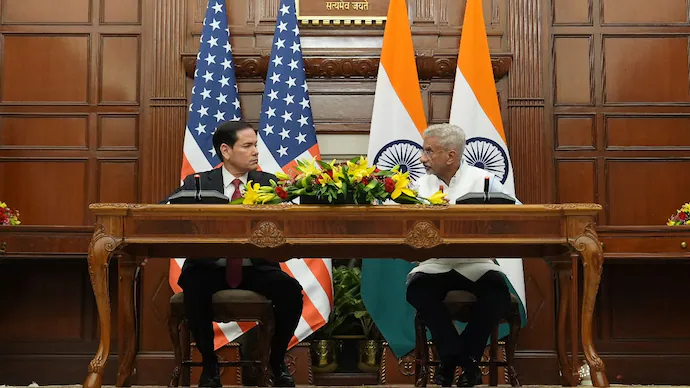
Six Democratic lawmakers in the United States have urged Secretary of State Marco Rubio to raise concerns about the treatment of student protesters in India during his upcoming discussions with External Affairs Minister S Jaishankar. The lawmakers alleged a pattern of repression, wrongful detention and excessive use of force against demonstrators, while also raising concerns about the alleged surveillance of Indian government critics on American soil.
The letter, signed by Congresswoman Ilhan Omar, Representative Pramila Jayapal and four other Democratic lawmakers, comes amid protests organised by the youth-led Cockroach Janta Party (CJP) and opposition groups. The demonstrations have focused on the handling of student protests, alleged irregularities in electoral rolls and demands for the resignation of Chief Election Commissioner Gyanesh Kumar.
The lawmakers have asked Washington to address the allegations directly with New Delhi. Their intervention adds a human rights dimension to the upcoming diplomatic engagement between the two countries, although the claims in the letter remain allegations that require independent scrutiny.
Six Democratic Lawmakers Write to Marco Rubio
The letter was signed by six Democratic members of the US House of Representatives: Ilhan Omar, Pramila Jayapal, Jim McGovern, Rashida Tlaib, Eleanor Holmes Norton and Jesus “Chuy” Garcia.
The lawmakers expressed concern about what they described as a pattern of excessive force, detentions and intimidation during student demonstrations in Delhi and other parts of India. They called on Rubio to raise these issues with Indian officials and press for thorough, transparent and independent investigations into reported incidents involving protesters.
The letter also raised concerns about alleged efforts to monitor or intimidate activists and members of the Indian diaspora who participated in demonstrations in the United States in support of the CJP-led movement.
According to the lawmakers, members of American human rights organisations and Indian diaspora groups who attended protests in Washington, DC, Chicago and San Francisco reported being photographed by individuals they believed had been hired by the Indian Embassy and Indian consulates.
The allegations have not, by themselves, established that Indian diplomatic missions directed surveillance or intimidation. The lawmakers are seeking greater scrutiny of the reported incidents and want the issue raised through diplomatic channels.
Rubio’s Meeting With Jaishankar Brings India-US Relations Into Focus
The letter was sent ahead of the scheduled October 20 meeting between Rubio and Jaishankar in Mumbai. The discussions are expected to take place against the backdrop of broader India-US diplomatic engagement, with the lawmakers seeking to ensure that concerns about civil liberties and protest policing receive attention.
Secretary of State Rubio is responsible for representing US foreign policy interests, including human rights concerns and relations with strategic partners. Jaishankar, India’s external affairs minister, is a central figure in managing New Delhi’s diplomatic relationships and responding to issues raised by foreign governments.
The lawmakers want Rubio to discuss the treatment of protesters as part of the bilateral engagement rather than limiting discussions to security, trade and other strategic priorities.
The issue illustrates a recurring tension in India-US Relations: both countries have significant reasons to maintain diplomatic cooperation, but disagreements over civil liberties, democratic institutions and domestic political developments can complicate their engagement.
Whether the concerns raised in the letter lead to formal discussions or further diplomatic exchanges will depend on the positions taken by both governments and the outcome of their engagement.
What Is the Cockroach Janta Party Movement?
The Cockroach Janta Party, commonly known as CJP, is a youth-led political movement that gained prominence during protests over the alleged NEET examination paper leak. The movement subsequently expanded its campaign to include demands relating to electoral transparency and the functioning of the Election Commission of India.
The group attracted national attention after organising demonstrations over the examination controversy. Its campaign became associated with demands for accountability from education authorities and changes in the government’s response to allegations of irregularities in competitive examinations.
The movement later joined the wider opposition campaign against Chief Election Commissioner Gyanesh Kumar, with protesters demanding his resignation and questioning the transparency of the Special Intensive Revision (SIR) of electoral rolls.
The CJP-led protests have drawn support from sections of the opposition and student groups. Demonstrators have argued that electoral roll revisions require greater transparency and effective safeguards to ensure eligible voters are not excluded.
The authorities and the Election Commission have disputed allegations that the revision exercise was designed to benefit a particular political party. The debate over the process has nevertheless become a major point of political contention, prompting demonstrations and demands for institutional accountability.
US Lawmakers Raise Concerns Over Police Action Against Protesters
In their letter, the Democratic lawmakers referred to reported incidents in which Indian security personnel allegedly used tear gas, pellet guns and batons against protesters. They argued that the reported incidents warranted closer examination and called for independent investigations into the handling of demonstrations.
Police in India have used crowd-control measures during protests connected to the CJP movement and opposition demands concerning electoral rolls. Authorities have also detained demonstrators during some gatherings, citing legal restrictions, public-order concerns or alleged violations of police directions.
Such incidents have prompted competing interpretations of the authorities’ response. Protesters and civil liberties advocates have questioned whether the measures were proportionate, while authorities have maintained that law enforcement must manage public gatherings and prevent disruptions.
The central questions include whether force was necessary in particular circumstances, whether detainees were treated in accordance with the law and whether restrictions on demonstrations were justified. Establishing the facts requires examining individual incidents, official records, eyewitness accounts and any findings from judicial or independent inquiries.
The lawmakers’ letter places these concerns within the wider debate over freedom of assembly, the right to protest and the responsibilities of security forces in a democratic society.
Controversy Over the Special Intensive Revision of Electoral Rolls
The letter also highlighted the controversy surrounding the Special Intensive Revision of electoral rolls, an exercise intended to verify and update voter registration records. According to the lawmakers, tens of thousands of people have participated in demonstrations since September 25, raising concerns about the scale and transparency of the revision process.
The lawmakers cited claims that more than 130 million names had been removed from electoral rolls. They argued that the scale of the deletions raised questions about whether eligible voters could face barriers to participating in elections, particularly members of minority communities.
However, the number of names removed from voter lists should not automatically be interpreted as the number of eligible voters who have been disenfranchised. Electoral roll revisions can involve removing duplicate entries and records of deceased or relocated individuals, as well as correcting other registration details.
The key issue is whether the process is transparent, whether the reasons for individual deletions are properly recorded and whether people whose names have been removed can challenge the decision and restore their registration when eligible.
The Election Commission has maintained that its actions are lawful and that electoral roll revisions are intended to improve the accuracy of voter lists. Opposition parties and campaigners have questioned aspects of the process and called for greater transparency.
The dispute has become a central focus of the CJP-led agitation, with protesters demanding accountability from the election authorities and the resignation of Chief Election Commissioner Gyanesh Kumar.
Concerns Over Potential Disproportionate Impact on Minorities
The US lawmakers also referred to concerns raised by United Nations human rights experts about the transparency of India’s voter-roll revision process. They warned that procedural barriers could disproportionately affect Muslims and other minority communities if eligible voters were unable to establish or retain their registration.
The concern centres on whether all eligible citizens can participate in the electoral process without facing unreasonable administrative obstacles. Documentation requirements, deadlines, access to registration facilities and the availability of effective appeals can influence whether voters successfully retain their names on electoral rolls.
Claims of disproportionate impact require detailed evidence, including reliable data on removals, the reasons behind them, demographic patterns and the outcomes of appeals. The overall number of deleted entries alone does not establish that a particular community has been deliberately targeted.
The Election Commission’s position and the concerns raised by opposition groups and human rights advocates represent competing interpretations of the revision process. Independent scrutiny of the procedures and outcomes would help clarify the extent of any problems and whether corrective action is necessary.
By including the issue in their letter, the six lawmakers have signalled that they view electoral transparency and the protection of minority voting rights as matters that should be discussed in the broader context of India-US relations.
Allegations of Surveillance of Indian Diaspora Activists in the US
One of the most sensitive aspects of the letter concerns claims that individuals photographed participants at demonstrations in American cities and allegedly identified themselves as working for Indian diplomatic missions.
The lawmakers said members of human rights organisations and the Indian diaspora who attended protests in Washington, DC, Chicago and San Francisco had reported being photographed. They expressed concern that such activity could amount to surveillance or intimidation of people exercising their right to peaceful assembly in the United States.
The allegations raise questions about the protection of civil liberties beyond India’s borders. People participating in lawful demonstrations in the United States are generally protected by constitutional safeguards, although the legal circumstances can vary depending on the conduct involved and the location of a protest.
At the same time, photographing people at public demonstrations does not, by itself, establish unlawful surveillance or intimidation. Determining whether any improper activity occurred would require evidence about the individuals involved, their affiliations, the purpose of the photography and whether threats or other forms of pressure were directed at participants.
The lawmakers have asked the State Department to address the reports with Indian officials. Any formal assessment would need to distinguish verified conduct from allegations and establish whether diplomatic personnel or individuals acting on their behalf were involved.
Political Disagreement Over the Letter’s Claims
The letter has also become part of a wider political debate over how US lawmakers should approach developments in India. Critics of the six representatives have questioned their neutrality and argued that their statements reflect a longstanding critical position towards the Indian government.
Supporters of raising the concerns argue that human rights and the protection of peaceful protest are legitimate subjects for diplomatic engagement, particularly when allegations involve the treatment of demonstrators and the rights of voters.
The disagreement reflects broader differences over the role of foreign governments and legislators in commenting on domestic political developments. Some view such interventions as a necessary part of international human rights diplomacy, while others regard them as inappropriate interference in another country’s internal affairs.
The credibility of the allegations ultimately depends on the available evidence rather than the political affiliations or reputations of the lawmakers who raised them. Independent investigations, transparent procedures and documented findings would provide a stronger basis for assessing the claims.
What the Letter Could Mean for India-US Relations
The appeal to Rubio adds another issue to the agenda of an important bilateral relationship. India and the United States cooperate across areas including defence, technology, trade, education and regional security. Both governments also have an interest in maintaining channels of communication despite disagreements.
Human rights concerns can become more prominent when lawmakers seek to influence the diplomatic priorities of the US administration. Although a letter from members of Congress does not automatically determine official policy, it can bring attention to particular issues and encourage the State Department to seek clarification from a partner government.
For India, the matter touches on sensitive questions of domestic governance, election administration and law enforcement. For Washington, it raises questions about how to balance strategic cooperation with its stated interest in civil liberties and democratic institutions.
The scheduled Rubio-Jaishankar meeting provides an opportunity for both sides to discuss concerns directly, should they choose to do so. The broader impact will depend on whether the allegations lead to further diplomatic exchanges, requests for information or any concrete follow-up measures.
What Happens Next?
The immediate focus is on the scheduled meeting between Rubio and Jaishankar and whether the issues raised by the six Democratic lawmakers are included in their discussions.
Further developments may depend on the response from Indian authorities, the availability of evidence concerning the alleged treatment of protesters and the reported monitoring of diaspora activists, as well as the progress of investigations into specific incidents.
The controversy over electoral roll revisions is also likely to remain a focus of political debate. The Election Commission’s explanations, the availability of effective remedies for people whose names have been removed and the publication of clear data on revisions will be important in assessing the competing claims.
For now, the letter represents a formal request by six US lawmakers for Washington to raise concerns with New Delhi. It does not establish that all the allegations are proven, but it places the treatment of protesters, electoral transparency and the reported monitoring of activists on the agenda ahead of the two countries’ diplomatic engagement.
For breaking news and live news updates, like us on Facebook or follow us on Twitter and Instagram. Read more on Latest India on thefoxdaily.com.




COMMENTS 0