Uttar Pradesh is increasingly positioning its religious heritage, cultural identity and traditional industries as major attractions for international visitors. Varanasi and Ayodhya, two of India’s most prominent pilgrimage centres, are at the heart of this strategy, with the state government highlighting their growing popularity among tourists.
On November 17, Awanish Kumar Awasthi, advisor to Uttar Pradesh Chief Minister Yogi Adityanath, claimed that Varanasi and Ayodhya had emerged as the world’s two most popular tourist destinations, placing Vatican City in third position.
Speaking about the state’s changing tourism profile, Awasthi said, “Out of the 10 most popular destinations in the world, Benaras and Ayodhya are on the top two. The third is Vatican City.”
The statement reflects the Uttar Pradesh government’s confidence in the growing international appeal of its religious and cultural destinations. However, the ranking was presented as Awasthi’s claim, and no independent global tourism index or methodology was identified to establish the comparison.
Why Varanasi and Ayodhya Are Attracting Attention
Varanasi and Ayodhya occupy important places in India’s religious and cultural landscape. Both cities attract pilgrims throughout the year and have become central to Uttar Pradesh’s efforts to expand Religious Tourism.
Varanasi, also known as Banaras or Kashi, is one of Hinduism’s oldest and most significant sacred cities. Located along the banks of the Ganga, it is known for its temples, ghats, religious ceremonies and centuries-old traditions. Visitors travel to the city for spiritual activities, cultural experiences and its historic neighbourhoods.
The city’s tourism appeal extends beyond pilgrimage. Its traditional silk weaving, local food, music, religious festivals and riverfront activities provide visitors with a wider experience of its cultural heritage.
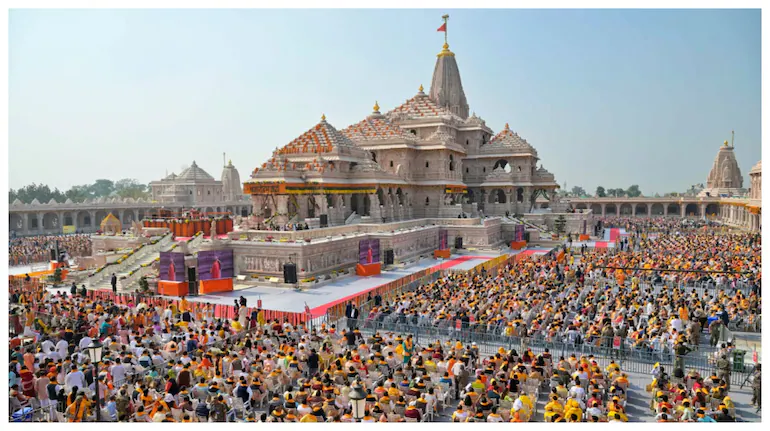
Ayodhya holds a central position in Hindu religious tradition as the birthplace of Lord Ram. The construction and inauguration of the Ram temple in January 2024 brought renewed international attention to the city and strengthened its position as a major pilgrimage destination.
The temple has contributed to a broader transformation in Ayodhya’s tourism profile. The city has seen increased attention towards accommodation, transport, retail, hospitality and visitor facilities as businesses respond to the growing flow of pilgrims.
Both destinations benefit from strong religious significance, but their appeal also reflects the growing importance of cultural tourism. Visitors increasingly seek experiences connected with heritage, architecture, traditional practices and local communities.
Vatican City Comparison Highlights Uttar Pradesh’s Tourism Ambitions
Awasthi’s comparison with Vatican City places the two Uttar Pradesh destinations in an international tourism context. Vatican City is a major global religious destination, attracting visitors because of its association with the Roman Catholic Church, St Peter’s Basilica and the Vatican Museums.
By claiming that Varanasi and Ayodhya have moved ahead of Vatican City in popularity, Awasthi sought to highlight the growing international profile of Uttar Pradesh’s religious heritage.
However, global tourism rankings can vary considerably depending on the criteria used. Some measure international arrivals, while others focus on visitor interest, online searches, bookings or overall destination popularity.
Without a named ranking organisation, reporting period and measurement method, the claim should not be interpreted as an established global tourism ranking. It nevertheless reflects the state’s effort to promote Varanasi and Ayodhya as destinations with international significance.
Uttar Pradesh Uses Tourism to Support Local Businesses
The state’s tourism strategy is closely connected with efforts to expand economic opportunities for local communities. A growing number of visitors can create demand for hotels, restaurants, transport services, guides, shops and traditional products.
Religious tourism can also support smaller businesses that depend on pilgrims and visitors. Local artisans, food vendors, shopkeepers, boat operators and transport workers can benefit when tourism activity spreads beyond major attractions.
For Uttar Pradesh, the challenge is to convert visitor numbers into sustained economic activity. Better infrastructure, organised visitor services, sanitation, transport connectivity and the preservation of historic sites are important to ensuring that tourism growth benefits local residents.
Awasthi’s remarks suggest that the state wants to connect its tourism ambitions with other sectors, particularly handicrafts and regional cuisine.
ODOP Initiative Connects Uttar Pradesh Handicrafts With Global Markets
Alongside tourism, Uttar Pradesh is promoting its traditional industries through the One District One Product (ODOP) initiative. The programme focuses on identifying and supporting distinctive products associated with different districts, helping local manufacturers and artisans reach wider markets.
The initiative covers a variety of traditional goods, including handicrafts, textiles, food products and other locally produced items. Its broader objective is to strengthen district-level economic identities while creating opportunities for small businesses and skilled workers.
Awasthi said the state had exported goods worth approximately Rs 2 lakh crore, with handicrafts representing a significant part of those exports.
“We have connected handicrafts with ODOP. We have exported goods worth Rs. 2 lakh crore, handicrafts are a significant part of those exports,” he said.
The export figure highlights the economic importance the state places on traditional manufacturing and locally produced goods. However, the statement did not specify the reporting period or provide a detailed breakdown of the export categories included in the figure.
For artisans, access to international markets can create opportunities beyond local retail and seasonal tourism. Better branding, product quality, packaging and distribution can help traditional products compete with mass-produced alternatives.
The ODOP model also gives districts a way to promote their distinctive products rather than relying entirely on large industrial centres for economic growth.
State Plans to Promote Cuisine From Every District
Uttar Pradesh is also looking to use food as another part of its cultural tourism strategy. Awasthi said the state had started an initiative to showcase the cuisine of each district.
The idea is to highlight regional food traditions and make local dishes part of the visitor experience. Food tourism can encourage travellers to explore local markets, restaurants, traditional kitchens and smaller destinations that may not receive the same attention as major religious sites.
Uttar Pradesh has a diverse culinary landscape shaped by its regional communities, history and local ingredients. From the food culture of Awadh to the traditional dishes of eastern Uttar Pradesh and the offerings found around major pilgrimage centres, cuisine provides another way to communicate the state’s cultural identity.
Connecting local food with tourism could also create opportunities for restaurants, small food businesses, farmers and traditional producers.
The initiative reflects a broader approach to tourism promotion: presenting destinations not only through monuments and religious sites but also through the everyday culture and traditions of the people who live there.
Uttar Pradesh’s Development Gains International Recognition, Says Awasthi
Awasthi also spoke about the growing international recognition of Uttar Pradesh’s development. Recalling his visits to Singapore and Japan alongside Chief Minister Yogi Adityanath, he said people in Japan were already familiar with the changes taking place in the state.
“UP is now recognised in Japan. Japanese people know about the development happening in UP,” he said.
His remarks point to the state’s efforts to present itself internationally as a destination for investment, tourism and industrial cooperation. Overseas visits by state leadership can provide opportunities to engage with businesses, investors and government representatives while promoting economic projects.
Japan is particularly relevant to Uttar Pradesh’s efforts to attract international business because of its established role in manufacturing, technology and infrastructure investment. Greater awareness of the state’s development plans could support future cooperation, although recognition alone does not guarantee investment or economic outcomes.
International engagement is therefore an important part of the state’s broader development strategy, alongside improvements in infrastructure, industrial activity and tourism facilities.
Changing Attitudes Towards Arts and Sports Careers
Beyond economic development and tourism, Awasthi highlighted what he described as a change in social attitudes towards creative and sporting professions.
He said parents in Uttar Pradesh were increasingly taking pride in children choosing careers as artists and sportspersons, reflecting a wider acceptance of professional opportunities beyond conventional employment paths.
“There are lot of opportunities today. Today parents are feeling proud to make their children artists, sportsmen. That is the change in Uttar Pradesh,” he said.
The comments point to the importance of cultural and sporting opportunities in the state’s development narrative. Careers in music, performing arts, visual arts and professional sports can create employment and allow talented individuals to build livelihoods around their abilities.
However, turning growing social acceptance into sustainable careers requires more than changing attitudes. Training facilities, coaching, educational support, professional platforms, funding and access to wider markets all play a role in helping young people succeed.
Can Tourism and Cultural Promotion Drive Uttar Pradesh’s Next Phase of Growth?
Uttar Pradesh’s approach combines several areas of development: religious tourism, traditional manufacturing, food culture, international outreach and opportunities in arts and sports.
Varanasi and Ayodhya provide the state with two prominent destinations capable of attracting large numbers of domestic and international visitors. The ODOP initiative offers a way to connect that tourism activity with local producers, while regional food promotion could encourage visitors to explore a wider range of cultural experiences.
But sustaining this momentum will depend on the quality of infrastructure and services available to visitors. Transport connectivity, accommodation, cleanliness, crowd management and the preservation of cultural heritage will remain important as tourism expands.
There is also a need to ensure that the economic benefits reach local communities. Tourism growth is most sustainable when small businesses, artisans, workers and residents can participate in the opportunities it creates.
Awasthi’s November 17 remarks underline the Uttar Pradesh government’s ambition to raise the state’s international profile through its religious heritage and economic development. His claim that Varanasi and Ayodhya rank ahead of Vatican City has drawn attention to the state’s tourism aspirations, although the comparison requires independent ranking data for verification.
The larger strategy is clear: Uttar Pradesh wants to promote itself not only as a destination for religious travel but also as a centre of handicrafts, regional cuisine, cultural experiences and investment. Whether these efforts translate into lasting international recognition will depend on measurable tourism growth, stronger local industries and continued improvements in the visitor experience.
For breaking news and live news updates, like us on Facebook or follow us on Twitter and Instagram. Read more on Latest India on thefoxdaily.com.






COMMENTS 0