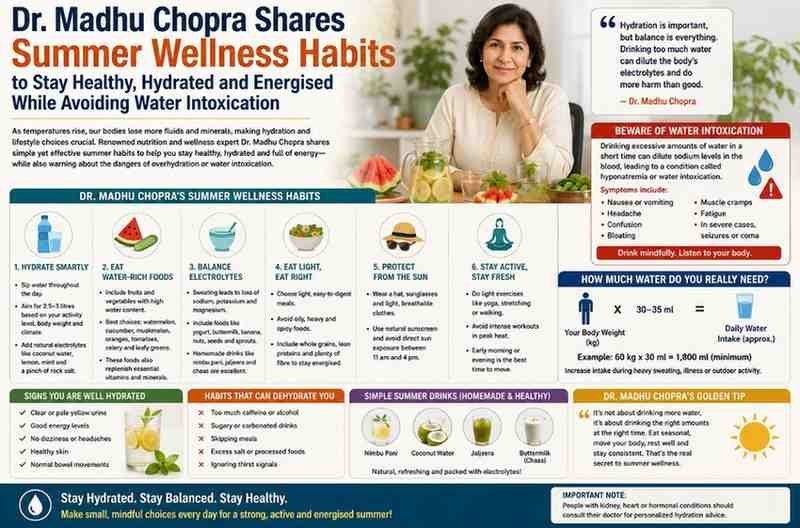
Summer brings longer days, outdoor activities, and plenty of sunshine, but it also places extra demands on the body. High temperatures increase sweating, accelerate fluid loss, and can leave people feeling tired, dehydrated, and less productive if they do not adjust their daily habits. While drinking enough water remains one of the most important health recommendations during hot weather, experts caution that Hydration is about balance not excess.
Dr. Madhu Chopra recently shared several practical habits that she follows to stay healthy, hydrated, and energised throughout the summer months. Her advice goes beyond simply increasing water intake and focuses on a holistic approach that includes nutritious foods, electrolyte balance, physical activity, and listening to the body’s natural signals.
One particularly important reminder is that drinking excessive amounts of water can also be harmful. Although uncommon, water intoxication also known as overhydration can occur when fluid intake greatly exceeds the body’s ability to eliminate it, leading to dangerously low sodium levels in the blood.
Why Summer Places Extra Stress on the Body
During hot weather, the body works continuously to maintain a stable internal temperature. Sweating is one of its primary cooling mechanisms, but this process also results in the loss of water and important minerals known as electrolytes.
If these fluids are not replaced appropriately, dehydration may develop, leading to symptoms such as:
- Excessive thirst.
- Fatigue.
- Headache.
- Dizziness.
- Dry mouth.
- Reduced concentration.
Maintaining proper hydration is therefore essential for overall health, especially during periods of intense heat.
Habit 1: Prioritise Smart Hydration
Rather than waiting until thirst becomes intense, drinking fluids consistently throughout the day can help maintain hydration.
Water remains the best choice for most healthy individuals, but hydration also comes from fruits, vegetables, soups, and other water-rich foods.
Instead of aiming for a fixed number of glasses, experts recommend adjusting fluid intake according to weather conditions, activity levels, and individual health needs.
Habit 2: Include Water-Rich Foods
Hydration does not come from beverages alone.
Many fruits and vegetables naturally contain large amounts of water while also providing vitamins, minerals, antioxidants, and fibre.
Examples include:
- Watermelon.
- Cucumber.
- Muskmelon.
- Oranges.
- Strawberries.
- Tomatoes.
- Lettuce.
These foods support hydration while contributing to overall nutritional balance.
Habit 3: Eat Light but Nutrient-Dense Meals
Heavy, greasy meals may leave some people feeling sluggish during extremely hot weather.
Instead, balanced meals containing vegetables, whole grains, lean proteins, legumes, and healthy fats can provide sustained energy without excessive heaviness.
Smaller, well-balanced meals throughout the day may also help maintain energy levels.
Habit 4: Replace Lost Electrolytes When Needed
Sweating results in the loss of electrolytes such as sodium and potassium, which play important roles in muscle function, nerve signalling, and fluid balance.
For individuals engaging in prolonged outdoor activity or intense exercise, replenishing electrolytes through appropriate foods or medically recommended beverages may sometimes be beneficial.
Most people, however, can usually meet their electrolyte needs through a balanced diet.
| Healthy Summer Habit | Benefit |
|---|---|
| Drink water regularly | Supports hydration |
| Eat seasonal fruits | Provides fluids and nutrients |
| Choose lighter meals | Helps maintain energy |
| Wear breathable clothing | Improves heat comfort |
| Avoid prolonged sun exposure | Reduces heat-related illness risk |
Habit 5: Stay Physically Active—But Wisely
Exercise remains important during summer, but timing matters.
Many health professionals recommend scheduling outdoor workouts during cooler parts of the day, such as early morning or evening, when temperatures are lower.
Taking regular breaks and drinking fluids appropriately helps reduce the risk of heat exhaustion.
The Hidden Danger: What Is Water Intoxication?
While dehydration receives considerable attention, drinking excessive amounts of water within a short period can also create health risks.
Water intoxication, or overhydration, occurs when the body’s sodium concentration becomes excessively diluted.
This condition, medically known as hyponatremia, may interfere with normal nerve and muscle function.
Although uncommon, severe cases require urgent medical attention.
Symptoms of Water Intoxication
Early symptoms may resemble other illnesses, making recognition important.
Possible signs include:
- Nausea.
- Headache.
- Confusion.
- Swelling.
- Muscle weakness.
- Vomiting.
- In severe cases, seizures or altered consciousness.
Individuals experiencing concerning symptoms should seek immediate medical evaluation.
How Much Water Is Too Much?
There is no universal amount of water that suits everyone. Fluid requirements vary depending on body size, weather, physical activity, medical conditions, pregnancy, and diet.
Rather than forcing excessive water intake, experts generally encourage drinking according to thirst while increasing fluids appropriately during exercise, illness, or hot weather.
Listening to the body’s natural cues remains an effective strategy for many healthy adults.
Other Ways to Stay Energised During Summer
Hydration is only one part of maintaining energy.
- Sleep seven to nine hours regularly.
- Limit excessive caffeine and sugary beverages.
- Take breaks from direct sunlight.
- Wear lightweight clothing.
- Use appropriate sun protection.
- Manage stress effectively.
Healthy routines work together to support both physical and mental well-being.
| Hydration Myth | Evidence-Based Reality |
|---|---|
| More water is always better. | Both dehydration and overhydration can be harmful. |
| Only beverages provide hydration. | Many fruits and vegetables also contribute fluids. |
| Clear urine always means perfect hydration. | Hydration depends on several factors, not one sign alone. |
| Everyone needs the same amount of water. | Fluid needs vary by individual and environment. |
| Sports drinks are necessary for everyone. | Most people meet electrolyte needs through a balanced diet. |
Why Balance Is the Key to Summer Health
Modern wellness advice increasingly emphasizes balance over extremes. Staying healthy during summer is not simply about drinking more water—it involves maintaining proper hydration, eating nutrient-rich foods, staying physically active, protecting against excessive heat, and getting adequate rest.
Small daily habits practiced consistently often provide greater benefits than occasional drastic changes. By paying attention to both hydration and overall lifestyle, people can better manage the physical demands of hot weather.
Conclusion
Dr. Madhu Chopra’s approach to summer wellness highlights an important principle: maintaining health during hot weather requires thoughtful balance. Drinking enough water, consuming water-rich fruits and vegetables, choosing nutritious meals, exercising wisely, and protecting against excessive heat all contribute to sustained energy and well-being.
Equally important is her reminder that more is not always better. While dehydration remains a common concern during summer, excessive water intake can also pose health risks through water intoxication. Listening to the body’s needs and maintaining moderation offers the safest approach.
Ultimately, staying healthy, hydrated, and energised throughout the summer is less about following rigid rules and more about developing sustainable habits that support the body’s natural ability to adapt to rising temperatures.
For breaking news and live news updates, like us on Facebook or follow us on Twitter and Instagram. Read more on Latest Lifestyle on thefoxdaily.com.

COMMENTS 0