On World Photography Day, August 19, Chennai becomes more than a city on a map. Through the cameras of five photographers, it emerges as a collection of moods, memories, textures and fleeting moments that are easy to overlook in everyday life.
The city’s familiar landmarks may be photographed thousands of times, but no two photographers necessarily see the same Chennai. One may be drawn to the weathered grandeur of an old building, another to the rhythm of a market, while someone else may find beauty in an ordinary street corner or a passing expression.
That is what makes photographing Chennai particularly fascinating. The city is layered: colonial-era buildings stand alongside modern commercial spaces; temple streets meet busy arterial roads; beaches shift from noisy public spaces to quiet horizons; and everyday life unfolds against a backdrop of architecture, culture and changing urban landscapes.
To mark World Photography Day 2026, five photographers revisit some of their favourite Chennai frames, reflecting not only on what their cameras captured but also on why those particular moments stayed with them.
Why Chennai works so well as a photographic subject
Chennai offers photographers something that technically perfect landscapes cannot always provide: contradiction.
The city can appear intensely crowded and unexpectedly intimate within the same frame. Its architecture carries traces of different periods of history, while its streets remain deeply rooted in everyday routines.
Morning light can transform an ordinary road. Monsoon clouds can give familiar buildings a completely different character. A crowded railway station can become a study in geometry and movement, while a quiet residential lane can reveal the city’s slower side.
For photographers, this means Chennai does not need to be spectacular to be photogenic.
Its strongest images often emerge from observation—waiting for the right person to enter the frame, watching how sunlight falls across a façade or noticing a detail that thousands of commuters pass without seeing.
Kiran Sa and the enduring character of Senate House
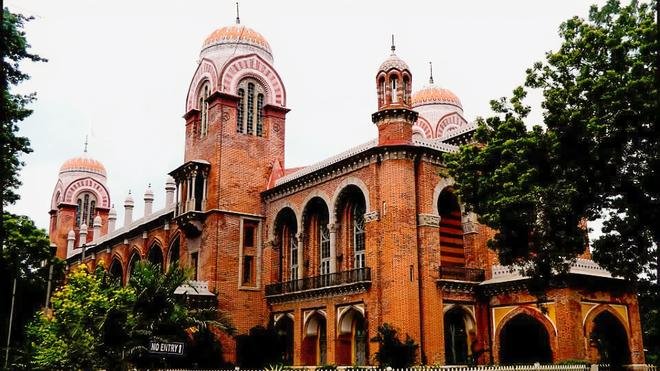
Among the images remembered for their ability to capture Chennai’s architectural history is photographer Kiran Sa’s frame of the Senate House at the University of Madras.
The building is one of Chennai’s most recognisable historic structures, with its Indo-Saracenic architectural vocabulary, distinctive domes and elaborate ornamentation. But photographing such a landmark is not simply about documenting its appearance.
The challenge is finding a perspective that makes a familiar building feel newly discovered.
For photographers drawn to architecture, Senate House offers precisely that opportunity. Its symmetry, details, colour, scale and relationship with the surrounding campus can produce dramatically different images depending on the time of day and composition.
The building also carries historical associations that make it more than an architectural subject. It belongs to Chennai’s institutional memory, connecting the present-day city with an era when the university and its surrounding structures were becoming important centres of education and public life.
A photograph of Senate House can therefore work on two levels: as a beautiful architectural frame and as a visual record of Chennai’s past.
Photography as a way of remembering a changing Chennai
One reason photographers become emotionally attached to particular city images is that urban landscapes are constantly changing.
Buildings are restored, roads are widened, trees disappear, shops change hands and neighbourhoods evolve. A photograph can preserve something that may no longer look exactly the same a decade later.
This gives street and architectural photography a documentary value beyond aesthetics.
A frame that initially seems like a personal favourite can eventually become a historical record.
Chennai’s older neighbourhoods are particularly valuable in this regard. Streets in areas such as Mylapore, George Town, Triplicane and other historic parts of the city contain layers of architecture and everyday life that are difficult to reproduce once the urban environment changes.
Photographers who document these spaces are, intentionally or otherwise, creating an archive of the city.
The photographer’s eye changes the familiar
For residents, Chennai’s most recognisable landmarks can become almost invisible through familiarity.
People pass them on their daily commute without stopping to look. Photographers reverse that habit.
They stop.
They wait.
They look at the building from a different angle, return at another hour or wait for a particular quality of light.
This process can make the ordinary extraordinary without artificially changing it.
That is one of photography’s most powerful qualities: it teaches people to look again.
Five photographers, five Chennais
The idea behind bringing together five photographers is not to create one definitive portrait of Chennai. It is almost the opposite.
There is no single Chennai.
There is the Chennai of historic buildings and the Chennai of modern cafés. There is the Chennai of fishermen and beaches, the Chennai of office commuters and public transport, the Chennai of temples and markets, and the Chennai of quiet residential streets.
Each photographer develops a personal relationship with these spaces.
One may repeatedly photograph people, another architecture, another light and shadow. Their choices reveal something about their personalities as much as they reveal the city.
The favourite frame becomes a kind of visual autobiography.
From landmark photography to street photography
Chennai’s photographic identity has traditionally been closely associated with its major landmarks. Marina Beach, Kapaleeshwarar Temple, Fort St George and historic Indo-Saracenic buildings are naturally attractive subjects.
But contemporary city photographers increasingly look beyond postcard images.
Street photography can reveal details that landmark photography often misses: a vendor preparing breakfast before sunrise, commuters waiting for a bus, children playing in a lane, an elderly resident watching the street from a doorway or a sudden exchange between strangers.
These moments are temporary, which makes them particularly valuable.
A landmark may remain in place for centuries. A human interaction can last only a few seconds.
The photographer’s job is to notice it before it disappears.
Light is one of Chennai’s most distinctive photographic elements
Chennai’s intense tropical light can be challenging for photographers, but it can also create powerful images.
Early morning and late afternoon offer softer light, while harsh midday sunlight can create strong shadows and graphic compositions.
The city’s coastal location also contributes to changing skies, particularly during seasonal weather shifts.
Photographers who spend years working in the city learn to recognise these variations almost instinctively.
A building that looks flat under one kind of light may suddenly become dramatic when the sun moves low enough to reveal its architectural details.
This is another reason photographers return repeatedly to the same locations.
The place may be unchanged, but the photograph never has to be.
What makes a favourite photograph?
A technically perfect image is not necessarily a photographer’s favourite.
Often, emotional significance matters more than technical perfection.
A photograph may remind someone of a particular day, a conversation, a person who is no longer around or a period in their life when they were discovering the city.
Another frame may represent a breakthrough—the moment a photographer finally captured the kind of image they had been trying to create for years.
Some images become favourites because they were completely unexpected.
A photographer might leave home intending to photograph architecture and return with a portrait of a stranger that becomes far more meaningful.
That unpredictability is part of the attraction of street photography.
Chennai’s architecture tells a story of cultural intersections
Buildings such as Senate House also demonstrate why Chennai’s architecture remains such a rich subject for photographers.
The city contains examples of Indo-Saracenic architecture alongside Dravidian temple traditions, colonial buildings, Art Deco structures, modernist architecture and contemporary commercial developments.
These architectural layers reflect different periods of Chennai’s history.
A single photographic project can therefore become a visual journey through time.
Photographing old buildings is also increasingly important because architectural heritage faces pressures from development, neglect, environmental exposure and changing urban priorities.
A well-made photograph can help preserve public memory even when the physical environment changes.
Photography is also about patience
One of the least visible skills behind a memorable photograph is waiting.
Street photographers often spend considerable time in one location without knowing whether anything worth photographing will happen.
The final frame may look spontaneous, but it can be the result of careful observation.
Architecture photographers face a similar challenge. The building does not move, but the light does. They may return several times to find the right combination of shadows, weather, people and atmosphere.
That patience is particularly important in a city like Chennai, where the same location can feel completely different at different times of day.
The city belongs in the frame, not just the landmark
One of the strongest lessons from Chennai’s photographers is that the city cannot be reduced to a list of tourist attractions.
Its identity is created by people, routines and ordinary spaces as much as by famous monuments.
A photograph of a crowded street may ultimately tell us more about contemporary Chennai than a perfectly composed image of a landmark.
Likewise, an image of an old doorway, a roadside shop or a disappearing neighbourhood may become more valuable with time because it records something that future generations may never see in exactly the same form.
World Photography Day: why these frames matter
World Photography Day is an opportunity not only to celebrate cameras and photographers but also to consider the role of images in preserving memory.
Photography has become easier than ever. Almost everyone carries a capable camera in a smartphone.
Yet the abundance of photographs makes intentional photography arguably more valuable, not less.
A meaningful frame requires more than pressing a shutter. It requires deciding what deserves attention.
The five Chennai photographers featured for World Photography Day demonstrate different answers to that question.
For one, it may be an historic building. For another, it may be a face, a street, a fleeting moment or a particular quality of light.
How Chennai may look through tomorrow’s cameras
Today’s photographs will eventually become tomorrow’s archive.
The Chennai captured in 2026 will inevitably differ from the Chennai of 2036 or 2046. New infrastructure will arrive, neighbourhoods will change and some familiar visual details will disappear.
That gives contemporary photography a quiet responsibility.
Photographers are not merely recording what the city looks like today. They are creating evidence of how people lived, travelled, worked and interacted with their surroundings.
Future viewers may look at today’s frames not because they are technically extraordinary, but because they reveal a Chennai that no longer exists.
Conclusion: five photographers, countless versions of Chennai
The favourite photographs selected by five Chennai photographers offer a reminder that a city can never be captured in a single image.
From Kiran Sa’s photograph of the Senate House at the University of Madras to the countless possibilities offered by Chennai’s streets, markets, people, beaches and historic neighbourhoods, every frame reveals only one version of the city.
That is precisely what makes photography powerful.
The camera freezes a moment, but the meaning of that moment can continue to evolve. A familiar building becomes a memory. A street scene becomes a document. A fleeting expression becomes a story.
On World Photography Day 2026, these photographers invite viewers to do something surprisingly simple: look at Chennai again.
Not as the city we think we know, but as a city that is constantly changing—and full of photographs waiting to be noticed.
For breaking news and live news updates, like us on Facebook or follow us on Twitter and Instagram. Read more on Latest Lifestyle on thefoxdaily.com.





COMMENTS 0