Made of Chennai
Search intent: Informational — readers want to understand what The Hindu’s Made of Chennai celebration is, why Chennai’s 387th birthday matters, and how the month-long cultural programme reflects the city’s heritage and contemporary identity.
Related keywords: Chennai 387th birthday, Madras Day 2026, Chennai heritage, Madras culture, Chennai history, Chennai food culture, Chennai music, Chennai heritage events, Made of Chennai festival
Every August, Chennai becomes unusually conscious of itself. Its old names, familiar streets, neighbourhood memories, food traditions, music, cinema, sporting culture and architectural landmarks suddenly become part of a much larger conversation. In 2026, that conversation gains another milestone as the city marks its 387th year, with The Hindu’s Made of Chennai bringing together a month-long programme centred on the many layers of Madras.
The celebration is significant not simply because it marks another birthday. It asks a more interesting question: what exactly makes a city a city? Is it the buildings that survive from another era, the food sold in its streets, the music heard in its neighbourhoods, the people who migrate into it, or the memories residents carry when they leave?
Made of Chennai approaches the answer by taking the celebration beyond a conventional birthday event. Across August, the city’s heritage, food, music, sport and public spaces become part of a broader cultural canvas. The idea is particularly relevant to Chennai, a metropolis where old Madras and contemporary Chennai coexist, sometimes comfortably and sometimes in productive tension.
Why Chennai’s 387th year is more than a birthday number
Madras Day is traditionally observed on August 22, commemorating the 1639 agreement associated with the acquisition of the land on which the English settlement of Fort St. George developed. Over centuries, the settlement expanded into a major colonial city and eventually into modern Chennai.
But a modern city cannot be understood through a single founding date. Chennai’s history stretches across much older Tamil cultural landscapes, trading networks, religious institutions, fishing communities, neighbourhoods and settlements that existed long before the colonial period.
That distinction matters. Calling Chennai 387 years old is useful as a reference to the conventional Madras Day timeline, but it does not mean the region itself began in 1639. The contemporary city is the product of many histories layered on top of one another.
This is one reason cultural celebrations such as Made of Chennai can be more meaningful than a simple anniversary programme. They provide an opportunity to examine not just when Madras was founded as a colonial settlement, but how the city acquired its distinctive personality over centuries.
From Madras Day to Madras Month
The Hindu’s Made of Chennai campaign emerged as an effort to expand the idea of a single birthday into a broader celebration of the city and its people. Earlier editions demonstrated that Chennai’s cultural identity could be explored through multiple formats rather than confined to one central event.
The approach has included heritage, music, cinema, food and community-focused experiences. In doing so, Made of Chennai has gradually shifted the emphasis from watching a celebration to participating in one.
That evolution is important because modern audiences increasingly experience cities through events, social media, neighbourhood discoveries and shared experiences. A month-long cultural programme gives Chennai residents multiple entry points into the story of their own city.
It also creates an unusual bridge between generations. A senior citizen may recognise a street from an archival photograph, while a younger resident may encounter the same neighbourhood through a music performance, food event or heritage walk. The subject is identical; the point of entry is different.
Heritage becomes more powerful when it leaves the museum
One of the strongest ideas behind Made of Chennai is the movement of heritage into everyday public spaces.
Chennai’s heritage is not limited to monuments. It exists in streets, markets, railway stations, old commercial districts, houses, temples, churches, mosques, theatres, schools, sports grounds and even ordinary corners that rarely appear on tourist itineraries.
Neighbourhoods such as George Town, Mylapore, Triplicane, Royapuram and other historic parts of the metropolis demonstrate how urban history survives through everyday life. Buildings tell only part of the story. The businesses, occupations, festivals, food habits and communities surrounding them provide the rest.
Heritage walks and archival displays can therefore perform an important function: they teach residents to see familiar surroundings differently.
A road used every day for commuting can suddenly become a historical route. An old building can become evidence of a changing economy. A market can reveal migration patterns. A food tradition can tell the story of communities that settled in the city over generations.
The deeper lesson is that heritage is not simply about preserving old objects; it is about preserving context.
The archival city: why old photographs still matter
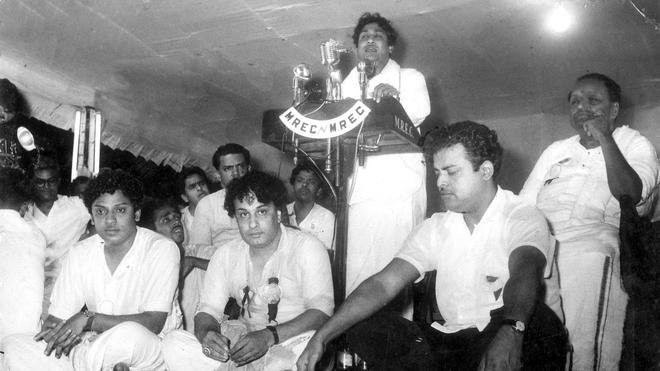
Among the most compelling aspects of Chennai’s cultural storytelling is the use of archival material. Old photographs, newspaper pages and advertisements can reveal a city that is almost impossible to reconstruct from official histories alone.
Archives capture ordinary life: how people dressed, travelled, worked, advertised products, spent leisure time and occupied public spaces. These seemingly small details can become invaluable evidence of social change.
For a city like Chennai, archival storytelling also offers a counterbalance to nostalgia. Looking at an old photograph should not merely produce the reaction that “things were better before.” It can instead prompt more useful questions: Who lived here? Who was missing? What changed? Which traditions survived? Which disappeared? And what should the city preserve today?
This makes archival culture particularly relevant to younger audiences. Instead of presenting history as a list of dates, photographs allow them to compare the city they know with earlier versions of the same urban landscape.
Food: the fastest route into Chennai’s identity
Few subjects reveal Chennai’s cultural complexity as quickly as food.
The city’s food culture cannot be reduced to a single cuisine. Traditional Tamil dishes coexist with influences shaped by migration, trade, colonial encounters and the constant movement of people into and out of the metropolis.
Breakfast institutions, street snacks, biryani traditions, seafood, filter coffee, bakery culture and contemporary restaurants all form part of the larger culinary map.
A food-focused celebration also brings an important economic dimension into the cultural conversation. Behind every dish are farmers, fishermen, traders, cooks, restaurant workers, small businesses and food entrepreneurs. Celebrating food therefore means celebrating an ecosystem rather than merely celebrating eating.
There is also a generational story hidden in Chennai’s food culture. Younger residents increasingly encounter traditional dishes alongside global cuisines and new dining formats. The challenge is not to freeze local food traditions in time but to allow them to evolve without losing their connection to their origins.
Music takes the city out of the concert hall
Chennai’s musical identity is famously associated with Carnatic music, but that is only one part of the picture.
The city has long supported an extraordinary range of sounds, from classical traditions and devotional music to gaana, film music, independent bands and contemporary performers. Bringing music into parks, public spaces and other everyday locations changes the relationship between performer and audience.
Instead of asking people to enter a conventional cultural venue, the performance enters the neighbourhood.
That shift has a democratic quality. Someone who might never purchase a concert ticket can encounter a performance while walking through a public space. A commuter can unexpectedly become an audience member. A familiar neighbourhood can acquire a new cultural identity for an evening.
For emerging musicians, such platforms can also provide visibility beyond established circuits. This makes the programme relevant not only as entertainment but as a potential support system for Chennai’s creative economy.
Sport reveals another side of Madras
Chennai’s cultural identity is incomplete without sport.
Cricket has an especially deep relationship with the city, but Chennai’s sporting landscape extends much further. Hockey, football, athletics, tennis, running and a range of community-level activities have contributed to the city’s sporting culture.
Sport is also one of the simplest ways to connect people across age and social backgrounds. Unlike some cultural activities, it does not require specialist knowledge to participate in or appreciate.
That makes the inclusion of sport in a city festival particularly valuable. It recognises that culture is not only what people watch on a stage or preserve in an archive. It is also what they practise together in streets, grounds and public spaces.
The hidden strength of Made of Chennai: public participation
The most interesting aspect of Made of Chennai may be its attempt to turn a media-led celebration into a community experience.
The Hindu has deep historical roots in Chennai, having been founded in the city in 1878. That relationship gives the campaign a distinctive starting point: the publication is not simply documenting Chennai from outside; it is participating in the cultural life of the city in which its own history is embedded.
Previous editions of Made of Chennai have demonstrated the potential of this model. The campaign has used physical events, digital storytelling, music, cinema, food and community experiences to connect audiences with the city.
That matters in an era when media organisations compete not only for attention but also for trust. A newspaper that creates opportunities for communities to meet and participate can occupy a different role from one that simply reports on events.
What competitors often miss about Chennai’s cultural story
Much of the coverage surrounding city anniversaries follows a familiar formula: iconic landmarks, famous personalities, nostalgic photographs and lists of things to do.
Made of Chennai offers an opportunity to go further because the city itself can become the subject rather than merely the backdrop.
The more important story is the relationship between heritage and urban change.
Chennai is growing, infrastructure is changing and neighbourhoods are evolving. New transport networks, commercial development and changing lifestyles continuously reshape the physical city. In that environment, cultural memory becomes increasingly important.
But preservation should not mean resisting every form of change. A successful city must be able to modernise while retaining the characteristics that make it recognisable to its residents.
This is where cultural programmes can contribute to urban thinking. They can create public interest in buildings, neighbourhoods, food traditions, music and community histories before those things disappear from everyday consciousness.
A useful comparison: Chennai versus a conventional city anniversary
| Conventional city anniversary | Made of Chennai approach |
|---|---|
| Focuses mainly on a symbolic birthday | Uses the birthday as a starting point for a wider cultural conversation |
| Often centres on major landmarks | Can bring attention to neighbourhoods, communities and everyday spaces |
| Primarily audience-oriented | Encourages participation through cultural and public experiences |
| Heritage is presented as the past | Heritage can be connected to contemporary Chennai |
| Celebration ends with the anniversary | A month-long programme creates a longer period of engagement |
Why this matters for Chennai’s future
The real test of a cultural celebration is what remains after the lights go out.
If residents discover a neighbourhood they had previously ignored, support a local performer, become curious about an old building or start asking questions about the history of their street, the impact extends beyond an event calendar.
There is also a civic dimension. Pride in a city is strongest when it is connected to responsibility for that city. Celebrating Chennai’s beaches, streets, heritage buildings, public spaces and cultural traditions can naturally lead to questions about how those assets are maintained and protected.
In that sense, the most valuable outcome of Made of Chennai may not be attendance figures or social media visibility. It may be the creation of a stronger emotional relationship between residents and the places they inhabit.
The prediction: city festivals will increasingly become platforms for civic identity
The success of city-based cultural programmes points towards a wider trend. As large cities become more digitally connected but physically fragmented, people increasingly need shared experiences that create a sense of belonging.
Future editions of city festivals are likely to move further toward neighbourhood-level participation, younger creators, local businesses, archival storytelling and experiences that combine physical and digital engagement.
For Chennai, that could mean an even stronger connection between cultural celebration and conversations about heritage conservation, public spaces, local entrepreneurship, sustainability and inclusive access to culture.
The opportunity is considerable because Chennai already possesses something that cannot be manufactured by a marketing campaign: an unusually strong sense of place.
Chennai’s 387th year is ultimately about people
A city may be measured through its population, roads, buildings and economic output, but its identity is harder to quantify.
It lives in memories of school days, favourite food stalls, crowded buses, music performances, cricket grounds, beaches, neighbourhood festivals and streets that have changed beyond recognition. It belongs equally to people who have lived in Chennai for generations and those who arrived recently and slowly made the city their own.
That is why the Made of Chennai celebration is more than an anniversary programme. By bringing heritage, food, music and sport into a single cultural frame, it presents Chennai as a living city rather than a museum piece.
Conclusion: From Madras nostalgia to Chennai’s next chapter
Chennai’s 387th year offers an opportunity to look backwards without becoming trapped in nostalgia.
The city’s past explains many of its present-day identities, but its future will be shaped by how successfully it carries those identities forward. Cultural celebrations such as Made of Chennai can help by making history accessible, giving local talent a platform and encouraging residents to see familiar spaces with fresh eyes.
The most meaningful celebration, therefore, is not simply one that says “Chennai has survived for 387 years.” It is one that asks what kind of city Chennai wants to become in the years ahead.
For one month, heritage, food, music and sport provide the vocabulary. The people of Chennai provide the meaning. And that may be the most fitting way to celebrate a city whose greatest story has never been just its age, but its ability to keep changing while remaining unmistakably Madras.
Four key takeaways
- Made of Chennai expands the idea of Madras Day into a broader cultural celebration covering heritage, food, music and sport.
- Chennai’s 387th-year celebration highlights the difference between the conventional 1639 Madras milestone and the much older histories of the region.
- Archival storytelling and public cultural events can help younger residents connect with Chennai’s changing urban landscape.
- The larger significance of the festival lies in strengthening civic identity while encouraging a more thoughtful conversation about Chennai’s future.
SEO title
Made of Chennai Celebrates Chennai’s 387th Year with Culture, Food and Music
SEO URL
made-of-chennai-chennai-387-years-madras-day-2026
Important keywords
Made of Chennai, Chennai 387th birthday, Madras Day 2026, Chennai heritage, Chennai culture
Tags
Chennai, Madras Day
Frequently Asked Questions
For breaking news and live news updates, like us on Facebook or follow us on Twitter and Instagram. Read more on Latest Lifestyle on thefoxdaily.com.




COMMENTS 0